
イベント検索
405 件
-
セミナー

Quantum features in cosmological perturbations?
2024年1月18日(木) 14:15 - 15:00
アモリ・ミケリ (理化学研究所 数理創造プログラム (iTHEMS) 特別研究員)
The statistical properties of the CMB anisotropies, reflecting the curvature inhomogeneities in the very early Universe, are very well accounted for by assuming that the inhomogeneities come from amplified vacuum fluctuations. This scenario makes the cosmological perturbations a possible observational window on the interplay between quantum degrees of freedom and gravity. I will review the discussions on the current presence or absence of quantum features in the perturbations, emphasising the quantum information approaches to this question, and comment on the observability of these features.
会場: 研究本館 3階 359号室とZoomのハイブリッド開催
イベント公式言語: 英語
-
セミナー
Gravitational lensing on superposed curved spacetime
2024年1月18日(木) 13:30 - 14:15
郭 優佳 (名古屋大学 大学院理学研究科 博士課程)
In 2017, Bose et al. proposed a tabletop experiment to observe the gravitational effect induced by a spatially superposed mass source, particularly gravity-induced entanglement. This experiment is expected to be the first step in exploring the quantum nature of gravity. Also, there are ongoing efforts to extend their proposal to the relativistic region to observe the unique quantum nature of gravity. In this talk, I will investigate gravitational lensing in a weak gravitational field induced by a spatially superposed mass source. I will show the Einstein ring image of a quantum scalar field propagated on a superposed curved spacetime and compare it with the image of the semi-classical gravity case. This work is currently in progress and is a collaboration with Yasusada Nambu.
会場: 研究本館 3階 359号室とZoomのハイブリッド開催
イベント公式言語: 英語
-
セミナー
Bayesian mechanics of classical, neural, and quantum systems
2024年1月17日(水) 16:30 - 17:45
磯村 拓哉 (理化学研究所 脳神経科学研究センター (CBS) 脳型知能理論研究ユニット ユニットリーダー)
(This is a joint seminar with iTHEMS Biology group.) Bayesian mechanics is a framework that addresses dynamical systems that can be conceptualised as Bayesian inference. However, the elucidation of requisite generative models is required for empirical applications to realistic self-organising systems. This talk introduces that the Hamiltonian of generic dynamical systems constitutes a class of generative models, thus rendering their Helmholtz energy naturally equivalent to variational free energy under the identified generative model. The self-organisation that minimises the Helmholtz energy entails matching the system's Hamiltonian with that of the environment, leading to an ensuing emergence of their generalised synchrony. In short, these self-organising systems can be read as performing variational Bayesian inference of the interacting environment. These properties have been demonstrated with coupled oscillators, simulated and living neural networks, and quantum computers. This notion offers foundational characterisations and predictions regarding asymptotic properties of self-organising systems exchanging with the environment, providing insights into potential mechanisms underlying emergence of intelligence.
会場: セミナー室 (359号室) (メイン会場) / via Zoom
イベント公式言語: 英語
-
セミナー
Methods for neural decoding using machine learning, deep learning, and quantum-inspired algorithms
2024年1月17日(水) 15:00 - 16:15
間島 慶 (量子科学技術研究開発機構 (QST) 研究員)
Note: The format of this event has changed from hybrid to Zoom only. However, you will still be able to watch it on the screen in Room #359 of the Main Research Building. (This is a joint seminar with iTHEMS Biology group.) Recent advances in machine learning have enabled the extraction of intrinsic information from neural activities, a field known as neural decoding. In this presentation, I will introduce several machine learning methods recently developed for neural decoding analysis: 1) a method for visualizing subjective images in the human mind based on brain activity [1], 2) a supervised algorithm designed for predicting discrete ordinal variables [2], and 3) a fast classical algorithm algorithm inspired by quantum computation for approximating principal component analysis (PCA) and canonical correlation analysis (CCA), potentially allowing for the analysis of vast-dimensional neural data [3]. Following these presentations, I am eager to engage in discussions with participants at the RIKEN Quantum Seminar regarding potential collaborations.
会場: via Zoom
イベント公式言語: 英語
-
ワークショップ
Functional Renormalization Group at Niigata 2024
2024年1月7日(日) - 8日(月)
ゲルゲイ・フェヨシュ (Associate Professor, Institute of Physics and Astronomy, Eötvös Loránd University, Hungary)
福嶋 健二 (東京大学 大学院理学系研究科 物理学専攻 教授)
奥西 巧一 (新潟大学 理学部 准教授)
春名 純一 (大阪大学 量子情報・量子生命研究センター 特任研究員)
Xu-Guang Huang (Professor, Physics Department and Center for Particle Physics and Field Theory, Fudan University, China)
伊藤 克美 (新潟大学 教育学部 教授)
川名 清晴 (Research Fellow, Korea Institute for Advanced Study (KIAS), Republic of Korea)
藪中 俊介 (日本原子力研究開発機構 研究員)
横田 猛 (理化学研究所 数理創造プログラム (iTHEMS) 基礎科学特別研究員)One of the most fundamental challenges in theoretical physics is to uncover the physical properties of strongly-interacting quantum many-body systems. This problem is shared in both subatomic physics and condensed matter physics; e.g., to unveil ground state structures and dynamical aspects of quantum systems. However, it has been an unresolved issue to establish non-perturbative theoretical tools, which allows a reliable analytic approach to quantum many-body problems described by field theory. The Functional Renormalization Group (FRG) is proposed as one of the theoretical methods that facilitates the non-perturbative investigation of quantum many-body systems. The FRG has found applications in various fields of physics, ranging from particle and nuclear physics to condensed matter physics, leading to several unique achievements in each fields. The aim of this two-day workshop is to provide an overview of the recent applications and progress of FRG in various fields of physics, discuss future directions, and explore potential new collaborations that bridge different fields of physics.
会場: 開志専門職大学 米山キャンパス (メイン会場) / via Zoom
イベント公式言語: 英語
-
セミナー

Application of Modular tensor category to Lattice gauge theory
2023年12月29日(金) 10:30 - 16:00
早田 智也 (慶應義塾大学 経済学部 助教)
Inspired by the recent development in quantum computers, much efforts have been devoted to exploring their potential applications in lattice gauge theories. However, in contrast to condensed matter systems, we face many challenges in applications of quantum computations to lattice gauge theories, where one of the major obstructions lies in implementation of gauge symmetries in quantum computations. In this seminar, I talk about a possible solution to the problem based on a unitary modular tensor category, expressing the Hamiltonian of lattice gauge theories in terms of the so called F moves, and implementing the F moves on quantum computers. References: TH, Y. Hidaka, JHEP 09 (2023) 126; JHEP 09 (2023) 123.
会場: セミナー室 (359号室)
イベント公式言語: 英語
-
講演会・レクチャー
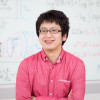
Introduction to Effective Field Theory and Many-Body Problems
2023年12月27日(水) - 28日(木)
本郷 優 (新潟大学 理学部 物理学プログラム 助教)
Quantum field theory (QFT) has been formulated as a theoretical tool to describe elementary particles and nuclei. However, after introducing the concept of "effective field theory," QFT has been providing a general and powerful theoretical framework for describing various universal phenomena in broader range of physical systems, including condensed matter physics and statistical physics. In this lecture, we will explore the basic aspects of field theory by employing it to address quantum many-body problems in simple nonrelativistic systems. The topics covered will include: Lecture 1: Low-energy scattering and renormalization in quantum mechanics Lecture 2: Effective field theory of low-energy scattering Lecture 3: Spontaneous symmetry breaking in weakly-interacting bose gas Lecture 4: Effective field theory of superfluid Lecture 5: Introduction to in-medium potential Lecture 6: Complex-valued in-medium potential between heavy impurities in ultracold atoms The aim is to provide an introductory overview and explanation of basics concepts in field theory. Schedule: Wed., Dec. 27 10:00 - 11:30: Lecture 1 13:00 - 14:30: Lecture 2 15:00 - 16:30: Lecture 3 Thur., Dec. 28 10:00 - 11:30: Lecture 4 13:00 - 14:30: Lecture 5 15:00 - 16:30: Lecture 6
会場: 研究本館 3階 359号室とZoomのハイブリッド開催
イベント公式言語: 英語
-
講演会・レクチャー
Rapid development of cold-atom quantum computers and their prospect
2023年12月26日(火) 13:30 - 17:00
富田 隆文 (分子科学研究所 光分子科学研究領域 助教)
Note for participants: For on-site participants, please register via the registration form. For online participants finding the Zoom link, you can get it after filling the registration form. Program: 13:30-15:00 Lecture 1 15:00-15:30 Coffee break 15:30-17:00 Lecture 2 Abstract: In this talk, I will give an overview of the recent rapid progress of cold-atom quantum computers. In a cold-atom quantum computer, a laser-cooled atomic gas in a vacuum chamber is captured with a two-dimensional trap array called an optical tweezers array, which is an array of tightly focused laser beams. An array of cold single atoms thus created is initialized, gate operated, and readout with other laser beams. Because of its controllability and scalability, the cold-atom quantum computer has been attracting much attention, as one of the most promising candidates in the race to develop quantum-computer hardware. I will describe the characteristics and development trends of the cold-atom hardware, as well as the development of a cold-atom quantum computer at Institute for Molecular Science including the realization of an ultrafast quantum gate using ultrashort laser pulses.
会場: 研究本館 4階 435-437号室 (メイン会場) / via Zoom
イベント公式言語: 英語
-
セミナー

A symmetry principle for gauge theories with fractons
2023年12月22日(金) 17:00 - 18:15
広野 雄士 (京都大学 大学院理学研究科 物理学・宇宙物理学専攻 物理学第二教室 特定准教授)
Fractonic phases are emergent quantum phases of matter that host excitations with restricted mobility. Although these phases have been considered to be of “beyond Landau” order, we show that a certain class of gapless fractonic phases are realized as a result of spontaneous breaking of generalized symmetries. The corresponding symmetries are continuous higher-form symmetries whose conserved charges do not commute with spatial translations, and we refer to them as nonuniform higher-form symmetries. For a given set of nonuniform symmetries, the effective theory associated with the spontaneous breaking of them can be constructed. At low energies, the theories reduce to known higher-rank gauge theories such as scalar/vector charge gauge theories, and the gapless excitations in these theories are interpreted as Nambu–Goldstone modes for higher-form symmetries. Due to the nonuniformity of the symmetry, some of the modes acquire a gap, which is the higher-form analogue of the inverse Higgs mechanism of spacetime symmetries. In this formulation, the mobility restrictions are fully determined by the choice of the commutation relations of charges with translations. This approach allows us to view existing (gapless) fracton models such as the scalar/vector charge gauge theories and their variants from a unified perspective and enables us to engineer theories with desired mobility restrictions. Field: condensed matter physics Keywords: fractonic phases, higher-form symmetries, Nambu-Goldstone modes, Higgs mechanism, gauge theories
会場: via Zoom
イベント公式言語: 英語
-
セミナー
Energy spectrum and time evolution of a SU(2) pure gauge lattice theory on a quantum annealer
2023年12月18日(月) 14:00 - 15:00
Emanuele Mendicelli (Postdoctoral Research Associate, Department of Mathematical Sciences, University of Liverpool, UK)
Lattice gauge theory is an indispensable tool for non-Abelian fields, such as those in quantum chromodynamics where lattice results have been of central importance for several decades. Recent studies suggest that quantum hardware could extend the reach of lattice gauge theory to inaccessible phenomena due to the need for an exponentially large amount of resources, the so-called sign problem. Among the available quantum hardware gate-based quantum computer are well know but less common quantum annealer can play a role too. In this talk we briefly report one of the first use of D-Wave quantum annealer to study the energy spectrum and the time evolution of a SU(2) pure gauge lattice theory in its Hamiltonian formulation. In particular we present how to extract the energy spectrum using the quantum Quantum Annealer Eigensolver algorithm and perform the time evolution using the Kitaev-Feynman clock states. Despite the nosy hardware, no error mitigation techniques were needed but the usability of the D-Wave hardware was extended by simply block-diagonalizing the Hamiltonian.
会場: セミナー室 (359号室) (メイン会場) / via Zoom
イベント公式言語: 英語
-
セミナー
Breaking down the magnonic Wiedemann-Franz law in the hydrodynamic regime
2023年12月4日(月) 15:00 - 16:30
佐野 涼太郎 (京都大学 大学院理学研究科 物理学・宇宙物理学専攻 博士課程)
Quantum transport has attracted a profound growth of interest owing to its fundamental importance and many applications in condensed matter physics. Recent significant developments in experimental techniques have further boosted the study of quantum transport. Notably in ultraclean systems, strong interactions between quasi-particles drastically affect the transport properties, resulting in an emergent hydrodynamic behavior. Recent experiments on ultrapure ferromagnetic insulators have opened up new pathways for magnon hydrodynamics. Hydrodynamic magnon transport implies exhibiting extraordinary features and has a potential for innovative functionalities beyond the conventional non-interacting magnon picture. However, the direct observation of magnon fluids remains an open issue due to the lack of probes to access the time and length scales characteristics of this regime. In this work, we derive a set of coupled hydrodynamic equations for a magnon fluid and study the spin and thermal conductivities by focusing on the most dominant time scales [1]. As a hallmark of the hydrodynamic regime, we reveal that the ratio between the two conductivities shows a large deviation from the so-called magnonic WF law. We also identify an origin of the drastic breakdown of the magnonic WF law as the difference in relaxation processes between spin and heat currents, which is unique to the hydrodynamic regime. Therefore, our results will become key evidence for an emergent hydrodynamic magnon behavior and lead to the direct observation of magnon fluids.
会場: 研究本館 3階 359号室とZoomのハイブリッド開催
イベント公式言語: 英語
-
セミナー
Volume complexity of de Sitter bubbles
2023年11月22日(水) 16:00 - 17:30
Nicolò Zenoni (大阪大学 大学院理学研究科 特任研究員)
Holographic complexity is conjectured to probe the evolution of spacetime. For black holes in anti-de Sitter (AdS) spacetime the growth rate of complexity approaches a constant value at late times, while in de Sitter (dS) spacetime it diverges at a finite critical time. In this talk, we consider geometries interpolating between AdS and dS. In particular, we discuss the evolution of volume complexity in a class of three-dimensional asymptotically anti-de Sitter geometries including dynamical bubbles of de Sitter in their interior. According to the dynamics of the bubble, complexity qualitatively behaves either as in the AdS black hole or as in the dS case. We conclude with some remarks about the possible dual interpretation.
会場: セミナー室 (359号室) (メイン会場) / via Zoom
イベント公式言語: 英語
-
ワークショップ
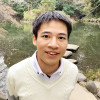
6th QGG Intensive Lectures: Introduction to thermalization in isolated quantum systems
2023年11月20日(月) - 21日(火)
濱崎 立資 (理化学研究所 開拓研究本部 (CPR) 濱崎非平衡量子統計力学理研白眉研究チーム 理研白眉研究チームリーダー)
This is the sixth event by the Quantum Gravity Gatherings (QGG) Study Group at RIKEN iTHEMS. For this event we have invited Professor Ryusuke Hamazaki from RIKEN, to deliver pedagogical lectures on the thermalization in isolated quantum systems. This topic describes how a non-equilibrium quantum state relaxes to thermal equilibrium through a unitary time evolution. This theme has applications not only in statistical physics but also in many areas of physics. In particular, in the context of quantum gravity, understanding thermalization via a unitary time evolution is anticipated to be a key to resolving the information loss problem of black holes. In addition, the notion of typicality and thermalization is important in the AdS/CFT correspondence to understand black hole physics. We expect this event to provide insights to researchers in related fields. Ryusuke Hamazaki is a leading expert in this subject. It is our enormous pleasure to have the opportunity to learn from him the idea of thermalization and its applications related to realistic systems. This intensive lecture series is designed to be an interactive event. The intensive talk will be given in a face-to-face blackboard style (in English, no online streaming) to encourage informal and lively Q&A discussions. The program will also include short talk sessions, where participants can present a 5-minute talk on a topic of their choice, which could be about their own research, reviews of specific works, or future study interests.
会場: 研究本館 435-437号室
イベント公式言語: 英語
-
セミナー
Vortex Reconnection in Classical and Quantum Fluids
2023年11月10日(金) 15:00 - 16:30
木村 芳文 (名古屋大学 大学院多元数理科学研究科 特任教授)
As a fundamental process in turbulence, vortex reconnection has been studied widely not only in classical fluids but also in quantum fluids. For the latter, the first real observation of vortex reconnection was rather recent, and since then active analyses have been continued. On the other hand, vortex reconnection in the former has a long history, and it is now studied intensively as a candidate for a solution to the problem of the regularity/Singularity of the Navier-Stokes equations, which is one of the seven millennium prize problems of the Clay Mathematical Institute. In this talk, after introducing the problem, we will present some results of analysis and simulations of the dynamical system which has been proposed to describe a vortex reconnection of two vortex rings located symmetrically on two tilted planes [1], [2], [3]. Then it will be shown that this dynamical system can be written in noncanonical Hamiltonian form with Hamiltonian, H, and a Casimir invariant, C in the limit of zero viscosity [4].
会場: セミナー室 (359号室) (メイン会場) / via Zoom
イベント公式言語: 英語
-
セミナー
Compact Star Solutions Beyond General Relativity
2023年11月7日(火) 13:30 - 15:00
沼尻 光太 (名古屋大学 大学院理学研究科 博士課程)
The neutron star solutions have been gathering attention. Their high compactness enables us to observationally access the information about extreme regimes of hadron physics. On the other hand, their strong gravity features bring up another possibility, gravity beyond general relativity (GR). Although GR has been a great success until now, the present scenario for our universe still has several problems, such as dark sectors and the quantum description of gravity. To tackle these problems, the modified gravity theories have been discussed for decades. Their modifications are expected to become noticeable in strong gravity regimes like compact stars. In this talk, I will discuss the configuration of the compact star solution under the F(R) gravity, one of the most popular and simplest modifications of GR. The background hydrostatic solutions are calculated with some F(R) models, which show non-trivial influences from the additional scalar DOF in this theory. The tidal deformation phenomenon is also considered to focus on another observable, tidal deformability. I will comment on how to utilize obtained observables to determine the gravity theory and the unknown equation of state simultaneously.
会場: セミナー室 (359号室) (メイン会場) / via Zoom
イベント公式言語: 英語
-
セミナー
A cluster algebra structure in the quantum cohomology ring of a quiver variety
2023年10月24日(火) 10:00 - 11:30
Yingchun Zhang (Postdoctoral Researcher, Institute for Advanced Study in Mathematics, Zhejiang University, China)
The Gromov-Witten theory of a quiver variety is expected to be preserved by quiver mutation according to Seiberg duality, which has been proved to be true for A-type and star-shaped quivers. Cluster algebra can be constructed for a given quiver via quiver mutation. The two subjects Gromov-Witten and cluster algebra seem to differ a lot. Howerver, when we move to the quantum cohomology ring of a quiver variety, Benini-Park-Zhao’s work “indicates” that there should be a cluster algebra structure in the quantum cohomology ring of the quiver variety. In this talk, I will introduce our recent work about the construction of such a cluster algebra structure in the quantum cohomology of a quiver variety. In particular, we will give a proof of the construction for A-type cluster algebra in quantum cohomology of a flag variety. This is a joint work with Weiqiang He.
会場: セミナー室 (359号室)
イベント公式言語: 英語
-
ワークショップ
Introduction to F-Theory
2023年10月18日(水) - 20日(金)
溝口 俊弥 (高エネルギー加速器研究機構 (KEK) 准教授)
This is the fifth event hosted by the Quantum Gravity Gatherings (QGG) Study Group at RIKEN iTHEMS. For this event, we have invited Professor Shun'ya Mizoguchi from KEK, Tsukuba, to deliver pedagogical lectures on the F-theory and its relation to particle physics. We aim for this event to provide insights to researchers in related fields. Originally, heterotic string theory was a promising candidate for describing our world, as it naturally incorporated Grand Unified Theory (GUT) based on an exceptional gauge group. However, heterotic theory encounters challenges in moduli fixing. On the other hand, type II theory has an advantage in moduli fixing, but realizing GUT proves to be challenging. The F-theory describes the strongly coupled type IIB string theory, fully utilizing string dualities. This theory appears to realize both the moduli fixing and GUT. Consequently, F-theory plays a central role in string phenomenology. Shun'ya is a leading expert in these areas. We are fortunate to have the opportunity to learn numerous insights into string theory as well as particle physics. This intensive lecture series is designed to be an interactive event. To facilitate this, the number of participants will be limited to approximately 30. The intensive talk will be given in a face-to-face blackboard style (in English, no online streaming) to encourage informal and lively Q&A discussions. The program will also include short talk sessions, where participants can present a 5-minute talk on a topic of their choice, including their research, reviews of specific works, or future study interests.
会場: 研究本館 4階 435-437号室
イベント公式言語: 英語
-
セミナー

Interactions between Algebraic Topology and Representation Theory by Toric Code
2023年10月2日(月) - 4日(水)
ミンキュ・キム (Research Fellow, School of Mathematics, Korea Institute for Advanced Study (KIAS), Republic of Korea)
Toric code is an error correction code designed by Kitaev in late 1990’s, which contributes to the birth of topological quantum computation. The goal of these lectures is to introduce toric code and related mathematics. We will explain an interaction between low-dimensional topology and representation of Drinfeld double. Especially, we will encode several operations (e.g. braidings) on representations into topology and geometry on surfaces. If time allows, we will give an overview of how toric code arises from chain complexes, which will be the prequel of our talk at Tokyo-Seoul Conference on Oct 6. These lectures will be fundamental and concrete. We hope that the audience are familiar with basic concepts of finite groups and Hopf algebras. These lectures will be held from Oct 2 to Oct 4, each from 13:30 to 15:00, for a total of 3 lectures. Oct 2 (mon) Introduction to toric code. Oct 3 (tue) Introduction to non-abelian toric code. Oct 4 (wed) Further studies on toric code.
会場: via Zoom / セミナー室 (359号室)
イベント公式言語: 英語
-
セミナー
Quantum skyrmion Hall effect
2023年9月14日(木) 17:00 - 18:15
Ashley Cook (Group Leader, Correlations and Topology, Max Planck Institute for the Physics of Complex Systems and Max Planck Institute for Chemical Physics of Solids, Germany)
Field: condensed matter physics Keywords: topology, electron-based quantum skyrmions, spin, Berry curvature Abstract: Topological skyrmion phases of matter are recently-introduced topological phases of electronic systems in equilibrium, in which a system with more than one degree of freedom (e.g. spin and orbital degrees of freedom) realizes a topological state for a subset of the degrees of freedom (e.g. only spin). For topological skyrmion phases of spin, this topology is relevant even if spin is not conserved due to non-negligible atomic spin-orbit coupling, and is distinguished by a skyrmion forming in the spin texture over the Brillouin zone, distinct from a skyrmion forming in the texture of the projector onto occupied states over the Brillouin zone. We present results on three band Bloch Hamiltonians realizing this non-trivial spin topology, and outline some bulk-boundary correspondence features, such as gapless edge states corresponding to zero net charge—but finite spin angular momentum—pumped across the bulk gap. Tracing out the orbital degree of freedom, we can identify this spin pumping with pumping of spin point charges, and local curvature of the k-space spin skyrmion with a Berry curvature of these spin point charges. That is, the spin pumping is identified with pumping of spin magnetic skyrmions, which reduce to point magnetic charges after tracing out the orbital degree of freedom. We therefore identify topological skyrmion phases as lattice counterparts of quantized transport of quantum magnetic skyrmions, a quantum skyrmion Hall effect. This indicates that the theory of the quantum Hall effect must be generalized, by relaxing the assumption of point charges.
会場: via Zoom
イベント公式言語: 英語
-
セミナー

The Cosmic Gravitational Microwave Background
2023年9月6日(水) 15:00 - 16:30
イヤン・シュテエグ (理化学研究所 数理創造プログラム (iTHEMS) 特別研究員)
The thermal plasma in the early universe produced a guaranteed stochastic gravitational wave (GW) background, which peaks today in the microwave regime and was dubbed the cosmic gravitational microwave background (CGMB). I show that the CGMB spectrum encodes fundamental information about particle physics and gravity at ultra high energies. In particular, one can determine from the CGMB spectrum the maximum temperature of the universe and the effective degrees of freedom at the maximum temperature. I also discuss briefly how quantum gravity effects arise in the CGMB spectrum as corrections to the leading order result.
会場: 研究本館 3階 359号室とZoomのハイブリッド開催
イベント公式言語: 英語