
イベント検索
405 件
-
セミナー
Towards S-matrix theory of unstable particles
2023年3月15日(水) 13:30 - 15:00
青木 勝輝 (京都大学 基礎物理学研究所 基研特任助教)
The S-matrix is one of the central objects in quantum field theory and gains renewed interest recently to understand the possible structures of low-energy effective field theories and quantum gravity. However, most of the particles have finite decay widths and thus do not appear in asymptotic states. Therefore, the standard S-matrix arguments may not be directly applied to scatterings of such unstable particles and we need to formulate “the S-matrix theory of unstable particles” to properly understand the availability of the S-matrix arguments in realistic systems. In this talk, I will talk about the first steps towards this goal. In particular, I will discuss non-perturbative consequences of unitarity in a scattering amplitude of unstable particles and its analytic properties.
会場: コモンルーム 246-248号室 とZoomのハイブリッド開催
イベント公式言語: 英語
-
セミナー
Topological Kondo superconductors
2023年3月2日(木) 17:00 - 18:15
Yung-Yeh Chang (Postdoctoral Researcher, National Center for Theoretical Sciences & National Chiao Tung University, Taiwan)
Spin-triplet p-wave superconductors are promising candidates for topological superconductors. They have been proposed in various heterostructures where a material with strong spin-orbit interaction is coupled to a conventional s-wave superconductor by proximity effect. However, topological superconductors existing in nature and driven purely by strong electron correlations are yet to be studied. Here we propose a realization of such a system in a class of Kondo lattice materials in the absence of proximity effect. Therein, the odd-parity Kondo hybridization mediates ferromagnetic spin-spin coupling and leads to spin-triplet resonant-valence-bond (t-RVB) pairing between local moments. Spin-triplet p±p’ wave topological superconductivity is reached when Kondo effect co-exists with t-RVB [1]. We identify the topological nature by the non-trivial topological invariant and the Majorana zero modes at edges. Our results on the superconducting transition temperature, Kondo coherent scale, and onset temperature of Kondo hybridization not only qualitatively but also quantitatively agree with the observations for UTe2, a U-based ferromagnetic heavy-electron superconductor. *This work is supported by the National Science and Technology Council, Taiwan. Field: condensed matter physics Keywords: strongly correlated systems, topological superconductor, Kondo effect, resonant valence bond, heavy-fermion compounds
会場: via Webex
イベント公式言語: 英語
-
コンファレンス
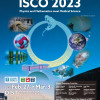
Interdisciplinary Science Conference in Okinawa (ISCO 2023)
2023年2月27日(月) - 3月3日(金)
The scientific method of studying the natural world has persisted over the centuries. The key to its longevity and progression lies in sharing and building upon accumulated knowledge. Physics, which explores the origin of the universe and matter; biology, which studies living organisms, and their functions and evolution; and medicine, which explores health based on the structure and function of living organisms: all have made enormous advancements that impact all aspects of our lives. As the scientific study progresses, however, additional challenges have arisen which are increasingly difficult to solve. Many of the challenges that humanity faces are in achieving sustainable development. These include environmental changes due to climate change, food crises caused by the gap between population growth and food production, and pandemics caused by the spreading of resistant bacteria and viruses. To rise to these new challenges, it is important to reassess the issues from a broader perspective: to combine the knowledge and methods of different scientific fields and to look for new approaches that can bridge the boundaries and work across multiple fields The purpose of ISCO 2023 is to bring together leading researchers in their respective fields, explore methods for solving issues through the fusion of different fields, and form a new network of researchers. The workshop will bring together speakers from Japan and abroad in the fields of space science, particle and nuclear physics, quantum computing, life sciences, and medicine to discuss the challenges they face and the latest advancements in their respective fields. We call for presentations from fields related to those subjects mentioned above and on the sustainable development of humankind. In addition, we plan to hold a poster session to facilitate a wide range of discussions. We hope that the knowledge gained at this workshop will lead to the creation of new research fields that will not only advance basic science but will also help solve the various new challenges that humanity faces.
会場: OIST Auditorium / via Zoom
イベント公式言語: 英語
-
特別講演会
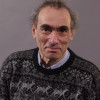
The Electron-Ion Collider: the Ultimate Electron Microscope
2023年2月20日(月) 15:00 - 16:30
ゴードン・ベイム (Professor Emeritus, University of Illinois, USA)
How does the nucleon get its mass? Certainly not from the Higgs -- the rest masses of the quarks it contains add up to only one percent of the nucleon mass. Rather the remaining 99% comes from the zero-point energy of the quarks, antiquarks and gluons localized in the nucleon. How do nuclei differ from being a simple collection of nucleons? How are the gluons, for example, distributed in nuclei? Do they stick out, or are they clumped towards the center of the nucleon? Gluons, like dark matter unseen but playing the crucial role in gluing matter together, are strongly interacting. Do such gluons form new emergent quantum states in nuclei, as in condensed matter physics? And how is the spin of the proton -- the key to NMR imaging -- put together from the spin and orbital motion of the quarks and gluons in the proton?
会場: 大河内記念ホール (メイン会場) / via Zoom
イベント公式言語: 英語
-
セミナー
Coherent sheaves, quivers, and quantum groups
2023年2月17日(金) 14:00 - 16:00
Gufang Zhao (Senior Lecturer, University of Melbourne, Australia)
This talk aims to illustrate symmetries in geometry. The first half surveys a few examples of parametrizing coherent sheaves on a variety and how quantum groups control the symmetry of parametrization space. The second half aims to illustrate some special cases when the variety is a local toric 3-Calabi-Yau.
会場: コモンルーム 246-248号室 とZoomのハイブリッド開催
イベント公式言語: 英語
-
セミナー
Quantum groups and cohomology theories
2023年2月15日(水) 14:00 - 16:00
Yaping Yang (Senior Lecturer, University of Melbourne, Australia)
In the first half of my talk, I will review quantum groups at roots of unity and their representation theory. In the second half, I will explain a construction of new quantum groups using cohomology theories from topology. The construction uses the so-called cohomological Hall algebra associated to a quiver and an oriented cohomology theory. In examples, we obtain the Yangian, quantum loop algebra and elliptic quantum group, when the cohomology theories are the cohomology, K-theory, and elliptic cohomology respectively.
会場: コモンルーム 246-248号室 とZoomのハイブリッド開催
イベント公式言語: 英語
-
セミナー
Entanglement in non-Hermitian quantum systems and non-unitary conformal field theories
2023年2月9日(木) 17:00 - 18:15
Chang Po-Yao (Assistant Professor, Department of Physics, National Tsing Hua University, Taiwan)
Time: 5pm ~ 6:15pm (JST); 9am ~ 10:15am (CET); 4pm ~ 5:15pm (Taiwan) Entanglement is a powerful tool to diagnose many-body quantum systems. One example is the critical system where the low energy property can be described by conformal field theories (CFTs), and the central charge which uniquely characterizes the CFT can be perfectly extracted from the entanglement entropy. However, the entanglement properties for non-unitary CFTs are not well understood. Moreover, the entanglement properties in many-body microscopic models which can be described by non-unitary CFTs have not been explored. In this talk, I would like to demonstrate several non-Hermitian systems which can be described by non-unitary CFTs, and show their entanglement properties can be correctly obtained by the proposed generic entanglement entropy. Field: Condensed Matter Physics Keywords: non-Hermitian systems, conformal field theory, many-body systems, entanglement entropy
会場: via Webex
イベント公式言語: 英語
-
講演会・レクチャー
Introduction to the Quantum Theory of Gravity via Asymptotic Safety
2023年1月24日(火) - 26日(木)
太田 信義 (Visiting Professor, Department of Physics, National Central University, Taiwan)
We give an introduction to the formulation towards the quantum theory of gravity using the functional (or exact) renormalization group, the so-called asymptotic safety. First we briefly explain the necessity of quantization of gravity and why the Einstein gravity is not sufficient for this purpose. Second, we introduce the functional renormalization group equation and explain what is the asymptotic safety program to achieve the quantum theory of gravity. This includes the notion of relevant, irrelevant and marginal operators, and it is important that there are finite number of relevant operators to make any prediction of quantum effects. This gives a nonperturbatively renormalizable theory of gravity. We then discuss various examples how the program may be applied to various theories, and summarize the current status of this approach. (Tentative schedule) [Day 1: Jan. 24, 2023] Free discussion: 9:30 - 10:30 Lecture 1: 10:30 - 12:00 Lunch: 12:00 - 13:30 Lecture 2: 13:30 - 15:00 Break: 15:00 - 15:30 Lecture 3: 15:30 - 17:00 [Day 2: Jan. 25, 2023] Free discussion: 9:30 - 10:30 Lecture 4: 10:30 - 12:00 Lunch: 12:00 - 13:30 Lecture 5: 13:30 - 15:00 Break: 15:00 - 15:30 Lecture 6: 15:30 - 17:00 [Day 3: Jan. 26, 2023] Q&A + discussion: 9:30 - 15:00
会場: 研究本館 5階 535-537号室
イベント公式言語: 英語
-
セミナー
Math and Physics of Seiberg-Witten theory
2023年1月20日(金) 16:00 - 18:10
飯田 暢生 (東京工業大学 理学院 日本学術振興会 特別研究員 PD)
Math and physics have developed through interactions with each other. For example, classical mechanics and calculous were born together. Einstein's theory of gravitation is written in the language of pseudo-Riemann geometry. Since the late 20th century, physicists centering on Edward Witten have revolutionized modern geometry. Seiberg-Witten theory is one of such breakthroughs, for both mathematicians and physicists. In physics it is regarded as a theory describing strong coupling (i.e. low energy) behavior of some supersymmetric gauge theories. It showes confinement (by a mechanism similar to superconductivity) and electric magnetic duality. Even though this story has not been mathematically justified yet, it is regarded as an important trigger of developments in understanding non perturbative aspects of quantum field theory and string theory, and stimulates broad fields of physics and math. In math, Seiberg-Witten theory is regarded as a fundamental tool to study 3 and 4-dimensional geometry. This is based on a PDE called Seiberg-Witten equation, which originates from the "electric magnetic dual description" of monopoles, but people can use it as a tool to study geometry without knowing such a physical origin. In this talk, developments of Seiberg-Witten theory from both viewpoints will be reviewed and if the time permits, works in math by the speaker and collaborators will be discussed. The speaker thinks it is unusual for a mathematician to talk about something that has not been mathematically justified yet, but hopes this talk will lead to new interactions between math and physics.
会場: コモンルーム 246-248号室 とZoomのハイブリッド開催
イベント公式言語: 英語
-
セミナー

Lattice gauge theory in curved spacetimes
2022年12月15日(木) 14:00 - 15:30
山本 新 (東京大学 大学院理学系研究科 物理学専攻 助教)
Lattice gauge theory is a powerful computational approach in quantum field theory. It is also utilizable for investigating quantum phenomena in curved spacetimes, such as rotating frame, torsion, and gravitational backgrounds. In this talk, I would like to overview the formulation and results of lattice simulations in curved spacetimes.
会場: コモンルーム (246-248号室) (メイン会場) / via Zoom
イベント公式言語: 英語
-
セミナー
Quantum kinetics of neutrinos in high-energy astrophysical phenomena
2022年12月9日(金) 14:00 - 15:00
長倉 洋樹 (国立天文台 科学研究部 特任助教(国立天文台フェロー))
Neutrinos are the most mysterious and elusive particles in the standard model of particle physics. They play important roles in core-collapse supernovae and binary neutron star mergers as driving mass-ejection, synthesizing heavy elements including r-process nuclei, and neutrino signals from these sources. This exhibits the importance of accurate modeling of neutrino radiation field in these phenomena, which will be used to connect neutrino physics to multi-messenger astronomy. It has recently been suggested that neutrino-flavor conversion (or neutrino-oscillation) can ubiquitously occur in these astrophysical environments, exhibiting the requirement of quantum kinetic treatments in the modeling of neutrino transport. In this seminar, I will give an overview of the quantum kinetics neutrino transport and then introduce its recent progress, paying a special attention to the connection to astrophysics. I will also present the latest results of our numerical simulations of collective neutrino oscillations, which can be properly accounted for only by quantum kinetic framework.
会場: via Zoom
イベント公式言語: 英語
-
セミナー
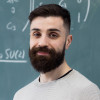
Efficient encoding of the Schrodinger equation on quantum computers
2022年12月5日(月) 14:00 - 15:30
エルマル・ルラーバイ (理化学研究所 数理創造プログラム (iTHEMS) 特別研究員)
The continuous space Schrödinger equation is reformulated in terms of spin Hamiltonians. For the kinetic energy operator, the critical concept facilitating the reduction in model complexity is the idea of position encoding. A binary encoding of position produces a spin-1/2 Heisenberg-like model and yields exponential improvement in space complexity when compared to classical computing. Encoding with a binary reflected Gray code (BRGC), and a Hamming distance 2 Gray code (H2GC) reduces the model complexity down to the XZ and transverse Ising model respectively. Any real potential is mapped to a series of k-local Ising models through the fast Walsh transform. As a first step, the encoded Hamiltonian is simulated for quantum adiabatic evolution. As a second step, the time evolution is discretized, resulting in a quantum circuit with a gate cost that is better than the Quantum Fourier transform. Finally, a simple application on an ion-based quantum computer is provided as proof of concept.
会場: コモンルーム (246-248号室) (メイン会場) / via Zoom
イベント公式言語: 英語
-
セミナー
Mathematics of Post-Quantum Cryptography
2022年11月18日(金) 14:00 - 16:30
相川 勇輔 (三菱電機株式会社 情報技術総合研究所 研究員)
Cryptography keeps our everyday information communications secure. Cryptography based on key sharing have been used mainly for military purposes since ancient times in human history, but with the advent of the Internet, cryptography that does not require key sharing has become necessary. In 1976, Diffie and Hellman proposed the concept of public key cryptography, which does not require key sharing among communicators. Since then, research on public key cryptography has progressed, involving not only computer science but also mathematics, and has become an essential technology for the society we live in. The security of public key cryptography is supported by computational hardness of problems derived from mathematics. For example, the integer factoring problem is a basis for the security of RSA cryptography, and the discrete logarithm problem is for elliptic curve cryptography. However, in 1994, Shor proposed an efficient quantum algorithm that solves these problems. This means that emergence of large-scale quantum computers will break RSA and elliptic curve cryptography we use today. For this reason, research on next-generation cryptography, so-called Post-Quantum Cryptography (PQC for short), is currently underway to prepare for a future in which quantum computers will emerge. In this talk, without assuming any knowledge of cryptography, I will give a brief overview of cryptography and the progress of PQC. The first half of the talk will mainly outline the relationship between mathematics and cryptography, while the second half will discuss isogeny-based cryptography, one of the promising PQC, with our recent results.
会場: コモンルーム 246-248号室 とZoomのハイブリッド開催
イベント公式言語: 英語
-
セミナー
Expanding Edges of Quantum Hall Systems in a Cosmology Language - Hawking Radiation from de Sitter Horizon in Edge Modes
2022年11月11日(金) 16:00 - 17:30
堀田 昌寛 (東北大学 大学院理学研究科物理学専攻 助教)
Expanding edge experiments are promising to open new physics windows of quantum Hall systems. In a static edge, the edge excitation, which is described by free fields decoupled with the bulk dynamics, is gapless, and the dynamics preserve conformal symmetry. When the edge expands, such properties need not be preserved. We formulate a quantum field theory in 1+1 dimensional curved spacetimes to analyze the edge dynamics. We propose methods to address the following questions using edge waveforms from the expanding region: Does the conformal symmetry survive? Is the nonlinear interaction of the edge excitations induced by edge expansion? Do the edge excitations interact with the bulk excitations? We additionally show that the expanding edges can be regarded as expanding universe simulators of two-dimensional dilaton-gravity models, including the Jackiw-Teitelboim gravity model. As an application, we point out that our theoretical setup might simulate emission of analog Hawking radiation with the Gibbons-Hawking temperature from the future de Sitter horizon formed in the expanding edge region.
会場: 研究本館 3階 345−347号室 (メイン会場) / via Zoom
イベント公式言語: 英語
-
講演会・レクチャー
An Introduction to Quantum Measurement Theory for Physicists
2022年11月10日(木) - 12日(土)
堀田 昌寛 (東北大学 大学院理学研究科物理学専攻 助教)
In this lecture, basic concepts in quantum measurement theory are introduced, including measurement operators and POVM's. The related topics are also picked up. Lecture 1: Nov. 10, 10:30 - 12:00 Lecture 2: Nov. 10, 13:30 - 15:00 Lecture 3: Nov. 10, 15:30 - 17:00 Lecture 4: Nov. 11, 10:30 - 12:00 Lecture 5: Nov. 11, 13:30 - 15:00 Lecture 6: Nov. 12, 10:30 - 12:00
会場: 研究本館 3階 345−347号室 (メイン会場) / via Zoom
イベント公式言語: 英語
-
セミナー
Tensor renormalization group approach to quantum fields on a lattice
2022年11月8日(火) 13:30 - 15:00
秋山 進一郎 (東京大学 量子ソフトウェア寄付講座 特任助教)
Tensor renormalization group (TRG) approach is a variant of the real-space renormalization group to evaluate the path integral defined on the thermodynamic lattice, without resorting to any probabilistic interpretation for the given Boltzmann weight. Moreover, since the TRG can directly deal with the Grassmann variables, this approach can be formulated in the same manner for the systems with bosons, fermions, or both. These advantages of the TRG approach have been confirmed by the earlier studies of various lattice theories, which suggest that the TRG enables us to investigate the parameter regimes where it is difficult to access with the standard stochastic numerical methods, such as the Monte Carlo simulation. In this talk, explaining our recent applications of the TRG approach to several lattice models, we demonstrate the efficiency of the TRG as a tool to investigate lattice theories particularly in higher dimensions and future perspective.
会場: コモンルーム 246-248号室 とZoomのハイブリッド開催
イベント公式言語: 英語
-
セミナー
Quantum nucleation of topological solitons
2022年10月20日(木) 13:30 - 15:00
衛藤 稔 (山形大学 理学部 教授)
The chiral soliton lattice is an array of topological solitons realized as ground states of QCD at finite density under strong magnetic fields or rapid rotation, and chiral magnets with an easy-plane anisotropy. In such cases, topological solitons have negative energy due to topological terms originating from the chiral magnetic or vortical effect and the Dzyaloshinskii-Moriya interaction, respectively. We study quantum nucleation of topological solitons in the vacuum through quantum tunneling in 2+1 and 3+1 dimensions, by using a complex ϕ4 (or the axion) model with a topological term proportional to an external field, which is a simplification of low-energy theories of the above systems. In 2+1 dimensions, a pair of a vortex and an anti-vortex is connected by a linear soliton, while in 3+1 dimensions, a vortex is string-like, a soliton is wall-like, and a disk of a soliton wall is bounded by a string loop. Since the tension of solitons can be effectively negative due to the topological term, such a composite configuration of a finite size is created by quantum tunneling and subsequently grows rapidly. We estimate the nucleation probability analytically in the thin-defect approximation and fully calculate it numerically using the relaxation (gradient flow) method. The nucleation probability is maximized when the direction of the soliton is perpendicular to the external field.
会場: via Zoom
イベント公式言語: 英語
-
セミナー
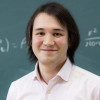
An Introduction to Rough Geometry (with a view to Euclidean Gravity)
2022年10月14日(金) 14:00 - 16:30
クリスティ・コウジ・ケリー (理化学研究所 数理創造プログラム (iTHEMS) 基礎科学特別研究員)
The mathematical formulation of Einstein gravity typically utilises differentiable manifolds as models of smooth spacetimes. In many scenarios, however, it is desirable to have coarser models of spacetime and a correspondingly rough theory of geometry applicable to these coarser spacetime structures. In 2D Euclidean quantum gravity, for instance, the use of Regge calculus allows one to treat triangulations as regularisations of smooth spacetimes. There has been much recent progress in the mathematical (rigorous) understanding of this theory which we briefly review. We also introduce a rich alternative framework for the study coarse Euclidean geometry in the form of metric geometry augmented by optimal transport theory. In particular we introduce several optimal transport theoretic curvatures and demonstrate that these recover the familiar smooth notions under suitable limits.
会場: コモンルーム 246-248号室 とZoomのハイブリッド開催
イベント公式言語: 英語
-
セミナー
Ultra-Light Axion Dark Matter: Bose-Einstein condensates and superfluids in the sky
2022年10月11日(火) 13:30 - 15:00
エリザ・フェレイラ (東京大学 カブリ数物連携宇宙研究機構 (Kavli IPMU) 特任助教)
The nature of dark matter (DM) is one of the biggest mysteries in cosmology. There are many different models to explain the nature of this elusive component. In this talk I will present a class of dark matter models: ultra-light dark matter (ULDM) or ultra-light axions (ULA). I will show the different models present in the literature and classify them according to the way they behave on small scales. One of the most interesting features of this class of DM models is that it might condense in the interior of the halos of galaxies forming a Bose-Einstein condensate (BEC) or superfluid. This interesting quantum phenomena on macroscopic scales, and the wave nature of ULDM leads to different and interesting astrophysical consequences that can be probed on small scales. I will quickly review first the fuzzy dark matter model, one of the most well studied ULA models, where I will present its description, predictions and current bounds. Then I will introduce the DM superfluid model, where, upon condensation in the interior of galaxies, DM dynamics represents that of MOdified Newtonian Dynamics (MOND) on galactic scales. This behaviour can address some of the curiosities of the behaviour of DM on small scales. I plan to show the theoretical description of this model and its interesting phenomenology.
会場: コモンルーム 246-248号室 とZoomのハイブリッド開催
イベント公式言語: 英語
-
セミナー

Isometric tensor networks in two dimension
2022年10月11日(火) 10:30 - 12:00
ヤンタオ・ウー (理化学研究所 数理創造プログラム (iTHEMS) 特別研究員)
In this talk, I would like to explain the ansatz of isometric tensor network states (isoTNS) as candidate wavefunctions in two-dimensional condensed matter systems. I will explain how the isometric structure in 2D helps generalize many 1D tensor network algorithms, like the density matrix renormalization group and the time-evolution block decimation methods, to two dimensions. Both bosons and fermions; ground states and dynamics will be discussed. I will also explain why it is a friendly trial wavefunction in the context of variational Monte Carlo, where the sampling correlation time vanishes. I will also explain its relation to quantum error correction and how it provides an interesting playground of quantum information. If time permits, I would like to discuss some open questions about its representability of topological phases.
会場: コモンルーム (246-248号室) (メイン会場) / via Zoom
イベント公式言語: 英語