
Search Event
674 results
-
Seminar
ABBL-iTHEMS Joint Seminars (Following r-EMU seminar 13:30-15:00)
May 31 (Fri) 15:15 - 17:35, 2019
15:15-15:35 Hiroyuki Sagawa (ICRR, U.Tokyo) “Recent TA Results and the extension status for the study of the highest-energy cosmic rays” 15:35-16:30 Igor Tkachev (Russian Academy of Sciences) “Axion stars: from birth to death” 16:30-16:40 Break 16:40-17:35 Peter Tinyakov (U. Libre de Bruxelles) “Solar mass black holes and dark matter"
Venue: #435-437, Main Research Building
Event Official Language: English
-
Workshop
iTHEMS Science Outreach Workshop 2019
May 31 (Fri) - June 3 (Mon) 2019
This is a workshop in which researchers in natural and mathematical sciences and the science journalists get together and discuss outreach activities. iTHEMS started to support this annual workshop as well as the journalist in residence program from last year to establish better science communication. Contact: Takashi Tsuboi (iTHEMS Deputy Director)
Venue: Tambara Institute of Mathematical Sciences, The University of Tokyo
Event Official Language: Japanese
-
Seminar
Certain invariants as dimension
May 24 (Fri) 16:00 - 18:10, 2019
Genki Ouchi (Special Postdoctoral Researcher, RIKEN Interdisciplinary Theoretical and Mathematical Sciences Program (iTHEMS))
Plan of the seminar: we separate each talk into two. In the first 60 minutes the speaker gives an introductory talk for non-mathematicians. After a short break, the second 60 minutes is spent for a bit more detailed talk for mathematicians (working in other areas). We welcome you joining both parts of the seminar or only the first/second half. Abstract: In this talk, I would like to talk about certain invariants that look like dimension. This talk has independent two parts. In part 1, I will talk about finite metric spaces. In 2013, Leinster introduced the notion of magnitude of finite metric spaces. It measures effective number of points in finite metric spaces. Considering magnitude and scale transformation, Leinster and Willerton defined dimension of finite metric space with scale. I will explain the definition of magnitude of finite metric spaces and see examples. In part 2, I will talk about derived categories of smooth projective varieties or finite dimensional algebras. In 2014, Dimitrov, Heiden, Katzarkov and Kontsevich introduced the notion of entropy of endofunctors of derived categories. It measures complexity of endofunctors under iteration. Serre functor is an autoequivalence of derived category, that describes Serre duality. Entropy of Serre functor looks like dimension of derived categories. I will talk about known results for entropy of Serre functors and some related topics.
Venue: Seminar Room #160
Event Official Language: English
-
Seminar
Introduction to Singularity Theory in Algebraic Geometry
May 16 (Thu) 16:00 - 18:10, 2019
Kenta Sato (Special Postdoctoral Researcher, RIKEN Interdisciplinary Theoretical and Mathematical Sciences Program (iTHEMS))
Plan of the seminar: we separate each talk into two. In the first 60 minutes the speaker gives an introductory talk for non-mathematicians. After a short break, the second 60 minutes is spent for a bit more detailed talk for mathematicians (working in other areas). We welcome you joining both parts of the seminar or only the first/second half. In this talk, I will explain for all scientists how singularities are studied in algebraic geometry. In algebraic geometry, we study algebraic varieties, which are figures defined as the zero sets of polynomial equations. To study an algebraic variety, we often expect that the variety is smooth, that is, the variety locally resembles Euclidian spaces. However, even if we start from smooth varieties, we sometimes encounter non-smooth varieties. This is one of the reasons why we need to study singularities. Part I: In the first one hour, I will explain how singularities are studied. I will introduce two invariants of singularities by which we can compare singularities numerically. One invariant is defined in terms of resolution of singularities and the other is defined in terms of positive characteristic methods. I also explain a surprising relation of these invariants. Part II: In the second one hour, I will explain how singularity theory is used to study smooth projective varieties. I will introduce Minimal Model Program and explain the relation with singularity theory.
Venue: Seminar Room #160
Event Official Language: English
-
Seminar
Gauge Theory and Symmetries of 4-Dimensional Spaces
April 26 (Fri) 16:00 - 18:10, 2019
Hokuto Konno (Special Postdoctoral Researcher, RIKEN Interdisciplinary Theoretical and Mathematical Sciences Program (iTHEMS))
Plan of the seminar: we separate each talk into two. In the first 60 minutes the speaker gives an introductory talk for non-mathematicians. After a short break, the second 60 minutes is spent for a bit more detailed talk for mathematicians (working in other areas). We welcome you joining both parts of the seminar or only the first/second half. Although the term "gauge theory" is usually used in physical contexts, in the early 1980's, mathematicians found that gauge theory has many striking applications to purely mathematical problems. Most of typical applications are related to topology of 4-dimensional spaces. As a recent development in this direction, I used gauge theory to study "the shape of the space of all symmetris of a 4-dimensional space". In the first one hour, I will explain a notion of mathematical spaces, called manifolds, and try to describe the idea: how mathematicians make use of gauge theory to study the topology of a 4-dimensional manifold. In the second one hour, I will explain what the space of symmetries of a manifold means, and which type of theorems about the space of symmetries can be obtained using gauge theory.
Venue: Seminar Room #160
Event Official Language: English
-
Colloquium
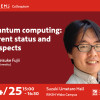
Quantum computing: current status and prospects
April 25 (Thu) 15:00 - 16:30, 2019
Keisuke Fujii (Professor, Graduate School of Engineering Science, Osaka University)
Supported by extensive experimental efforts for realization of quantum computing devices, quantum computers of a hundred qubits are now within reach in the near future. This level of a quantum computer is not enough for fully fledged fault-tolerant quantum computing, but is still expected to have computational advantage against classical computers. Such a noisy intermediate scale quantum computing (NISQ) device is thought to be a testbed for proof-of-principle experiments of quantum algorithms and verification of quantum physics in the limit of extremely high complexity. In this talk, I will provide a general introduction to quantum computing starting from how and for what quantum computers work. Then I will provide an overview of the current status and prospects of the field of quantum computing. As the final part, I will also talk about our own activities on quantum-classical hybrid algorithm, which is a kind of quantum algorithms specifically designed for the NISQ devices.
Venue: Suzuki Umetaro Hall
Broadcast:R511, Computational Science Research Building / SUURI-COOL (Kyoto) / SUURI-COOL (Sendai)
Event Official Language: English
-
Seminar
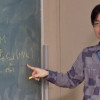
Introduction to Galois Theory and Class Field Theory
April 18 (Thu) 16:00 - 18:00, 2019
Hiroyasu Miyazaki (Special Postdoctoral Researcher, RIKEN Interdisciplinary Theoretical and Mathematical Sciences Program (iTHEMS))
Plan of the seminar: we separate each talk into two. In the first 60 minutes the speaker gives an introductory talk for non-mathematicians. After a short break, the second 60 minutes is spent for a bit more detailed talk for mathematicians (working in other areas). We welcome you joining both parts of the seminar or only the first/second half. Part I: Galois theory is one of the most important theories in mathematics. Speaking in one phrase, it explains the correspondence between “extensions of numbers” and “subgroups of Galois group”. Basically, finding subgroups of a finite group is much easier than finding extensions of numbers. As a result, Galois theory has incredibly strong applications. For example, we can prove polynomial equations of degree greater than 4 are not always solvable by radicals, which is a celebrated result by Abel and Galois. In the first part of the talk, I will introduce Galois theory in an accessible way for all scientists. Part II: Class Field Theory (CFT) is a monumental work in number theory. Given Galois theory, which is explained in Part I, classifying “extension of numbers” is reduced to classifying “subgroups of Galois group”. So, the next thing to do would be to analyze the structure of Galois groups. CFT enables us to describe the Galois group of a number field K by using only the language of K, i.e., not by using its extensions. In the second part of the talk, I will explain CFT in an as accessible way as possible for all scientists (in particular, also for mathematicians). If time permits, I would like to explain a geometric interpretation of Galois theory, and higher dimensional CFT.
Venue: Seminar Room #160
Event Official Language: English
-
Workshop
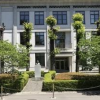
International Molecule-type Workshop "Frontiers in Lattice QCD and related topics"
April 15 (Mon) - 26 (Fri) 2019
International Molecule-type Workshop "Frontiers in Lattice QCD and related topics" will be held in Yukawa Institute for Theoretical Physics (YITP) on April 15 - 26, 2019 under the support of iTHEMS and YITP. Lattice quantum chromodynamics (QCD) is a systematic method to investigate strong interaction of hadrons with numerical simulations. In this workshop, frontiers of lattice QCD will be discussed under relaxed atmosphere in Kyoto. Organizers: Sinya Aoki (YITP), Yasumichi Aoki (RIKEN, CCS), Hidenori Fukaya (Osaka U.), Shoji Hashimoto (KEK), Tetsuo Hatsuda (RIKEN, iTHEMS), Takumi Doi (RIKEN, Nishina Center), Atsushi Watanabe (YITP)
Venue: Yukawa Institute for Theoretical Physics, Kyoto University
Event Official Language: English
-
Seminar
The Origin of the X-ray Clumpy Ejecta in Type Ia Supernova Remnants
April 3 (Wed) 14:00 - 15:00, 2019
Toshiki Sato (Special Postdoctoral Researcher, High Energy Astrophysics Laboratory, RIKEN Cluster for Pioneering Research (CPR))
X-ray-emitting clumpy structures are generally observed in young Type Ia supernova remnants although the origin is still obscure. There are two candidates for explaining the formation of clumps; initial clumpiness in ejecta at the explosion (i.e., clumpy ejecta model) or hydrodynamic instabilities made from smooth ejecta profile (i.e., smooth ejecta model). This information should reflect the initial ejecta structure of SNe Ia, so it is important for understanding the Type Ia explosion itself. Our preliminary investigations into constraining the structure of SN Ia remnants using Fourier and wavelet-transform analyses did not turn out to be sufficiently powerful at discriminating the two hydro models and the observed Tycho image from each other. This led us to investigate an approach that would be more sensitive to patterns in the distribution of clumps and holes in the images, such as the "genus statistic.” In this study, for the first time, the genus statistics have been applied to a famous type Ia remnant, Tycho (SN 1572) to understand the formation of the clumps by comparing with hydrodynamical models (Sato et al. 2019, arXiv: 1903.00764). We found the genus curve from Tycho's supernova remnant strongly indicates a skewed non-Gaussian distribution of the ejecta clumps, which is similar to that of a hydrodynamical model for the clumpy ejecta model. In contrast, a hydrodynamical model for the smooth ejecta model has a genus curve that is similar to that of a random Gaussian distribution. Thus, our results support the initial clumpiness in the Type Ia ejecta is more reasonable for the origin of the clumps and demonstrate usefulness of the genus statistics for this field. In addition, we will also discuss the origin of “Fe-rich” ejecta clumps in Type Ia SNRs in this seminar.
Venue: #433, Main Research Building
Event Official Language: English
-
Colloquium
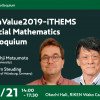
ZetaValue2019-iTHEMS Special Mathematics Colloquium
March 21 (Thu) 14:00 - 17:30, 2019
Kohji Matsumoto (Professor, Nagoya University)
Jörn Steuding (University of Würzburg, Germany)Prof. Kohji Matsumoto (Nagoya University) "An overview of the theory of multiple zeta-functions" Multiple zeta-functions are generalizations of the Riemann zeta-function, and its theory has been rapidly developed in these decades. It is connected with various fields of mathematics and mathematical physics. In this talk I will give an overview of some part of recent developments, mainly from the analytic viewpoint. Prof. Jörn Steuding (University of Würzburg, Germany) "On the Infinite in Number Theory" Beginning with two simple examples from elementary number theory (one of diophantine origin and one of arithmetical nature), we discuss the role of “infinity” in number theory. We touch upon topics like how to find good rational approximations to irrational quantities and the distribution of prime numbers. We conclude with a motivation of the big open question in this field, namely, the Riemann hypothesis (one of the six unsolved millennium problems) and the Langlands program.
Venue: Okochi Hall
Event Official Language: English
-
Workshop
Workshop of Nuclear-Astrophysics by UKAKUREN/Japan Forum of Nuclear Astrophysics (JaFNA): Nuclear data & Heavy Element Nucleosynthesis
March 6 (Wed) - 8 (Fri) 2019
We are pleased to announce that we will have a meeting on Nuclear-Astrophysics at Hokkaido Univ. Especially this time we will focus on the impact of nuclear data & nucleosynthesis of heavy elements. Gravitational wave is another keyword. This workshop is held by UKAKUREN (JaFNA), together with Nuclear Reaction Data Centre, Hokkaido University (JCPRG). This workshop is supported by iTHEMS, CNS, RCNP, NAOJ, KEK, and WNSC. You are welcomed to join us. For registration, please fill in the attached form (in Japanese) and send it to: sec-ukakuren18@kek.jp by 30th November 2018. We are looking forward to seeing you at Hokkaido U. Organizers T. Kajino (Chair), T. Kawabata (Osaka), H. Utsunomiya (Konan), S. Nishimura (RIKEN), H. Yamaguchi (CNS), T.Hayakawa (QST), T.Motobayashi (RIKEN), K.Terada(Osaka), S.Nagataki(RIKEN), S.Chiba(TIT), T.Tamagawa(RIKEN), W.Aoki(NAOJ), S.Wanajo(AEI), S.Kubono(RIKEN), T.Shima(RCNP)
Venue: Hokkaido University Conference Hall
Event Official Language: Japanese
-
Colloquium
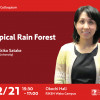
Tropical Rain Forest
February 21 (Thu) 15:30 - 17:00, 2019
Akiko Satake (Professor, Mathematical Biology Laboratory, Department of Biology, Faculty of Science, Kyushu University)
In a unique phenomenon restricted to the tropical rain forests in Southeast Asia, hundreds of plant species from dozens of families reproduce synchronously at irregular, multi-year intervals. Although several hypotheses have been proposed, the proximate environmental cues that synchronize these general flowering events are uncertain. Fortunately, accumulation of long-term data and advanced statistical and modeling techniques are starting to shed new light on phenology of tropical plants. In this talk, series of studies that integrate long-term field monitoring, gene expression analyses, and modeling will be presented.
Venue: Okochi Hall
Broadcast:#311, Computational Science Research Building / SUURI-COOL (Kyoto) / SUURI-COOL (Sendai)
Event Official Language: English
-
Workshop
RIKEN-Berkeley WS on Quantum Information Science (RB19)
January 25 (Fri) - 29 (Tue) 2019
Initiated by the RIKEN Interdisciplinary Theoretical and Mathematical Sciences (iTHEMS) program at Berkeley, this workshop will focus on the development of quantum computing techniques, quantum materials, and quantum sensing, as well as their corresponding applications to physical sciences, with an emphasis to galvanize the participants into future collaboration. Organizing Committee: Chia Cheng Chang (RIKEN iTHEMS/UCB/LBNL NSD) Takumi Doi (RIKEN iTHEMS) Tetsuo Hatsuda (RIKEN iTHEMS) Wick Haxton (UCB/LBNL NSD/RIKEN iTHEMS) Alan Poon (LBNL NSD/BQ) Advisory Committee: Jonathan Carter (LBNL CRD/BQ) Yasunobu Nakamura (RIKEN CEMS/Tokyo) Franco Nori (RIKEN/Michigan) Thomas Schenkel (LBNL AT-AP/BQ) Irfan Siddiqi (UCB/BQ) Seigo Tarucha (RIKEN CEMS/Tokyo) Co-hosted by RIKEN iTHREMS RIKEN CEMS Lawrence Berkeley National Lab. (LBNL) Univ. of California at Berkeley (UCB) Supported by Berkeley Quantum (bq) US Dept. of Energy (DOE)
Venue: Lawrence Berkeley National Laboratory (Berkeley, California)
Event Official Language: English
-
Seminar
Biology Seminar
December 13 (Thu) 14:00 - 16:00, 2018
Yusuke Kazama (Team Leader, Plant Genome Evolution Research Team, RIKEN Nishina Center for Accelerator-Based Science (RNC))
Jeffrey Fawcett (Senior Research Scientist, RIKEN Interdisciplinary Theoretical and Mathematical Sciences Program (iTHEMS))Speaker: Jeffrey Fawcett (iTHEMS) Title: Introduction to Genomics Abstract: The genetic information, or the genome, of almost all species are determined by the order (i.e. the "sequence") of millions of nucleotides represented by A, G, C, and T. I will first outline what we already know about the genome, how they differ across species and individuals, and how we can study them. I will then briefly introduce "3D Genomics", a topic that is becoming quite hot in biology now: the genome is not only a one dimensional "sequence" information but the chromosomes must be folded up to fit into the cell nuclei, and this 3D structure of the chromosome and the spatial positioning of the genes might be important for the biology of each species. Speaker: Yusuke Kazama (Nishina Center) Title: 大きな玉ほど大きく壊す:シロイヌナズナを用いて明らかにした重イオンビーム変異の特徴 Abstract: 重イオンビームはγ線やX線よりも線エネルギー付与(LET)が高いことで知られ、核種やビームの速度を選択することによりLETを調節して照射することもできる。私たちは、モデル植物シロイヌナズナを用いてLETが変異誘発に与える影響を調べ、変異率が最大となるLET=30.0 keV/μm(LETmax)を発見した。突然変異体の全ゲノム解析を行ない、LETmaxでは塩基置換や小さい欠失が多いのに対し、LET=290 keV/μmでは大きな欠失や染色体再編成の頻度が高いことを明らかにした。目的や材料に合わせて「高効率で1遺伝子を破壊するにはLETmax照射」を、「2遺伝子以上の破壊や染色体再編成の誘発には高LET照射」を行うオンデマンド照射技術を確立した。今後は、染色体再編成が植物の形質に与える影響を、3Dゲノム構造の変化、クロマチン構造の変化、遺伝子発現の変化に注目して研究していきたい。
Venue: Seminar Room #160
Event Official Language: English
-
Workshop
Workshop on Recent Developments of Chiral Matter and Topology
December 6 (Thu) - 9 (Sun) 2018
The aim of this workshop is to gather researchers of high-energy and condensed-matter physics working on chiral Matter and Topology, to exchange ideas and establish collaborations to tackle unsolved issues and carry out future extensions. The workshop expects to welcome 40-60 participants who are interested in the aforementioned topics. Organizers: Tomoki Ozawa, Tetsuo Hatsuda (RIKEN iTHEMS) Di-Lun Yang (RIKEN Nishina Center; YITP, Kyoto) Chang-Tse Hsieh (Kavli IPMU / ISSP, the Univ. of Tokyo) Jiunn-Wei Chen, Guang-Yu Guo (National Taiwan Univ.) Hsiang-Nan Li (Academia Sinica)
Venue: National Taiwan University, Taipei, Taiwan
Event Official Language: English
-
Conference
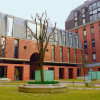
International Symposium on Quantum Fluids and Solids (QFS)
July 25 (Wed) - 31 (Tue) 2018
The International Symposium on Quantum Fluids and Solids (QFS) will be held at Ito International Research Center (IIRC) on Hongo campus of the University of Tokyo, Japan, from July 25 through 31, 2018. One of the sponsors of this conference is iTHEMS. The QFS series started forty-three years ago making it one of the oldest series of international conferences in the field of low temperature physics. It has historically been focusing on physics of liquid and solid helium and hydrogen. But in this century its scope is expanding widely from laser cooled cold atoms to topological matters. At QFS2018 in Tokyo, this trend will be continued and with even more interdisciplinary aspects emphasized between the traditional subjects and those in broader physical systems.
Venue: Ito International Research Center (IIRC), Hongo Campus, The University of Tokyo
Event Official Language: English
-
Colloquium
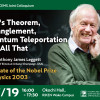
Bell's Theorem, Entanglement, Quantum Teleportation and All That
July 19 (Thu) 16:00 - 17:30, 2018
Anthony James Leggett (Professor, University of Illinois at Urbana-Champaign, USA)
iTHEMS-CEMS Joint Colloquium. Professor Leggett is widely recognized as a world leader in the theory of low-temperature physics, and his pioneering work on superfluidity was recognized by the 2003 Nobel Prize in Physics. Abstract: One of the most surprising aspects of quantum mechanics is that under certain circumstances it does not allow individual physical systems, even when isolated, to possess properties in their own right. This feature, first clearly appreciated by John Bell in 1964, has over the last half-century been tested experimentally and found (in most people's opinion) to be spectacularly confirmed. More recently it has been realized that it permits various operations which are classically impossible, such as "teleportation" and secure-in-principle cryptography. This talk is a very basic introduction to the subject, which requires only elementary quantum mechanics.
Venue: Okochi Hall
Broadcast:#311, Computational Science Research Building / SUURI-COOL (Kyoto) / 2F Seminar Room, AIMR Main Building
Event Official Language: English
-
Workshop
iCeMS-iTHEMS Joint Workshop on Interdisciplinary Biology
July 4 (Wed) 10:00 - 16:30, 2018
This is the first joint workshop between iCeMS (Kyoto Univ.) and iTHEMS (RIKEN). The WS is co-hosted by KUIAS (Kyoto Univ.), iTHEMS (RIKEN) and MACS Program (Kyoto Univ.). By exploring the forefront of experimental and mathematical biology, this workshop aims to stimulate novel research directions in these areas and strengthen the connection between Kyoto Univ. and RIKEN. Those who plan to attend the "get-together", please register before June 22 (Fri.) noon. Co-hosted by Kyoto University Institute for Advanced Study (KUIAS), Kyoto Univ. Interdisciplinary Theoretical and Mathematical Sciences (iTHEMS), RIKEN MACS Program (MACS), Kyoto Univ.
Venue: #201, Maskawa Building for Education and Research
Event Official Language: English
-
Colloquium
Systems Biology of Cellular Rhythms
July 2 (Mon) 15:00 - 16:30, 2018
Albert Goldbeter (Professor, Unit of Theoretical Chronobiology, Faculty of Sciences, Université Libre de Bruxelles, Belgium)
Rhythmic phenomena occur at all levels of biological organization, with periods ranging from milliseconds to years. Among biological rhythms, circadian clocks, of a period close to 24h, play a key role as they allow the adaptation of living organisms to the alternation of day and night. Biological rhythms represent a phenomenon of temporal self-organization in the form of sustained oscillations of the limit cycle type. Mathematical models show how the emergent property of oscillatory behavior arises from molecular interactions in cellular regulatory networks, which explains why cellular rhythms represent a major research topic in systems biology. After providing an introduction to biological rhythms and their modeling, I will focus on mathematical models for two major examples of rhythmic behavior at the cellular level : the circadian clock and the cell cycle. The coupling of these rhythms allows for their synchronization and for the occurrence of more complex patterns of oscillatory behavior. I will discuss the reasons why models for cellular rhythms tend to become more complex, upon incorporating new experimental observations. The case of cellular rhythms allows us to compare the merits of simple versus complex models for the dynamics of biological systems.
Venue: Suzuki Umetaro Hall
Broadcast:#305-2, Computational Science Research Building / SUURI-COOL (Kyoto) / 2F Seminar Room, AIMR Main Building
Event Official Language: English
-
Seminar

Relative and equivariant Lagrangian Floer homology and Atiyah-Floer conjecture
June 19 (Tue) 14:30 - 16:00, 2018
Kenji Fukaya (Senior Visiting Scientist, RIKEN Interdisciplinary Theoretical and Mathematical Sciences Program (iTHEMS) / Permanent Member, Simons Center for Geometry and Physics, Stony Brook University, New York, USA)
Atiyah-Floer conjecture concerns a relationship between Floer homology in Gauge theory and Lagrangian Floer homology. One of its difficulty is that the symplectic manifold on which we consider Lagrangian Floer homology is in general singular. In this talk I will explain that, by using relative and equivariant version of Lagrangian Floer homology, we can resolve this problem and can at least state the conjecture as rigorous mathematical conjecture. Supported by RIKEN iTHEMS and Tuesday Seminar on Topology (Graduate School of Mathematical Sciences, The University of Tokyo).
Venue: Room 056, Graduate School of Mathematical Sciences, The University of Tokyo
Event Official Language: Japanese