
Search Event
672 results
-
Seminar

Do the mechanisms of speciation vary with latitude? Empirical case study 1: evolution of the plant cycad genus Ceratozamia from Mexico
June 2 (Thu) 16:00 - 17:00, 2022
José Said Gutiérrez-Ortega (Special Postdoctoral Researcher, RIKEN Interdisciplinary Theoretical and Mathematical Sciences Program (iTHEMS))
“Species” form biodiversity, and “speciation” is the evolutionary process that originate them. Speciation can occur by stochastic processes —neutral theory— or through the influence of ecological factors —selection theory—. They are not competing theories, but rather explain different facets of speciation. But the mechanisms of speciation seem quite to depend on the group of study and its underlying spatial and temporal factors. Why do in some groups species are more prone to evolve via selection or stochastically than others? It does not exist a unified theory that can explain and predict events of speciation at the global level. However, I hypothesize that there is a latitude-association between two main mechanisms of speciation: 1) “allopatric speciation by means of niche conservatism” and 2) “ecological speciation by means of niche divergence”. The first is hypothetically more common at low latitudes, and the second is more common at high latitudes. In this context, I will use the recent results of my own empirical research on the plant cycad genus Ceratozamia from Mexico as an example to show how mechanisms of speciation seem to covariate with latitude. Hopefully, you can help me to formulate a theory that can explain where and under what factors speciation can occur.
Venue: via Zoom
Event Official Language: English
-
Seminar
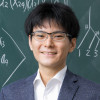
A mathematical formulation of two-dimensional conformal field theory
May 23 (Mon) 14:00 - 16:30, 2022
Yuto Moriwaki (Special Postdoctoral Researcher, RIKEN Interdisciplinary Theoretical and Mathematical Sciences Program (iTHEMS))
The mathematical construction of non-trivial quantum field theory in four dimensions, known as the "Yang-Mills existence and mass gap problem", is a very important issue in mathematical sciences. There are many examples of rigorous quantum field theories in two dimensions, although the four dimensions have not yet been solved. In particular, two-dimensional conformal field theory, which is a quantum field theory with conformal symmetry, has good properties and can be formulated mathematically using algebraic structures formed by "products of a field and a field" (operator product expansion). In this talk, this algebraic formulation (full vertex algebra) will be explained. Various construction methods and concrete examples (construction using codes, construction from quantum groups, and construction by deformation) will then be discussed. All the talk here is mathematical, but I will try to speak in a way that is motivated by physics as much as possible throughout the talk. I hope to receive various comments from the viewpoints of other fields.
Venue: Hybrid Format (Common Room 246-248 and Zoom)
Event Official Language: English
-
Seminar
The Hunt for Extraterrestrial Neutrino Counterparts
May 20 (Fri) 16:00 - 17:00, 2022
Yannis Liodakis (Postdoctoral Researcher, University of Turku, Finland)
The origin of high-energy neutrinos is fundamental to our understanding of the Universe. Apart from the technical challenges of operating detectors deep below ice, oceans, and lakes, the phenomenological challenges are even greater. The sources are unknown, unpredictable, and we lack clear signatures. Neutrino astronomy therefore represents the greatest challenge faced by the astronomy and physics communities thus far. The possible neutrino sources range from accretion disks and tidal disruption events, through relativistic jets to galaxy clusters with blazar TXS 0506+056 the most compelling association thus far. Since then, immense effort has been put into associating AGN-jets with high-energy neutrinos, but to no avail. I will discuss our current efforts in understanding the multimessenger processes in the Universe, and once and for all proving or disproving if AGN-jets are neutrino emitters.
Venue: via Zoom
Event Official Language: English
-
Seminar
More Data, More Problems: Big Data in Correlative Ecology
May 19 (Thu) 16:00 - 17:00, 2022
Dan Warren (Staff Scientist, Biodiversity and Biocomplexity Unit, Okinawa Institute of Science and Technology Graduate University (OIST))
The rapidly expanding pool of large data sets on species distributions, community composition, and environmental factors has been accompanied by an increasing number of methodological approaches to analyze this data. If done correctly, this represents an unprecedented opportunity for understanding ecological processes at large scales. However, it also represents an opportunity to be wrong about those same processes at a scale that was previously not possible. In this talk, I will use examples from ecology and other fields to discuss some of the issues that arise when we take big data approaches to ecological questions.
Venue: via Zoom
Event Official Language: English
-
Seminar

Khovanov homology theory - an introduction to categorification
May 13 (Fri) 14:00 - 16:30, 2022
Taketo Sano (Special Postdoctoral Researcher, RIKEN Interdisciplinary Theoretical and Mathematical Sciences Program (iTHEMS))
Jones polynomial is a knot invariant discovered by V. F. R. Jones in 1984. Not only that it is a useful mathematical tool, the discovery led to opening up a new research area, quantum topology, which connects quantum mechanics and low-dimensional topology. In 2000, M. Khovanov introduced a “categorification of the Jones polynomial”, which is now called Khovanov homology, and made categorification one of the fundamental concept in knot theory. Now what does categorification mean, and what is it good for? In this talk, assuming that many of the audience are not familiar with abstract category theory, I will start from easy examples of categories and categorifications, for example categorification of natural numbers, and explain why they are something natural to think of. In the latter part, I will briefly explain the construction of Khovanov homology, and introduce several related topics.
Venue: Hybrid Format (Common Room 246-248 and Zoom)
Event Official Language: English
-
Seminar
Classical and Quantum Chaos
May 12 (Thu) 16:00 - 17:00, 2022
Akira Shudo (Professor, Department of Physics, Graduate School of Science, Tokyo Metropolitan University)
Classical and quantum mechanics in multi-dimensions are qualitatively different from those in one-dimension since they are no more integrable in general and chaos appears in the dynamics. This brings a great deal of complexity or even richness both in classical and quantum dynamics. Especially in generic nonintegrable systems which are neither completely integrable nor fully chaotic, phase space becomes a mixture of regular and chaotic components. Such an aspect is a source of inexhaustible questions not only in the past but in the future. We here overview classical and quantum chaos in Hamiltonian systems.
Venue: via Zoom
Event Official Language: English
-
Seminar
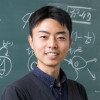
Diversity of Asgardarchaota and Theoretical verification of the endosymbiotic theory
April 28 (Thu) 10:00 - 11:00, 2022
Daiki Kumakura (Ph.D. Student, Graduate School of Life Science, Hokkaido University)
How did intracellular symbiosis occur and give rise to eukaryotic ancestor? This question has been considered to the two theories as three-domain theory and eocyte theory. Here I present asgard archaea, the archaeon closest to eukaryotes. Asgard archaea is an archaeon found at a deep-sea sampling site called Loki's castle at between Greenland and Norway. So all the closely related species are named after Norse mythology (Loki-, Thor-, Odin-, Heimdall-, etc.). Unlike other archaea, asgard archaea has many eukaryotic-specific proteins and is considered to be the closest to eukaryotes. In 2020, one of the asgard archaea species was finally successfully cultured. This archaeon was cultured and found to take on a branch-like structure. It is then hypothesized that intracellular symbiosis between this archaeon and the ancestor of mitochondria resulted in the ancestor of today's eukaryotic cells. In this talk, I would like to discuss with you the explanation of how we arrived at this hypothesis and how to construct a mathematical model.
Venue: via Zoom
Event Official Language: English
-
Special Lecture

iTHEMS x academist Online Event "World of Mathematical Sciences 2022"
April 24 (Sun) 10:00 - 16:30, 2022
Masaki Taniguchi (Special Postdoctoral Researcher, RIKEN Interdisciplinary Theoretical and Mathematical Sciences Program (iTHEMS))
Hidetoshi Taya (Special Postdoctoral Researcher, RIKEN Interdisciplinary Theoretical and Mathematical Sciences Program (iTHEMS))
Akira Harada (Special Postdoctoral Researcher, RIKEN Interdisciplinary Theoretical and Mathematical Sciences Program (iTHEMS))
Yingying Xu (Special Postdoctoral Researcher, RIKEN Interdisciplinary Theoretical and Mathematical Sciences Program (iTHEMS))
Euki Yazaki (Postdoctoral Researcher, RIKEN Interdisciplinary Theoretical and Mathematical Sciences Program (iTHEMS))Venue: via Zoom
Event Official Language: Japanese
-
Seminar
Recurrence theorems for topological Markov chains
April 22 (Fri) 17:00 - 19:00, 2022
Cédric Ho Thanh (Postdoctoral Researcher, Prediction Science Laboratory, RIKEN Cluster for Pioneering Research (CPR))
Recurrence theorems place conditions under which probabilistic systems, specifically Markov chains, are expected to visit certain states infinitely often. For example, a printer with its many moving parts and the random requests it receives, may be described as a probabilistic system, and recurrence of the "ready to print" state is desirable. Recurrence theorems in the case of finite Markov chains are widely known. In this talk, we are interested in generalization to the infinitary setting. As it turns out, some care has to be put in the definition of infinite Markov chains. Rather than simply infinite, the introduct topological Markov chains, and show how standard constructions can be naturally extended to thisframework: path spaces, cylinder sets, as well as the semantic of LTL and PCTL. With all these tools in hand, we finally state our recurrence theorems. This is work in progress in collaboration with Natsuki Urabe and Ichiro Hasuo. This seminar is hold in a hybrid style. If you want attend the seminar onsite, please contact to Keita Mikami.
Venue: Hybrid Format (Common Room 246-248 and Zoom) (Main Venue)
Event Official Language: English
-
Colloquium
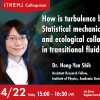
How is turbulence born: Statistical mechanics and ecological collapse in transitional fluids
April 22 (Fri) 15:00 - 16:30, 2022
Hong-Yan Shih (Assistant Research Fellow, Institute of Physics, Academia Sinica, Taiwan)
The onset of turbulence is ubiquitous in daily life and is important in various industrial applications, yet how fluids become turbulent has remained unsolved for more than a century. Recent experiments in pipe flow finally quantified this transition, showing that non-trivial statistics and spatiotemporal complexity develop as the flow velocity is increased. Combining numerical simulations of the hydrodynamics equations and an effective theory from statistical mechanics, we discovered the surprising fact that fluid behavior at the transition is governed by the emergent predator-prey dynamics, leading to the mathematical prediction that the laminar-turbulent transition is analogous to an ecosystem on the edge of extinction. This prediction demonstrates that the laminar-turbulent transition is a non-equilibrium phase transition in the directed percolation universality class, and provides a unified picture of transition to turbulence in various systems. I will also show our recent progresses on transitional turbulence, including how an extended ecological model with energy balance successfully recapitulates the spatiotemporal patterns beyond the critical point, and the determination of the critical behavior and an emergent novel phase under interactions in the experimental collaboration.
Venue: via Zoom
Event Official Language: English
-
Seminar
Coherent emission from 3D relativistic shocks
April 22 (Fri) 14:00 - 15:00, 2022
Masanori Iwamoto (Kyushu University)
The origin of fast radio bursts (FRBs; Lorimer et al. 2007) is one of the unsolved problems in astrophysics. Many observations of FRBs indicate that FRBs must be coherent emission in the sense that coherently moving electrons radiate electromagnetic waves. In relativistic shocks, it is well known that coherent electromagnetic waves are excited by synchrotron maser instability (SMI) in the shock transition (Hoshino & Arons 1991). The SMI is also known as the emission mechanism of coherent radio sources such as auroral kilometric radiation at Earth and Jovian decametric radiation. Recently, some models of fast radio burst based on the coherent emission from relativistic shock via the SMI have been proposed (e.g., Lyubarsky 2014; Beloborodov 2017; Plotnikov & Sironi 2019; Metzger et al. 2019) and the SMI in the context of relativistic shocks attracts more attention from astrophysics. In this study, by performing the world’s first three-dimensional (3D) particle-in-cell (PIC) simulation of relativistic shocks, we will demonstrate that large-amplitude electromagnetic waves are indeed excited by the SMI even in 3D and that the wave amplitude is significantly amplified and comparable to that in pair plasmas due to a positive feedback process associated with ion-electron coupling. Based on the simulation results, we will discuss the applicability of the SMI for FRBs in this talk.
Venue: via Zoom
Event Official Language: English
-
Seminar
Neurons are potential statisticians
April 21 (Thu) 10:00 - 11:00, 2022
Takuya Isomura (Unit Leader, Brain Intelligence Theory Unit, RIKEN Center for Brain Science (CBS))
Humans and animals can predict what will happen in the future and act appropriately by inferring how the sensory inputs were generated from underlying hidden causes. The free-energy principle is a theory of the brain that can explain how these processes occur in a unified way. However, how the fundamental units of the brain, such as the neurons and synapses, implement this principle has yet to be fully established. Here, we have mathematically shown that neural networks that minimise a cost function implicitly follow the free-energy principle and actively perform statistical inference. We have reconstructed a biologically plausible cost function for neural networks based on the equation of neural activity and shown that the reconstructed cost function is identical to variational free energy, which is the cost function of the free-energy principle. This equivalence speaks to the free-energy principle as a universal characterisation of neural networks, implying that even at the level of the neurons and synapses, the neural networks can autonomously infer the underlying causes from the observed data, just as a statistician would. The proposed theory will advance our understanding of the neuronal basis of the free-energy principle, leading to future applications in the early diagnosis and treatment of psychiatric disorders, and in the development of brain-inspired artificial intelligence that can learn like humans.
Venue: via Zoom
Event Official Language: English
-
Seminar

Journal Club: Phase separation in a many-component system with random interactions
March 31 (Thu) 10:00 - 11:00, 2022
Kyosuke Adachi (Special Postdoctoral Researcher, Nonequilibrium Physics of Living Matter RIKEN Hakubi Research Team, RIKEN Center for Biosystems Dynamics Research (BDR))
Several kinds of protein condensates have been observed in living cells, and the liquid-liquid phase separation is regarded as a basic mechanism of the condensate formation. However, given that there are thousands of protein species in a cell, it is not clear how the number and the composition of distinct condensates are controlled. One of the physics approaches to this problem is considering a model of many components with random interactions. In this Journal Club, I will introduce a recent paper [1] that applies random-matrix theory to the phase separation dynamics.
Venue: via Zoom
Event Official Language: English
-
Seminar
Explore the possibility to control hurricanes
March 18 (Fri) 16:00 - 18:00, 2022
Lin Li (Postdoctoral Researcher, Prediction Science Laboratory, RIKEN Cluster for Pioneering Research (CPR))
Hurricanes, also known as tropical cyclones and typhoons, are the biggest and the most devastating storms on Earth. In this seminar, I will talk about the possibility to control hurricanes with existing human capability. Energetically speaking, controlling hurricanes is a very challenging task due to a large gap: hurricanes are gigantic heat engines with a power of around 1014 Watt, while the most powerful manmade engines have the power of only 108 Watt. This six-order-magnitude gap is the major obstacle toward using existing engines to control hurricanes. To fill in this gap, we propose to utilize the chaotic nature of hurricanes, namely, the sensitivity of a chaotic system to its initial condition, to control hurricanes. In this presentation, I will first review the basics of hurricanes and existing chaos control methods, and then present my thoughts on hurricane control and preliminary results I acquired since joining Prediction Science Laboratory. Future directions on using reinforcement learning to control hurricanes will also be discussed. Since it is a very challenging task, I welcome any discussions, questions, and comments. I hope we can make the hurricane-risk-free future come earlier.
Venue: via Zoom
Event Official Language: English
-
Seminar

Phylogenomics revealed one of the problems for phylogeny –The monophyly of Archaeplastida including land plant-
March 17 (Thu) 10:00 - 11:00, 2022
Euki Yazaki (Postdoctoral Researcher, RIKEN Interdisciplinary Theoretical and Mathematical Sciences Program (iTHEMS))
There are many problems between large eukaryotic lineages. One of these is the monophyly of Archaeplastida to which land plants and other photosynthetic organisms belong. Although it has been believed that the Archaeplastida are monophyletic because they share common chloroplast structures, several large-scale molecular phylogenetic analyses have failed to reproduce this phylogenetic relationship. In this study, by enhancing the taxon sampling of the data set, the monophyly of Archaeplastida was successfully reconstructed, showing that the taxa critical for the reconstruction are present. Through detailed molecular phylogenetic and statistical analyses, it was estimated that the lack of monophyly ofArchaeplastida is due to the specific evolutionary signals of certain taxa.
Venue: via Zoom
Event Official Language: English
-
Special Lecture

[Shigefumi Mori and Takashi Sakajo Special Talk] How is mathematics utilized in society? - Exploring the Essence of Mathematical Research
March 12 (Sat) 13:00 - 14:30, 2022
Tetsuo Hatsuda (Program Director, RIKEN Interdisciplinary Theoretical and Mathematical Sciences Program (iTHEMS))
Takashi Sakajo (Professor, Division of Mathematics and Mathematical Sciences, Graduate School of Science, Kyoto University)
Shigefumi Mori (Director-General, Kyoto University Institute for Advanced Study (KUIAS))Venue: via Zoom
Event Official Language: Japanese
-
Seminar
Extracting rules from trained machine learning models with applications in Bioinformatics
March 11 (Fri) 16:00 - 18:00, 2022
Pengyu Liu (Postdoctoral Researcher, Medical Data Mathematical Reasoning Team, RIKEN Information R&D and Strategy Headquarters (R-IH))
Recently, Machine learning methods have achieved great success in various areas. However, some machine learning-based models are not explainable (e.g., Artificial Neural Networks), which may affect the massive applications in medical fields. In this talk, we first introduce two approaches that extract rules from trained neural networks. The first one leads to an algorithm that extracts rules in the form of Boolean functions. The second one extracts probabilistic rules representing relations between inputs and the output. We demonstrate the effectiveness of these two approaches by computational experiments. Then we consider applying an explainable machine learning model to predict human Dicer cleavage sites. Human Dicer is an enzyme that cleaves pre-miRNAs into miRNAs. We develop an accurate and explainable predictor for the human Dicer cleavage site -- ReCGBM. Computational experiments show that ReCGBM achieves the best performance compared with several existing methods. Further, we find that features close to the center of pre-miRNA are more important for the prediction.
Venue: via Zoom
Event Official Language: English
-
Seminar
Toward modeling complete supernova neutrino emissions
March 11 (Fri) 16:00 - 17:00, 2022
Yudai Suwa (Associate Professor, Department of Earth Science and Astronomy, Graduate School of Arts and Sciences, The University of Tokyo / Affiliate Associate Professor, Yukawa Institute for Theoretical Physics, Kyoto University)
Neutrinos are guaranteed observable from the next Galactic supernova (SN). Optical lights and gravitational waves are also observable but can be difficult to observe if SN location in the galaxy and the explosion details are unsuitable. The key to the next coming SN observation will be understanding various physical quantities using neutrinos first and then connecting them to other signals. In particular, understanding neutrinos in the late time (> 1 sec after the onset of explosion) is essential, since physics in this time scale has much smaller uncertainties than that of the early time. We should construct a simple and understandable neutrino model based on the late-time emissions. It allows us to tackle the physics in the early phase like the explosion mechanism. In this talk, I will discuss the following topics: 1) how to model the complete neutrino emissions from the very early phase up to the last observable event. 2) what physical quantities (e.g., mass and radius of neutron stars) can be extracted from observations using large statistical neutrinos as physics probes. 3) how to use these extracted physical quantities to link with the explosion mechanism of SN and multi-messenger observations.
Venue: via Zoom
Event Official Language: English
-
Seminar
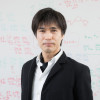
Independent regulation of multiple checkpoints in cell-cycle network system -Biological function originated in the law of localization-
March 10 (Thu) 10:00 - 11:00, 2022
Atsushi Mochizuki (Professor, Institute for Frontier Life and Medical Sciences, Kyoto University)
In cell cycle, G1-S and G2-M checkpoints are regulated by different protein complexes, Cdc2-Cdc13 and Cdc2-Cig2, respectively. For a normal mitosis, activity of two complexes should rise specifically at different timing. However, the complex formations share common species of proteins and activation reactions conform a complicated network. We study how independent regulation of two checkpoints is realized in the network system by “structural sensitivity analysis”, which was previously established by us. The analyses clarified that activities of two complexes are regulated by disjoint sets of reaction parameters in the system. A series of non-trivial behaviors are generated by “buffering structures with an intersection”, which can generally appear in chemical reaction network including complex formation.
Venue: via Zoom
Event Official Language: English