
Search Event
669 results
-
Seminar
Algebra of symmetry in BF-like models in 3d and 4d
February 22 (Wed) 14:00 - 15:30, 2023
Christophe Goeller (Humboldt Fellow, Ludwig-Maximilians-Universität München, Germany)
In this talk, I will discuss the construction of the boundary symmetry algebra for BF-like theories in 3D and 4D. In the 3D case, the theory corresponds to (an extension of) 3D gravity allowing for a source of curvature and torsion. I will show how the study of the current algebra and its associated Sugawara construction allows for two notions of quadratic charges (the usual diffeomorphism and its "dual") independently of boundary conditions. I will discuss their resulting algebra and its relation with the usual construction of the asymptotic boundary algebra. In the 4D case, a similar yet fundamentally different construction is possible, similarly resulting in multiple quadratic charges. I will discuss their constructions and their possible relations to 4D gravity.
Venue: Hybrid Format (Common Room 246-248 and Zoom)
Event Official Language: English
-
Seminar
Coherent sheaves, quivers, and quantum groups
February 17 (Fri) 14:00 - 16:00, 2023
Gufang Zhao (Senior Lecturer, University of Melbourne, Australia)
This talk aims to illustrate symmetries in geometry. The first half surveys a few examples of parametrizing coherent sheaves on a variety and how quantum groups control the symmetry of parametrization space. The second half aims to illustrate some special cases when the variety is a local toric 3-Calabi-Yau.
Venue: Hybrid Format (Common Room 246-248 and Zoom)
Event Official Language: English
-
Seminar
Quantum groups and cohomology theories
February 15 (Wed) 14:00 - 16:00, 2023
Yaping Yang (Senior Lecturer, University of Melbourne, Australia)
In the first half of my talk, I will review quantum groups at roots of unity and their representation theory. In the second half, I will explain a construction of new quantum groups using cohomology theories from topology. The construction uses the so-called cohomological Hall algebra associated to a quiver and an oriented cohomology theory. In examples, we obtain the Yangian, quantum loop algebra and elliptic quantum group, when the cohomology theories are the cohomology, K-theory, and elliptic cohomology respectively.
Venue: Hybrid Format (Common Room 246-248 and Zoom)
Event Official Language: English
-
Workshop
Kyoto Univ. MACS Program x RIKEN iTHEMS Collaborative Research Forum
February 13 (Mon) 13:00 - 18:00, 2023
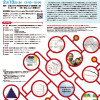
RIKEN iTHEMS and the SACRA Interdisciplinary Research Division of the Graduate School of Science, Kyoto University signed a joint research agreement on the task "Creation of new fields and solution of various problems in science using mathematical-based interdisciplinary methods", which started in 2018, and the two institutions have been strengthening collaboration over the past five years. During this period, various collaborative activities in both research and education have been carried out and results have been achieved, including the holding of research symposia, joint lectures across universities, the establishment of visiting lectures, and educational activities in the MACS Study Group. At this forum, we would like to present the results of these five years of joint research and to link them to the start of further collaboration in the future. In particular, many undergraduate and graduate students have participated in the "MACS Study Group 2022-SG5 Pipeline Connecting RIKEN and MACS", and have been actively engaged in research activities with RIKEN researchers. The results of these SG5 activities will be presented by the students.
Venue: 4F, South Tower, School of Science Bldg. No.6, Kyoto University (Main Venue) / via Zoom
Event Official Language: Japanese
-
Seminar
Universal Biology in Adaptation and Evolution: Dimensional Reduction and Fluctuation-Response Relationship
February 2 (Thu) 16:00 - 17:00, 2023
Kunihiko Kaneko (Professor, Niels Bohr Institute, University of Copenhagen, Denmark)
A macroscopic theory for adaptive changes of cells is presented, based on consistency between cellular growth and molecular replication, as well as robustness of fitted phenotypes against perturbations. Adaptive changes in high-dimensional phenotypes are shown to be restricted within a low-dimensional slow manifold, from which a macroscopic law for cellular states is derived, as is confirmed by adaptation experiments of bacteria under stress. The theory is extended to phenotypic evolution, leading to proportionality between phenotypic responses against genetic evolution and by environmental adaptation, which also explains the evolutionary fluctuation-response relationship previously uncovered. Relevance of statistical-physics and dynamical-systems approach is discussed.
Venue: via Zoom
Event Official Language: English
-
Colloquium
Scaling Optimal Transport for High dimensional Learning
January 24 (Tue) 17:00 - 18:30, 2023
Gabriel Peyré (Research Director, CNRS/École Normale Supérieure, France)
iTHEMS-AIP Joint Colloquium Optimal transport (OT) has recently gained a lot of interest in machine learning. It is a natural tool to compare in a geometrically faithful way probability distributions. It finds applications in both supervised learning (using geometric loss functions) and unsupervised learning (to perform generative model fitting). OT is however plagued by the curse of dimensionality, since it might require a number of samples which grows exponentially with the dimension. In this talk, I will explain how to leverage entropic regularization methods to define computationally efficient loss functions, approximating OT with a better sample complexity. More information and references can be found on the website of our book "Computational Optimal Transport" (see related link below).
Venue: via Zoom
Event Official Language: English
-
Seminar
Math and Physics of Seiberg-Witten theory
January 20 (Fri) 16:00 - 18:10, 2023
Nobuo Iida (JSPS Research Fellow PD, School of Science, Tokyo Institute of Technology)
Math and physics have developed through interactions with each other. For example, classical mechanics and calculous were born together. Einstein's theory of gravitation is written in the language of pseudo-Riemann geometry. Since the late 20th century, physicists centering on Edward Witten have revolutionized modern geometry. Seiberg-Witten theory is one of such breakthroughs, for both mathematicians and physicists. In physics it is regarded as a theory describing strong coupling (i.e. low energy) behavior of some supersymmetric gauge theories. It showes confinement (by a mechanism similar to superconductivity) and electric magnetic duality. Even though this story has not been mathematically justified yet, it is regarded as an important trigger of developments in understanding non perturbative aspects of quantum field theory and string theory, and stimulates broad fields of physics and math. In math, Seiberg-Witten theory is regarded as a fundamental tool to study 3 and 4-dimensional geometry. This is based on a PDE called Seiberg-Witten equation, which originates from the "electric magnetic dual description" of monopoles, but people can use it as a tool to study geometry without knowing such a physical origin. In this talk, developments of Seiberg-Witten theory from both viewpoints will be reviewed and if the time permits, works in math by the speaker and collaborators will be discussed. The speaker thinks it is unusual for a mathematician to talk about something that has not been mathematically justified yet, but hopes this talk will lead to new interactions between math and physics.
Venue: Hybrid Format (Common Room 246-248 and Zoom)
Event Official Language: English
-
Seminar
Mathematical models inspired by the Lenski experiment
January 19 (Thu) 10:00 - 11:00, 2023
Adrian Gonzalez-Casanova (Neyman Visiting Assistant Professor, University of California, Berkeley, USA / Associate Professor, National Autonomous University of Mexico, Mexico)
We will discuss the basic models of mathematical population genetics and see how to apply them to the study of the Lenski experiment. Furthermore, we will describe novel models that are capable of providing a parsimonious explanation of the deceleration of the relative fitness and can be used to attack questions such as, is it advantageous to be efficient? If time permits, we will also discuss examples of mathematical modelling beyond the Lenski experiment, including the study of populations of bacteria carrying plasmids.
Venue: via Zoom
Event Official Language: English
-
Seminar
Tetra-neutron system studied by RI-beam experiments
January 17 (Tue) 13:30 - 15:00, 2023
Susumu Shimoura (Research Scientist, Spin isospin Laboratory, RIKEN Cluster for Pioneering Research (CPR))
Multi-neutron systems have attracted a long-standing attention in nuclear physics. In several decades, experimental attempts have been made with a particular focus on the tetra-neutron system. Among them, the two different experiments, the double-charge exchange reaction on 4He and the alpha-particle knockout reaction from the 8He, show a sharp peak just above the threshold in the four-neutron spectra, which could be a signature of a "resonant state", separate from a broad bump structure at higher excitation energy regions. Both the experiments have been realized by using the 8He beam above 150 A MeV at the RIKEN RI Beam Factory. Details of the two experiments including basic idea, experimental techniques, and analysis are presented as well as a historical review of previous experimental attempts. Emphasis is made for the experimental conditions for populating a kinematically isolated tetra-neutron system with very small momentum transfer. The spectral shape is discussed by means of reaction processes and correlations in the final tetra-neutron system with several recent theoretical studies.
Venue: Common Room #246-248 (Main Venue) / via Zoom
Event Official Language: English
-
Seminar
Basic of microbial ecology and applicability of your life and research
January 12 (Thu) 16:00 - 17:00, 2023
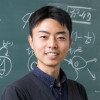
Daiki Kumakura (Ph.D. Student, Graduate School of Life Science, Hokkaido University)
Microbial ecology is a fascinating field that examines the various environments in which microbes can thrive and their potential applications to human life. In this seminar, I will delve into four main topics:
Venue: via Zoom
Event Official Language: English
-
Seminar
Searching for high-freqeuncy gravitational waves with axion detectors
January 12 (Thu) 14:00 - 15:30, 2023
Valerie Domcke (Senior Faculty, Department of Theoretical Physics, CERN, Switzerland)
Current gravitational wave (GW) experiments cover a large frequency range from nHz to kHz. Beyond that, the regime of high frequency GWs is both extremely challenging challenging, and highly motivated as a unique window to the very early Universe. In this talk I will discuss a proposal for a new type of electromagnetic GW detector which makes use of the observation that GWs generate oscillating electromagnetic effects in the vicinity of external electric and magnetic fields. This is in close analogy to the interaction of the axion with electromagnetic fields. I will discuss how existing bounds from axion searches can be recast for GWs, as well as implications for future axion searches such as the DMRadio program.
Venue: Hybrid Format (Common Room 246-248 and Zoom)
Event Official Language: English
-
Conference

Can social issues be solved by mathematical science!? - Connecting Corporate Issues and Mathematical Sciences -
January 7 (Sat) 13:00 - 17:00, 2023
Continuing from last year, we will hold a symposium to explore the possibility of solving social issues through mathematical research. Last year, under the theme of "Social Implementation of Mathematical Research!? - Attempts and Challenges -", we held talks by mathematical scientists working on mathematical problems extracted from corporate issues, and saw that efforts to address issues of interest at the individual researcher level are becoming more active. This year, under the broader theme of "Connecting" mathematical scientists and companies, we will introduce not only researchers who are strongly promoting joint research with companies, but also activities of companies who are collaborating with mathematical scientists from the standpoint of companies. We would like to organize a panel session to share with the participants not only the results of their activities but also the difficulties of the collaboration and the exchange of opinions on how to solve the problems. We are sincerely looking forward to the active participation of corporate researchers and mathematical scientists who are interested in such activities.
Venue: Hybrid Format (Noyori Conference Hall, Nagoya University and Zoom)
Event Official Language: Japanese
-
Seminar
A cell membrane model that reproduces cortical flow-driven cell migration and collective movement
January 5 (Thu) 16:00 - 17:00, 2023
Katsuhiko Sato (Associate Professor, Research Institute for Electronic Science, Hokkaido University)
Cellular migration is a key component of numerous biological processes, including the morphogenesis of multicellular organisms, wound healing, and cancer metastasis, where cells adhere to each other to form a cluster and collectively migrate. Although the mechanisms controlling single-cell migration are relatively well understood, those underlying multiple-cell migration still remain unclear. A key reason for this knowledge gap is the so-called many-body problem. That is, many forces—including contraction forces from actomyosin networks, hydrostatic pressure from the cytosol, frictional forces from the substrate, and forces from adjacent cells—contribute to cell cluster movement, making it challenging to model, and ultimately elucidate, the final result of these forces. In this talk, I provide a two-dimensional cell membrane model that represents cells on a substrate with polygons and expresses various mechanical forces on the cell surface, keeping these forces balanced at all times by neglecting cell inertia. The model is discrete but equivalent to a continuous model if appropriate replacement rules for cell surface segments are chosen. When cells are given a polarity, expressed by a direction-dependent surface tension reflecting the location dependence of contraction and adhesion on a cell boundary, the cell surface begins to flow from front to rear as a result of force balance. This flow produces unidirectional cell movement, not only for a single cell but also for multiple cells in a cluster, with migration speeds that coincide with analytical results from a continuous model. Further, if the direction of cell polarity is tilted with respect to the cluster center, surface flow induces cell cluster rotation. The reason why this model moves while keeping force balance on cell surface (i.e., under no net forces from outside) is because of the implicit inflow and outflow of cell surface components through the inside of the cell. I provide an analytical formula connecting cell migration speed and turnover rate of cell surface components.
Venue: via Zoom
Event Official Language: English
-
Seminar
How to infer evolutionary history
December 22 (Thu) 16:00 - 17:00, 2022
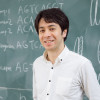
Jeffrey Fawcett (Senior Research Scientist, RIKEN Interdisciplinary Theoretical and Mathematical Sciences Program (iTHEMS))
One main goal of evolutionary studies is to infer the evolutionary that explains the current diversity. We want to infer the ancestral state and what kind of changes occurred from the previous ancestral state to the current state. In other words, we want to infer the phylogenetic relationship that explains the branching pattern that leads to the current diversity and infer the state at each node and the changes that occurred in each branch of the phylogeny. In this talk, I will introduce some basic concepts that are used in evolutionary biology to tackle these questions, especially how molecular data, i.e., DNA and protein sequence data, can be utilized. This talk will be introductory and aimed at non-experts including non-biologists.
Venue: via Zoom
Event Official Language: English
-
Seminar
Modelling Optical Signals from Magnetar-Driven Supernovae
December 20 (Tue) 14:00 - 15:00, 2022
Conor Omand (Postdoctoral Researcher, Department of Astronomy, Stockholm University, Sweden)
Many energetic supernovae are thought to be powered by the rotational energy of a highly-magnetized, rapidly-rotating neutron star. The emission from the associated luminous pulsar wind nebula (PWN) can affect the system in different ways, including accelerating the ejecta, ionizing the ejecta, and breaking the spherical symmetry through hydrodynamic instabilities or large scale asymmetries. Modeling the observables from these processes; the light curves, spectrum, and polarization; is essential from understanding the nature of the central engine. I will present the results of a radiative transfer study looking at the effects of a PWN on the supernova nebular spectrum, and the preliminary results from a more physically motivated light curve model for parameter inference, and a study examining the polarization that arises due to hydrodynamic instabilities in the ejecta of engine-driven supernovae.
Venue: Common Room #246-248 / via Zoom
Event Official Language: English
-
Seminar
CM minimization and special K-stability
December 16 (Fri) 14:00 - 16:30, 2022
Masafumi Hattori (Ph.D. Student, Department of Mathematics, Graduate School of Science, Kyoto University)
Odaka proposed a conjecture predicting that the degrees of CM line bundles for families with fixed general fibers are strictly minimized if the special fibers are K-stable. This conjecture is called CM minimization and a quantitative strengthening of the conjecture of separatedness of moduli spaces of K-stable varieties (K-moduli). This conjecture was already shown for K-ample (Wang-Xu), Calabi-Yau (Odaka) and Fano varieties (Blum-Xu). In this talk, we introduce a new class, special K-stable varieties, and settle CM minimization for them, which is a generalization of the above results. In addition, we would like to explain an important application of this, construction of moduli spaces of uniformly adiabatically K-stable klt trivial fibrations over curves as a separated Deligne-Mumford stack in a joint work with Kenta Hashizume to appear. This is based on arXiv:2211.03108.
Venue: via Zoom
Event Official Language: English
-
Seminar
Chemophoresis Engine: Theory of ATPase-driven Cargo Transport
December 15 (Thu) 16:00 - 17:00, 2022
Takeshi Sugawara (Project Researcher, Universal Biology Institute, The University of Tokyo)
The formation of macromolecule patterns depending on chemical concentration under non-equilibrium conditions, first observed during morphogenesis, has recently been observed at the intracellular level, and its relevance as intracellular morphogen has been demonstrated in the case of bacterial cell division. These studies have discussed how cargos maintain positional information provided by chemical gradients. However, how cargo transports are directly mediated by chemical gradients remains unknown. Based on the previously proposed mechanism of chemotaxis-like behavior of cargos (referred to as chemophoresis), we introduce the chemophoresis engine as a physicochemical mechanism of cargo motion, which transforms chemical free energy to directed motion through the catalytic ATP hydrolysis [1]. We propose its possible role as a universal principle of hydrolysis-driven intracellular transport.
Venue: via Zoom
Event Official Language: English
-
Colloquium
The Epidemiology and Economics of Physical Distancing during Infectious Disease Outbreaks
December 14 (Wed) 11:00 - 12:30, 2022
Troy Day (Professor, Head of Department, Department of Mathematics and Statistics, Queen's University, Canada)
People's incentives during an infectious disease outbreak influence their behaviour, and this behaviour can impact how the outbreak unfolds. Early on during an outbreak, people are at little personal risk of infection and hence may be unwilling to change their lifestyle to slow the spread of disease. As the number of cases grows, however, people may then voluntarily take extreme measures to limit their exposure. Political leaders also respond to the welfare and changing desires of their constituents, through public health policies that themselves shape the course of the epidemic and its ultimate health and economic repercussions. In this talk I will use ideas from the study of differential games to model how individuals’ and politicians’ incentives change during an outbreak, and the epidemiological and economic consequences that ensue when these incentives are acted upon. Motivated by the COVID-19 pandemic, I focus on physical distancing behaviour and the imposition of stay-at-home orders by politicians. I show that there is a fundamental difference in the political, economic, and health consequences of an infectious disease outbreak depending on the degree of asymptomatic transmission. If transmission occurs primarily by asymptomatic carriers, then politicians will be incentivized to impose stay-at-home orders earlier and for longer than individuals would like. Despite such orders being unpopular, however, they ultimately benefit all individuals. On the other hand, if the disease is transmitted primarily by symptomatic infections, then individuals are incentivized to stay at home earlier and for longer than politicians would like. In this case, politicians will be incentivized to impose back-to-work orders that, despite being unpopular, will again ultimately be to the benefit of all individuals. This is joint work with David McAdams, Fuqua School of Business and Economics Department, Duke University.
Venue: via Zoom
Event Official Language: English
-
Seminar
Chiral effects on lepton transport in core-collapse supernovae
December 13 (Tue) 13:30 - 15:00, 2022
Di-Lun Yang (Assistant Research Fellow, Institute of Physics, Academia Sinica, Taiwan)
Dynamics of leptons such as electrons and neutrinos play an important role in the evolution of core-collapse supernovae (CCSN). Nevertheless, chirality as one of fundamental microscopic properties that could affect lepton transport, through e.g. weak interaction, has been mostly overlooked. In this talk, I will discuss how chiral effects such as the renowned chiral magnetic effect (CME), generating an electric charge current along magnetic fields with chirality imbalance, could result in the unstable modes of magnetic fields and inverse cascade, which potentially influence the matter evolution in CCSN and pulsar kicks. I will also show how an effective CME could be realized via the backreaction from neutrino radiation even in the absence of an axial charge characterizing an unequal number of right- and left-handed electrons.
Venue: Hybrid Format (Common Room 246-248 and Zoom)
Event Official Language: English
-
Seminar
Quantum kinetics of neutrinos in high-energy astrophysical phenomena
December 9 (Fri) 14:00 - 15:00, 2022
Hiroki Nagakura (Specially Appointed Assistant Professor (NAOJ Fellow), Division of Science, NAOJ)
Neutrinos are the most mysterious and elusive particles in the standard model of particle physics. They play important roles in core-collapse supernovae and binary neutron star mergers as driving mass-ejection, synthesizing heavy elements including r-process nuclei, and neutrino signals from these sources. This exhibits the importance of accurate modeling of neutrino radiation field in these phenomena, which will be used to connect neutrino physics to multi-messenger astronomy. It has recently been suggested that neutrino-flavor conversion (or neutrino-oscillation) can ubiquitously occur in these astrophysical environments, exhibiting the requirement of quantum kinetic treatments in the modeling of neutrino transport. In this seminar, I will give an overview of the quantum kinetics neutrino transport and then introduce its recent progress, paying a special attention to the connection to astrophysics. I will also present the latest results of our numerical simulations of collective neutrino oscillations, which can be properly accounted for only by quantum kinetic framework.
Venue: via Zoom
Event Official Language: English