
Search Event
669 results
-
Seminar
Conditions for maintaining pseudo-overdominance
May 11 (Thu) 16:00 - 17:00, 2023
Diala Abu Awad (Associate Professor, Génétique Quantitative et Évolution - Le Moulon, Université Paris-Saclay, France)
Deleterious recessive mutations should purge or fix within inbred populations, yet inbred populations often retain moderate to high segregating load. However, arrays of deleterious recessives linked in repulsion could generate appreciable pseudo-overdominance, mimicking overdominant selection that would sustain segregating load. We use analytical approches and simulations to explore whether and for how long pseudo-overdominant (POD) zones can persist once created (e.g., by hybridization between populations fixed for alternative mildly deleterious mutations). Balanced haplotype loads, tight linkage, and moderate to strong cumulative selective effects all serve to maintain POD zones. Tight linkage is key, suggesting that such regions are most likely to arise and persist in low recombination regions (like inversions). Selection and drift unbalance the load, eventually eliminating POD zones, but this process is quite slow, and could influence short term evolution of populations.
Venue: via Zoom
Event Official Language: English
-
Seminar
Generalized AKS scheme of integrability via vertex algebra
May 9 (Tue) 16:15 - 17:15, 2023
Wenda Fang (Ph.D. Student, Research Institute for Mathematical Sciences (RIMS), Kyoto University)
In this talk, we define and study the classical R-matrix for vertex Lie algebra, based on which we propose to construct a new vertex Lie algebra. As an application, using the classical R-matrix we defined, we give a new scheme to construct infinite-dimensional (Liouville) integrable systems via the Feigin-Frenkel center. This seminar is on-site only.
Venue: Seminar Room #359
Event Official Language: English
-
Seminar
On the Beem-Nair conjecture
May 9 (Tue) 15:00 - 16:00, 2023
Syun Furihata (Ph.D. Student, Research Institute for Mathematical Sciences (RIMS), Kyoto University)
Given a simple Lie group G, we have an open immersion (constructed by Beem and Nair) from the Kostant-Toda lattice associated to G into the universal centralizer of G. They expected that a free field realization of the chiral universal centralizer of G at the critical level will be obtained by the chiralization of this immersion. In this talk, we will verify this conjecture is true by constructing an embedding from the chiral universal centralizer into an appropriate vertex operator algebra at any level. This seminar is on-site only.
Venue: Seminar Room #359
Event Official Language: English
-
Seminar
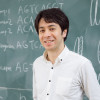
Introduction to Genomics
April 27 (Thu) 16:00 - 17:00, 2023
Jeffrey Fawcett (Senior Research Scientist, RIKEN Interdisciplinary Theoretical and Mathematical Sciences Program (iTHEMS))
A 'genome' is a single set of genetic information of a given individual, which is encoded by the nucleotide sequence of the DNA. For instance, the human genome consists of around 3 billion nucleotide base pairs, although the size and content of the genome differs greatly across species and individuals. Some species such as the budding yeast has a genome as small as 12 million base pairs, whereas other species such as Paris japonica, a flowering plant native to the sub-alpine regions of Japan, is said to have a genome as large as 150 billion base pairs. In this talk, I will give a introduction of what kind of information is contained within a genome, and how that differs across species and individuals. This talk will be introductory and aimed at non-experts including non-biologists.
Venue: via Zoom
Event Official Language: English
-
Workshop
Spring Workshop on Quantum Gravity
April 26 (Wed) - 28 (Fri) 2023
This is co-hosted by iTHEMS and NCTS, and is also the first of Quantum Gravity Gatherings. What is space-time? How did the universe begin? Various approaches exist toward theories of quantum gravity that can answer such fundamental questions. Each approach has its own strengths and weaknesses and should capture, at least partially, some essential aspect of quantum gravity. Then, what are the general properties (if any) of the quantum nature of gravity independent of the details of such approaches? As the main speaker, we have asked Hikaru Kawai to give an intensive talk approaching this question from both general and specific arguments in a style consistent with the concept of Quantum Gravity Gatherings. We hope that the younger generation will experience his powerful arguments based on his experience and deep insights. This workshop is intended to be a lively and participatory event, not just a listening experience. For this reason, the number of participants will be limited to about 30 with priority given to graduate students and young post-docs; the intensive talk will be given in a face-to-face blackboard style (in English, no online streaming) to allow for informal and lively Q&A discussions. In addition, there will be sessions where any participant can give a short talk on any topic of his/her choice. Through these, all the participants will discuss the above question from various angles, and the young generations in Japan and Taiwan will stimulate each other and start new exchanges.
Venue: #435-437, 4F, Main Research Building
Event Official Language: English
-
Special Lecture
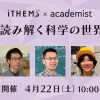
iTHEMS x academist Online Event "World of Mathematical Sciences 2023"
April 22 (Sat) 10:00 - 16:30, 2023
Takumi Doi (Senior Research Scientist, RIKEN Interdisciplinary Theoretical and Mathematical Sciences Program (iTHEMS))
Ryo Namba (Senior Research Scientist, RIKEN Interdisciplinary Theoretical and Mathematical Sciences Program (iTHEMS))
Yuto Moriwaki (Special Postdoctoral Researcher, RIKEN Interdisciplinary Theoretical and Mathematical Sciences Program (iTHEMS))
Kyosuke Adachi (Special Postdoctoral Researcher, Nonequilibrium Physics of Living Matter RIKEN Hakubi Research Team, RIKEN Center for Biosystems Dynamics Research (BDR))
Natsuki Tomida (Specially Appointed Assistant Professor, Center for Science Adventure and Collaborative Research Advancement (SACRA), Graduate School of Science, Kyoto University)Venue: via Zoom
Event Official Language: Japanese
-
Seminar
Machine learning predicts biological system evolution by gene gains and losses
April 20 (Thu) 16:00 - 17:00, 2023
Naoki Konno (Ph.D. Student, Department of Biological Sciences, Graduate School of Science, The University of Tokyo)
Prediction of evolution is a fundamental goal of biology with a potential impact on strategic pathogen control and genome engineering. While predictability of short-term and sequence-level evolution has been investigated, that of long-term and system-level evolution has not been systematically examined. Here, we show that evolution of metabolic systems by gene gains and losses is generally predictable by applying ancestral gene content reconstruction and machine learning techniques to ~3000 bacterial genomes. Our framework, Evodictor, successfully predicted gene gain and loss events at the branches of the reference phylogenetic tree, suggesting universally shared evolutionary pressures and constraints on metabolic systems. I herein present the mathematical model of Evodictor and our findings on evolutionary rules from physiological and ecological aspects. I will further discuss potential versatility of Evodictor approach to analyze various diversification processes along branching lineage trees, not only evolution, but also developmental processes.
Venue: via Zoom
Event Official Language: English
-
Seminar
Towards EeV Neutrino Astronomy with GRAND
April 18 (Tue) 14:00 - 15:15, 2023
Kumiko Kotera (Director of Research, Institute of Astrophysics, France)
We are living exciting times: we are now able to probe the most violent events of the Universe with diverse messengers (cosmic rays, neutrinos, photons and gravitational waves). One challenge to complete the multi-messenger picture resides in the highest energies, as no ultra-high energy neutrinos have been observed yet. This challenge could be undertaken by the GRAND (Giant Radio Array for Neutrino Detection) project, which aims at detecting ultra-high energy particles, with a colossal array of 200'000 antennas over 200'000 km2, split into ~20 sub-arrays of ~10'000 km2 deployed worldwide. In this talk, we will present preliminary designs and simulation results, plans for the ongoing, staged approach to construction, and the rich research program made possible by the proposed sensitivity and angular resolution.
Venue: Common Room #246-248 / via Zoom
Event Official Language: English
-
Colloquium
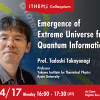
Emergence of Extreme Universe from Quantum Information
April 17 (Mon) 16:00 - 17:30, 2023
Tadashi Takayanagi (Professor, Yukawa Institute for Theoretical Physics, Kyoto University)
Recently, a new interpretation of gravitational spacetime in terms of quantum entanglement has been obtained. The idea of holography in string theory provides a simple geometric computation of entanglement entropy. This generalizes the well-known Bekenstein-Hawking formula of black hole entropy and strongly suggests that a gravitational spacetime consists of many qubits with quantum entanglement. Also a new progress on black hole information problem has been made recently by applying this idea. I will explain these developments in this colloquium.
Venue: via Zoom
Event Official Language: English
-
Seminar

Why are cell populations maintained via multiple compartments?
April 13 (Thu) 10:00 - 11:00, 2023
Carmen Molina-París (Researcher, Theoretical Biology and Biophysics, Los Alamos National Laboratory, USA)
We consider the maintenance of “product” cell populations from “progenitor” cells via a sequence of one or more cell types, or compartments, where each cell’s fate is chosen stochastically. If there is only one compartment then large amplification, that is, a large ratio of product cells to progenitors comes with disadvantages. The product cell population is dominated by large families (cells descended from the same progenitor) and many generations separate, on average, product cells from progenitors. These disadvantages are avoided using suitably-constructed sequences of compartments: the amplification factor of a sequence is the product of the amplification factors of each compartment, while the average number of generations is a sum over contributions from each compartment. Passing through multiple compartments is, in fact, an efficient way to maintain a product cell population from a small flux of progenitors, avoiding excessive clonality and minimising the number of rounds of division en route. We analyse the possible descendants of one progenitor cell, families of cells that journey through the sequence of compartments. We find that the ability of product cells to perform their function may be negatively affected by the number of rounds of cell division that separates them from their progenitor, because every round of division brings with it a risk of mutation.
Venue: via Zoom
Event Official Language: English
-
Seminar

Quantum modularity of quantum invariants and related techniques
April 11 (Tue) 13:00 - 15:30, 2023
Yuya Murakami (JSPS Research Fellow PD, Faculty of Mathematics, Kyushu University)
In this talk, I will present my recent work[1] and related research. In the first half of the talk, I will provide an overview of the concept of quantum modularity of quantum invariants, and briefly discuss my main result. In the second half, I will provide a more detailed explanation of my main result and the proof.
Venue: Seminar Room #359 (Main Venue) / via Zoom
Event Official Language: English
-
Seminar
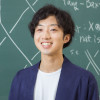
Frobenius algebras associated with the α-induction for equivariantly braided tensor categories
April 10 (Mon) 14:00 - 16:30, 2023
Mizuki Oikawa (Ph.D. Student / JSPS Research Fellow DC, Graduate School of Mathematical Sciences, The University of Tokyo)
In this talk, I would like to introduce my work https://arxiv.org/abs/2303.11845. In the first half of the talk, I will give an introduction of tensor categories. In the latter half, I will explain about my construction of some tensor categories and Frobenius algebras.
Venue: Seminar Room #359 / via Zoom
Event Official Language: English
-
Seminar

Gauge-equivariant neural networks as preconditioners in lattice QCD
April 6 (Thu) 13:30 - 15:00, 2023
Tilo Wettig (Professor, Universität Regensburg, Germany)
We demonstrate that a state-of-the-art multi-grid preconditioner can be learned efficiently by gauge-equivariant neural networks. We show that the models require minimal re-training on different gauge configurations of the same gauge ensemble and to a large extent remain efficient under modest modifications of ensemble parameters. We also demonstrate that important paradigms such as communication avoidance are straightforward to implement in this framework.
Venue: Common Room #246-248 (Main Venue) / via Zoom
Event Official Language: English
-
Seminar
Asymmetric enzyme kinetics of F1-ATPase resulted from asymmetric allosterism
March 30 (Thu) 16:00 - 17:00, 2023
Yohei Nakayama (Assistant Professor, Department of Applied Physics, Graduate School of Engineering, Tohoku University)
Bio-molecular machines play various roles in cells where thermal fluctuation is dominant. Since artificial molecular machines are far behind bio-molecular machines for the present, we should begin with understanding how bio-molecular machines are designed to play their roles. We examine the motion of a bio-molecular machine, F1-ATPase, in single molecule experiments. In particular, we focus on the operation of F1-ATPase as ATP synthase in addition to as molecular motor. In this seminar, I talk about the enzyme kinetics, dependence of reaction rate on substrate concentration, of F1-ATPase in ATP synthesis. The experimental result shows that the enzyme kinetics of F1-ATPase in ATP synthesis exhibits weaker dependence on substrate concentration than the ordinary Michaelis-Menten kinetics, whereas that in ATP hydrolysis follows Michaelis-Menten kinetics. Therefore, the enzyme kinetics of F1-ATPase turned out to be asymmetric between ATP synthesis and hydrolysis. We analyzed this asymmetry based on a potential switching model, totally asymmetric allosteric model, whose characteristic is asymmetry in angular dependence of binding rates of substrates. It was shown that the totally asymmetric allosteric model may reproduce the experimental results, where the asymmetry of binding rates is essential. We also discuss physiological roles that the asymmetry of enzyme kinetics may play.
Venue: via Zoom
Event Official Language: English
-
Others
First Chalk
March 29 (Wed) 16:30 - 17:00, 2023
The occasion to celebrate the launch of the new seminar room will take place after iTHEMS NOW & NEXT.
Venue: Seminar Room #359
Event Official Language: English
-
Seminar
Warming reduces the density-dependent divergence in emergence time for two competing parasitoid species
March 23 (Thu) 16:00 - 17:00, 2023
Midori Tuda (Associate Professor, Department of Bioresource Sciences, Faculty of Agriculture, Kyushu University)
Climate change is expected to directly affect ectothermic species through their sensitivity to temperature, with cascading effects on populations and communities. Here we experimentally tested predictions from two non-exclusive hypotheses concerning the impacts of elevated temperature (+2°C) on interactions between a single host species (the azuki bean beetle) and two species of parasitoid wasps. We hypothesized that increasing temperature shortens the time that the host is vulnerable to parasitoid attack. This change in available resource should heighten intra- and interspecific competition among parasitoids, which could induce divergence in emergence times. We found that intraspecific competition of both parasitoid species was more intense than interspecific competition irrespective of temperature. The difference (d) in the emergence times of the two parasitoid species increased with the density of each parasitoid but decreased at the elevated temperature. Both parasitoids emerged sooner at the elevated temperature and experienced a reduction in body size. Thus, high levels of intraspecific competition (along with the consequent reduction in body size) may have attenuated the intensity of interspecific competition at the elevated temperature despite a reduction in the differentiation of emergence times.
Venue: via Zoom
Event Official Language: English
-
Seminar
Towards S-matrix theory of unstable particles
March 15 (Wed) 13:30 - 15:00, 2023
Katsuki Aoki (Research Assistant Professor, Yukawa Institute for Theoretical Physics, Kyoto University)
The S-matrix is one of the central objects in quantum field theory and gains renewed interest recently to understand the possible structures of low-energy effective field theories and quantum gravity. However, most of the particles have finite decay widths and thus do not appear in asymptotic states. Therefore, the standard S-matrix arguments may not be directly applied to scatterings of such unstable particles and we need to formulate “the S-matrix theory of unstable particles” to properly understand the availability of the S-matrix arguments in realistic systems. In this talk, I will talk about the first steps towards this goal. In particular, I will discuss non-perturbative consequences of unitarity in a scattering amplitude of unstable particles and its analytic properties.
Venue: Hybrid Format (Common Room 246-248 and Zoom)
Event Official Language: English
-
Seminar
Cosmic magnetism and its effects on the observed properties of ultra high-energy cosmic rays
March 10 (Fri) 14:00 - 15:00, 2023
Ellis Owen (JSPS International Research Fellow, Theoretical Astrophysics Group, Department of Earth and Space Science, Graduate School of Science, Osaka University)
Ultra high-energy (UHE) cosmic rays (CRs) from distant sources interact with intergalactic radiation fields, leading to their spallation and attenuation through photo-hadronic processes. Their deflection and diffusion in large scale intergalactic magnetic fields (IGMFs), in particular those associated with Mpc-scale structures, alter the cumulative cooling and interactions of a CR ensemble to modify their spectral shape and composition observed on Earth. In this talk, I will demonstrate the extent to which IGMFs can affect observed UHE CRs, and show that source population models are degenerate with IGMF properties. Interpretation of observations, including the endorsement or rejection of any particular UHE CR source classes, needs careful consideration of the structural properties and evolution of IGMFs. Future observations providing tighter constraints on IGMF properties will significantly improve confidence in assessing UHE CR sources and their intrinsic CR production properties.
Venue: via Zoom / Common Room #246-248
Event Official Language: English
-
Seminar
Reproductive interference can affect trait diversity of closely related animal species
March 9 (Thu) 16:00 - 17:00, 2023
Keiichi Morita (Ph.D. Student, School of Advanced Sciences Department of Evolutionary Studies of Biosystems, The Graduate University for Advanced Studies (SOKENDAI))
Previous theoretical studies have considered that evolution driven by resource competition is important for the creation and maintenance of biodiversity. Recently, reproductive interference caused by misrecognition of sexual traits such as calling between closely related species has been increasingly important for the creation and maintenance of diversity, but the impact of reproductive interference on trait diversity between closely related species remains unresolved. In this study, we combined population dynamics model with reproductive interference in two closely related species with an evolutionary model of traits related to reproduction to examine the impact of reproductive interference on the evolutionary consequences of reproductive traits in the two closely related species. The model assumed a trade-off in which reproductive interference weakens as reproductive traits diverge between the two species, but predation pressure increases as the reproductive traits diverge from their optimum traits in their habitat. For simplicity, we assumed that only one species evolves. Our model analysis revealed that convergence and divergence of traits of two closely related species occurs depending on initial trait divergence. Also, under the parameter condition where trait convergence occurs, large mutation makes trait divergence possible. Our model will provide a new framework for understanding evolutionary dynamics in ecological communities containing closely related species.
Venue: via Zoom
Event Official Language: English