
Seminar
1095 events
-
Seminar

Computational Problems in Post-Quantum Cryptography
July 7 (Mon) 15:30 - 17:00, 2025
Tsuyoshi Takagi (Professor, Department of Mathematical Informatics, The University of Tokyo)
The security of current public-key cryptosystems relies on the hardness of factoring large integers or solving discrete logarithm problems. However, these computational problems can be solved in polynomial time using a quantum computer. This vulnerability has prompted research into post-quantum cryptography (PQC) using alternative mathematical problems that are secure in the era of quantum computers. In this talk, we give an overview of recent developments in the research on PQC. We explain a standardization project of PQC conducted by the National Institute of Standards and Technology (NIST). We then introduce an efficient digital signature, QR-UOV, based on the hardness of solving a system of multivariate quadratic polynomial equations over a finite field (the MQ problem). We also introduce a computational challenge problem, Fukuoka MQ Challenge, which aims at evaluating the hardness of the MQ problem with practical parameters.
Venue: Hybrid Format (3F #359 and Zoom), Seminar Room #359
Event Official Language: English
-
Seminar
Boundary Scattering and Non-invertible Symmetries in 1+1 Dimensions
July 4 (Fri) 14:00 - 15:00, 2025
Soichiro Shimamori (Ph.D. Student, Graduate School of Science, Osaka University)
Recent studies by Copetti, Córdova and Komatsu have revealed that when non-invertible symmetries are spontaneously broken, the conventional crossing relation of the S-matrix is modified by the effects of the corresponding topological quantum field theory (TQFT). We extend these considerations to (1+1)-dimensional quantum field theories (QFTs) with boundaries. In the presence of a boundary, one can define not only the bulk S-matrix but also the boundary S-matrix, which is subject to a consistency condition known as the boundary crossing relation. We show that when the boundary is weakly-symmetric under the non-invertible symmetry, the conventional boundary crossing relation also receives a modification due to the TQFT effects. As a concrete example of the boundary scattering, we analyze kink scattering in the gapped theory obtained from the Φ(1,3)-deformation of a minimal model. We explicitly construct the boundary S-matrix that satisfies the Ward-Takahashi identities associated with non-invertible symmetries. This talk is based on the collaboration with Satoshi Yamaguchi.
Venue: Hybrid Format (3F #359 and Zoom), Seminar Room #359
Event Official Language: English
-
Seminar

iTHEMS Biology welcomes a new member!
July 3 (Thu) 16:00 - 17:00, 2025
Aina Colomer i Vilaplana (Postdoctoral Researcher, Mathematical Genomics RIKEN ECL Research Unit, Division of Fundamental Mathematical Science, RIKEN Center for Interdisciplinary Theoretical and Mathematical Sciences (iTHEMS))
This meeting will be used to welcome a new members to the iTHEMS Biology Study Group: Postdoc Aina Colomer, who is joining Unit Leader Leo Speidel's Mathematical Genomics RIKEN ECL Research Unit. She will give us a 15-20 min talk to introduce her research. If time permits, let's also use this time to catch up on each other's current research. I hope that many people will join us to welcome this new member and come meet her and hear about her research.
Venue: Hybrid Format (3F #359 and Zoom), Seminar Room #359
Event Official Language: English
-
Seminar

Quantum Computing Algorithms and Institute of Mathematics-for-Industry
July 3 (Thu) 15:30 - 17:00, 2025
Hiroyuki Ochiai (Professor, Institute of Mathematics for Industry, Kyushu University)
This is the kickoff talk of the Kyushu University Collaboration Team, which aims to foster communication between iTHEMS and IMI. I will introduce some of IMI's activities and organization, as well as my own work, including research on quantum algorithms that began with the launch of the Quantum Computing System Center in 2022.
Venue: #345-347, 3F, Main Research Building
Event Official Language: English
-
Seminar
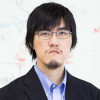
Exact WKB as unified analytic structure for resonance physics
June 27 (Fri) 15:00 - 17:00, 2025
Okuto Morikawa (Special Postdoctoral Researcher, Division of Fundamental Mathematical Science, RIKEN Center for Interdisciplinary Theoretical and Mathematical Sciences (iTHEMS))
We develop a unified framework for analyzing quantum mechanical resonances using the exact WKB method. The non-perturbative formulation based on the exact WKB method works for incorporating well-established phenomenological regularizations, the ABC theorem (proof of the completeness of Hilbert space), and the rigged Hilbert space in resonant phenomena. By examining the inverted Rosen-Morse potential, we illustrate how the exact WKB analysis captures resonant phenomena rigorously. Also, we clarify the corresponding linear spaces defined in each step of the exact WKB manipulations. The complementarity between the essential analyticity for resonance and the ABC theorem leads us to construct a modified Hilbert space called the rigged Hilbert space within the exact WKB framework. This offers a deeper understanding of resonant states and their analytic structures. Our results provide a concrete demonstration of the non-perturbative accuracy of exact WKB methods in unstable quantum systems.
Venue: Seminar Room #359 (Main Venue) / via Zoom
Event Official Language: English
-
Seminar
Universal Pseudo-Goldstone Damping from the Real-Time Functional Renormalization Group
June 26 (Thu) 15:00 - 16:00, 2025
Yang-Yang Tan (Ph.D. Candidate, Dalian University of Technology, China)
Strongly correlated systems, from QCD matter to condensed matter, exhibit universal dynamics near phase transitions. However, despite the successes of various theoretical approaches, systematic treatments of fluctuations are scarce. This talk unveils a novel universal damping mechanism for pseudo-Goldstone modes in systems with spontaneously broken approximate symmetries. I will introduce the real-time functional renormalization group (fRG) method, a powerful non-perturbative framework for studying real-time dynamics near critical points. Using this approach within a critical O(N) model, we uncover a new universal scaling for pseudo-Goldstone damping. Different from the conventional damping found in holography and hydrodynamics, the new one is controlled by critical fluctuations, hence is invisible in mean-field systems or strongly correlated systems with classical gravity duals. Since the critical damping depends solely on the universalities of the critical point, irrespective of the microscopic details, our conclusion should be applicable to a wide class of interacting systems.
Venue: Seminar Room #359 (Main Venue) / via Zoom
Event Official Language: English
-
Seminar

A diagrammatic approach to the Rasmussen invariant via tangles and cobordisms
June 26 (Thu) 15:00 - 17:00, 2025
Taketo Sano (Research Scientist, Mathematical Application Research Team, Division of Applied Mathematical Science, RIKEN Center for Interdisciplinary Theoretical and Mathematical Sciences (iTHEMS))
Rasmussen’s s-invariant is an integer-valued knot invariant derived from Khovanov homology, and it has remarkable applications in topology, such as providing a combinatorial reproof of the Milnor conjecture. Although the s-invariant is defined using the quantum filtration of the homology group, it is difficult to interpret it geometrically. In this talk, we give a cobordism-based interpretation of the s-invariant based on Bar-Natan’s reformulation of Khovanov homology via tangles and cobordisms. This interpretation allows for the computation of the s-invariant from a tangle decomposition of the knot. As an application, we demonstrate that the s-invariants of 3-strand pretzel knots can be computed by hand.
Venue: #345-347, Main Research Building, RIKEN Wako Campus (Main Venue) / via Zoom
Event Official Language: English
-
Seminar

Simulating the spread of infection in networks with quantum computers
June 26 (Thu) 13:00 - 14:00, 2025
Xiaoyang Wang (Postdoctoral Researcher, Quantum Mathematical Science Team, Division of Applied Mathematical Science, RIKEN Center for Interdisciplinary Theoretical and Mathematical Sciences (iTHEMS))
Many classical stochastic processes can be modeled as Markovian processes, including the spreading of infection in networks. Simulating the Markovian processes using classical computers is generally unscalable for large networks. In this seminar, I will introduce the Hamiltonian evolution on quantum computers and how the Markovian spreading of infection can be efficiently simulated using the Hamiltonian evolution. In particular, we analytically and numerically analyze the evolution of a specifically designed Hamiltonian, and prove that the evolution simulates a classical Markovian process, which describes the well-known epidemiological stochastic susceptible and infectious (SI) model. As an example, we simulate the infection spreading process of the SARS-CoV-2 variant Omicron in a small-world network. The simulation results are qualitative consistent with the infection spreading in the west coast of USA.
Venue: via Zoom / Seminar Room #359
Event Official Language: English
-
Seminar

Generative Models for Statistical Field Theories
June 25 (Wed) 15:00 - 16:00, 2025
Lingxiao Wang (Research Scientist, Division of Fundamental Mathematical Science, RIKEN Center for Interdisciplinary Theoretical and Mathematical Sciences (iTHEMS))
In the final talk of the DEEP-IN series, we will explore the role of generative models in learning phase transitions and sampling in lattice systems. First, we demonstrate how generative models can serve as global samplers by learning the underlying probability distributions. This enables the sampling of configurations more efficiently for lattice field theories. We will also demonstrate how the ferromagnetic phase transition, the Kosterlitz-Thouless transition, and quantum phase transitions can be identified from generative models. I will briefly introduce generative diffusion models, which can be interpreted as a stochastic quantization scheme. This opens a new path for understanding deep generative models. This is an informal seminar, we will start with the methodology and some practical examples, and finally reserve time for everyone interested to discuss it together.
Venue: #345-347, Main Research Building, RIKEN Wako Campus (Main Venue) / via Zoom
Event Official Language: English
-
Seminar
Condensed-Matter Physics of Neutron Stars 2
June 25 (Wed) 14:00 - 16:30, 2025
Daisuke Inotani (Postdoctoral Researcher, Research and Education Center for Natural Sciences, Keio University)
Neutron stars, the most compact stars in the Universe, are composed of various matter. However, due to their extremely low temperatures and high densities, they exhibit strong interactions and condensed states. Knowledge of condensed-matter physics is essential for describing such quantum matter. In this lecture, theoretical aspects of condensed-matter physics relevant with neutron stars, through active discussion with participants.
Venue: #359, 3F, RIKEN Wako Campus (Main Venue) / via Zoom
Event Official Language: Japanese
-
Seminar
Condensed-Matter Physics of Neutron Stars 1
June 25 (Wed) 10:00 - 12:30, 2025
Hiroyuki Tajima (Assistant Professor, Graduate School of Science, The University of Tokyo)
Neutron stars, the most compact stars in the Universe, are composed of various matter. However, due to their extremely low temperatures and high densities, they exhibit strong interactions and condensed states. Knowledge of condensed-matter physics is essential for describing such quantum matter. In this lecture, theoretical aspects of condensed-matter physics relevant with neutron stars, through active discussion with participants.
Venue: Seminar Room #359 (Main Venue) / via Zoom
Event Official Language: Japanese
-
Seminar
ComSHeL introductions meeting
June 24 (Tue) 14:00 - 15:30, 2025
Following our Launch Meeting on May 1st, in this second meeting of our study group we plan for each member of the ComSHeL Study Group and anyone who joins us that day to introduce their research briefly to get to know one another's focus and expertise. If you are interested in possibly collaborating with ComSHeL members and/or you would like to get to know some of the researchers who joined us as part of iTHEMS new Division of Applied Mathematical Science, please join us. I extended the duration to 90 min (from our usual 60 min) to make sure we have enough time to hear from everyone. Each attendee will have approximately 4 minutes to explain their past, current, or upcoming research and time will be kept strictly. Time might be adjusted on the day of the meeting based on the number of applicants. If you would like to show some slides (max 3 slides), please prepare them in advance and send them to cbeau@riken.jp in PDF format no later than June 20. But no one should feel they must prepare slides: it is fine to speak freely and informally about your work.
Venue: Hybrid Format (3F #359 and Zoom), Seminar Room #359
Event Official Language: English
-
Seminar
LLM-based physics analysis assistant at BESIII
June 23 (Mon) 15:00 - 16:00, 2025
Yipu Liao (Ph.D. Student, Institute of High Energy Physics, Chinese Academy of Sciences, China)
The data processing and analyzing is one of the main challenges at HEP experiments. To accelerate the physics analysis and drive new physics discovery, the rapidly developing Large Language Model (LLM) is the most promising approach, it have demonstrated astonishing capabilities in recognition and generation of text while most parts of physics analysis can be benefitted. In this talk we will discuss the construction of a dedicated intelligent agent, an AI assistant names Dr.Sai at BESIII based on LLM, the potential usage to boost the data analysis. I will also provide a brief overview of the construction of the AI platform at the Institute of High Energy Physics (ai.ihep.ac.cn) and outline the roadmap for AI4HEP. Yipu Liao (廖一朴) is a Ph.D. student at the Institute of High Energy Physics, Chinese Academy of Sciences. His research is centered on particle physics data analysis, with a special emphasis on Charmonium(-like) and tau physics within the BESIII and Belle II experiments. He is actively engaged in the development of the AI assistant project (DrSai) for the BESIII experiment, and leads the design and evaluation of automated processes.
Venue: #345-347, Main Research Building, RIKEN Wako Campus (Main Venue) / via Zoom
Event Official Language: English
-
Seminar
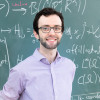
Spectral flow and applications
June 23 (Mon) 14:00 - 16:00, 2025
Christopher Bourne (Associate Professor, Institute of Liberal Arts and Sciences, Nagoya University)
Given a family of symmetric matrices indexed by a parameter (e.g. time, external field), changing this parameter will cause the eigenvalues to move along the real axis. The spectral flow tracks these eigenvalues and counts how many cross the point 0. This idea turns out to be very useful for both pure mathematics as well as applications to physics and elsewhere. In this talk, I will introduce the spectral flow and how it can be generalised to a variety of settings that are also relevant for applications in quantum physics.
Venue: Hybrid Format (3F #359 and Zoom), Main Research Building (Main Venue) / via Zoom
Event Official Language: English
-
Seminar

Categorification and K-theory
June 20 (Fri) 15:30 - 17:30, 2025
Vladimir Sosnilo (Research Scientist, Division of Fundamental Mathematical Science, RIKEN Center for Interdisciplinary Theoretical and Mathematical Sciences (iTHEMS))
In this talk, I will explain and motivate the concept of categorification and present various examples. The Euler characteristic is an invariant of a topological space, that serves as a shadow of a more refined category theoretic invariant—homology—which retains significantly more information. The existence of such a categorical construction underlying a numerical one is a common phenomenon in topology and algebra. I will also discuss Khovanov's question on the existence of categorification of arbitrary rings.
Venue: Seminar Room #359
Event Official Language: English
-
Seminar

Programmed chromosome eliminations in flies
June 19 (Thu) 13:00 - 14:00, 2025
Robert Baird (Visiting Researcher, Division of Fundamental Mathematical Science, RIKEN Center for Interdisciplinary Theoretical and Mathematical Sciences (iTHEMS))
Species that break the traditional rules of genetics and inheritance offer perhaps some of the best opportunities to study fundamental biological questions. Sciarids (fungus gnats) are a species-rich family of flies with highly unorthodox chromosome inheritance. Asymmetric male meiotic divisions result in elimination of the paternal genome every generation, and maternally-controlled eliminations of chromosomes in the developing embryo determine offspring sex. I use a combination of genomics, population genetics, and cytogenetics to understand both the mechanisms and the evolution of this system. I will discuss how these approaches have allowed us to uncover some fascinating biology as well as tackle broader biological questions.
Venue: via Zoom / Hybrid Format (3F #359 and Zoom), Seminar Room #359
Event Official Language: English
-
Seminar

Gauge-equivariant multigrid neural networks
June 19 (Thu) 10:30 - 12:00, 2025
Tilo Wettig (Professor, Universität Regensburg, Germany)
In lattice QCD simulations, the most time-consuming element is typically the solution of the Dirac equation in the presence of a given gauge field. The current state of the art is to use a multigrid preconditioner to reduce the condition number of the Dirac operator matrix. We show how such preconditioners can be constructed using gauge-equivariant neural networks. For the multigrid solve we employ parallel-transport convolution layers. For the multigrid setup we consider two versions: the standard construction based on the near-null space of the operator, and a gauge-equivariant construction using pooling and subsampling layers. We show that both versions eliminate critical slowing down.
Venue: Hybrid Format (3F #359 and Zoom), Seminar Room #359
Event Official Language: English
-
Seminar
Black hole states at finite N
June 18 (Wed) 16:30 - 17:30, 2025
Sunjin Choi (Postdoctoral Fellow, Kavli Institute for the Physics and Mathematics of the Universe (Kavli IPMU), The University of Tokyo)
We study new cohomologies for the local BPS operators of the maximal super-Yang-Mills theory to better understand the black hole microstates. We first analyze the index of these black hole operators and explicitly construct their cohomologies to study how they imitate the quantum black holes. We find many towers of states and partial no-hair behaviors where certain gravtions are forbidden to dress these black hole operators. This qualitatively agrees with the behavior of the perturbative hairy BPS black holes or the so-called grey galaxies. Throughout this talk, we mainly focus on a subsector of the field theory corresponding to the BMN matrix theory, which exhibits a black hole-like entropy growth at large N.
Venue: Hybrid Format (3F #359 and Zoom), Seminar Room #359
Event Official Language: English
-
Seminar
Identifying Lightning Structures and Predicting Cloud Properties
June 18 (Wed) 15:00 - 16:00, 2025
Lingxiao Wang (Research Scientist, Division of Fundamental Mathematical Science, RIKEN Center for Interdisciplinary Theoretical and Mathematical Sciences (iTHEMS))
This third talk in the DEEP-IN series focuses on using unsupervised machine learning to identify and predict patterns in atmospheric phenomena. We begin by demonstrating how clustering and dimensionality reduction techniques can uncover coherent lightning patterns from high-dimensional LOFAR (LOw Frequency ARray) data, offering insight into large-scale organization. We then show how generative diffusion models enable super-resolution retrieval of cloud properties for all day from satellite observations. This is an informal seminar, we will start with the methodology and some practical examples, and finally reserve time for everyone interested to discuss it together.
Venue: Seminar Room #359 (Main Venue) / via Zoom
Event Official Language: English
-
Seminar

Charting the landscape of gauge-fermion dynamics
June 16 (Mon) 13:30 - 15:00, 2025
Álvaro Pastor Gutiérrez (Special Postdoctoral Researcher, Division of Fundamental Mathematical Science, RIKEN Center for Interdisciplinary Theoretical and Mathematical Sciences (iTHEMS))
Gauge–fermion quantum field theories are central to our understanding of nature, from QCD to the electroweak sector. Beyond the Standard Model, strongly coupled gauge dynamics offer compelling avenues to address open puzzles. In this talk, I present a cartographic study of gauge–fermion theories across varying numbers of colours and flavours, focusing on the interplay between colour confinement and chiral symmetry breaking. We determine the flavour and colour dependence of the corresponding dynamical scales, providing a unified picture that interpolates between QCD-like regimes—where we recover quantitative agreement with lattice results—and the perturbative conformal limit. The analysis is based on the functional renormalisation group and employs a novel approximation scheme that allows for controlled and flexible access to the non-perturbative dynamics. We further explore the near-conformal regime with walking behaviour and estimate the lower boundary of the Caswell–Banks–Zaks conformal window. This framework enables a self-consistent mapping of the theory space of strongly coupled gauge–fermion systems and yields first-principles results with direct relevance for physics beyond the Standard Model.
Venue: Hybrid Format (3F #359 and Zoom), Seminar Room #359
Event Official Language: English
1095 events