
Search Event
674 results
-
Seminar
Index of the Wilson-Dirac operator revisited: a discrete version of Dirac operator on a finite lattice
February 25 (Tue) 16:00 - 18:10, 2020
Mikio Furuta (Professor, The University of Tokyo)
The Wilson-Dirac operator is a discrete version of Dirac operator defined on regular lattices. When the discrete version is a fine approximation of the Dirac operator on a Z/2-graded Clifford module on a torus, it is known that (1) an integer-valued index is defined for the Wilson-Dirac operator, and (2) the index is equal to the Atiyah-Singer index of the Dirac operator on the torus. These have been well established up to around 2000. The strategy of all the previous works is to make use of the discrete version of the heat kernel for Neuberger's overlap Dirac operator. Therefore the strategy cannot be generalized to mod 2 index nor family version of index. In this talk I would like to explain a new approach to the index of Wilson-Dirac operator which can be immediately generalized to these various cases. Joint work with H. Fukaya, S. Matsuo, T. Onogi, S. Yamaguchi and M. Yamashita.
Venue: Seminar Room #160
Event Official Language: English
-
Seminar
Semiclassical methods in mathematical quantum mechanics
January 23 (Thu) 16:00 - 18:10, 2020
Shu Nakamura (Professor, Gakushuin University)
Plan of the seminar: we separate each talk into two. In the first 60 minutes the speaker gives an introductory talk for non-mathematicians. After a short break, the second 60 minutes is spent for a bit more detailed talk for mathematicians (working in other areas). We welcome you joining both parts of the seminar or only the first/second half. Talk 1: Semiclassical analysis, microlocal analysis and scattering theory. I plan to talk about overview on the semiclassical analysis and related topics, especially its intrinsic relationship with microlocal analysis and (microlocal) scattering theory. Roughly speaking, the microlocal analysis is an application of semiclassical idea to the analysis of singularities, and its analogue in momentum space is the microlocal scattering theory. We discuss basic notions of these, and mention several recent results. Talk 2: Microlocal structure of the scattering matrix with long-range perturbations. As an example of topics discussed in Talk 1, we discuss recent results on the scattering matrix with long-range perturbations. In particular, we show that the scattering matrix is expressed as a Fourier integral operator, and in some cases we can decide its spectral properties. Our approach is fairly geometric and abstract, and thus applies not only to usual Schrödinger operators but also to higher order operators and discrete Schrödinger operators.
Venue: #435-437, Main Research Building
Event Official Language: English
-
Colloquium

Exploring the learning principle in the brain
January 16 (Thu) 15:30 - 17:00, 2020
Taro Toyoizumi (Team Leader, Laboratory for Neural Computation and Adaptation, RIKEN Center for Brain Science (CBS))
Animals adapt to the environment for survival. Synaptic plasticity is considered a major mechanism underlying this process. However, the best-known form of synaptic plasticity, i.e., Hebbian plasticity that depends on pre- and post-synaptic activity, can surge coincident activity in model neurons beyond a physiological range. Our lab has explored how neural circuits learn about the environment by synaptic plasticity. The instability of Hebbian plasticity could be mitigated by a global factor that modulates its outcome. For example, TNF-alpha that mediates homeostatic synaptic scaling is released by glia, reflecting the activity level of surrounding neurons. I show that a specific interaction of Hebbian plasticity with this global factor accounts for the time course of adaptation to the altered environment (Toyoizumi et al. 2015). At a more theoretical level, I ask what is the optimal synaptic plasticity rule for achieving an efficient representation of the environment. A solution is the error-gated Hebbian rule, whose update is proportional to the product of Hebbian change and a specific global factor. I show that this rule, suitable also in neuromorphic devices, robustly extracts hidden independent sources in the environment (Isomura and Toyoizumi 2016, 2018, 2019). Finally, I introduce that synapses change by intrinsic spine dynamics, even in the absence of synaptic plasticity. I show that physiological spine-volume distribution and stable cell assemblies are both achieved when intrinsic spine dynamics are augmented in a model (Humble et al.2019).
Venue: Large Meeting Room, 2F Welfare and Conference Building (Cafeteria)
Broadcast:R311, Computational Science Research Building / SUURI-COOL (Kyoto) / SUURI-COOL (Sendai)
Event Official Language: English
-
Seminar
Constraining superheavy dark matter with the multi-messenger observations of accompanying radiation
December 20 (Fri) 14:00 - 15:00, 2019
Yana Zhezher (Institute for Cosmic Ray Research (ICRR), The University of Tokyo)
One of the main alternatives for the weakly interacting massive particles (WIMP) dark matter scenario are the super-heavy X particles with masses larger than the weak scale by orders of magnitude. We assume the experimentally more plausible scenario of decaying superheavy dark matter (SHDM), which leads to the production secondary particles: electrons, positrons, gamma rays and neutrinos. The hypothetical X-particle has two main parameters: it’s mass MX and lifetime ?, which can be indirectly constrained by comparisons of predicted flux of secondary particles with the astrophysical observations. We present the limits on the SHDM parameters derived with the multi-messenger data from the Fermi-LAT, IceCube and other experiments.
Venue: Seminar Room #132
Event Official Language: English
-
Seminar
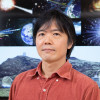
Seminar talk on GRB190114C
December 11 (Wed) 13:45 - 15:30, 2019
Susumu Inoue (Research Scientist, RIKEN Interdisciplinary Theoretical and Mathematical Sciences Program (iTHEMS))
Detection of very high energy gamma-rays (~TeV) from GRB190114C by MAGIC telescope is reported in the latest nature issue. Dr. Susumu Inoue (iThems) who is one of MAGIC team members will give a seminar talk on this exciting event.
Venue: Seminar Room #132
Event Official Language: English
-
Seminar
Noncommutative crepant resolutions and some higher dimensional flops
December 4 (Wed) 16:00 - 18:10, 2019
Wahei Hara (JSPS Research Fellow, Faculty of Science and Engineering, Waseda University)
Plan of the seminar: we separate each talk into two. In the first 60 minutes the speaker gives an introductory talk for non-mathematicians. After a short break, the second 60 minutes is spent for a bit more detailed talk for mathematicians (working in other areas). We welcome you joining both parts of the seminar or only the first/second half. Abstract: We will talk about the theory noncommutative resolution of singularities. Noncommutative resolution is a noncommutative analog of usual (geometric) resolution of singularities, and allows us to generalise the idea of McKay correspondence to a large class of singularities. In the first part of the talk, we discuss the classical McKay correspondence, the definition of noncommutative crepant resolution, and some known results in lower dimensions. In the second half, we will discuss some concrete examples of noncommutative crepant resolutions in higher dimensions.
Venue: Seminar Room #160
Event Official Language: English
-
Seminar
A multiscale study of turbulent heating in hot accretion flows
November 18 (Mon) 14:00 - 15:00, 2019
Yohei Kawazura (Assistant Professor, Tohoku University)
Recently, the Event Horizon Telescope (ETH) collaboration revealed the stunning picture of radiation from the vicinity of the black hole. For accurate interpretation of the observation, it is crucial to understand the nature of plasma in the accretion disk. The disks that EHT is observing are called radiatively inefficient accretion flows, in which the plasma is hot and dilute, and consequently collisionless. In collisionless plasma, ions and electrons can have different temperatures as they do not thermally relax through Coulomb interaction. The ion-to-electron temperature ratio is the key to interpreting the observation because we can measure only the electrons' energy via radiation. To study ion and electron heating, kinetic treatment, rather than hydrodynamic treatment, is necessary. However, kinetic plasma turbulence is an extremely challenging subject. Therefore, we utilized gyrokinetics that is widely used in magnetic confinement fusion research. Our new multiscale approach treats a "large scale" where turbulence is driven by magnetorotational instability via MHD, and a "small scale" where turbulence is dissipated via gyrokinetics. Using this approach, we formulated a prescription of ion-to-electron heating ratio. In my talk, I will also present basic knowledge that is necessary to study collisionless turbulent heating.
Venue: Seminar Room #132
Event Official Language: English
-
Seminar
Some topics in projective geometry of algebraic varieties
November 8 (Fri) 16:00 - 18:10, 2019
Atsushi Ito (Assistant Professor, Graduate School of Mathematics, Nagoya University)
Plan of the seminar: we separate each talk into two. In the first 60 minutes the speaker gives an introductory talk for non-mathematicians. After a short break, the second 60 minutes is spent for a bit more detailed talk for mathematicians (working in other areas). We welcome you joining both parts of the seminar or only the first/second half. Abstract: We talk about Gauss maps and projective dual varieties, which are classical objects in projective geometry of algebraic varieties. In particular, we explain Gauss maps in positive characteristic and projective dual varieties of toric varieties in characteristic 0.
Venue: Seminar Room #160
Event Official Language: English
-
Workshop
Collaborative Meeting on Supernova Remnants between Japan and USA
November 7 (Thu) - 12 (Tue) 2019
The aim of the workshop is to bring together experts on supernova remnants and related topics for active discussions and to initiate possible collaborations among the participants. The workshop will be held at RIKEN Wako campus (first week, Nov. 7th and 8th) and Kyoto University (second week, Nov. 11th and 12th). This workshop is supported by iTHEMS (RIKEN Interdisciplinary Theoretical and Mathematical Sciences Program) and r-EMU (RIKEN Pioneering Project:Evolution of Matter in the Universe).
Venue: Okochi Hall / 224-226, Main Research Building / SUURI-COOL (Kyoto)
Event Official Language: English
-
Seminar
Atiyah-Hirzebruch spectral sequence in the band theory
October 24 (Thu) 16:00 - 18:10, 2019
Ken Shiozaki (Assistant Professor, Yukawa Institute for Theoretical Physics, Kyoto University)
Plan of the seminar: we separate each talk into two. In the first 60 minutes the speaker gives an introductory talk for non-mathematicians. After a short break, the second 60 minutes is spent for a bit more detailed talk for mathematicians (working in other areas). We welcome you joining both parts of the seminar or only the first/second half. Abstract: The topological nature of the band theory in crystalline systems can be well described by the topological K-theory over the Brillouin zone torus. In the first part of my talk, I will present the band-theory understanding of the grading of the K-group, and how the exactness axiom and the Mayer-Vietoris sequence are naturally understood. In the second part, I discuss how to compute the differentials of the Atiyah-Hirzebruch spectral sequence associated with a cell decomposition.
Venue: Seminar Room #160
Event Official Language: English
-
Seminar
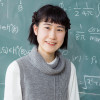
Dark matter search in extended dwarf spheroidal galaxies with CTA
October 11 (Fri) 14:00 - 15:00, 2019
Nagisa Hiroshima (Postdoctoral Researcher, RIKEN Interdisciplinary Theoretical and Mathematical Sciences Program (iTHEMS))
The nature of dark matter (DM) is still a big mystery. Among the varieties of candidates, Weakly Interacting Massive Particle (WIMP) is one of the most promising ones. Gamma-ray observations of dwarf spheroidal galaxies (dSphs) by Fermi satellites put the strongest constraints at mDM<~ a few hundreds of GeV. In the near future, Cherenkov Telescope Array (CTA) starts its operations and expect to probe WIMP of mDM>~O(1)TeV. Different from previous experiments, spatial distributions of DM in dSphs are resolved with CTA. In this talk, I explain how it affects our accessibility to DM annihilation cross-section.
Venue: Seminar Room #132
Event Official Language: English
-
Seminar
Angular power spectrum analysis on current and future high-energy neutrino data
September 18 (Wed) 14:00 - 15:00, 2019
Ariane Dekker (Faculty of Science, University of Amsterdam, Netherlands)
The astrophysical neutrino events that have been measured in the last couple of years show an isotropic distribution on the sky. To constrain the contribution of source populations to the observed neutrino sky, we consider isotropic and anisotropic components of the diffuse neutrino data. We simulate through-going muon neutrino events by applying statistical distributions for the fluxes of extra-galactic sources and investigate the sensitivities of current (IceCube) and future (IceCube-Gen2 and KM3NeT) experiments. I will show that the angular power spectrum is a powerful probe to assess the angular characteristics of neutrino data and demonstrate that we are already constraining rare and bright sources with current IceCube data. In addition, I will investigate the decay and annihilation of very heavy dark matter as a potential neutrino source suggested by the excess in HESE data. We apply our angular power spectrum analysis to HESE data for different channels, allowing us to interpret the observed neutrino sky and perform a sensitivity forecast.
Venue: #160, 1F, Main Research Building
Event Official Language: English
-
Seminar
iTHEMS Biology Seminar
September 13 (Fri) 15:00 - 17:20, 2019
Hiroyuki Kubota (Professor, Medical Institute of Bioregulation, Kyushu University)
Yasufumi Uezu (Researcher, Sensory And Motor Research Group, NTT Communication Science Laboratories)Timetable 15:00-16:00 Hiroyuki Kubota (Kyushu Univ.) 16:00-16:20 Break 16:20-17:20 Yasufumi Uezu (NTT) Time: 15:00-16:00 Speaker: Hiroyuki Kubota (Kyushu Univ.) Title: Regulation of insulin action by temporal patterns of insulin Abstract: Cells respond to various extracellular stimuli through a limited number of signaling pathways. One strategy to process such stimuli is to code the information into the temporal patterns of molecules. Almost all hormones exhibit distinct temporal patterns and the importance of their patterns has been reported. However, the mechanisms of how hormones regulate downstream molecules depending on their temporal patterns remain unknown. We focused on insulin which plays crucial roles on glucose homeostasis and shows several temporal patterns in vivo. In this study, we show how the Insulin signaling pathway processes the information encoded into the temporal patterns of blood insulin using a cultured cell line and mice. We found that insulin patterns selectively regulate the insulin-AKT pathway, metabolites, and mRNAs. Mathematical modeling revealed the mechanisms via differences in network structures and from sensitivity and time constants. Given that almost all hormones exhibit distinct temporal patterns, temporal coding may be a general principle of system homeostasis by hormones. Time: 16:20-17:20 Speaker: Yasufumi Uezu (NTT) Title: Source-filter interaction brings various representation in speech and singing voice Abstract: Speech plays a very important role in human communication. The source-filter interaction, a model that takes into account the actual speech production process, assumes that the sound source generation mechanism and the vocal-tract filter are not independent, but affect each other physiologically and acoustically. It is known that the source-filter interaction brings about non-linearity of speech and singing, such as singing voice with a loud volume and wide pitch range like an opera singer, or voice register transition where the vocal suppression and/or the voice pitch jump occurs. I would like to introduce my researches targeting non-linear vocalization phenomena due to the source-filter interaction and results of measuring and analyzing the time waveform of speech sound and vocal-fold vibrations through measurement experiments.
Venue: #424-426, Main Research Building
Event Official Language: Japanese
-
Seminar

Physics of Gamma-Ray Bursts: Emission Mechanism, Particle Acceleration, Nucleosynthesis, and Gravitational Waves
August 17 (Sat) 12:00 - 13:00, 2019
Shigehiro Nagataki (Deputy Program Director, RIKEN Interdisciplinary Theoretical and Mathematical Sciences Program (iTHEMS) / Chief Scientist, Astrophysical Big Bang Laboratory, RIKEN Cluster for Pioneering Research (CPR))
Gamma-Ray Bursts (GRBs) are very powerful, special explosions of massive stars. In the explosions, highly relativistic jets are launched from progenitor stars and lots of gamma-rays are emitted from the jets. It is also suggested by gravitational wave detection with follow-up observations that (short duration) GRBs are triggered by neutron star mergers (NSMs). In this talk, physics of GRBs are introduced with some of our recent studies. I would like to introduce how the relativistic jets will emit bunch of gamma-rays, and how particle acceleration happens in the relativistic jets. I also would like to introduce our recent studies on r-process nucleosynthesis & gravitational wave emission at NSMs. Location: 50A-5132
Venue: Lawrence Berkeley National Laboratory (Berkeley, California)
Event Official Language: English
-
Seminar
Complex analysis on a neighborhood of a complex submanifold and its applications
July 30 (Tue) 16:00 - 18:10, 2019
Takayuki Koike (Lecturer, Department of Mathematics, Graduate School of Science, Osaka City University)
Plan of the seminar: we separate each talk into two. In the first 60 minutes the speaker gives an introductory talk for non-mathematicians. After a short break, the second 60 minutes is spent for a bit more detailed talk for mathematicians (working in other areas). We welcome you joining both parts of the seminar or only the first/second half. Abstract: We explain our recent study on the complex analytic structure of a small tubular neighborhood of a complex submanifold, which is based on T. Ueda's classification theory. We also explain how to apply them to: (i) a study on (non-) existence of a smooth Hermitian metric on a nef line bundle over a projective manifold with semi-positive curvature, and (ii) a study on non-projective and non-Kummer K3 surfaces.
Venue: Seminar Room #160
Event Official Language: English
-
Workshop
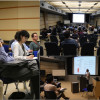
Workshop to bring together experts on High Energy Astrophysics from Japan and Israel
July 18 (Thu) - 23 (Tue) 2019
This workshop is co-organized by iTHEMS. 1st week (July 18-19th) Place: Okochi Hall, RIKEN, Wako, Saitama, Japan 2nd week (July 22-23th) Place: Integrated Innovation Building (IIB), RIKEN, Kobe, Hyogo, Japan
Venue: Okochi Hall / Integrated Innovation Building (IIB)
Event Official Language: English
-
Seminar

Introduction to Schroedinger Operators
July 12 (Fri) 16:00 - 18:10, 2019
Keita Mikami (Research Scientist, RIKEN Interdisciplinary Theoretical and Mathematical Sciences Program (iTHEMS))
Plan of the seminar: we separate each talk into two. In the first 60 minutes the speaker gives an introductory talk for non-mathematicians. After a short break, the second 60 minutes is spent for a bit more detailed talk for mathematicians (working in other areas). We welcome you joining both parts of the seminar or only the first/second half. Abstract: In this seminar, I will talk about mathematical study of Schroedinger operators (or Schroedinger equation). Part 1: I will talk about what mathematicians do to find a solution to Schroedinger equation. The goal of the first part is to be able to check the existence of solutions of Schroedinger equations in terms of decay/growth rate of potentials. Part 2: I will talk about what can we say about solutions to Schroedinger equation constructed in the first part. Especially, the relationship to the corresponding classical mechanic is introduced.
Venue: Seminar Room #160
Event Official Language: English
-
Colloquium
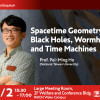
Spacetime Geometry of Black Holes, Wormholes, and Time Machines
July 2 (Tue) 15:30 - 17:00, 2019
Pei-Ming Ho (Distinguished Professor, Department of Physics, National Taiwan University, Taiwan)
Since the advent of General Relativity, people have found many solutions with interesting spacetime geometries. Most notably, the black holes have attracted a lot of attention for their roles in generating gravitational waves, and for inducing the information loss paradox. In this talk, we consider black holes amongst other geometric structures and investigate the subtlety involved in the quantum effect such as Hawking radiation. In this context, we mention wormholes and time machines, and explain how they are conceptually related to the geometry under the horizon of a black hole. There will also be comments on my recent research result about how quantum effect must be large for observers sitting on top of the black hole horizon.
Venue: Large Meeting Room, 2F Welfare and Conference Building (Cafeteria)
Broadcast:R511, Computational Science Research Building / SUURI-COOL (Kyoto) / SUURI-COOL (Sendai)
Event Official Language: English
-
Seminar
ABBL/iTHEMS/r-EMU Joint Seminar: Towards systematic and consistent nuclear data inputs for astrophysical r-process with Bayesian approaches
June 28 (Fri) 14:00 - 15:00, 2019
Haozhao Liang (Senior Research Scientist, Quantum Hadron Physics Laboratory, RIKEN Nishina Center for Accelerator-Based Science (RNC))
This is his 2nd seminar talk for non-experts of nuclear physics, following the 1st one on 18th Jan. 2019. Abstract: In this interdisciplinary talk, I will start with some basic concepts as well as some frontiers of nuclear physics, and then introduce the roles of nuclear data inputs for the study of astrophysical rapid neutron-capture process (r-process), which is responsible for the creation of approximately half the abundances of the atomic nuclei heavier than iron. Recent progress in nuclear physics focuses on improving the accuracy of crucial nuclear inputs, such as nuclear masses, beta-decay half-lives. Nevertheless, in most of the studies these inputs are investigated individually. One of our ongoing attempts is to organize the crucial nuclear inputs in a systematic and consistent way, together with Bayesian and/or machine learning approaches, which are able to provide not only the theoretical results but also the corresponding uncertainties.
Venue: 224-226, Main Research Building
Event Official Language: English
-
Seminar
Asymmetric metric and coarse geometry
June 20 (Thu) 16:00 - 18:10, 2019
Hiroki Kodama (Visiting Scientist, RIKEN Interdisciplinary Theoretical and Mathematical Sciences Program (iTHEMS) / Assistant Professor, Advanced Institute for Materials Research (AIMR), Tohoku University)
Plan of the seminar: we separate each talk into two. In the first 60 minutes the speaker gives an introductory talk for non-mathematicians. After a short break, the second 60 minutes is spent for a bit more detailed talk for mathematicians (working in other areas). We welcome you joining both parts of the seminar or only the first/second half. Abstract: For most of mathematicians, metric is symmetric. However, we can define asymmetric metric without any difficulty. "Coarse" is a notion to describe some large scale viewpoint. For example, the set of real numbers is coarse equivalent to the set of integers (with respect to standard metric). I will discuss asymmetric metric space in "coarse" sense. Part 1: I will define metric space and asymmetric metric space. I will also explain a notion of coarse equivalence. Part 2: I will discuss what kind of asymmetric metric space is not coarse equivalent to (symmetric) metric space. I also would like to give other generalizations of metric.
Venue: Seminar Room #160
Event Official Language: English