
Search Event
669 results
-
Seminar
Breaking down the magnonic Wiedemann-Franz law in the hydrodynamic regime
December 4 (Mon) 15:00 - 16:30, 2023
Ryotaro Sano (Ph.D. Student, Division of Physics and Astronomy, Graduate School of Science, Kyoto University)
Quantum transport has attracted a profound growth of interest owing to its fundamental importance and many applications in condensed matter physics. Recent significant developments in experimental techniques have further boosted the study of quantum transport. Notably in ultraclean systems, strong interactions between quasi-particles drastically affect the transport properties, resulting in an emergent hydrodynamic behavior. Recent experiments on ultrapure ferromagnetic insulators have opened up new pathways for magnon hydrodynamics. Hydrodynamic magnon transport implies exhibiting extraordinary features and has a potential for innovative functionalities beyond the conventional non-interacting magnon picture. However, the direct observation of magnon fluids remains an open issue due to the lack of probes to access the time and length scales characteristics of this regime. In this work, we derive a set of coupled hydrodynamic equations for a magnon fluid and study the spin and thermal conductivities by focusing on the most dominant time scales [1]. As a hallmark of the hydrodynamic regime, we reveal that the ratio between the two conductivities shows a large deviation from the so-called magnonic WF law. We also identify an origin of the drastic breakdown of the magnonic WF law as the difference in relaxation processes between spin and heat currents, which is unique to the hydrodynamic regime. Therefore, our results will become key evidence for an emergent hydrodynamic magnon behavior and lead to the direct observation of magnon fluids.
Venue: Hybrid Format (3F #359 and Zoom), Main Research Building
Event Official Language: English
-
Seminar

Evolution by gene and genome duplications
November 28 (Tue) 16:00 - 17:00, 2023
Jeffrey Fawcett (Senior Research Scientist, RIKEN Interdisciplinary Theoretical and Mathematical Sciences Program (iTHEMS))
Each organism typically has (tens of) thousands of genes in its genome that perform various molecular and cellular functions, but how did these genes originate? The answer for most genes is by the duplication of another gene. In fact, all the genes (the entire genome) can get duplicated simultaneously on some instances. Thus, gene and genome duplications are considered key driving forces of evolution and are one of the most important topics in molecular evolutionary biology. In this talk, I will introduce the background and basic concepts related to gene and genome duplications. The talk will be aimed at non-experts so non-biologists are also welcome to attend.
Venue: via Zoom
Event Official Language: English
-
Workshop
Joint RIKEN/N3AS Workshop on Multi-Messenger Astrophysics
November 26 (Sun) 9:00 - 19:00, 2023
RIKEN iTHEMS and NSF Physics Frontier Center N3AS will jointly organize a workshop on "Multi-Messenger Astrophysics" on Sunday, November 26, at the Hilton Waikoloa Village, in conjunction with the JPS/ APS DNP meeting. For the program and registration form, please visit the workshop website at the related links. The workshop is open to all and there is no registration fee. However, we ask those wishing to attend to register, to help us plan. The workshop will conclude with an early evening poster session that will combine science with an opportunity for JPS and APS participants to socialize. Organizers: Tetsuo Hatsuda(RIKEN iTHEMS) Wick Haxton (UC Berkaley, N3AS) Baha Balentekin (UW-Madison, N3AS)
Venue: Hilton Waikoloa Village, Waikoloa, Hawaii
Event Official Language: English
-
Seminar

Early Formation of Dark Matter Halos
November 24 (Fri) 14:00 - 15:15, 2023
Derek Beattie Inman (Research Scientist, RIKEN Interdisciplinary Theoretical and Mathematical Sciences Program (iTHEMS))
Cosmological observations have led to an extremely precise understanding of the large-scale structure of the Universe. A common assumption is to extrapolate large-scale properties to smaller scales; however, whether this is correct or not is unknown and many well-motivated early Universe scenarios predict substantially different structure formation histories. In this seminar I will discuss two scenarios where nonlinear structures form much earlier than is typically assumed. In the first case, the initial fluctuations are enhanced on small scales leading to either primordial black holes clusters or WIMP minihalos right after matter-radiation equality. In the second, I will show that an additional attractive dark force leads to structure formation even in the radiation dominated Universe. I will furthermore discuss possible observations of such early structure formation including changes to the cosmic microwave background, dark matter annihilation, and when the first galaxies form.
Venue: Seminar Room #359 (Main Venue) / via Zoom
Event Official Language: English
-
Seminar

X's Fast and Slow
November 21 (Tue) 16:00 - 17:00, 2023
Thomas Hitchcock (Special Postdoctoral Researcher, RIKEN Interdisciplinary Theoretical and Mathematical Sciences Program (iTHEMS))
Sex chromosomes have long been suggested to undergo distinct evolutionary dynamics to the rest of the genome. Their distinct ploidy and transmission genetics may result in differing strengths of selection, magnitude of drift, and mutation rates to the autosomes, particularly if there are sex differences. Consequently, a body of theory and empirical work has developed investigating such differences, and how they might manifest in the rates of change between populations, and the diversity observed within populations. I will briefly review the theoretical basis of these comparisons, how we can infer rates of evolutionary change from genetic data, and what we can learn from non-model systems, particularly focusing on fungus gnats and pea aphids.
Venue: via Zoom
Event Official Language: English
-
Colloquium
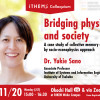
Bridging physics and society: A case study of collective memory dynamics by socio-econophysics approach
November 20 (Mon) 15:00 - 16:30, 2023
Yukie Sano (Associate Professor, Institute of Systems and Information Engineering, University of Tsukuba)
The movements of individuals with free will are unpredictable, complex, and, needless to say, fundamentally distinct from the movements of matter. Furthermore, studying society, which forms collectives while engaging in intricate individual interactions, using mathematical models seems incredibly daunting. However, when analyzing empirical data, relatively simple mathematics often emerge in the distribution and dynamics of society at the level of collective behavior. Additionally, such mathematics often share commonalities with physical phenomena. With this background, research is progressing by applying ideas from physics to social-economic phenomena, a field known as socio-econophysics. In this presentation, I will introduce a mathematical model that addresses the decay of collective memory using access logs on the web as an example of research in socio-econophysics.
Venue: Okochi Hall / via Zoom
Event Official Language: English
-
Workshop

6th QGG Intensive Lectures: Introduction to thermalization in isolated quantum systems
November 20 (Mon) - 21 (Tue) 2023
Ryusuke Hamazaki (RIKEN Hakubi Team Leader, Nonequilibrium Quantum Statistical Mechanics RIKEN Hakubi Research Team, RIKEN Cluster for Pioneering Research (CPR))
This is the sixth event by the Quantum Gravity Gatherings (QGG) Study Group at RIKEN iTHEMS. For this event we have invited Professor Ryusuke Hamazaki from RIKEN, to deliver pedagogical lectures on the thermalization in isolated quantum systems. This topic describes how a non-equilibrium quantum state relaxes to thermal equilibrium through a unitary time evolution. This theme has applications not only in statistical physics but also in many areas of physics. In particular, in the context of quantum gravity, understanding thermalization via a unitary time evolution is anticipated to be a key to resolving the information loss problem of black holes. In addition, the notion of typicality and thermalization is important in the AdS/CFT correspondence to understand black hole physics. We expect this event to provide insights to researchers in related fields. Ryusuke Hamazaki is a leading expert in this subject. It is our enormous pleasure to have the opportunity to learn from him the idea of thermalization and its applications related to realistic systems. This intensive lecture series is designed to be an interactive event. The intensive talk will be given in a face-to-face blackboard style (in English, no online streaming) to encourage informal and lively Q&A discussions. The program will also include short talk sessions, where participants can present a 5-minute talk on a topic of their choice, which could be about their own research, reviews of specific works, or future study interests.
Venue: #435-437, Main Research Building
Event Official Language: English
-
Seminar
Introduction and prospects of topological recursion
November 17 (Fri) 15:00 - 17:00, 2023
Osuga Kento (JSPS Research Fellow PD, Graduate School of Mathematical Sciences, The University of Tokyo)
Topological recursion is a universal recursive formalism that connects many branches in mathematical physics, such as enumerative geometry, algebraic geometry, integrable hierarchy, matrix models, 2d gravity, and more. In the first half of this talk, I will give a pedagogical overview of topological recursion and present simple examples from which we learn how topological recursion works. Then in the second half, I will present some ongoing research projects as well as a few future directions in topological recursion.
Venue: Seminar Room #359
Event Official Language: English
-
Seminar
Geometry of special nilpotent orbits
November 15 (Wed) 14:00 - 15:30, 2023
Baohua Fu (Professor, Academy of Mathematics and Systems Science, Chinese Academy of Sciences, China)
Special nilpotent orbits play a key role in representation theory, but their geometry is little understood. I'll first report a joint work with Yongbin Ruan and Yaoxiong Wen proposing a mirror symmetry conjecture for special nilpotent orbits and then a joint work with Daniel Juteau, Paul Levy and Eric Sommers on the proof of sliced version of Lusztig's conjecture on special pieces.
Venue: via Zoom
Event Official Language: English
-
Conference
MCME SYMPOSIUM 2023
November 15 (Wed) - 16 (Thu) 2023
Kyosuke Adachi (Research Scientist, RIKEN Interdisciplinary Theoretical and Mathematical Sciences Program (iTHEMS))
Hiroshi Kokubu (Executive Vice-President, Kyoto University)
Masaru Hongo (Assistant Professor, Department of Physics, Faculty of Science, Niigata University)"MCME SYMPOSIUM 2023" will be held at the Musashino Center of Mathematical Engineering (MCME), Musashino University. This symposium is free of charge and open to everyone. Colleagues of iTHEMS will also be speaking. Below is an excerpt from the program. Wednesday, November 15, 11:20 - 12:30 Kyosuke Adachi Wednesday, November 15, 16:20 - 17:30 Hiroshi Kokubu Thursday, November 16, 10:00 - 11:10 Masaru Hongo Registration is open until November 14. Please register from the related links below. Organized by Musashino Center of Mathematical Engineering (MCME), Musashino University Co-organized by RIKEN Interdisciplinary Theoretical and Mathematical Sciences Program (iTHEMS)
Venue: Hybrid Format (Room 301, Building 5, Ariake Campus, Musashino University and Zoom)
-
Seminar

Patterns of fern community assembly throughout the American continent: Do the mechanisms of species diversification also vary with latitude?
November 7 (Tue) 16:00 - 17:00, 2023
José Said Gutiérrez-Ortega (Special Postdoctoral Researcher, RIKEN Interdisciplinary Theoretical and Mathematical Sciences Program (iTHEMS))
The global latitudinal gradient of biodiversity, a pattern suggesting that the low-latitude (tropical) areas have more species than the high-latitude (temperate) areas, represents the most conspicuous pattern of correlation between the environmental/geographic variation and biodiversity distribution. Yet, the relative roles of all ecological, geographic, and historical variables that can explain the gradient are unclear. Specifically, it is because we do not have a clear link between latitude and the underlying mechanisms that originate and extinct species throughout the gradient. In other words, we lack a connection between the “macroevolutionary patterns" and “microevolutionary processes”. I am researching the community assembly of ferns from the American continent, as it seems to be a group that can give some answers to what causes the latitudinal gradient of biodiversity and how the gradient is related to the processes of speciation and extinction. Regarding the community assembly, as expected, I found that the fern community clearly follows the latitudinal gradient: the number of species and localities colonized by ferns decrease with latitude. Also, this pattern is associated to a strong phylogenetic structure: the community at each latitudinal area is dependent of the previously colonizing genera (in other words, genera tend to diversify within specific latitudinal spans; most of them are restricted to the tropics). These results suggest that the fern community from the American continent follows the latitudinal gradient, and that it is a good representer of this pattern. Then, using linear regressions, I tested some classical hypotheses that have been proposed to explain the latitudinal gradient (e.g., that tropical environments, being more thermodynamically active, promote higher speciation rates). However, my results so far, suggest that none of the previously proposed hypotheses give a satisfactory explanation: there is no a single factor that can link the gradient with the processes of speciation or extinction. Rather, my data suggest that to promote speciation, the relative roles of environmental differentiation, geographic isolation, niche divergence, and time since divergence between sister species pairs vary with latitude. For example, to become new species, species near the equator did not need much geographic isolation or niche divergence from their sister counterparts (i.e., near the equator, species pairs tend to be more sympatric and present higher niche overlap). I hope my talk can stimulate some discussion about how to approach and treat the data that I have compiled, and that we can create opportunities for further collaboration.
Venue: via Zoom
Event Official Language: English
-
Seminar
Compact Star Solutions Beyond General Relativity
November 7 (Tue) 13:30 - 15:00, 2023
Kota Numajiri (Ph.D. Student, Graduate School of Science, Nagoya University)
The neutron star solutions have been gathering attention. Their high compactness enables us to observationally access the information about extreme regimes of hadron physics. On the other hand, their strong gravity features bring up another possibility, gravity beyond general relativity (GR). Although GR has been a great success until now, the present scenario for our universe still has several problems, such as dark sectors and the quantum description of gravity. To tackle these problems, the modified gravity theories have been discussed for decades. Their modifications are expected to become noticeable in strong gravity regimes like compact stars. In this talk, I will discuss the configuration of the compact star solution under the F(R) gravity, one of the most popular and simplest modifications of GR. The background hydrostatic solutions are calculated with some F(R) models, which show non-trivial influences from the additional scalar DOF in this theory. The tidal deformation phenomenon is also considered to focus on another observable, tidal deformability. I will comment on how to utilize obtained observables to determine the gravity theory and the unknown equation of state simultaneously.
Venue: Seminar Room #359 (Main Venue) / via Zoom
Event Official Language: English
-
Seminar

Mathematical modelling of the host response to inhalational anthrax across different scales
October 31 (Tue) 16:00 - 17:00, 2023
Bevelynn Williams (Postdoctoral Fellow, School of Mathematics, University of Leeds, UK)
Inhalational anthrax, caused by the bacterium Bacillus anthracis, is a disease with very high fatality rates. Due to the significant risk posed if the bacterium was to be intentionally used as a bioweapon, it is important to be able to defend against such an attack and to make optimal decisions about treatment strategies. Mechanistic mathematical models can help to quantify and improve understanding of the underlying mechanisms of the infection. In this talk, I will present a multi-scale mathematical model for the infection dynamics of inhalational anthrax. This approach involves constructing individual models for the intracellular, within-host, and population-level infection dynamics, to define key quantities characterising infection at each level, which can be used to link dynamics across scales. I will begin by introducing a model for the intracellular infection dynamics of B. anthracis, which describes the interaction between B. anthracis spores and host cells. The model can be used to predict the distribution of outcomes from this host-pathogen interaction. For example, it can be used to estimate the number of bacteria released upon rupture of an infected phagocyte, as well as the timing of phagocyte rupture and bacterial release. Next, I will show how these key outputs can be used to connect the intracellular model to a model of the infection at the within-host scale. The within-host model aims to provide an overall understanding of the early progression of the infection, and is parametrised with infection data from studies of rabbits and guinea pigs. Furthermore, this model allows the probability of infection and the time to infection to be calculated. Building a model that offers a realistic mechanistic description of these different animal responses to the inhalation of B. anthracis spores is an important step towards eventually extrapolating the model to describe the dynamics of human infection. This would enable predictions of how many individuals would become infected in different exposure scenarios and also on what timescale this would occur.
Venue: via Zoom / Hybrid Format (3F #359 and Zoom), Main Research Building
Event Official Language: English
-
Seminar
A cluster algebra structure in the quantum cohomology ring of a quiver variety
October 24 (Tue) 10:00 - 11:30, 2023
Yingchun Zhang (Postdoctoral Researcher, Institute for Advanced Study in Mathematics, Zhejiang University, China)
The Gromov-Witten theory of a quiver variety is expected to be preserved by quiver mutation according to Seiberg duality, which has been proved to be true for A-type and star-shaped quivers. Cluster algebra can be constructed for a given quiver via quiver mutation. The two subjects Gromov-Witten and cluster algebra seem to differ a lot. Howerver, when we move to the quantum cohomology ring of a quiver variety, Benini-Park-Zhao’s work “indicates” that there should be a cluster algebra structure in the quantum cohomology ring of the quiver variety. In this talk, I will introduce our recent work about the construction of such a cluster algebra structure in the quantum cohomology of a quiver variety. In particular, we will give a proof of the construction for A-type cluster algebra in quantum cohomology of a flag variety. This is a joint work with Weiqiang He.
Venue: Seminar Room #359
Event Official Language: English
-
Workshop
Introduction to F-Theory
October 18 (Wed) - 20 (Fri) 2023
Shun'ya Mizoguchi (Associate Professor, High Energy Accelerator Research Organization (KEK))
This is the fifth event hosted by the Quantum Gravity Gatherings (QGG) Study Group at RIKEN iTHEMS. For this event, we have invited Professor Shun'ya Mizoguchi from KEK, Tsukuba, to deliver pedagogical lectures on the F-theory and its relation to particle physics. We aim for this event to provide insights to researchers in related fields. Originally, heterotic string theory was a promising candidate for describing our world, as it naturally incorporated Grand Unified Theory (GUT) based on an exceptional gauge group. However, heterotic theory encounters challenges in moduli fixing. On the other hand, type II theory has an advantage in moduli fixing, but realizing GUT proves to be challenging. The F-theory describes the strongly coupled type IIB string theory, fully utilizing string dualities. This theory appears to realize both the moduli fixing and GUT. Consequently, F-theory plays a central role in string phenomenology. Shun'ya is a leading expert in these areas. We are fortunate to have the opportunity to learn numerous insights into string theory as well as particle physics. This intensive lecture series is designed to be an interactive event. To facilitate this, the number of participants will be limited to approximately 30. The intensive talk will be given in a face-to-face blackboard style (in English, no online streaming) to encourage informal and lively Q&A discussions. The program will also include short talk sessions, where participants can present a 5-minute talk on a topic of their choice, including their research, reviews of specific works, or future study interests.
Venue: #435-437, 4F, Main Research Building
Event Official Language: English
-
Seminar
Population genetics in microchannels
October 17 (Tue) 16:00 - 17:00, 2023
Anzhelika Koldaeva (Postdoctoral Researcher, Biological Complexity Unit, Okinawa Institute of Science and Technology Graduate University (OIST))
Spatial constraints, such as rigid barriers, affect the dynamics of cell populations, potentially altering the course of natural evolution. In this paper, we investigate the population genetics of Escherichia coli proliferating in microchannels with open ends. Our analysis is based on a population model, in which reproducing cells shift entire lanes of cells toward the open ends of the channel. The model predicts that diversity is lost very rapidly within lanes but at a much slower pace among lanes. As a consequence, two mixed, neutral E. coli strains competing in a microchannel must organize into an ordered regular stripe pattern in the course of a few generations. These predictions are in quantitative agreement with our experiments. We also demonstrate that random mutations appearing in the middle of the channel are much more likely to reach fixation than those occurring elsewhere. Our results illustrate fundamental mechanisms of microbial evolution in spatially confined space.
Venue: via Zoom
Event Official Language: English
-
Seminar
Do higher-order interactions promote coexistence in diverse ecological communities?
October 10 (Tue) 10:00 - 11:00, 2023
Theo Gibbs (Ph.D. Student, Lewis-Sigler Institute for Integrative Genomics, Princeton University, USA)
A central assumption in most ecological models is that the interactions in a community operate only between pairs of species. However, two species may interactively affect the growth of a focal species. Although interactions among three or more species, called higher-order interactions, have the potential to modify our theoretical understanding of coexistence, ecologists lack clear expectations for how these interactions shape community structure. In this talk, I will analyze two different sets of assumptions for how higher-order interactions impact the dynamics of competing species and show that they lead to differing outcomes. When higher-order interactions are sampled from unconstrained probability distributions, they are unlikely to generate widespread coexistence. In fact, using an analytical technique from statistical physics, I will show many — though not all — of the qualitative rules derived for pairwise interactions still apply to the higher-order case. Higher-order interactions that have specific relationships with the underlying pairwise interactions, however, can stabilize coexistence in diverse communities. I will conclude by briefly discussing ongoing experimental work that seeks to determine whether or not the dynamics of annual plant communities are structured by higher-order interactions.
Venue: via Zoom
Event Official Language: English
-
Seminar
Neutrino production in AGN cores: Constraints from Kinetic Plasma Simulations
October 6 (Fri) 14:00 - 15:15, 2023
Amir Levinson (Professor, Tel Aviv University, Israel)
Accreting black holes power a variety of high-energy astrophysical systems. The activation and mode of operation of these engines has been subject of intensive research. In recent years the structure of the multi-flow emanating from the putative, giant black hole in the M87 galaxy was probed down to near horizon scales in unprecedented detail, shedding new light on the physics of accretion and the processes responsible for the formation and dissipation of relativistic jets by the black hole. I shall review recent progress in observational and theoretical studies of accreting black hole engines.
Venue: Seminar Room #359 (Main Venue) / via Zoom
Event Official Language: English
-
Seminar
Progenitors and Explosion Properties of Supernova Remnants Hosting Central Compact Objects
October 6 (Fri) 10:00 - 11:30, 2023
Chelsea Braun (Ph.D. Student, Department of Physics and Astronomy, University of Manitoba, Canada)
Presented is a systematic, global study of Galactic supernova remnants (SNRs) hosting Central Compact Objects (CCOs) aimed at addressing their explosion properties and supernova progenitors. With the Chandra and XMM-Newton telescopes, a spatially resolved X-ray spectroscopy study is performed on seven SNRs that show evidence of shock-heated ejecta. Using an algorithm, we segmented each SNR in the sample into regions of similar surface brightness. These regions were fit with one- or two-component plasma shock model(s) in order to separate the forward-shocked interstellar medium from the reverse shock-heated ejecta which peak in the X-ray bands for elements including O, Ne, Mg, Si, S, Ar, Ca, and Fe. We subsequently derived the explosion properties for each SNR in the sample and found overall low explosion energies (<10^51 erg). To address their progenitor mass, we compare the measured abundances from our spectroscopic modelling to five of the most widely used explosion models and a relatively new electron-capture supernova model. Additionally, we explore degeneracy in the explosion energy and its effects on the progenitor mass estimates. However, no explosion models match all of the measured ejecta abundances for any of the SNRs in our sample. Therefore, we present our best progenitor mass estimates and find overall low progenitor masses (<=25 solar masses) and we highlight the discrepancies between the observed data and the theoretical explosion models.
Venue: via Zoom
Event Official Language: English
-
Seminar
How is host-symbiont specificity determined? ---Host’s partner-choice mechanisms and symbiont’s motility
October 3 (Tue) 16:00 - 17:00, 2023
Yoshitomo Kikuchi (Group Leader, Environmental Biofunction Research Group, National Institute of Advanced Industrial Science and Technology (AIST))
Microbial symbiosis is omnipresent in animals and plants, playing a crucial role in the evolution of these organisms. While some organisms have developed mechanisms for vertical symbiont transmission, in most cases, these microbial partners are acquired from the surrounding environment, where the enormously diverse microorganisms inhabit. How, then, do these hosts ensure specificity with their symbiotic partners among such diverse environmental microorganisms? And how has this host-symbiont specificity evolved? We are addressing these questions using the bean bug Riptortus pedestris as our model. The insect acquires Caballeronia insecticola from the soil and symbioses with it in the gut crypts. Recently, we revealed that the entrance to the gut symbiotic organ is a narrow tube, just a few micrometers in diameter, filled with a mucus-like matrix. This constricted region helps the host insect select the symbiotic bacterium from the many other soil microbes. Notably, to pass through the constricted region, Caballeronia shows a unique motility called “drill motility”, where the bacterium wraps its flagella around its body. In this presentation, I will introduce the evolutionary process of both host insects and symbiotic bacteria and will discuss the pivotal role played by bacterial motility in the context of host-symbiont specificity.
Venue: via Zoom
Event Official Language: English