
Volume 427
Back to Newsletter List


Volume 427
September 25, 2026
Hot Topic

A simulation of the Milky Way galaxy, utilizing exascale supercomputers and AI, advances to Finals for 2026 ACM Gordon Bell Prize
2026-09-24
A research group including Special Postdoctoral Researcher Keiya Hirashima of the Division of Fundamental Mathematical Science at the RIKEN Center for Interdisciplinary Theoretical and Mathematical Sciences (iTHEMS) has been selected as a finalist for the 2026 ACM Gordon Bell Prize for their research achievements on a high-resolution simulation of the Milky Way galaxy using multiple GPU supercomputers. The research group also includes researchers from the University of Tokyo, Kobe University, Flatiron Institute, University of Tsukuba, Tohoku University of Community Service and Science, Hokkaido University, and the University of Barcelona.
- SC26: International Conference for High-Performance Computing, Networking, Storage, and Analysis
- Project page: PHEASANT — Building a Milky Way, Star by Star — PHEASANT
- Simulation movie: A Journey Through Our Galaxy, Star by Star, for 67 Million Years
- AI vs Supercomputers round 1: galaxy simulation goes to AI | RIKEN
- The simulated Milky Way: 100 billion stars using 7 million CPU cores | RIKEN
Seminar Report

iTHEMS Theoretical Physics Seminar by Masashi Kawahira on September 24, 2026
2026-09-24
In this seminar, we discussed whether analogues of 7-branes in type IIB superstring theory can exist in type 0B string theory, a non-supersymmetric counterpart of type IIB theory. Based on the recently proposed self-duality group of type 0B string theory by Baykara, Dudas, and Vafa, the possible existence and properties of such objects were investigated. The talk also stimulated discussion on duality and the interpretation of branes in non-supersymmetric string theory.
Reported by Okuto Morikawa
7-Branes in Non-SUSY String Theory
September 24 (Thu) 15:00 - 17:00, 2026
Upcoming Events
Lecture
Foundations of Quantum Programming Lecture
September 28 (Mon) - October 2 (Fri) 2026
Mingsheng Ying (Professor, University of Technology Sydney, Australia)
Lecture
Professor Mingsheng Ying is internationally recognised for his contributions to quantum computing, quantum programming, and quantum software verification. He is a Distinguished Professor at the UTS Centre for Quantum Software and Information at the University of Technology Sydney.
His research interests include quantum computation, programming language theory, quantum program semantics, verification, and the foundations of quantum software.
Professor Ying is Co-Editor-in-Chief of ACM Transactions on Quantum Computing and has served in editorial roles for several leading journals and conferences.
Abstract
Recent advances in quantum hardware have brought the field from prototype devices to increasingly practical platforms.
To fully realise the potential of quantum computing, quantum programming and software-development technologies will play a crucial role.
This lecture series systematically introduces the theoretical foundations of quantum programming, including operational and denotational semantics, quantum program logics with an emphasis on quantum Hoare logic, verification and analysis of quantum programs, and quantum recursive programming.
The lectures will also discuss open problems that may inspire future research in quantum programming.
Venue: Room C502, West Zone 1 Building D, Ito Campus, Kyushu University, SUURI-COOL (Kyushu), Ito Campus, Kyushu University / via Zoom
Event Official Language: English
Workshop

Foundations of Quantum Programming Mini-Workshop & Contributed Talks
September 28 (Mon) - October 2 (Fri) 2026
Mingsheng Ying (Professor, University of Technology Sydney, Australia)
Hiroyuki Ochiai (Professor, Institute of Mathematics for Industry, Kyushu University)
Jianjun Zhao (Professor, Kyushu University)
Minh Canh Do (Instructor, Japan Advanced Institute of Science and Technology)
Venue: Room C502, West Zone 1 Building D, Ito Campus, Kyushu University, SUURI-COOL (Kyushu), Ito Campus, Kyushu University / via Zoom
Event Official Language: English
Meeting

Mathematical Application Research Team Meeting #19
September 28 (Mon) 14:00 - 15:15, 2026
Antoine Diez (Research Scientist, Mathematical Application Research Team, Division of Applied Mathematical Science, RIKEN Center for Interdisciplinary Theoretical and Mathematical Sciences (iTHEMS))
In this meeting, Antoine Diez will give a talk on his work in progress regarding "Scaling limits for active Laguerre tessellations."
Venue: #359, Seminar Room #359, 3F Main Research Building, RIKEN / via Zoom
Event Official Language: English
Seminar
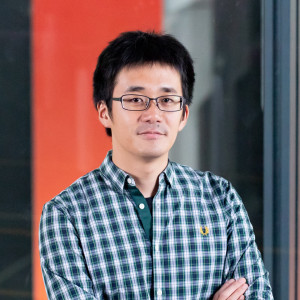
121st Data Assimilation and Prediction Science Seminar
September 28 (Mon) 14:00 - 16:00, 2026
Shunji Kotsuki
Title: "Exploring Live Cameras for Actionable Weather Prediction: Recent Studies with Chiba University’s BAECAST Network"
Abstract: Numerical weather prediction has advanced substantially through improvements in observing technologies, data assimilation methods, and numerical weather prediction (NWP) models. More recently, artificial intelligence (AI) has increasingly been used to develop surrogates for NWP models and to advance nonlinear and non-Gaussian data assimilation. These developments are expected to enable more effective use of large volumes of observational data, including satellite observations. To further improve weather forecast accuracy, it is important not only to refine data assimilation methods and NWP models but also to explore new sources of observations. Our research focuses on the vast amounts of data generated by live-streaming cameras already deployed in everyday settings. Many of these cameras capture aspects of weather conditions, and harnessing this information could contribute to further improvements in weather prediction. This talk will present several studies on weather forecasting and diagnostics using live-streaming cameras installed at Chiba University. I will introduce BAECAST, an approach to visual weather forecasting, and discuss which meteorological variables can be retrieved from live-camera imagery. I will also present our efforts to transform the nature of weather forecasts using live-camera data using a conditional diffusion model.
Venue: Hybrid Format (RIKEN R-CCS room C107 and Zoom) / via Zoom
Event Official Language: English
Seminar
Coexistence and hybridization in plant communities - lessons from mediterranean shrublands
October 1 (Thu) 13:00 - 14:00, 2026
Carmelo Gómez Martínez (Postdoctoral Researcher, Global Change Research Institute, Universidad Rey Juan Carlos, Spain)
This talk explores how two closely related Mediterranean shrubs, the rockroses Cistus ladanifer and Cistus laurifolius, share the same habitat despite being direct competitors for soil, light and pollinators. Hybridization – the natural interbreeding of two related species – often produces offspring that blend both parents' traits, and is surprisingly common in plants, including the Cistus genus. Fieldwork across Spain's Iberian Central System combining genomics, flowering timing and soil experiments shows that no single factor by itself – not genetics, climate or soil – fully explains these dynamics. The next step is to study how pollination shapes hybridization, and for that, we are developing and agent-based model that simulates bee foraging across realistic landscapes to predict new hybrid outcomes under environmental change.
Venue: Hybrid Format (3F #359 and Zoom), Seminar Room #359, 3F Main Research Building, RIKEN / via Zoom
Event Official Language: English
Seminar

Evolutionary Dynamics and Information Theory
October 1 (Thu) 15:00 - 16:00, 2026
Marc Harper (Data Scientist, Google Inc., USA)
We'll discuss some of the history of connections among information theory, evolutionary dynamics, and statistical inference, drawing analogies between concepts and results in these fields, for example between the replicator equation (a model of natural selection) and Bayesian inference. Time permitting, we'll continue with generalizations to finite populations with mutation and/or variations including an analogy between epigenetics from biological evolution and momentum from machine learning.
Venue: Seminar Room #359, 3F Main Research Building, RIKEN / via Zoom
Event Official Language: English
Seminar

Adaptive Regulation through Model-Observation Mismatch: From Process Control to Cognitive Neurorobotics
October 8 (Thu) 13:00 - 14:00, 2026
Henrique Oyama (Postdoctoral Researcher, Cognitive Neurorobotics Research Unit, Okinawa Institute of Science and Technology Graduate University (OIST))
Adaptive behavior requires biological and artificial systems to respond when their internal models no longer match what they observe. How can such discrepancies be used not only to correct predictions, but also to regulate how a system interacts with its environment?
In this talk, I will explore this question across two research directions spanning process control and cognitive neurorobotics. First, I will introduce a model predictive control framework in which a controller actively guides a nonlinear process toward informative conditions to distinguish among competing models while maintaining safe operation. I will then move to cognitive neurorobotics, where brain-inspired computational principles are used to investigate perception, prediction, and action in embodied artificial agents. In physical human-robot interaction, I will show how a predictive-coding-inspired recurrent neural network enables a humanoid robot to regulate the balance between its learned expectations and sensory information arising from human-guided movements. In particular, recent mismatches between sensory observations and the robot's internal model are used to regulate how strongly it relies on its learned dynamics or accommodates ongoing interaction. Together, these studies illustrate how model-observation mismatch can provide a general signal for adaptive regulation, connecting ideas from control engineering, artificial intelligence, neuroscience, and embodied cognition.
Venue: Hybrid Format (3F #359 and Zoom), Main Research Building, RIKEN Wako Campus / via Zoom
Event Official Language: English
Workshop
Quantum Computing for Nuclear Physics (QC-NP 2026)
October 13 (Tue) - 16 (Fri) 2026
Join us for a comprehensive workshop on the application of quantum computing to nuclear physics, bringing together experts from around the world to share the latest developments and advancements in this rapidly evolving field. The workshop will cover a broad range of topics, including quantum algorithms, quantum computing hardware, and their applications to lattice field theories, gauge field theories, scattering, nuclear structure, and nuclear astrophysics.
The workshop will provide ample opportunities for participants to exchange ideas, share their research, and initiate new collaborations. Through a combination of presentations and interactive discussion sessions, we aim to foster a collaborative environment that drives innovation and advances our understanding of the intersection of quantum computing and nuclear physics.
[Workshop Schedule]
The workshop will start from the morning of October 13
The banquet will be held on the evening of October 15
[Important Dates]
Registration deadline with oral presentation: August 31, 2026
Recommended to register by: August 31, 2026
[Invited Speakers]
A. Baha Balantekin (University of Wisconsin Madison)
Raul Briceño (University of California Berkeley/Lawrence Berkeley National Laboratory)
Philipp Höhn (Okinawa Institute of Science and Technology
Etsuko Itou (Kyoto University)
Dima Kharzeev (Brookhaven National Laboratory/Stony Brook University)
Yuta Kikuchi (Quantinuum)
Denis Lacroix (IJCLab)
Dean Lee (Michigan State University)
Mario Motta (IBM Quantum)
Takeshi Sato (University of Tokyo)
Ionel Stetcu (Los Alamos National Laboratory)
Paul Stevenson (University of Surrey)
Nathan Wiebe (University of Toronto)
Seiji Yunoki (RIKEN)
[Organizers]
Ermal Rrapaj (Lawrence Berkeley National Laboratory/RIKEN, Chair)
Carlo Barbieri (University of Milan)
Tetsuo Hatsuda (RIKEN)
Masaaki Kimura (RIKEN/University of Tokyo)
Haozhao Liang (University of Tokyo)
Tomoya Naito (University of Tokyo/RIKEN)
Enrico Prati (University of Milan)
Alessandro Roggero (University of Trento)
Takeshi Sato (University of Tokyo)
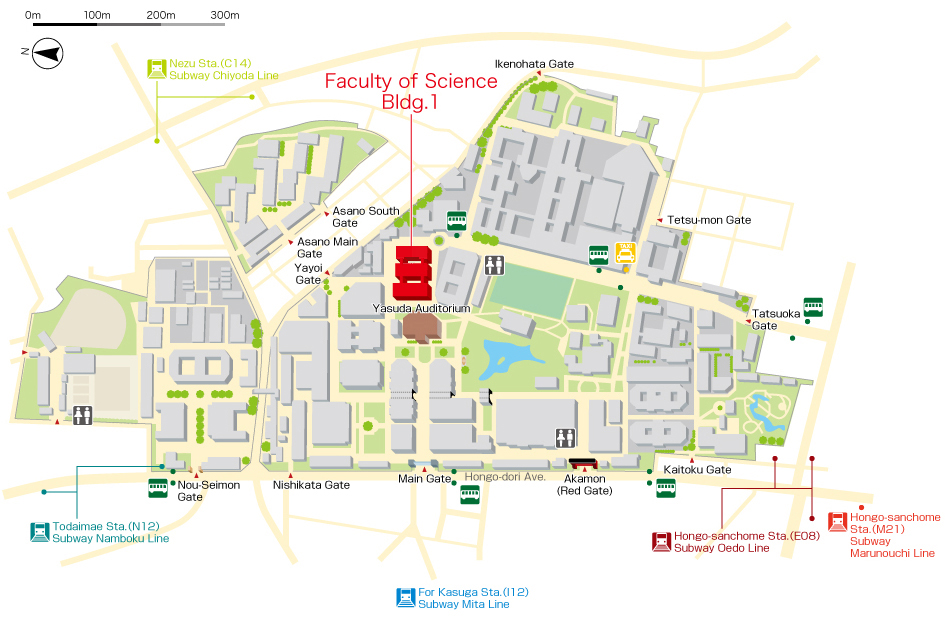
Venue: Faculty of Science Bldg.1, School of Science, The University of Tokyo, Hongo Campus
Register: Event registration form
Event Official Language: English
Seminar
From data to cohomologies of digraphs, to representations of categories
October 13 (Tue) 10:30 - 12:00, 2026
Luigi Caputi (Research Fellow, Department of Mathematics, University of Bologna, Italy)
Motivated by applications to topological data analysis, in the last years we have been witnessing a growing interest in new (topological, homological, categorical) features associated to graphs. The aim of the talk is to describe a recently developed (co)homology theory of directed graphs, called multipath cohomology, whose definition is inspired by Khovanov homology of knots. We will show its relations with more established invariants, such as chromatic homology of graphs, Hochschild homology of algebras, and matching complexes. If time allows it, we will show that the ranks of multipath cohomology, when restricted to graphs with bounded genus, grow at most polynomially in the number of edges, and that the order of its torsion is bounded. This will depend upon structural properties of (the representation category of) graphs, such as its Noetherianity properties.
Venue: #359, 3F, Main Research Building, RIKEN Wako Campus / via Zoom
Event Official Language: English
Workshop

Majorana Modes: Fundamentals, Status & Directions
October 13 (Tue) - 16 (Fri) 2026
Workshop Overview
Majorana modes lie at the heart of contemporary condensed-matter physics, exhibiting non-Abelian exchange statistics; when protected by topology, they are robust against environmental perturbations. Here, “Majorana mode” is used broadly to include a localized zero-energy Majorana state (a Majorana zero mode) and chiral Majorana edge states with gapless dispersion crossing zero energy.
This three-day in-person workshop returns to fundamentals and open questions. It opens with a tutorial session on the afternoon of October 13 for non-experts and adjacent fields, and emphasizes rigorous theory–experiment dialogue, robust methodology, and concrete benchmarks for realizing and testing Majorana modes.
Participants
Experimentalists and theorists working on Majorana modes
Researchers in adjacent fields (quantum materials, superconductivity, mesoscopic physics)
Graduate students and postdocs interested in entering the field
Topics include (non-exhaustive)
Majorana zero modes in a variety of nanostructures
Chiral Majorana edge states in quantum spin liquids and other platforms
Disorder, interactions, and realistic device modeling
Experimental diagnostics and “smoking gun” signatures
Topological Quantum Spin Systems
Venue: Okochi Hall, 1F Laser Science Laboratory, RIKEN
Register: Event registration form
Event Official Language: English
Seminar

AI and Scientific Discovery
October 19 (Mon) 13:00 - 14:00, 2026
Joseph Ledsam (Google Health Lead, Japan, Google Japan)
Artificial intelligence is having a transformative impact on health and scientific discovery. This presentation will trace the evolution from foundational breakthroughs to the sophisticated capabilities of today's large-scale AI models. It will explore how these advanced systems are creating new possibilities across the healthcare landscape, from accelerating therapeutic development to enhancing diagnostic processes and interpreting complex medical data. The session will also take a deeper look at the future possibilities for AI in health and explore the emerging role of agentic AI in scientific discovery. The core theme is the responsible development of AI to create tools that assist scientists, support healthcare professionals, and empower users.
Bio:
Dr Joseph Ledsam leads Google Health in Japan, where he works across AI research, digital health and health in Google products. He has led research in medical AI, genomics and drug discovery published in journals including Nature, Nature Medicine and Nature Methods. Before moving to Japan he worked as a medical doctor in the UK, and founded the Health Research and Genomics teams in Google DeepMind. He obtained his medical degree from The University of Leeds, UK, and was a research fellow at University College London during his clinical residency.
Venue: #435-437, Main Research Building, RIKEN Wako Campus / via Zoom
Event Official Language: English
Seminar
Quantum Creation of the Universe: Reassessing the No-Boundary and Tunneling Proposals
October 30 (Fri) 14:00 - 15:00, 2026
Hiroki Matsui (Researcher, Osaka Central Advanced Mathematical Institute, Osaka Metropolitan University)
How was our Universe created? This is one of the most fundamental questions in cosmology. Quantum cosmology attempts to answer it by using a "wave function of the Universe," and for four decades the discussion has been dominated by two proposals: the no-boundary proposal of Hartle and Hawking, and the tunneling proposal of Vilenkin. The two predict very different initial states for our Universe, yet for a long time there was no common framework in which they could be exactly analyzed and compared.
In this talk I will begin with a pedagogical introduction to the wave function of the Universe and to the Lorentzian path integral formulation based on Picard-Lefschetz theory, which makes the gravitational path integral well defined without the ambiguities of the traditional Euclidean approach and allows both proposals to be treated on the same footing. I will then present our recent results. Using Lefschetz-thimble analysis together with resurgence theory, we resolve the Stokes-line ambiguity that had obscured earlier analyses and show that the path integral uniquely yields the tunneling wave function rather than the no-boundary one. The no-boundary saddles nevertheless leave a trace: their contributions exactly cancel the Borel ambiguity of the perturbative quantum-gravity corrections around the tunneling saddle, demonstrating that resurgence is at work in quantum cosmology. I will also discuss what changes beyond general relativity, using Hořava-Lifshitz gravity as a concrete UV-complete example.
Venue: Hybrid Format (3F #359 and Zoom), Main Research Building, RIKEN Wako Campus / via Zoom
Event Official Language: English
Seminar
Scaling regimes of the 1D Kuramoto-Sivashinsky equation
November 5 (Thu) 17:00 - 18:30, 2026
Liubov Gosteva (Ph.D. Student, LPMMC, Université Grenoble Alpes, France)
The Kuramoto-Sivashinsky (KS) equation describes various phenomena exhibiting chaos and instabilities, including flames, reaction-diffusion processes, and thin liquid film flows. It resembles the Kardar-Parisi-Zhang (KPZ) equation, with the key difference being the negative "viscosity" in the KS equation. The KS equation is known to belong to the KPZ universality class: at large scales, its statistical properties are governed by the KPZ fixed point, characterized by the dynamical exponent $z=3/2$ and a known PDF of fluctuations. In this talk, I will analyze the stochastic KS equation using the functional renormalization group (FRG). In this framework, attractive fixed points of the FRG equation determine large-scale universal behavior, while unstable fixed points govern small-scale universal behavior. I will show that the two-point correlation function exhibits, besides the KPZ scaling at large scale, another universal scaling regime at small scale, with $z=1$. This scaling is very robust as it is intrinsic to the KS dynamics. It arises from the vanishing of the effective viscosity when evolving from its microscopic negative KS value, to its macroscopic effective positive KPZ value. I will also present results from direct numerical simulations, which confirm these findings.
References
- L. Gosteva, D. Roy, N. Wschebor, and L. Canet, Inviscid scaling in the Kuramoto-Sivashinsky equation from functional renormalization group and direct numerical simulations, arXiv: 2605.23364
- L. Gosteva, N. Wschebor, and L. Canet, Scaling regimes of the Kuramoto-Sivashinsky equation from the functional renormalization group, arXiv: 2607.15784
Venue: via Zoom
Event Official Language: English
Seminar

A non-negative matrix factorization-based approach to integrating multimodal omics data with automatically tuned hyperparameters
November 16 (Mon) 14:00 - 15:00, 2026
Dorothy Ellis (Postdoctoral Researcher, Laboratory for Integrative Genomics, RIKEN Center for Integrative Medical Sciences (IMS))
Venue: via Zoom
Event Official Language: English
Workshop

KEK(-iTHEMS) Theory Workshop 2026
November 25 (Wed) - 27 (Fri) 2026
Hirotaka Hayashi (Professor, Department of Physics, School of Science, Tokai University)
Hikaru Kawai (Visiting Professor, Nambu Yoichiro Institute of Theoretical and Experimental Physics (NITEP), Osaka Metropolitan University)
Takato Mori (Assistant Professor, Department of Physics, Faculty of Science, Rikkyo University)
Masaya Nakagawa (Assistant Professor, Department of Physics, Graduate School of Science, The University of Tokyo)
Masaki Shigemori (Professor, Department of Physics, Graduate School of Science, Nagoya University)
Tadashi Takayanagi (Professor, Yukawa Institute for Theoretical Physics, Kyoto University)
Norihiro Tanahashi (Program-Specific Associate Professor, Department of physics, Graduate School of Science, Kyoto University)
Tatsuya Yamaoka (Ph.D. Student, Department of Physics, Graduate School of Science, The University of Osaka)
The KEK Theory Workshop is an annual workshop on string theory and quantum field theory.
Since 2014, it has been held every winter as an international workshop and has become one of the major annual events in the high-energy physics community in Japan.
This year’s workshop will be held on site at the KEK Tsukuba Campus from November 25 to 27, and it will be jointly organized with RIKEN iTHEMS.
The workshop this year aims to provide a forum for extensive discussions on recent developments in string theory, matrix models, gauge/gravity duality, black-hole microstates, lattice constructions of chiral gauge theories, and open quantum systems.
Venue: Seminar Hall, Building 3, KEK Tsukuba Campus
Register: Event registration form
Event Official Language: English
Seminar
Hamiltonian simulation: Standard algorithms and recent developments
December 17 (Thu) 10:30 - 17:00, 2026
Kaoru Mizuta (Associate Professor, Center for Quantum Information and Quantum Biology, The University of Osaka)
This is a lecture-style seminar of quantum computation. The tentative schedule consists of three slots: 10:30-12:00, 13:30-15:00, and 15:30-17:00. Due to equipment limitations, the blackboard might not be visible on Zoom, so we recommend attending in person.
Venue: Seminar Room #359, 3F Main Research Building, RIKEN / via Zoom
Event Official Language: English
Meeting
iTHEMS NOW & NEXT 2027
July 13 (Tue) - 15 (Thu) 2027
We will hold our annual gathering, **“iTHEMS NOW & NEXT 2027,” from July 13 to 15, 2027**.
iTHEMS NOW & NEXT has traditionally been a two-day in-house event, providing an important opportunity for all iTHEMS members, including visiting researchers and new members, to gain a comprehensive overview of current activities across iTHEMS, to learn about research beyond their own fields, and to discuss where iTHEMS should go next.
In 2027, we will **expand NOW & NEXT from two to three days** and, for the first time, invite leading researchers from outside iTHEMS across a broad range of research fields. While the first two days will retain the main character of our traditional in-house gathering, the extended three-day format is intended to create a broader opportunity for scientific exchange and, in particular, to enable leading researchers from outside iTHEMS to become better acquainted with our research activities and with the researchers who make up the iTHEMS community.
As in previous years, the program will present activities across iTHEMS, including those of its divisions, research teams, working groups, and study groups, together with research presentations and poster sessions by iTHEMS members. Particular emphasis will be placed on communication across disciplinary and organizational boundaries and on identifying emerging research directions and opportunities for new collaborations.
The additional third day will build on the presentations and discussions of the preceding two days and provide an opportunity for invited researchers to gain a deeper understanding of the breadth and strengths of research at iTHEMS and to interact directly with our members. We hope that these exchanges will not only introduce iTHEMS and its researchers more widely to leading scientists in different fields, but also bring new perspectives to our community and open possibilities for future scientific interactions and collaborations.
Through this expanded three-day NOW & NEXT 2027, we hope to share where iTHEMS is now and where it is heading next, both within our own community and with leading researchers from outside iTHEMS, and to explore together new possibilities for the future development of iTHEMS.
Venue: 2F Large Conference Room, Administrative Headquarters, RIKEN Wako Campus / via Zoom
Event Official Language: English
Paper of the Week
Week 4, September 2026
2026-09-24
Title: PR-Smoother: Simulator-Preserving Non-Gaussian Smoothing for Data Assimilation
Author: Yuta Tarumi
arXiv: http://arxiv.org/abs/2609.26890v1
Title: Geometries of Quantum Field Theories
Author: Masahito Yamazaki
arXiv: http://arxiv.org/abs/2609.28210v1
Title: Quasinormal-mode redshifts of black holes in galactic halos with radial pressures
Author: Che-Yu Chen, Hassan Hassanabadi, Soroush Zare
arXiv: http://arxiv.org/abs/2609.27379v1
Title: Ejecta clumps revealed by study of reverse-shocked ejecta through MUSE integral field spectroscopy of SNR 0509-67.5
Author: Priyam Das, Ivo Seitenzahl, J. Martin Laming, Gilles Ferrand, Simon J. Murphy, Ashley Ruiter
Journal Reference: PASA, 2026;43:e105
doi: https://doi.org/10.1017/pasa.2026.10255
arXiv: http://arxiv.org/abs/2608.17465v1
Title: Bulk OPE Coefficients of the $E$-Series Virasoro Minimal Models
Author: Amaury Lhoste, Jiaxin Qiao, Masahito Yamazaki
arXiv: http://arxiv.org/abs/2609.25215v1
Title: Evidence for a Continuous Hadron--Quark Transition in Cold Dense Matter
Author: Yong-Jia Huang, Bikai Gao
arXiv: http://arxiv.org/abs/2609.22450v1
Title: QCD thermodynamics through the crossover as a gas of confining strings with repulsive interactions
Author: Yuki Fujimoto, Volodymyr Vovchenko
arXiv: http://arxiv.org/abs/2609.23292v1
Title: Statistical Mechanics of Quarkyonic Matter
Author: Marcus Bluhm, Yuki Fujimoto, Marlene Nahrgang
arXiv: http://arxiv.org/abs/2604.00247v1
Title: Physical and emergent nonpairwise interactions in oscillator networks: from higher-order phase reduction to coupling design
Author: Riccardo Muolo, Hiroya Nakao, Christian Bick
arXiv: http://arxiv.org/abs/2609.20632v1
If you would like to cancel your subscription or change your email address,
please let us know via our contact form.
Copyright © iTHEMS, RIKEN. All rights reserved.