
Volume 376
Back to Newsletter List


Volume 376
October 3, 2025
Press Release
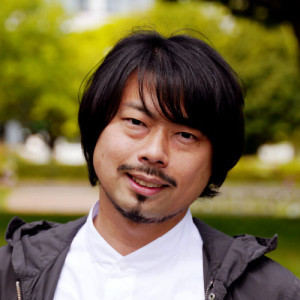
Who should be prioritized for continued COVID-19 vaccination?
2025-09-26
A research group led by Professor Shingo Iwami of the Graduate School of Science, Nagoya University (Visiting Scientist at iTHEMS, RIKEN), in collaboration with Professor Masaharu Tsubokura of Fukushima Medical University, analyzed changes in blood IgG(S) antibody titers from the initial two doses of the COVID-19 mRNA vaccine through the first booster dose. Their study revealed three characteristic patterns of antibody response: “durable responders,” “vulnerable responders,” and “rapid-decliners.”
For further details, please see the related links.
Award
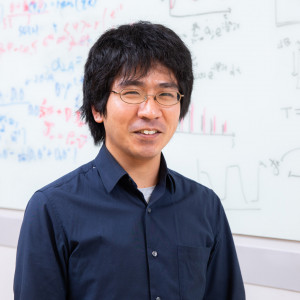
Shingo Gibo Receives the 23rd Japanese Society for Chronobiology Academic Early Career Award
2025-10-02
Shingo Gibo (Visiting Scientist, iTHEMS) has received the 23rd (2025) Japanese Society for Chronobiology Academic Early Career Award (学術奨励賞).
The award-winning research topic is “Theoretical research on biological clocks and hibernation focusing on time waveforms”.
He is the first to receive it solely for theoretical work.
The award ceremony and acceptance lecture are scheduled to take place at the 32nd Annual Meeting of the Japanese Society for Chronobiology on October 5, 2025.
Congratulations, Shingo!
Award
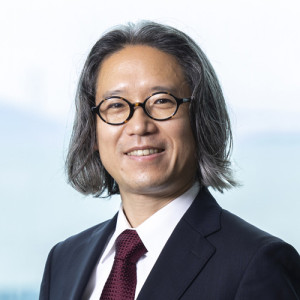
Takemasa Miyoshi honored as Guest of Honor by the Cordoba City Council
2025-09-26
On September 11, 2025, Takemasa Miyoshi (Team Director, Prediction Science Research Team, iTHEMS) was honored as Guest of Honor (Honorary Guest of Cordova City) by the Concejo Deliberante de Cordoba in recognition of his outstanding contributions to climate disaster prevention and early warning system development.
The Miyoshi team is leading the SATREPS project “PREVENIR” in Cordova, promoting the development of an early warning system for urban flooding.
This project provides a practical educational opportunity in applied science and contributes to strengthening international cooperation, primarily with Argentina.
Congratulations!!
Award

Kan Kitamura Receives the 2025 MSJ Takebe Katahiro Prize for Encouragement of Young Researchers
2025-09-26
Our colleague Kan Kitamura (Special Postdoctoral Researcher, iTHEMS) has received the 2025 MSJ Takebe Katahiro Prize for Encouragement of Young Researchers. The title of the research achievement is “Study of operator algebraic quantum groups”.
Congratulations, Kan!
Hot Topic

Farewell message from Tomoya Naito
2025-10-01
Our colleague, Tomoya Naito, has left iTHEMS at the end of September 2025 to join the Department of Nuclear Engineering and Management, Graduate School of Engineering, The University of Tokyo as a Project Assistant Professor. We are grateful for his many contributions during his time with us and wish him every success in his new position.
Here is a message from Tomoya:
I first joined the Quantum Hadron Physics Laboratory (Hatsuda Lab.) at the Nishina Center in June 2017 as a student trainee, and from that time I also began attending iTHEMS activities. In April 2022, I officially became a member of iTHEMS as an SPDR, and from April to September 2025 I was a JSPS PD. During these three and a half years (or unofficially, more than eight years!), I really enjoyed being a member of iTHEMS. Although I was often away on business trips in the last two and a half years, I have always appreciated the activities of iTHEMS.
My research is on low-energy nuclear physics and quantum many-body problems using density functional theory. Only a few people in iTHEMS are working in this field, but I had many opportunities to learn about other areas such as physics, mathematics, mathematical biology, and machine learning. These experiences gave me new knowledge and even led to new research topics. In particular, during the pandemic, I was not officially a member of iTHEMS, but I still joined many activities and had many discussions with iTHEMS colleagues. These experiences strongly influenced my current research direction. From this April, iTHEMS has been expanding and the atmosphere is also changing. It was a great honor to be a member during such an important period.
In October 2025, I moved to the Graduate School of Engineering, the University of Tokyo, as a Project Assistant Professor. Since RIKEN is still geographically close, I would like to continue joining iTHEMS activities, and I look forward to further interactions with everyone.
Finally, I would like to express my sincere appreciation to all the researchers and assistants of iTHEMS for their kind support.
Seminar Report

iTHEMS Theoretical Physics Seminar by Amaury Micheli on September 30, 2025
2025-09-30
In this seminar, spontaneous quasiparticle creation in an analogue preheating experiment is presented. Starting with a brief introduction of cosmological reheating and analogue gravity, recent experiments of spontaneous quasiparticle creation with Bose-Einstein condensates of cold atoms. There, various properties such as the entanglement of parametrically generated quasiparticle pairs are demonstrated.
Reported by Yuta Sekino

Spontaneous quasiparticle creation in an analogue preheating experiment
September 30 (Tue) 10:00 - 12:00, 2025
Upcoming Events
Lecture

Lectures on General Probabilistic Theories: From Introduction to Research Participation
October 6 (Mon) - 9 (Thu) 2025
Hayato Arai (JSPS Research Fellow, Graduate School of Arts and Sciences, The University of Tokyo)
(The deadline of the registration is on Sep 30.)
100 years have passed since quantum mechanics was born. The mathematical model has been describing the physical world remarkably well. However, the foundations of this model still remain unclear. A comprehensive understanding of quantum theory, including its foundations, is becoming even more important in an era where the demands of realizing quantum information technologies pose significant theoretical and experimental challenges.
The framework of General Probabilistic Theories (GPTs) is a modern approach to the foundations of quantum theory. It deals with mathematical generalizations of both classical and quantum theories and has attracted increasing attention in recent years. Roughly speaking, research on GPTs has three major objectives: characterizing the models of classical and quantum theories, investigating the fundamental limits of physical and information-theoretic properties arising from operational requirements, and deepening our understanding of the mathematical structures underlying classical and quantum theories. The studies of GPTs have provided many new perspectives on these topics. However, at the same time, there remain many important open problems in the field. For this reason, more researchers are encouraged to enter and contribute to research on GPTs.
This intensive three-day lecture series is designed to provide researchers and graduate students with the essential knowledge necessary for research on GPTs, starting from an introduction to the subject. The lectures will cover the mathematical foundations, physical and information-theoretic concepts, and both the established results and future directions of GPT research. The 1st day will present the necessary mathematical structures, including convex geometry, positive cones, and the operational formulation of probabilistic models. The 2nd day will explore composite systems, information-theoretic quantities, symmetries, and Euclidean Jordan algebras. The 3rd day will survey key results on discrimination and communication tasks, the characterization of classical and quantum theories, and open problems that connect GPTs to quantum information science and beyond.
Note: The content of each lecture may extend into the next slot or be covered earlier, depending on the pace of discussion and participant questions.
The 1st day (6th Oct.): Mathematical Introduction to GPTs
Venue: Large Meeting Room, 2F, Wako Welfare & Conference Building
10:30-12:00 Lecture 1 (Introduction and Mathematics on Positive Cones)
12:00-13:30 Lunch time
13:30-15:00 Lecture 2 (Mathematics on Positive Cones)
15:00-15:30 Coffee break
15:30-17:00 Lecture 3 (Introduction to General Models and Relation between Operational Probability Theories)
The 2nd day (7th Oct.): Physical and Information Theoretical Concepts in GPTs
Venue: Large Meeting Room, 2F, Wako Welfare & Conference Building
10:30-12:00 Lecture 4 (Composite Systems in GPTs)
12:00-13:30 Lunch time
13:30-15:00 Lecture 5 (Information Quantities)
15:00-15:30 Coffee break
15:30-17:00 Lecture 6 (Dynamics, Symmetry, and Euclidean Jordan Algebras)
The 3rd day (8th Oct): Previous and Future Studies in GPTs
Venue: Meeting Room 435-437, 4F, Wako Main Research Building
10:30-12:00 Lecture 7 (Discrimination and Communication Tasks)
12:00-13:30 Lunch time
13:30-15:00 Lecture 8 (Characterization of Classical and Quantum Theories)
15:00-15:30 Coffee break
15:30-17:00 Lecture 9 (Other Topics, Open Problems, and Future Directions)
18:00- Dinner
The day of no lecture (9th Oct): Open Discussion and Q&A
Research discussions will take place between the lecturer and participants in areas such as the hallways on the 3rd and 4th floors of the Main Research Bldg, RIKEN Wako Campus.
Venue: Welfare and Conference Bldg. 2F Meeting Room, RIKEN Wako Campus / #435-437, Main Research Building, RIKEN Wako Campus
Event Official Language: English
Seminar
Discovering and harnessing symmetry with machine learning
October 6 (Mon) 16:00 - 17:30, 2025
Escriche Santos Eduardo (Ph.D. Student, Department of Computer Science, Technical University of Munich, Germany)
Incorporating symmetry-inspired inductive biases into machine learning models has led to many significant advances in the field, especially for its application to scientific data. However, recently, a trend has emerged that favors implicitly learning relevant symmetries from data instead of designing constrained equivariant architectures. In this talk, I will first introduce these different modelling alternatives, together with their associated benefits and limitations. Then, I will describe some examples of automatic symmetry discovery methods as a way of mitigating some of those limitations. Finally, I will present our recent work that integrates symmetry discovery and the definition of an equivariant model into a joint learnable end-to-end approach, which further alleviates some of the limitations of current equivariant modelling approaches.
Reference
- Eduardo Santos Escriche, Stefanie Jegelka, Learning equivariant models by discovering symmetries with learnable augmentations, arXiv: 2506.03914
Venue: via Zoom
Event Official Language: English
Math Lecture
On ℓ_p-Vietoris-Rips complexes and blurred magnitude homology
October 7 (Tue) 11:00 - 13:00, 2025
Sergei O. Ivanov (Professor, Beijing Institute of Mathematical Sciences and Applications, China)
One of the main tools in topological data analysis is the notion of a persistence module. The most prominent example is the persistence module associated with the Vietoris–Rips complex of a finite metric space. On the other hand, the concept of magnitude has become increasingly well known in data analysis. Recently, Nina Otter introduced blurred magnitude homology, which is also a persistence module associated with a metric space. Govc and Hepworth showed that the magnitude of a finite metric space can be uniquely recovered from its blurred magnitude homology. For 1 ≤ p ≤ ∞, we define the ℓ_p-Vietoris–Rips complexes and the associated ℓ_p-persistent homology of metric spaces, and we study their fundamental properties. We show that for p=∞ this theory recovers the classical theory of Vietoris–Rips complexes and their persistent homology, while for p=1 it recovers the theory of blurred magnitude homology.
Venue: 3F 345-347 Seminar Room, Main Research Building, RIKEN Wako Campus / via Zoom
Event Official Language: English
Lecture

Lectures on Neutron Star Structure I
October 7 (Tue) 15:30 - 17:00, 2025
Mark Alford (Professor, Washington University in St. Louis, USA)
This is a lecture series by Prof. Mark Alford (Washington University in St. Louis) on the structure of neutron stars.
Oct. 7 (Tues), 15:30-17:00
Lecture I: Quark matter: the high-density frontier
The densest predicted state of matter is color-superconducting quark matter, which has some affinities to electrical superconductors, but a much richer phase structure because quarks come in many varieties. This form of matter may well exist in the core of compact stars, and the search for signatures of its presence is currently proceeding. I will review the nature of color-superconducting quark matter, and discuss some ideas for finding it in nature.
Oct. 14 (Tues), 15:30-17:00
Lecture II: Solid quark matter
I will review three ways in which quark matter can occur in a solid phase, where translational invariance is broken by some sort of crystalline structure. These include a color superconductor of the Fulde-Ferrell-Larkin-Ovchinnikov type, mixed phases that can arise at a nuclear/quark matter interface, and the strangelet crystal crust of a strange star.
Oct. 21 (Tues), 15:30-17:00
Lecture III: Dissipation in neutron star mergers
In a neutron star merger, nuclear matter experiences dramatic changes in temperature and density that happen in milliseconds. Mergers therefore probe dynamical properties that may help us uncover the phase structure of ultra-dense matter. I will describe some of the relevant material properties, focusing on flavor equilibration and its consequences such as bulk viscosity and damping of oscillations.
Oct. 28 (Tues), 15:30-17:00
Lecture IV: Neutrinos in dense matter: beyond modified Urca
Neutrino absorption and emission (the "Urca process") is an essential aspect of the formation and cooling of neutron stars and of the dynamics of neutron star mergers. In this talk I will describe the traditional way of calculating Urca rates, explain its shortfalls, and propose an alternative approach, the nucleon width approximation.
Venue: Seminar Room #359, 3F Main Research Building, RIKEN / via Zoom
Event Official Language: English
Seminar
Homo lupo lupus est: Man is a wolf to wolves.
October 9 (Thu) 14:00 - 15:00, 2025
Carlos Sarabia (Postdoctoral Researcher, Evolutionary Population Genetics Lab, Institute of Evolutionary Biology (IBE-CSIC), Spain)
The gray wolf (Canis lupus) is one of the most emblematic wild species in human history: revered as a symbol of strength and wildness, although unforgivably persecuted as a competitor and pest. Across Europe and much of Eurasia, wolves would still dominate as apex predators... were it not for millennia of human pressure. Today, their evolutionary trajectory is shaped not only by climate fluctuations and habitat loss, but also by a uniquely flexible species boundary. Due to their unique karyotype, canids can admix freely with other related species, a capacity that both threatens the genetic integrity of wild canids like wolves and enriches our understanding of hybridization as a driver of adaptation. In this talk, we will explore recent studies on wolf demography under human pressure and climatic change, with particular attention to admixture with domestic dogs and the consequences for their survival in increasingly anthropized environments. Finally, we will observe how the wolf's distinctive genomic architecture makes it a powerful model for testing population genetics theoretical frameworks and for applying state-of-the-art computational tools, offering new insights into the understanding of evolution as a force for change.
Venue: via Zoom
Event Official Language: English
Others

Mathematical Application Research Team Meeting #9
October 10 (Fri) 13:30 - 14:30, 2025
Antoine Diez (Research Scientist, Mathematical Application Research Team, Division of Applied Mathematical Science, RIKEN Center for Interdisciplinary Theoretical and Mathematical Sciences (iTHEMS))
In this meeting, Antoine Diez will give a talk entitled "Mean-field limits a la Tanaka and large deviations for particle systems with network interactions." Feel free to join if you are interested.
Venue: #359, 3F, Main Research Building, RIKEN Wako Campus / via Zoom
Event Official Language: English
Colloquium

Why do we sleep? — The Role of Calcium and Phosphorylation in Sleep
October 10 (Fri) 15:30 - 17:00, 2025
Hiroki R. Ueda (Professor, Systems Pharmacology, Graduate School of Medicine, The University of Tokyo / Professor, Department of Systems Biology, Institute of Life Science, Kurume University)
Sleep remains one of greatest remaining mysteries. At the Sleep 2012 conference, we conceived a shift from the concept of “sleep substances” to “wake substances” such as calcium, suggesting that sleep homeostasis may arise from the integration of wake-related activity. Inspired by Dr. Setsuro Ebashi’s work on calcium signaling, we investigated calcium’s role in sleep regulation.
Using our Triple-CRISPR method (Sunagawa et al. 2016), we screened 25 genes related to calcium channels and pumps, revealing calcium as a brake on brain activity to promote sleep (Tatsuki et al. 2016). We also developed a tissue-clearing method CUBIC (Susaki et al. 2014; Tainaka et al. 2014) to visualize calcium’s effects on neural circuits. Further work showed that calcium-dependent enzymes, CaMKIIα/β kinases, act as calcium “memory” devices, with phosphorylation sites controlling sleep onset, duration, and termination (Tone et al. 2022). Other direct and indirect calcium-dependent phosphatases, Calcineurin and PP1 (sleep-promoting), and opposing kinases, PKA (wake-promoting), function as synaptic sleep switches (Wang et al. 2024).
We also identified the ryanodine receptor 1, a calcium channel, as a molecular target of inhalational anesthetics, hinting at shared pathways between anesthesia and sleep (Kanaya et al. 2025). Lastly, we proposed the WISE (Wake Inhibition Sleep Enhancement) mechanism, where quiet wakefulness suppresses and deep sleep strengthens synaptic connections, explaining links between sleep, depression, and antidepressant effects (Kinoshita et al. 2025).
Venue: Okochi Hall, 1F Laser Science Laboratory, RIKEN / via Zoom
Event Official Language: English
Seminar
Temporal Evolution of Crustal Stress at Volcanoes During Periods of Unrest
October 14 (Tue) 10:30 - 12:00, 2025
Eric Newland (Research Fellow, Faculty of Mathematical & Physical Sciences, University College London, UK)
Eruptions that occur at volcanoes after periods of quiescence are difficult to forecast. Pathways that connect the source to the surface may have become sealed. The pressurisation of the source leads to the deformation of the crust. Initially the crust deforms elastically, strain is accommodated via ground movement and elastic strain energy is stored to the crust. Then, the deformation transitions to inelastic where strain is accommodated via brittle failure (volcano-tectonic event), and elastic strain energy is transferred from the crust.
We present a novel method to estimate the temporal evolution of elastic strain energy and bulk stress during periods of unrest. We consider the transfer of energy using measurements of surface deformation and seismic activity. We evaluate the temporal evolution of crustal bulk stress and investigate the progression of deformation in the crust. We apply our method to the unrest at the Campi Flegrei caldera, Italy from 2011-2024, and the eruption of Sierra Negra, Galapagos, 2018. Our calculations reveal that the bulk stress follows a characteristic progression, in which the stress initially increases linearly with time prior to the onset of significant seismicity, consistent with elastic deformation. We then observe a transition to inelastic deformation, when rate of elastic strain energy lost via fracturing increases and eventually exceeds the rate of elastic strain energy transferred to the crust. This results in a decrease in the bulk stress stored in the crust with time, indicating a progressive weakening of the crustal material due to seismicity-induced damage. Comparison with laboratory experiments show the behaviour is consistent with bulk failure in extension and the potential formation of new pathways in the crust.
Finally, we demonstrate how our method, along with the understanding of eruption precursors gained from the results, can be used to constrain deformation regimes at reawakening volcanoes after extended repose and to evaluate the hazard posed during periods of unrest.
Venue: Hybrid Format (RIKEN R-CCS room 107 and Zoom)
Event Official Language: English
Seminar
Particle-in-Cell Simulations on Collisionless Shocks and Particle Acceleration in Black Hole Coronae
October 16 (Thu) 14:00 - 15:15, 2025
Nhat-Minh Ly (Ph.D. Student, Department of Physics, The University of Osaka)
Multiple nearby Active Galactic Nuclei have been reported as sources of high-energy neutrinos detected by the IceCube observatory. These results strongly suggest efficient proton acceleration to (sub-)PeV energies, likely within Black Hole (BH) coronae, given the lack of γ-ray counterparts. The acceleration mechanisms remain unconfirmed due to limited understanding of coronal environments and challenges in modeling hot, relativistic plasmas. Although diffusive shock acceleration (DSA) has been proposed, a self-consistent treatment incorporating detailed kinetic plasma effects has been lacking. In this study, we present the particle-in-cell (PIC) method as a first-principles approach to investigate particle acceleration by collisionless shocks under conditions inferred from multi-wavelength observations of BH coronae. Using large-scale 1D3V simulations, we surveyed shock parameters, focusing on underexplored effects such as initial ion–electron temperature ratios and trans-relativistic shock velocities, and found that collisionless shocks can form even in hot, low-Mach plasmas. These shocks accelerate protons up to ~100 TeV, consistent with the energies required for IceCube neutrino detections, across a wide range of coronal conditions. The shocks partition ~10% of dissipated energy into nonthermal protons and <1% into electrons, providing critical, observationally testable constraints on the plasma state of BH coronae.
Venue: Hybrid Format (3F #359 and Zoom), Seminar Room #359, 3F Main Research Building, RIKEN
Event Official Language: English
Seminar

Bonded Knotted Structures and Applications
October 16 (Thu) 16:00 - 18:00, 2025
Sofia Lambropoulou (Professor, School of Applied Mathematical and Physical Sciences, National Technical University of Athens, Greece)
We present the theory of bonded knots and bonded knotoids, as well as their algebraic counterparts, the theory of bonded braids and bonded braidoids. We also discuss some applications to the topological study of proteins.
Venue: via Zoom / Seminar Room #359, 3F Main Research Building, RIKEN
Event Official Language: English
Workshop
RIKEN–Berkeley Workshop on Quantum Gravity 2025
October 23 (Thu) - 24 (Fri) 2025
This workshop will serve as the first meeting of the collaboration between the Leinweber Institute for Theoretical Physics (LITP) at the University of California Berkeley and the RIKEN Center for Interdisciplinary Theoretical and Mathematical Sciences (iTHEMS). Participation is open and researchers from other institutions are welcome to attend. The workshop will feature talks on recent developments in the field of Quantum Gravity and other relevant topics.
Venue: via Zoom / #359 (23rd Morning) & #435-437 (23rd Afternoon & 24th Morning), Main Research Building, RIKEN Wako Campus
Event Official Language: English
Seminar
Introduction to Lean theorem prover
October 31 (Fri) 14:00 - 17:00, 2025
Yuma Mizuno (Postdoctoral Researcher, University College Cork, Ireland)
A theorem prover is a tool for the formalization of mathematics, that is, for rigorously expressing and verifying theorems and proofs on a computer. In recent years, the Lean theorem prover has seen progress in the formalization of a wide range of areas of mathematics. In this talk, I will explain formalization of mathematics in Lean from the basics and survey the formalized results achieved to date.
Venue: via Zoom / #359, Seminar Room #359, 3F Main Research Building, RIKEN
Event Official Language: English
Seminar
Rational function semifields of dimension one
November 7 (Fri) 13:30 - 15:30, 2025
JuAe Song (Assistant Professor, Faculty of Mathematics, Kyushu University)
Recently some researchers gave many studies toward algebro-geometric foundation for tropical geometry. I focused on rational function semifields of tropical curves and characterized them. With this characterization, in this talk, I suggest a definition of ``rational function semifield of dimension one". This definition can write out weight in the term of $\boldsymbol{T}$-algebra homomorphism, and can write balancing condition together with harmonic functions, where both weight and balancing condition are fundamental concepts for tropical varieties and $\boldsymbol{T}$ is the tropical semifield $(\boldsymbol{R} \cup \{-\infty\}, \operatorname{max}, +)$.
Venue: Seminar Room #359, 3F Main Research Building, RIKEN / via Zoom
Event Official Language: Japanese
Lecture
9th QGG Intensive Lectures – Correlation Effects in Quantum Many-Body Systems: Some Prototypical Examples in Condensed Matter Physics
November 19 (Wed) - 20 (Thu) 2025
Norio Kawakami (Deputy Director, Fundamental Quantum Science Program, TRIP Headquarters, RIKEN)
The ninth installment of the Intensive Lecture Series, organized by the Quantum Gravity Gatherings (QGG) study group at RIKEN iTHEMS, will feature Prof. Norio Kawakami from the Fundamental Quantum Science Program (FQSP) under RIKEN's Transformative Research Innovative Platform (TRIP). Over the course of two days, Prof. Kawakami will deliver a lecture series on quantum many-body systems.
In recent years, insights from quantum many-body physics have become central to research in quantum gravity, where correlation effects induced by gravity play nontrivial roles. By bridging perspectives from gravitational physics and quantum many-body dynamics, one hopes to understand how macroscopic spacetime and its geometric properties emerge from the collective behavior of quantum constituents at microscopic scales.
In this lecture series, Prof. Kawakami will introduce the fundamental properties of correlation effects through representative examples in condensed matter physics. A distinctive aspect of this event is its joint organization with the Fundamental Quantum Science Program (FQSP) at RIKEN. The goal is to further strengthen connections between the quantum gravity, condensed matter, and quantum information communities.
The lectures will be delivered in a blackboard-style format (in English), designed to foster interaction, active participation, and in-depth Q&A discussions. In addition, short talk sessions will be held, giving participants the opportunity to present briefly on topics of their choice. Through this informal and dynamic setting, we hope to spark active interactions among participants and create an environment where ideas can be shared openly and enthusiastically.
Abstract:
Some examples of theoretical methods to treat strongly correlated systems in condensed matter physics are explained. We start with the Kondo effect, which is one of the most fundamental quantum many-body problems and has been intensively studied to date in a wide variety of topics such as dilute magnetic alloys, heavy fermion systems, quantum dot systems, etc. Dynamical mean-field theory (DMFT) is then introduced, which enables us to systematically treat strongly correlated materials such as a Mott insulator. It is shown that the essence of DMFT is closely related to the Kondo effect. Furthermore, we explain how to apply conformal field theory (CFT) to treat correlation effects in one-dimensional electron systems.
Topics of these lectures include:
- Introduction to quantum many-body systems in condensed matter physics
- The Kondo effect: a prototypical quantum many-body problem
- Dynamical mean-field theory: a generic method to study correlation effects
- Application of CFT to correlated electron systems in one dimension
For more information, please visit the event webpage from the links below.
Venue: #435-437, 4F, Main Research Building, RIKEN Wako Campus
Event Official Language: English
Upcoming Visitor
October 6 (Mon) - 31 (Fri) 2025 Mark AlfordProfessor, Washington University in St. Louis, USA Visiting Place: Main Research Building |
Paper of the Week
Week 1, October 2025
2025-10-02
Title: Vector Horndeski black holes in nonlinear electrodynamics
Author: Che-Yu Chen, Antonio De Felice, Shinji Tsujikawa, Taishi Sano
arXiv: http://arxiv.org/abs/2509.23134v1
Title: Regularized Lednicky-Lyuboshitz formula for higher-partial waves in femtoscopy
Author: Koichi Murase, Tetsuo Hyodo
arXiv: http://arxiv.org/abs/2509.22844v1
Title: The Courant-Hilbert construction in 4D Chern-Simons theory
Author: Osamu Fukushima, Takaki Matsumoto, Kentaroh Yoshida
arXiv: http://arxiv.org/abs/2509.22080v1
Title: A first characterization of the leaflet endophytic prokaryotic community in Dioon cycads
Author: Gonzalo Contreras-Negrete, Antonio Hernández-López, Jimena Jazmín Hurtado-Olvera, Miguel Ángel Pérez-Farrera, José Said Gutiérrez-Ortega
Journal Reference: Plant Species Biology
doi: https://doi.org/10.1111/1442-1984.70029
If you would like to cancel your subscription or change your email address,
please let us know via our contact form.
Copyright © iTHEMS, RIKEN. All rights reserved.