
Volume 363
Back to Newsletter List


Volume 363
July 11, 2025
Press Release
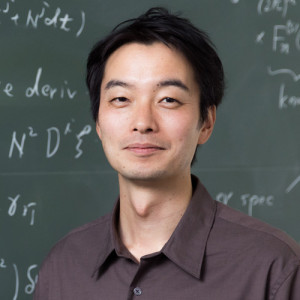
Capturing the Echoes of Black Holes with Mathematical Precision
2025-07-10
A research group including Ryo Namba (Senior Research Scientist, iTHEMS) has successfully demonstrated a method that systematically and precisely captures the frequency structure of rapidly decaying quasinormal modes of black holes by incorporating the mathematical technique known as exact WKB analysis.
This result enables more rigorous analysis of gravitational wave signals from black holes in various theoretical models and is expected to contribute to improving the precision of future gravitational wave observations and verifying the fundamental properties of black holes with greater accuracy.
For further details, please refer to the related link below.
Reference
- Taiga Miyachi, Ryo Namba, Hidetoshi Omiya, Naritaka Oshita, Path to an exact WKB analysis of black hole quasinormal modes, Phys. Rev. D 111, 124045 (2025), doi: 10.1103/1gmr-9f1g
Research News

RIKEN NEWS: The Appeal of the ECL Program in Nurturing Early-Career Researchers
2025-07-08
An interview with Leo Speidel (RIKEN ECL Research Unit Leader, Mathematical Genomics RIKEN ECL Research Unit) has been featured in the Topics section, as part of the Close-up RIKEN 2025 series on RIKEN’s research introduction page. A video interview is also available alongside the article.
The RIKEN Early Career Leaders (ECL) Program was launched in 2023 to provide more substantial support for early-career researchers. Building on and expanding the previous RIKEN Hakubi Program, the ECL Program enables researchers to pursue agile and flexible research. In addition to appointing Team Leaders (equivalent to department heads or young professors at universities), the program has introduced the position of Unit Leader (equivalent to section heads or associate professors/lecturers at universities) to support outstanding young researchers with limited experience. These Unit Leaders are provided with a highly mobile and independent research environment at their host research centers.
We spoke with Dr. Leo Speidel, the RIKEN ECL Research Unit Leader of the Mathematical Genomics RIKEN ECL Research Unit, Mathematical Science Core Division, at the Interdisciplinary Theoretical and Mathematical Sciences Program (iTHEMS), who is part of the program's first cohort. He is working to uncover human evolution and history through the study of DNA mutations, and he shared with us the appeal of the ECL Program.
For more information, please see the related links below.
Upcoming Events
External Event


What is “Quantum”!?: RIKEN Symposium Commemorating 100 Years of Quantum Science
July 12 (Sat) 13:00 - 17:00, 2025
Makoto Kobayashi (Director Emeritus, Kobayashi-Maskawa Institute for the Origin of Particles and the Universe (KMI), Nagoya University)
Yasunori Nomura (Professor/Director, Berkeley Center for Theoretical Physics, University of California, Berkeley, USA)
Kenji Ito (Professor, Division of Contemporary Culture, Graduate School of Letters, Kyoto University)
Miho Hatanaka (Professor, Department of Chemistry, Faculty of Science and Technology, Keio University)
Norio Kawakami (Deputy Director, Fundamental Quantum Science Program, TRIP Headquarters, RIKEN)
Yasushi Okada (Deputy Director, RIKEN Center for Biosystems Dynamics Research (BDR))
Kouichi Hagino (Professor, Graduate School of Science, Kyoto University)
Shigeki Takeuchi (Professor, Graduate School of Engineering, Kyoto University)
Yasunobu Nakamura (Director, RIKEN Center for Quantum Computing (RQC))
Makoto Gonokami (President, RIKEN)
In celebration of the 100th anniversary of the birth of quantum science, the United Nations General Assembly has declared 2025 as the International Year of Quantum Science and Technology, coordinated by UNESCO.
To mark this occasion, we will host a public symposium entitled:
“What is “Quantum”!?: RIKEN Symposium Commemorating 100 Years of Quantum Science”, aimed at the general public.
The talks will be conducted in Japanese.
For more details and to register, please visit the official website via the related link.
Venue: via Zoom
Event Official Language: Japanese
Seminar
Self-organization mechanism of adaptive colony size sensing in ants
July 17 (Thu) 13:00 - 14:00, 2025
Kazuki Tsuji (Professor, Department of Environmental Sciences and Technology, University of the Ryukyus)
Social insects such as ants and termites are superorganisms, and traits of a colony change in a manner similar to the growth of an individual. The most common pattern is that reproductive castes are produced only when the colony size exceeds a certain threshold, which is well known to be adaptive. This means that social insects can “sense” their own colony size. However, how they achieve this even without visual information in a dark environment was yet largely unknown. We empirically tested the self-organization hypothesis on the proximate mechanism using ant colonies. In Diacamma colonies the monogynous queen is known to increase the effort devoted to queen pheromone–transmission behaviour (patrolling) as the colony grows, as if she perceives colony size. The negative feedback hypothesis assumes that through repeated physical contacts with workers the queen monitors the physiological state (fertility) of workers and increases her patrolling effort when she encounters more fertile workers. Supporting this hypothesis, we found that queens increased patrol effort in response to a higher ratio of fertile workers under the experimental condition of constant colony size. Furthermore, supplementary experiments suggested that cuticular hydrocarbons can mediate the observed queen–worker communication of fertility state. However, when the colony size exceeds a certain value, information transmission fails, resulting in the production of the next generation of reproductive caste. Such a self-organising mechanism of sensing colony size may also operate in other social insects living in small colonies.
Venue: Seminar Room #359, 3F Main Research Building, RIKEN / via Zoom
Event Official Language: English
Meeting

Mathematical Application Research Team Meeting #7
July 18 (Fri) 14:00 - 15:30, 2025
Hirosi Ooguri (Fred Kavli Professor and Director, Walter Burke Institute for Theoretical Physics, California Institute of Technology, USA)
As the 7th meeting of the Mathematical Application Research Team, we invite Prof. Hirosi Ooguri to give a lecture.
Title: Gravity is Different - Counterexamples to the Wilsonian Paradigm of Low Effective Theory
Venue: via Zoom / #359, Seminar Room #359, 3F Main Research Building, RIKEN
Event Official Language: English
Seminar
Thermal evolution of accreting neutron stars
July 20 (Sun) 16:00 - 17:30, 2025
Martin Javier Nava-Callejas (Postdoc, Université Libre de Bruxelles, Belgium)
Neutron stars undergoing mass accretion at low-mass X-ray binary systems (LMXBs) represent an outstanding opportunity to test our current models for nuclear matter and its properties, in particular those related to thermonuclear reactions at the surface, as well as the evolution of their ashes via weak reactions. While some aspects are relatively well understood, there are others which call out for further attention or a re-examination of what we so far know. In this talk I will discuss the current state-of-art regarding the modelling of thermal evolution of these objects and will introduce a new method aimed to simplify the calculation of thermal evolution during accreting episodes.
Venue: via Zoom
Event Official Language: English
Seminar
Peaks sphericity of non-Gaussian random fields
July 22 (Tue) 10:30 - 12:00, 2025
Michiru Uwabo (Ph.D. Student / JSPS Research Fellow DC, Faculty of Science, Ochanomizu University)
We formulate the statistics of peaks of non-Gaussian random fields and implement it to study the sphericity of peaks. For non-Gaussianity of the local type, we present a general formalism valid regardless of how large the deviation from Gaussian statistics is. For general types of non-Gaussianity, we provide a framework that applies to any system with a given power spectrum and the corresponding bispectrum in the regime in which contributions from higher-order correlators can be neglected. We present an explicit expression for the most probable values of the sphericity parameters, including the effect of non-Gaussianity on the profile. We show that the effects of small perturbative non-Gaussianity on the sphericity parameters are negligible, as they are even smaller than the subleading Gaussian corrections. In contrast, we find that large non-Gaussianity can significantly distort the peak configurations, making them much less spherical.
Reference
- Cristiano Germani (Barcelona U.), Mohammad Ali Gorji (IBS, Daejeon, CTPU), Michiru Uwabo-Niibo (IBS, Daejeon, CTPU and Ochanomizu U., Inst. Human. Sci.), Masahide Yamaguchi (IBS, Daejeon, CTPU and Nihon U., IQS), Peaks sphericity of non-Gaussian random fields, arXiv: 2503.05434
Venue: Hybrid Format (3F #359 and Zoom), Seminar Room #359, 3F Main Research Building, RIKEN
Event Official Language: English
Seminar
Detectability of post-Newtonian classical and quantum gravity via quantum clock interferometry
July 22 (Tue) 14:00 - 15:00, 2025
Eyuri Wakakuwa (Associate Professor, Department of Mathematical Informatics, Graduate School of Informatics, Nagoya University)
Understanding physical phenomena at the intersection of quantum mechanics and general relativity remains a major challenge in modern physics. While various experimental approaches have been proposed to probe quantum systems in curved spacetime, most focus on the Newtonian regime, leaving post-Newtonian effects such as frame dragging largely unexplored. In this study, we propose and theoretically analyze an experimental scheme to investigate how post-Newtonian gravity affects quantum systems. We consider two setups: (i) a quantum clock interferometry configuration designed to detect the gravitational field of a rotating mass, and (ii) a scheme exploring whether such effects could mediate entanglement between quantum systems. Due to the symmetry of the configuration, the proposed setup is insensitive to Newtonian gravitational contributions but remains sensitive to the frame-dragging effect. Assuming the validity of the quantum equivalence principle, this approach may provide insights not only into the quantum nature of gravity but also into whether spacetime itself exhibits quantum properties. However, our analysis reveals that, within realistic experimental parameters, the expected effects are too small to be detected. We discuss possible interpretations of this undetectability, and its implications for tests of quantum gravity.
Venue: #445--447, 4F, Main Research Building, RIKEN Wako Campus / via Zoom
Event Official Language: English
Seminar

Mesoscopic transport via one-dimensional chain with Localized two-body loss
July 23 (Wed) 10:00 - 11:30, 2025
Kensuke Kakimoto (Ph.D. Student, Faculty of Science and Engineering, School of Fundamental Science and Engineering, Waseda University)
Mesoscopic transport has long served as a powerful probe into the quantum behavior of matter; however, the role of dissipation in such systems remains unresolved. In recent years, quantum simulations of mesoscopic systems with ultracold atomic gases have made significant progress, particularly through the use of optical tweezers to induce local dissipation via atom loss. In this talk, we discuss a two-terminal mesoscopic system in which two-body loss occurs locally at the center of a one-dimensional chain, modeling a dissipative quantum point contact. To analyze this setup, we employ the Keldysh Green’s function formalism in combination with a noise-field representation of Lindblad dynamics. Our analysis reveals that the dissipation strength depends on the occupation number of the central dissipative site, leading to a weaker suppression of particle current in the weakly dissipative regime compared to the case of one-body loss.
Reference
- Kensuke Kakimoto and Shun Uchino, Quantum Point Contact with Local Two-body Loss (2025), arXiv:2505.24391 (2025), doi: 10.48550/arXiv.2505.24391, arXiv: 2505.24391
Venue: Hybrid Format (3F #359 and Zoom), Seminar Room #359, 3F Main Research Building, RIKEN
Event Official Language: English
Meeting
iTHEMS NOW & NEXT 2025
July 24 (Thu) - 25 (Fri) 2025
We will hold this fiscal year’s annual in-house gathering, “iTHEMS NOW & NEXT,” as follows.
This event is a rare opportunity for all iTHEMS members, including visiting researchers, to gain a comprehensive overview of iTHEMS’s current activities and future directions.
Program
July 24th
9:30-9:45 Opening by Director Iso
9:45-10:10 Keynote lecture Sonia Mahmoudi
10:10-10:35 Keynote lecture Masazumi Honda
10:35 20-min break
10:55
Fundamental Quantum Science Program (FQSP) introduction
Working Group introduction 5-min each
11:30 Lunch break
13:30 Teams introduction part 1
RIKEN-Berkeley Center RIKENーBerkeley Center (Shigehiro Nagataki)
Mathematical Application Research Team (Motoko Kotani / Tsukasa Tada)
13:50 11 SG Presentation 5 min each
14:45 break
15:00 Flash talks & Poster session
18:00 Reception
July 25th
9:30 Keynote lecture Yuto Yamamoto
9:55 Keynote lecture Kyosuke Adachi
10:20 break
10:40 Teams introduction part 2
Prediction Science Research Team (Takemasa Miyoshi)
Medical Science Deep Learning Team (Jun Seita)
Medical Science Data-driven Mathematics Team (Eiryo Kawakami)
Quantum Mathematical Science Team (Tetsuo Hatsuda)
Mathematical Social Science Team (Yohsuke Murase)
11:30 Lunch
13:30 Flash Talk & Poster presentation
16:30 Concluding remark
Venue: 2F Large Conference Room, Administrative Headquarters, RIKEN Wako Campus / via Zoom
Event Official Language: English
Workshop
The Theory of Periodic Tangles & Their Interdisciplinary Applications
July 28 (Mon) - August 1 (Fri) 2025
The mathematical characterization of entanglement holds immense potential for describing the mechanical functions of diverse physical systems and materials. A universal interdisciplinary study, involving scientists, engineers, and artists promises both advance of the field itself and significant contribution to the research and design of innovative solutions for textiles, medical devices, polymers, molecular chemistry, or construction materials among others. The program seeks an alternative to the trial–and–error approach, bringing together academia and industry to seek new sustainable solutions and inspiration, contributing to society. It will consist not only of scientific exchanges but will promote cultural impact by organizing exhibitions or hands–on workshops. Additionally, it will encourage several discussions by providing networking opportunities and utilizing the unique venue of House of Creativity at Tohoku University.
This workshop will gather researchers from various disciplines and include invited lectures, a poster session, roundtable discussions, and brainstorming activities. Our focus will be on exploring the connections between knot theory and its applications in areas such as polymers and soft matter, textile mechanics, graphic design, and more.
This event includes a joint symposium between the WPI–AIMR (Tohoku University) and WPI–SKCM2 (Hiroshima University) on Friday, August 1st, 2025: INTERWOVEN: A WPI–AIMR & WPI–SKCM2 Symposium, Towards a Universal Topological Model of Entangled Structures for Sustainable Metamaterials
Please fill in the registration form by June 16th 2025.
Confirmed speakers (alphabetical order):
Jörn Dunkel (Massachusetts Institute of Technology)
Yuanyuan Guo (Tohoku University)
Tatsuki Hayama (Keio University)
Louis H. Kauffman (University of Illinois at Chicago)
Yuka Kotorii (Hiroshima University)
Sofia Lambropoulou (National Technical University of Athens)
Eleni Panagiotou (Arizona State University)
Pedro M. Reis (École Polytechnique Fédérale de Lausanne)
Takahiro Sakaue (Aoyama Gakuin University)
Vanessa Sanchez (Rice University)
Henry Segerman (Oklahoma State University)
Koya Shimokawa (Ochanomizu University)
Hiroshi Suito (Tohoku University)
Ryuichi Tarumi (Osaka University)
Hirofumi Wada (Ritsumeikan University)
Please refer to the workshop website via the relevant link for more details.
We are looking forward to your participation and to welcoming you to Sendai!
Venue: TOKYO ELECTRON House of Creativity, Katahira Campus, Tohoku University
Event Official Language: English
Workshop
Recent Developments and Challenges in Tensor Networks: Algorithms, Applications to science, and Rigorous theories
July 28 (Mon) - August 8 (Fri) 2025
Venue: Panasonic Hall, Yukawa Institute for Theoretical Physics, Kyoto University
Event Official Language: English
Colloquium

Chemical and isotopic analyses of samples returned by the Hayabusa2 mission from the asteroid Ryugu
August 1 (Fri) 14:00 - 15:30, 2025
Tetsuya Yokoyama (Professor, Department of Earth and Planetary Sciences, School of Science, Institute of Science Tokyo)
The recent success of asteroid sample return missions has led to significant advances in Solar System science. JAXA's Hayabusa2 successfully retrieved and returned to Earth a total of 5.4 grams of samples from the C-type asteroid Ryugu. Sample return missions are critical to the scientific community, as they provide pristine, terrestrially unaltered extraterrestrial material. The analytical data obtained in laboratories for samples collected by space missions will facilitate the understanding of the formation and evolution of the Solar System. I was appointed deputy leader of the Initial Analysis Chemistry team of Hayabusa2 project, and was heavily involved in analyzing the chemical and isotopic compositions of Ryugu materials. A series of analyses of these samples indicated that the mineral, chemical, and isotopic compositions of Ryugu bear a strong resemblance to those of the Ivuna-type (CI) carbonaceous chondrites. CI chondrites have been recognized as a unique group of meteorites with a chemical composition similar to that of the solar photosphere except for highly volatile elements and Li. In the seminar, I will present the meaning and significance of the compositional similarity between Ryugu and CI chondrites. I will also present our recent activities in a new project called the Ryugu Reference Project, which was initiated to maximize the potential value of the returned samples.
Venue: 2F Large Conference Room, Administrative Headquarters, RIKEN Wako Campus / via Zoom
Event Official Language: English
Seminar
iTHEMS Cosmology Forum #4 - Evolving Cosmos: new physical insights from new spectroscopic data
August 4 (Mon) - 5 (Tue) 2025
Seshadri Nadathur (Associate Professor, University of Portsmouth, UK)
Andrei Cuceu (NASA Einstein Fellow, Lawrence Berkeley National Laboratory (LBNL), USA)
Gerrit Farren (Postdoc, Lawrence Berkeley National Laboratory (LBNL), USA)
Antonio De Felice (Associate Professor, Yukawa Institute for Theoretical Physics, Kyoto University)
Linda Blot (Project Assistant Professor, Kavli Institute for the Physics and Mathematics of the Universe (Kavli IPMU), The University of Tokyo)
Wen Yin (Associate Professor, Department of Physics, Graduate School of Science, Tokyo Metropolitan University)
iTHEMS Cosmology Forum Workshop is a series of short workshops, each focusing on an emerging topics in cosmology. The target audience is cosmologists, high-energy physicists and astronomers interested in learning about the subject, not just those who have already worked on the topic. The goal of the workshop is to provide working knowledge of the topic and leave dedicated time for discussions to encourage mutual interactions among participants.
The fourth workshop is dedicated to new physics discoveries enabled by new spectroscopic data. Nearly three decades after the discovery of accelerated expansion, there is at last compelling data pointing away from the simple cosmological constant. The results of new data hint at evolving dark energy, but the statistical significance and physical interpretation are both far from clear. Furthermore, another anticipated new physics measurement of the neutrino mass has also proven difficult. With this workshop, we aim to interrogate both the statistical evidence for new physics as well as the theoretical implications if these new results are confirmed.
This forum will consist of two days.
The workshop will be in English.
The workshops are organised by the iTHEMS Cosmology Forum working group, which is the successor of the Dark Matter Working Group at RIKEN iTHEMS.
Important dates:
July 18 - Registration deadline
August 4th, 5th - Workshop Days
Invited Speakers:
Sesh Nadathur (University of Portsmouth)
Andrei Cuceu (LBNL)
Gerrit Farren (LBNL)
Antonio De Felice (YITP)
Linda Blot (IPMU)
Wen Yin (TMU)
Venue: #435-437, 4F, Main Research Building, RIKEN Wako Campus
Event Official Language: English
Workshop
iTHEMS-NCTS Workshop
August 18 (Mon) - 21 (Thu) 2025
This workshop aims to strengthen collaboration between researchers at RIKEN iTHEMS and the National Center for Theoretical Sciences in Taiwan. It will be a four-day event, with the first two days dedicated to interdisciplinary topics. The last two days will focus on specialized areas, with one day devoted to condensed matter physics and the other to high-energy physics, including quantum gravity.
Venue: via Zoom / RIKEN Wako Campus
Event Official Language: English
Seminar

Computer Algebra with Deep Learning
September 5 (Fri) 15:00 - 17:00, 2025
Yuki Ishihara (Assistant Professor, Department of Mathematics, College and Science Technology, Nihon University)
Computer algebra is a field that aims to perform various mathematical calculations on computers. In recent years, there has been a surge in efforts to accelerate computer algebra algorithms using deep learning models such as “Transformer,” which is used in ChatGPT. In this lecture, I will introduce the results of joint research with Professor Kera et al. on learning Gröbner bases with Transformer.
Reference
- Yuki Ishihara, Computer Algebra with Deep Learning
Venue: via Zoom / #359, Seminar Room #359, 3F Main Research Building, RIKEN
Event Official Language: English
Conference
XIIIth International Symposium on Nuclear Symmetry Energy (NuSym25)
September 8 (Mon) - 13 (Sat) 2025
[Scientific scope]
The symposium will address experimental and theoretical investigations of the equation-of-state (EoS) of nuclear matter at various isospin asymmetries. Such investigations include efforts in nuclear structure, nuclear reactions and heavy-ion collisions, as well as in astrophysical observations of compact stars and associated phenomena. An important role of the symposium is to unify efforts of the nuclear physics and astrophysics communities in addressing common research challenges.
Venue: Integrated Innovation Building (IIB), Kobe Campus, RIKEN
Event Official Language: English
Lecture
8th QGG Intensive Lecture: Quantum reference frames and their applications in high-energy physics
September 24 (Wed) - 26 (Fri) 2025
Philipp Höhn (Assistant Professor, Qubits and Spacetime Unit, Okinawa Institute of Science and Technology Graduate University (OIST))
Quantum reference frames (QRFs) are a universal tool for dealing with symmetries in quantum systems. Roughly speaking, they are internal subsystems that transform in some non-trivial way under the symmetry group of interest and constitute the means for describing quantum systems from the inside in purely relational terms. QRFs are thus crucial for describing and extracting physics whenever no external reference frame for the symmetry group is available. This is in particular the case when the symmetries are gauge, as in gauge theory and gravity, where QRFs arise whenever building physical observables. The choice of internal QRF is typically non-unique, giving rise to a novel quantum form of covariance of physical properties under QRF transformations. This lecture series will explore this novel perspective in detail with a specific emphasis on applications in high-energy physics and gravity.
I will begin by introducing QRFs in mechanical setups and explain how they give rise to quantum structures of covariance that mimic those underlying special relativity. I will explain how this leads to subsystem relativity, the insight that different QRF decompose the total system in different ways into gauge-invariant subsystems, and how this leads to the QRF dependence of correlations, entropies, and thermal properties. We will then explore how relational dynamics in Hamiltonian constrained systems and the infamous "problem of time" can be addressed with clocks identified as temporal QRFs. In transitioning to the field theory setting, we will first consider hybrid scenarios, where QRFs are quantum mechanical, but the remaining degrees of freedom are quantum fields including gravitons. I will explain how this encompasses the recent discussion of "observers", generalized entropies, and gravitational von Neumann algebras by Witten et al. and how subsystem relativity leads to the conclusion that gravitational entanglement entropies are observer dependent. We will then discuss the classical analog of QRFs in gauge theory and gravity and how they can be used to build gauge-invariant relational observables and to describe local subsystems. This will connect with discussions on edge and soft modes in the literature, the former of which turn out to be QRFs as well. This has bearing on entanglement entropies in gauge theories, which I will describe on the lattice, providing a novel relational construction that overcomes the challenges faced by previous constructions, which yielded non-distillable contributions to the entropy and can be recovered as the intersection of "all QRF perspectives". Finally, I will describe how the classical discussion of dynamical reference frames can be used to build a manifestly gauge-invariant path integral formulation that opens up novel relational perspectives on effective actions and the renormalization group in gravitational contexts, which is typically plagued by a lack of manifest diffeomorphism-invariance. I will conclude with open questions and challenges in the field.
Program:
September 24
10:15 - 10:30 Registration and reception with coffee
10:30 - 12:00 Lecture 1
12:00 - 13:30 Lunch
13:30 - 15:00 Lecture 2
15:00 - 16:00 Coffee break
16:00 - 17:00 Lecture 3
17:10 - 18:10 Short talk session
18:20 - 21.00 Banquet
September 25
10:15 - 10:30 Morning discussion with coffee
10:30 - 12:00 Lecture 4
12:00 - 13:30 Lunch
13:30 - 15:00 Lecture 5
15:00 - 16:00 Coffee break
16:00 - 17:00 Lecture 6
17:10 - 18:10 Short talk session
September 26
10:15 - 10:30 Morning discussion with coffee
10:30 - 12:00 Lecture 7
12:00 - 13:30 Lunch
13:30 - 15:00 Lecture 8
15:00 - 16:00 Coffee break
16:00 - 17:00 Lecture 9 & Closing
Venue: #435-437, 4F, Main Research Building, RIKEN Wako Campus
Event Official Language: English
Person of the Week

Self-introduction: Zhe Wang
2025-07-09
I received my doctoral degree from Tsinghua University in 2023. After that, I spent two years at Kyoto University as a postdoctoral researcher. In 2025, I joined iTHEMS.
My main research interest lies in exploring various aspects of mathematical physics using tools from integrable systems. In particular, I apply techniques from (infinite-dimensional) Hamiltonian integrable systems to study Gromov-Witten type theories, mirror symmetry, and related topics. A typical problem in this area involves constructing integrable systems that govern the partition functions of specific theories—such as cohomological field theory, equivariant quantum cohomology, quantum K-theory, or symplectic field theory—and analyzing their structure through the integrable systems.
More recently, I've become increasingly interested in the connections between integrable hierarchies and quantum algebras, such as vertex algebras and W-algebras. While the classical relationships between these fields have been well studied, understanding their quantum counterparts remains a rich and challenging direction. I believe that further progress in this area will deepen our overall understanding of integrable systems, which play a central role in mathematical physics.
If you’re interested in my work or would like to discuss related topics, I’d be very happy to hear from you. Please feel free to reach out!
Paper of the Week
Week 2, July 2025
2025-07-10
Title: Neural Unfolding of the Chiral Magnetic Effect in Heavy-Ion Collisions
Author: Shuang Guo, Lingxiao Wang, Kai Zhou, Guo-Liang Ma
arXiv: http://arxiv.org/abs/2507.05808v1
Title: Pair Correlation Conjecture for the zeros of the Riemann zeta-function II: The Alternative Hypothesis
Author: Daniel A. Goldston, Junghun Lee, Jordan Schettler, Ade Irma Suriajaya
arXiv: http://arxiv.org/abs/2507.06823v1
Title: Quantum Machine Learning for Identifying Transient Events in X-ray Light Curves
Author: Taiki Kawamuro, Shinya Yamada, Shigehiro Nagataki, Shunji Matsuura, Yusuke Sakai, Satoshi Yamada
Journal Reference: ApJ 987 105 (2025)
doi: https://doi.org/10.3847/1538-4357/adda43
arXiv: http://arxiv.org/abs/2507.05589v1
Title: Zariski-dense deformations of standard discontinuous groups for pseudo-Riemannian homogeneous spaces
Author: Kazuki Kannaka, Toshiyuki Kobayashi
arXiv: http://arxiv.org/abs/2507.03476v1
Title: Whole-genome ancestry of an Old Kingdom Egyptian
Author: Adeline Morez Jacobs, Joel D. Irish, Ashley Cooke, Kyriaki Anastasiadou, Christopher Barrington, Alexandre Gilardet, Monica Kelly, Marina Silva, Leo Speidel, Frankie Tait, Mia Williams, Nicolas Brucato, Francois-Xavier Ricaut, Caroline Wilkinson, Richard Madgwick, Emily Holt, Alexandra J. Nederbragt, Edward Inglis, Mateja Hajdinjak, Pontus Skoglund, Linus Girdland-Flink
Journal Reference: Nature 2025
doi: https://doi.org/10.1038/s41586-025-09195-5
If you would like to cancel your subscription or change your email address,
please let us know via our contact form.
Copyright © iTHEMS, RIKEN. All rights reserved.