
Volume 434
Back to Newsletter List


Volume 434
November 13, 2026
Press Release
Developing a New Method to Uncover Hidden Topological Materials
2026-11-09
A collaborative research team including Seishiro Ono, then a Special Postdoctoral Researcher at iTHEMS (now a Visiting Scientist at iTHEMS), has developed a theoretical method to systematically construct topological invariants, which are used to identify the topological properties of materials, according to crystal symmetry.
The method uses the Atiyah-Hirzebruch spectral sequence, a mathematical technique for investigating the topological properties of the entire momentum space. When applied to time-reversal-symmetric superconductors that conventional symmetry indicators cannot diagnose, the method completely identified their topological properties in 159 of the 230 space groups.
This result is expected to enable the theoretical discovery of topological materials that previous methods could not identify, accelerating comprehensive materials searches and the search for new materials.
For more details, please refer to the related link.
Reference
- Seishiro Ono and Ken Shiozaki, Toward Complete Characterization of Topological Insulators and Superconductors: A Systematic Construction of Topological Invariants Based on Atiyah-Hirzebruch Spectral Sequence, Physical Review X 16, 041024 (2026), doi: 10.1103/2rw7-bzl4
Press Release
Proof of the Law of Increasing Entropy from Quantum Mechanics
2026-11-09
A collaborative research group including Ryusuke Hamazaki, Senior Research Scientist at iTHEMS and RIKEN Hakubi Team Leader, has for the first time proved that the law of increasing entropy, a fundamental expression of the second law of thermodynamics, can be derived from quantum mechanics.
The group constructed a quantum-mechanical framework for thermal equilibrium states and thermodynamic operations based on macroscopically meaningful physical quantities. Using this framework, they showed that entropy does not decrease under macroscopic operations on thermal equilibrium states, including pure quantum states.
This result is expected to advance the understanding of how thermodynamics, the law governing the macroscopic world, emerges from quantum mechanics, the law governing the microscopic world.
For more details, please refer to the related link.
Reference
- Yuuya Chiba, Yasushi Yoneta, Ryusuke Hamazaki, Akira Shimizu, Second law of thermodynamics in closed quantum many-body systems, PRX Quantum 7, 043023 (2026), doi: 10.1103/3y8f-yrp8
Hot Topic
A new math framework captures symmetry in layered materials
2026-11-10
An international research team including Sonia Mahmoudi, Assistant Professor at the Advanced Institute for Materials Research (AIMR), Tohoku University, and Visiting Scientist at iTHEMS's Tohoku University Collaboration Team, has developed a new mathematical framework for describing symmetry in complex layered structures.
The study extends orbifold notation, a compact symbolic language for describing symmetry, to structures that repeat in two directions while extending into three dimensions. Although this notation has been used for two-dimensional periodic patterns and three-dimensional structures that repeat in all directions, a corresponding framework for periodic layered structures had been unavailable.
The researchers applied the framework to knitted fabrics, whose interlocking strands form three-dimensional structures. The work is expected to help clarify the relationship between structure and properties in layered and entangled materials, supporting the design of materials with desired characteristics.
For more details, please refer to the related link.
Reference
- Sonia Mahmoudi, Elizabeth J. Dresselhaus, and Michael S. Dimitriyev, n orbifold framework for classifying layer groups with an application to knitted fabrics, Interface Focus 16 (2): 20250093 (2026), doi: 10.1098/rsfs.2025.0093
Hot Topic

Farewell Message from Che-Yu Chen
2026-11-09
Our colleague, Che-Yu Chen, will leave iTHEMS on November 30, 2026, and join the Institute for Basic Science (IBS) in South Korea as a Young Scientist Fellow. We will all miss him and wish him the best of luck in his new endeavor.
Here is a message from Che-Yu:
Since joining iTHEMS in 2023, I have greatly benefited from its stimulating and exciting research environment. Through discussions with researchers from diverse backgrounds, I have been constantly inspired by how people from different fields can approach the same problem from different perspectives. At the same time, I have been fascinated by how often scientific questions arising in seemingly unrelated fields can be addressed using similar mathematical or physical approaches. This has been a truly unique and rewarding experience during my time at iTHEMS. In addition, I have had the opportunity to organize several workshops and intensive lectures, as well as attend numerous seminars. These experiences have been extremely fruitful and have significantly broadened my research horizons.
My time at iTHEMS has also been particularly special to me personally, as I became the father of twins in 2024. I’m truly grateful to have been part of iTHEMS during such an important chapter of my life. It was an extremely challenging period for me, and I would like to express my heartfelt gratitude to all the assistants, especially Chikako-san and Keiko-san, for their kind support and patience in answering my endless questions. I am also deeply grateful to RIKEN for allowing me to take a couple of months of childcare leave overseas, an opportunity that, as far as I know, remains uncommon not only in Asia but also in many other parts of the world. Furthermore, I sincerely appreciate the freedom and flexibility that iTHEMS has given me to balance my research responsibilities with family life.
Leaving Japan and joining IBS in South Korea marks the beginning of a new and challenging chapter in my life. Nevertheless, I will always cherish my time at iTHEMS, and I’m quite sure that I will return to visit from time to time!
Upcoming Events
Seminar

A non-negative matrix factorization-based approach to integrating multimodal omics data with automatically tuned hyperparameters
November 16 (Mon) 14:00 - 15:00, 2026
Dorothy Ellis (Postdoctoral Researcher, Laboratory for Integrative Genomics, RIKEN Center for Integrative Medical Sciences (IMS))
Venue: via Zoom
Event Official Language: English
Seminar
Real-time calculations for excited state tunneling
November 17 (Tue) 14:00 - 15:30, 2026
Thomas Steingasser (Postdoctoral Fellow, Institute of Theoretical Physics (IFT), Spain)
Quantum tunnelling is conventionally formulated through Euclidean instantons, obscuring the role of physical time and complicating non-vacuum initial states. I will review the steadyon picture, in which infinitesimally regulated real-time path integrals are controlled by complex saddles whose projections recover familiar instantons. I will summarize its applications to finite-temperature decay, resonance states and states carrying conserved Noether charge, highlighting an emerging unified description of tunnelling beyond the false vacuum.
Venue: Hybrid Format (3F #359 and Zoom), Seminar Room #359, 3F, Main Research Building, RIKEN / via Zoom
Event Official Language: English
Seminar

Two Universal Pathways in Demographic Transition
November 19 (Thu) 13:00 - 14:30, 2026
Kenji Itao (Special Postdoctoral Researcher, Computational Group Dynamics Collaboration Unit, RIKEN Center for Brain Science (CBS))
Demographic transition, characterized by declines in fertility and mortality, is a global phenomenon associated with modernization. While typical patterns of fertility decline have been described mainly in Western countries, their applicability to other regions and the underlying mechanisms remain unclear. Using data spanning 1800–2020 from 237 countries and territories, I identify two universal pathways in the relationship between the crude birth rate (births per 1,000 person-years, λ) and period life expectancy at birth (e₀). Most countries' demographic trajectories follow one of these two pathways or shift between them. These pathways define phases governed by different mechanisms. Phase I, conserving λe₀, dominated until the mid-20th century and was characterized by high child mortality and steady population growth. By contrast, Phase II, conserving λexp(e₀/17), has prevailed since 1950 and is marked by low child mortality and steady growth in GDP per capita. I also introduce theoretical models considering the trade-off between reproduction and education to elucidate the transition between these phases. The transition to Phase II is accelerated by declining educational costs, rising social mobility, and cultural transmission linked to modernization and Westernization. This study demonstrates quantitative regularities between fertility and longevity during demographic transition and provides a theoretical lens for understanding their underlying mechanisms.
Venue: Hybrid Format (3F #359 and Zoom), Seminar Room #359, 3F, Main Research Building, RIKEN / via Zoom
Event Official Language: English
Seminar
Quantum Simulation of Non-Equilibrium Dynamics in SU(2) and SU(3) Lattice Gauge Theories
November 24 (Tue) 15:00 - 16:30, 2026
Xiaojun Yao (Research Assistant Professor, University of Washington, USA)
Venue: Seminar Room #359, 3F, Main Research Building, RIKEN / via Zoom
Event Official Language: English
Workshop

KEK(-iTHEMS) Theory Workshop 2026
November 25 (Wed) - 27 (Fri) 2026
Hirotaka Hayashi (Professor, Department of Physics, School of Science, Tokai University)
Hikaru Kawai (Visiting Professor, Nambu Yoichiro Institute of Theoretical and Experimental Physics (NITEP), Osaka Metropolitan University)
Takato Mori (Assistant Professor, Department of Physics, Faculty of Science, Rikkyo University)
Masaya Nakagawa (Assistant Professor, Department of Physics, Graduate School of Science, The University of Tokyo)
Masaki Shigemori (Professor, Department of Physics, Graduate School of Science, Nagoya University)
Tadashi Takayanagi (Professor, Yukawa Institute for Theoretical Physics, Kyoto University)
Norihiro Tanahashi (Program-Specific Associate Professor, Department of physics, Graduate School of Science, Kyoto University)
Tatsuya Yamaoka (Ph.D. Student, Department of Physics, Graduate School of Science, The University of Osaka)
The KEK Theory Workshop is an annual workshop on string theory and quantum field theory.
Since 2014, it has been held every winter as an international workshop and has become one of the major annual events in the high-energy physics community in Japan.
This year’s workshop will be held on site at the KEK Tsukuba Campus from November 25 to 27, and it will be jointly organized with RIKEN iTHEMS.
The workshop this year aims to provide a forum for extensive discussions on recent developments in string theory, matrix models, gauge/gravity duality, black-hole microstates, lattice constructions of chiral gauge theories, and open quantum systems.
Venue: Seminar Hall, Building 3, KEK Tsukuba Campus
Register: Event registration form
Event Official Language: English
Seminar
Rare k-mers reveal centromere haplogroups underlying human diversity and cancer translocation
November 26 (Thu) 13:00 - 14:00, 2026
Yuichi Shiraishi (Chief, Division of Genome Analysis Platform Development, National Cancer Center Japan)
Centromeres are highly variable and rapidly evolving regions of the human genome, and are frequently implicated in various cancers. Human centromeres consist of highly repetitive DNA sequences known as α-satellite higher-order repeats (HORs), which makes their analysis using conventional genome sequencing approaches extremely challenging. Although long-read sequencing technologies now enable near-complete sequencing of centromeres, applying these methods to large numbers of samples remains difficult. As a result, our understanding of centromere diversity across populations and its role in chromosomal rearrangements in cancer has remained limited.
In this study, by focusing on rare k-mer markers, we demonstrate that α-satellite HOR haplotypes cluster into genetically related haplogroups. We further developed a software tool, ascairn, to accurately infer these haplogroups from common short-read whole-genome sequencing (WGS) data. Applying our approach to a dataset of more than 3,300 human samples revealed extensive centromere diversity and geographic variation.
We also applied the rare k-mer–based approach to centromere sequences from 104 Japanese individuals generated as part of the Japanese Pangenome Project. This analysis revealed characteristic patterns of centromere evolution in the Japanese population and provided new insights into Japanese-specific centromere variation.
In addition, we used this method to investigate class-defining chromosomal translocations, specifically der(1;19), also known as 1p/19q co-deletion, in oligodendrogliomas. By analyzing 142 samples from TCGA, we hypothesized that the breakpoints occurred on the p-arm side of D1Z7 and the q-arm side of D19Z3. This hypothesis was subsequently validated through extensive long-read sequencing in two cases, indicating that der(1;19) results in a dicentric chromosome containing two functional centromeres. We also observed that chromosomal rearrangements preferentially occurred in haplotypes with longer repetitive arrays on either the q-arm or p-arm side of the centromere. Furthermore, we identified specific centromere haplogroups associated with either increased or decreased likelihoods of der(1;19) translocations.
Our findings show that rare k-mer analysis is a powerful approach for investigating centromere complexity and clarifying the mechanisms underlying centromere-associated abnormalities in cancer.
Venue: via Zoom / Seminar Room #359, 3F, Main Research Building, RIKEN
Event Official Language: English
Seminar
Quantum Geometry from Matrices: Framework and Applications
November 30 (Mon) 15:00 - 16:30, 2026
Harold Steinacker (Senior Scientist, Faculty of Physics, University of Vienna, Austria)
I will discuss the general framework of matrix geometry, which is a version of quantum geometry defined by a set of almost-commuting matrices. This framework allows for an efficient description of manifolds embedded in some target or feature space, which is particularly efficient for high-dimensional manifolds. I will discuss some applications in data science as well as in fundamental physics, notably how spacetime and gravity can emerge from the IKKT or IIB matrix model in this framework.
References
- Alexander G. Abanov, Luca Candelori, Harold C. Steinacker, Martin T. Wells, Jerome R. Busemeyer, Cameron J. Hogan, Vahagn Kirakosyan, Nicola Marzari, Sunil Pinnamaneni, Dario Villani, Mengjia Xu, Kharen Musaelian, Quantum Geometry of Data, arXiv: 2507.21135
- Harold C. Steinacker, Quantum spacetime and gravity from the IKKT matrix model: an invitation, arXiv: 2609.08955
Venue: Hybrid Format (3F #359 and Zoom), Main Research Building, RIKEN Wako Campus / via Zoom
Event Official Language: English
Seminar

Chiral Anomaly, Neutral-Pion Lifetime and Axion–Photon Coupling
December 7 (Mon) 15:00 - 16:30, 2026
Xu Feng (Professor, Director, Institute of Theoretical Physics, School of Physics, Peking University, China)
The chiral anomaly provides one of the rare opportunities to test QCD in the confinement regime at the percent level and beyond. A prime example is the neutral pion lifetime: after two decades of PrimEx measurements reaching 1.5% precision, future experiments at an upgraded 22 GeV JLab aim at the sub-percent level, calling for a comparably precise first-principles QCD prediction.
The same anomaly also governs the QCD contribution to the axion–photon coupling, a key quantity connecting axion models to experimental searches for one of the leading dark-matter candidates. In this talk, I will present our recent lattice QCD studies of these two quantities, going beyond the chiral limit.
Venue: Hybrid Format (3F #359 and Zoom), Seminar Room #359, 3F, Main Research Building, RIKEN / via Zoom
Event Official Language: English
Seminar
Hamiltonian simulation: Standard algorithms and recent developments
December 17 (Thu) 10:30 - 17:00, 2026
Kaoru Mizuta (Associate Professor, Center for Quantum Information and Quantum Biology, The University of Osaka)
This is a lecture-style seminar of quantum computation. The tentative schedule consists of three slots: 10:30-12:00, 13:30-15:00, and 15:30-17:00. Due to equipment limitations, the blackboard might not be visible on Zoom, so we recommend attending in person.
Venue: Seminar Room #359, 3F, Main Research Building, RIKEN / via Zoom
Event Official Language: English
Seminar

Binary Neutron Star Mergers as the source of UHECRs
December 18 (Fri) 14:00 - 15:30, 2026
Glennys Farrar (Professor of Physics, New York University, USA)
I will show that Ultrahigh Energy Cosmic Ray data points to binary neutron star mergers as the source of UHECRs, and discuss several unique predictions which confirm this scenario:
Venue: Seminar Room #359, 3F, Main Research Building, RIKEN / via Zoom
Event Official Language: English
Seminar

Optimal transport: Thermodynamics, biological information processing and generative models
January 18 (Mon) 13:30 - 15:00, 2027
Sosuke Ito (Associate Professor, Graduate School of Science, The University of Tokyo)
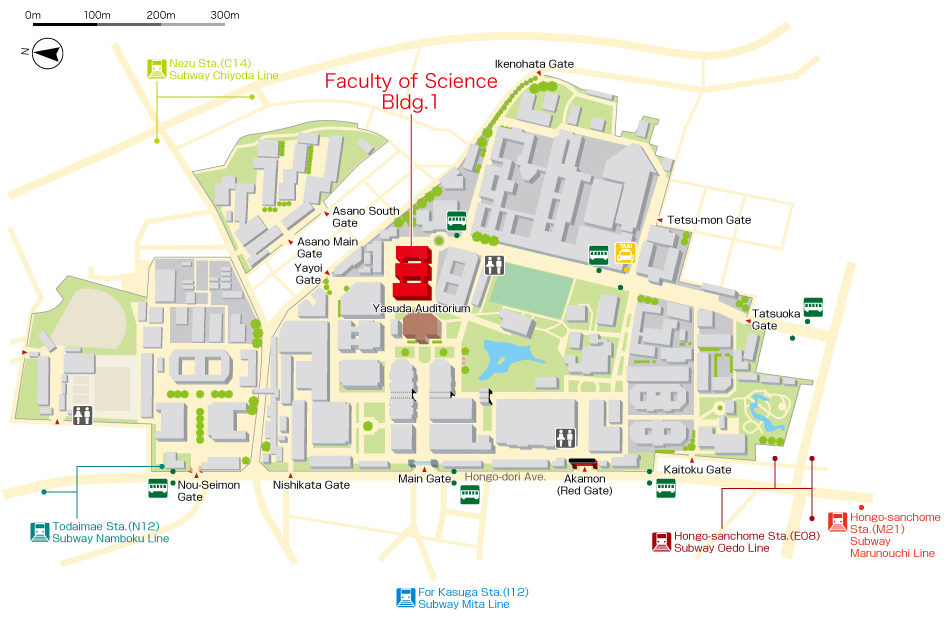
This is a joint seminar co-hosted by Institute for Physics of Intelligence (iπ), UTokyo, and the Venue is #1042,10F of Science Bldg.1
Optimal transport theory is a useful theoretical framework for geometrically characterizing the distance between probability distributions.
It is not only used in recent research on generative models but has also been applied to detect information-processing capabilities in biological systems from a statistical perspective, and to discuss thermodynamic efficiency. In this seminar, I will begin with an introduction to optimal transport theory, and also discuss our research on its various applications.
More specifically, I will discuss the following topics: 1) The problem of minimizing entropy production within a finite time and its experimental testing. 2) The application of optimal transport to the training of generative models, specifically diffusion models, and their optimal protocols. 3) Quantifying information processing performance using optimal transport in biological signal transduction.
References
- Mintu Nandi, Sosuke Ito, Decoding cell signaling via optimal transport and information theory, arXiv: 2602.18028
- Kotaro Ikeda, Tomoya Uda, Daisuke Okanohara, Sosuke Ito, Speed-Accuracy Relations for Diffusion Models: Wisdom from Nonequilibrium Thermodynamics and Optimal Transport, arXiv: 2407.04495
Venue: Faculty of Science Bldg.1, School of Science, The University of Tokyo, Hongo Campus / via Zoom
Event Official Language: English
Meeting
iTHEMS NOW & NEXT 2027
July 13 (Tue) - 15 (Thu) 2027
We will hold our annual gathering, **“iTHEMS NOW & NEXT 2027,” from July 13 to 15, 2027**.
iTHEMS NOW & NEXT has traditionally been a two-day in-house event, providing an important opportunity for all iTHEMS members, including visiting researchers and new members, to gain a comprehensive overview of current activities across iTHEMS, to learn about research beyond their own fields, and to discuss where iTHEMS should go next.
In 2027, we will **expand NOW & NEXT from two to three days** and, for the first time, invite leading researchers from outside iTHEMS across a broad range of research fields. While the first two days will retain the main character of our traditional in-house gathering, the extended three-day format is intended to create a broader opportunity for scientific exchange and, in particular, to enable leading researchers from outside iTHEMS to become better acquainted with our research activities and with the researchers who make up the iTHEMS community.
As in previous years, the program will present activities across iTHEMS, including those of its divisions, research teams, working groups, and study groups, together with research presentations and poster sessions by iTHEMS members. Particular emphasis will be placed on communication across disciplinary and organizational boundaries and on identifying emerging research directions and opportunities for new collaborations.
The additional third day will build on the presentations and discussions of the preceding two days and provide an opportunity for invited researchers to gain a deeper understanding of the breadth and strengths of research at iTHEMS and to interact directly with our members. We hope that these exchanges will not only introduce iTHEMS and its researchers more widely to leading scientists in different fields, but also bring new perspectives to our community and open possibilities for future scientific interactions and collaborations.
Through this expanded three-day NOW & NEXT 2027, we hope to share where iTHEMS is now and where it is heading next, both within our own community and with leading researchers from outside iTHEMS, and to explore together new possibilities for the future development of iTHEMS.
Venue: 2F Large Conference Room, Administrative Headquarters, RIKEN Wako Campus / via Zoom
Event Official Language: English
Upcoming Visitor
November 16 (Mon) - 20 (Fri) 2026 Thomas SteingasserPostdoctoral Fellow, Institute of Theoretical Physics (IFT), Spain Visiting Place: Main Research Building |
Paper of the Week
Week 3, November 2026
2026-11-12
Title: NS 1987A: A Potential Probe of Crustal Superfluidity with Future X-ray Observations
Author: Akira Dohi, Keita Izumi, Asuka Ito, Emanuele Greco, Marco Miceli, Salvatore Orlando, Shigehiro Nagataki
arXiv: http://arxiv.org/abs/2611.12811v1
Title: Assessing the expressive power of a gauge-invariant PEPS ansatz across a topological phase transition
Author: Etsuko Itou, Tsuyoshi Okubo
arXiv: http://arxiv.org/abs/2611.13852v1
Title: Elliptic hypergeometric sum/integrals for orthogonal groups and Seiberg duality on the lens space
Author: Andrew P. Kels, Masahito Yamazaki
arXiv: http://arxiv.org/abs/2611.13803v1
Title: Evaluating generative samplers for lattice field theory by scale
Author: Satoshi Iso, Lingxiao Wang
arXiv: http://arxiv.org/abs/2611.11108v1
Title: Has Quarkyonic Matter Been Seen in Lattice Simulations?
Author: Kohei Fujikura, Kenji Fukushima, Yoshimasa Hidaka, Etsuko Itou, Larry McLerran
arXiv: http://arxiv.org/abs/2611.08279v1
Title: Constraint Variance Identity and the Matter-Geometry Fluctuation Relation
Author: Yuki Yokokura
arXiv: http://arxiv.org/abs/2611.07015v1
If you would like to cancel your subscription or change your email address,
please let us know via our contact form.
Copyright © iTHEMS, RIKEN. All rights reserved.