
Volume 431
Back to Newsletter List


Volume 431
October 23, 2026
Hot Topic
AI and Symmetry Accelerate the Design of Sound-Absorbing Woven Materials
2026-10-20
An international research team including Sonia Mahmoudi, Assistant Professor at the Advanced Institute for Materials Research (AIMR), Tohoku University, and Visiting Scientist at iTHEMS's Tohoku University Collaboration Team, has developed a method that uses AI and symmetry to make the design of sound-absorbing woven materials more efficient.
The researchers organized manufacturable weave patterns according to symmetry and trained an AI model on a limited set of detailed simulations, enabling rapid evaluation of many candidates. Predicted sound-absorption performance agreed with independent simulations within 5%. The team plans to test selected 3D-woven prototypes experimentally.
For details, please see the related links.
Reference
- Thanasak Wanglomklang, Frédéric Gillot, Sonia Mahmoudi & Sébastien Besset, AI-assisted symmetry-informed topology optimization of woven materials for broadband sound absorption, Commun Mater 7, 208 (2026), doi: 10.1038/s43246-026-01296-6
Upcoming Events
Seminar

Born-Oppenheimer EFT: an unified description of ordinary and exotic quarkonia
October 27 (Tue) 13:30 - 15:00, 2026
Nora Brambilla (Professor, TUM School of Natural Sciences, Technical University of Munich, Germany)
We show how the Born--Oppenheimer effective field theory (BOEFT) provides a unified description of ordinary and exotic quarkonia grounded on the non-relativistic expansions of QCD and supplemented with lattice QCD inputs. We show applications of the BOEFT to tetraquarks, pentaquarks, quarkonium hybrids and on threshold effects in the quarkonium spectrum. We present the insights that BOEFT delivers us on the mature of these XYZ exotics states.
Venue: via Zoom
Event Official Language: English
Seminar
Exploring Noisy Quantum Thermodynamical Processes via the Depolarizing-Channel Approximation
October 28 (Wed) 16:00 - 17:00, 2026
Jian Li (Ph.D. Student, Center for Theoretical Physics, Polish Academy of Sciences, Poland)
Noise and errors are unavoidable in any realistic quantum process, including processes designed to reduce noise and errors in the first place. In particular, quantum thermodynamical protocols for cooling can be significantly affected, potentially altering both their performance and efficiency. Analytically characterizing the impact of such errors becomes increasingly challenging as the system size grows, particularly in deep quantum circuits where noise can accumulate in complex ways. To address this, we introduce a general framework for approximating the cumulative effect of gate-dependent noise using a global depolarizing channel. We specify the regime in which this approximation provides a reliable description of the noisy dynamics. Applying our framework to the thermodynamical two-sort algorithmic cooling (TSAC) protocol, we analytically derive its asymptotic cooling limit in the presence of noise. Using the cooling limit, the optimal cooling performance is achieved by a finite number of qubits --- distinguished from the conventional noiseless TSAC protocol by an infinite number of qubits --- and fundamental bounds on the achievable ground-state population are derived. This approach opens new avenues for exploring noisy quantum thermodynamical processes.
Reference
- Jian Li, Xiaoyang Wang, Marcus Huber, Nicolai Friis, and Pharnam Bakhshinezhad, Exploring noisy quantum thermodynamical processes via the depolarizing-channel approximation, Phys. Rev. Lett. (2026), doi: DOI: 10.1103/wg2x-z2vm
Venue: via Zoom
Event Official Language: English
Seminar

Behaviorally Informed Institutional Design with Game Theory and LLMs
October 29 (Thu) 14:30 - 15:30, 2026
Ryutaro Mori (Special Postdoctoral Researcher, Computational Group Dynamics Collaboration Unit, RIKEN Center for Brain Science (CBS))
The event will start 30 minutes before initially announced.
How can we design social institutions that account for how people actually make decisions? Behavioral research has revealed substantial heterogeneity in preferences and decision-making that traditional economic models often abstract away. Understanding these tendencies may open new possibilities for improving collective outcomes. In this talk, I present two projects addressing complementary aspects of this broader goal. First, I investigate how real-time interaction facilitates cooperation in a one-shot social dilemma, where purely self-interested behavior predicts only mutual defection. Experiments show that real-time interaction yields higher mutual cooperation, primarily through stronger reciprocity by followers. A game-theoretic model suggests that flexible decision timing helps people infer others' cooperative preferences from their actions and coordinate their responses. This illustrates how institutional tweaks can leverage existing cooperative tendencies. Second, I introduce Cross-Centaur, an LLM-based model of individual decision-making across diverse domains. We construct a dataset in which the same participants complete tasks spanning learning, decisions under risk and delay, reasoning, and social decision-making, and use it to fine-tune an LLM. The model uses behavior in one task to better predict the same individual's decisions in another, a step toward more flexible, generalizable models of decision-making. Together, these projects explore how understanding human decision-making may inform the design of better social institutions.
Venue: Hybrid Format (3F #359 and Zoom), Seminar Room #359, 3F Main Research Building, RIKEN / via Zoom
Event Official Language: English
Seminar
Maximal Enhancements in Eight-Dimensional Non-Supersymmetric Heterotic Strings
October 30 (Fri) 10:30 - 12:00, 2026
Yuefeng Liu (Academic Researcher, Institute for Advanced Study,, Kyushu University)
We classify maximally enhanced, rank-preserving non-supersymmetric heterotic strings in eight dimensions by studying orbifolds of supersymmetric heterotic strings on T^2.We first review the construction in nine dimensions, where it reproduces the 95 maximally semisimple enhancement points obtained from previous extended-Dynkin analyses. We then start from the maximally enhanced supersymmetric Narain points in eight dimensions and use Kac's theorem to enumerate candidate order-two inner actions, retaining only those that lift to consistent Narain-lattice shifts. This gives 1210 maximal enhancement points, of which 71 are tachyon-free, and 25 have neither tachyons nor shifted-sector massless scalars. For each entry we determine the gauge algebra and the low-lying scalar and fermion spectra, and for the tachyon-free cases we evaluate the one-loop cosmological constant. For the 25 subcases without shifted-sector massless scalars, we further compute the Hessian of the one-loop potential and test the refined de Sitter swampland conjecture.
Venue: Seminar Room #359, Seminar Room #359, 3F Main Research Building, RIKEN / via Zoom
Event Official Language: English
Seminar
Quantum Creation of the Universe: Reassessing the No-Boundary and Tunneling Proposals
October 30 (Fri) 14:00 - 15:00, 2026
Hiroki Matsui (Researcher, Osaka Central Advanced Mathematical Institute, Osaka Metropolitan University)
How was our Universe created? This is one of the most fundamental questions in cosmology. Quantum cosmology attempts to answer it by using a "wave function of the Universe," and for four decades the discussion has been dominated by two proposals: the no-boundary proposal of Hartle and Hawking, and the tunneling proposal of Vilenkin. The two predict very different initial states for our Universe, yet for a long time there was no common framework in which they could be exactly analyzed and compared.
In this talk I will begin with a pedagogical introduction to the wave function of the Universe and to the Lorentzian path integral formulation based on Picard-Lefschetz theory, which makes the gravitational path integral well defined without the ambiguities of the traditional Euclidean approach and allows both proposals to be treated on the same footing. I will then present our recent results. Using Lefschetz-thimble analysis together with resurgence theory, we resolve the Stokes-line ambiguity that had obscured earlier analyses and show that the path integral uniquely yields the tunneling wave function rather than the no-boundary one. The no-boundary saddles nevertheless leave a trace: their contributions exactly cancel the Borel ambiguity of the perturbative quantum-gravity corrections around the tunneling saddle, demonstrating that resurgence is at work in quantum cosmology. I will also discuss quantum cosmology beyond four-dimensional general relativity, using two-dimensional Jackiw-Teitelboim gravity as an illustrative model.
Venue: Hybrid Format (3F #359 and Zoom), Main Research Building, RIKEN Wako Campus / via Zoom
Event Official Language: English
Meeting
Mathematical Application Research Team Meeting #20
October 30 (Fri) 15:30 - 16:45, 2026
Yuya Kodama (Assistant Professor, Graduate School of Science and Engineering, Kagoshima University)
Mathematical Application Research Team is delighted to welcome Prof. Kodama Yuya from Kagoshima University for an upcoming team meeting. We warmly invite everyone to join us to hear his talk.
Title: Thompson's groups and knot theory
Abstract:
Thompson’s groups were introduced by Richard Thompson in the 1960s. They first appeared in mathematical logic, but they have since been studied in many other areas of mathematics. For example, they were rediscovered in homotopy theory, and some researchers have tried to use them in cryptography. In 2014, Vaughan Jones found an interesting connection between Thompson’s groups and knot theory. In this talk, I will first introduce Thompson’s groups and some of their connections with other areas. I will then explain the basic idea of Jones’s theory. If time permits, I will also mention my joint work with Takano of Osaka University.
Venue: via Zoom / #359, 3F, Seminar Room #359, 3F Main Research Building, RIKEN
Event Official Language: English
Seminar
Scaling regimes of the 1D Kuramoto-Sivashinsky equation
November 5 (Thu) 17:00 - 18:30, 2026
Liubov Gosteva (Ph.D. Student, LPMMC, Université Grenoble Alpes, France)
The Kuramoto-Sivashinsky (KS) equation describes various phenomena exhibiting chaos and instabilities, including flames, reaction-diffusion processes, and thin liquid film flows. It resembles the Kardar-Parisi-Zhang (KPZ) equation, with the key difference being the negative "viscosity" in the KS equation. The KS equation is known to belong to the KPZ universality class: at large scales, its statistical properties are governed by the KPZ fixed point, characterized by the dynamical exponent $z=3/2$ and a known PDF of fluctuations. In this talk, I will analyze the stochastic KS equation using the functional renormalization group (FRG). In this framework, attractive fixed points of the FRG equation determine large-scale universal behavior, while unstable fixed points govern small-scale universal behavior. I will show that the two-point correlation function exhibits, besides the KPZ scaling at large scale, another universal scaling regime at small scale, with $z=1$. This scaling is very robust as it is intrinsic to the KS dynamics. It arises from the vanishing of the effective viscosity when evolving from its microscopic negative KS value, to its macroscopic effective positive KPZ value. I will also present results from direct numerical simulations, which confirm these findings.
References
- L. Gosteva, D. Roy, N. Wschebor, and L. Canet, Inviscid scaling in the Kuramoto-Sivashinsky equation from functional renormalization group and direct numerical simulations, arXiv: 2605.23364
- L. Gosteva, N. Wschebor, and L. Canet, Scaling regimes of the Kuramoto-Sivashinsky equation from the functional renormalization group, arXiv: 2607.15784
Venue: via Zoom
Event Official Language: English
Workshop
Holography and Observables in Quantum Gravity
November 9 (Mon) - 13 (Fri) 2026
Keiichiro Furuya (Project Researcher, Kavli Institute for the Physics and Mathematics of the Universe (Kavli IPMU), The University of Tokyo)
Moshe Rozali (Professor, The University of British Columbia, Canada)
Tadashi Takayanagi (Professor, Yukawa Institute for Theoretical Physics, Kyoto University)
Mengyang Zhang (Project Researcher, Kavli Institute for the Physics and Mathematics of the Universe (Kavli IPMU), The University of Tokyo)
Martin Sasieta (Postdoctoral Researcher, University of California, Berkeley, USA)
Pawel Caputa (Professor, Stockholm University, Sweden)
Kristan Jensen (Professor, University of Victoria, Canada)
Kotaro Shinmyo (Ph.D. Student, Kyoto University)
七海 中村 (Ph.D. Student, Yukawa Institute for Theoretical Physics, Kyoto University)
Ahmed Abdalla (Ph.D. Student, University of California, Berkeley, USA)
In the past 20 years, there has been significant progress in our understanding of quantum gravity based on AdS/CFT. Recently, study of quantum gravity beyond AdS/CFT attracts a lot of attention, where there is no longer an asymptotically AdS boundary on which we can perform measurements with infinite accuracy. Thus it is important to understand observables in gravitational spacetimes with no asymptotic AdS boundaries, what an observer experiences and measures in such a spacetime, and what is the microscopic theory that describes them. This workshop aims to gather researchers in the this subject to exchange cutting edge ideas, aiming to establish new research directions and collaborations.
Venue: via Zoom / Okochi Hall, 1F Laser Science Laboratory, RIKEN / Thursday only, Suzuki Umetaro Hall, 1F Bioscience Building, RIKEN
Register: Event registration form
Event Official Language: English
Seminar

Topological properties of empirical fitness landscapes from merge trees
November 9 (Mon) 13:00 - 14:00, 2026
Igors Dubanevics (Ph.D. Student, Okinawa Institute of Science and Technology Graduate University (OIST))
How evolution navigates sequence space depends on the shape of the fitness landscape. Viewed as a scalar field over a discrete genotype graph, theoretical landscapes range from single-peaked to rugged and fragmented, with very different mutational accessibility. Which shapes real biological sequences occupy remains an open empirical question. Deep mutational scanning now measures sequence–function maps across complete combinatorial regions of sequence space, but the resulting landscapes are large, noisy, and hard to compare across studies. Existing analyses typically reduce each dataset to a few summary statistics, discarding which peaks connect to which, and through which saddles.
We are developing a two-layer toolkit for empirical sequence–function landscapes. A statistical layer models overdispersed sequencing counts directly to separate genuine phenotypic differences from measurement noise, pruning spurious topological features before analysis. A topological layer then summarises the landscape as a merge tree of peaks, saddles, and the high-fitness ridges that link them, using persistence as a natural scale to distinguish global structure from minor ruggedness.
I will first illustrate this approach on the largest published combinatorially complete protein-coding landscape, spanning over 260,000 sequences. Filtering by measurement uncertainty and persistence simplifies an apparently rugged surface, revealing that major peaks remain connected through high-fitness saddles rather than isolated by deep valleys. I will then present preliminary findings from a comparative atlas of more than 150 combinatorially complete sequence–function landscapes spanning DNA, RNA, and protein. By comparing merge-tree structure across this collection, we ask whether high-fitness ridges that bypass rugged regions recur across unrelated sequences, and whether landscapes group by the biological function they encode.
Venue: via Zoom / Hybrid Format (3F #359 and Zoom), Seminar Room #359, 3F Main Research Building, RIKEN
Event Official Language: English
Workshop
Good Enough Coding in Science
November 10 (Tue) 10:00 - 15:00, 2026
Igors Dubanevics (Ph.D. Student, Okinawa Institute of Science and Technology Graduate University (OIST))
Many of us write software for research without much training in software development. A quick script and a few clever fixes can get us surprisingly far—until the project grows, a collaborator joins, or, heaven forbid, a paper revision means rerunning everything six months later. AI coding assistants make creating and changing software easier, but a well-organised project helps both humans and AI work with it. So what does “well-organised” actually mean? That’s what this hands-on workshop is about. Through small, approachable examples, we’ll explore practical habits for collaboration, reproducible environments, testing whether code does what we intend, and automating repetitive tasks—and how to use AI coding assistants to support those habits. You’ll leave with a repository and tutorial you can adapt to your own research projects.
Venue: #359, 3F, Seminar Room #359, 3F Main Research Building, RIKEN
Event Official Language: English
Workshop
Meeting on Outreach of Data Descriptive Science and Mathematical Sciences 2026@IMI Kyushu&Zoom
November 13 (Fri) - 15 (Sun) 2026
The Journalists-in-Residence Program started in 2010 in cooperation with the Mathematical Society of Japan, and since then by this program many journalists were invited to stay at the places of researchers. In order to accelerate the bilateral information exchange between researchers and journalists which has been developed in JIR program, we have been organizing meetings on outreach since 2011. These are meetings where researchers and science journalists, science writers, ... get together. Researchers explain their research to journalists, ... and science journalists and writers talk about their experiences. This year we have the “Meeting on Outreach of Data Descriptive Science and Mathematical Sciences 2026@IMI Kyushu&Zoom” by the support of Transformative Research Areas (A), 2022–2026 “Establishing data descriptive science and its cross-disciplinary applications” as explained below. For the participation, please send an e-mail to the organizer.
Venue: W1-D-413, IMI Auditorium, Ito Campus, Kyushu University / via Zoom
Event Official Language: Japanese
Colloquium

MACS Study Group Introduction and Networking Session
November 13 (Fri) 14:45 - 18:30, 2026
14:45-15:00 Teatime Discussion
15:00-17:30 MACS Study Group Introduction and Networking Session (at each study group's booth)
17:30-18:30 Discussion
Venue: Science Seminar House (Map 9), Kyoto University
Event Official Language: Japanese
Seminar

A non-negative matrix factorization-based approach to integrating multimodal omics data with automatically tuned hyperparameters
November 16 (Mon) 14:00 - 15:00, 2026
Dorothy Ellis (Postdoctoral Researcher, Laboratory for Integrative Genomics, RIKEN Center for Integrative Medical Sciences (IMS))
Venue: via Zoom
Event Official Language: English
Seminar
Quantum Simulation of Non-Equilibrium Dynamics in SU(2) and SU(3) Lattice Gauge Theories
November 24 (Tue) 15:00 - 16:30, 2026
Xiaojun Yao (Research Assistant Professor, University of Washington, USA)
Venue: Seminar Room #359, 3F Main Research Building, RIKEN / via Zoom
Event Official Language: English
Workshop

KEK(-iTHEMS) Theory Workshop 2026
November 25 (Wed) - 27 (Fri) 2026
Hirotaka Hayashi (Professor, Department of Physics, School of Science, Tokai University)
Hikaru Kawai (Visiting Professor, Nambu Yoichiro Institute of Theoretical and Experimental Physics (NITEP), Osaka Metropolitan University)
Takato Mori (Assistant Professor, Department of Physics, Faculty of Science, Rikkyo University)
Masaya Nakagawa (Assistant Professor, Department of Physics, Graduate School of Science, The University of Tokyo)
Masaki Shigemori (Professor, Department of Physics, Graduate School of Science, Nagoya University)
Tadashi Takayanagi (Professor, Yukawa Institute for Theoretical Physics, Kyoto University)
Norihiro Tanahashi (Program-Specific Associate Professor, Department of physics, Graduate School of Science, Kyoto University)
Tatsuya Yamaoka (Ph.D. Student, Department of Physics, Graduate School of Science, The University of Osaka)
The KEK Theory Workshop is an annual workshop on string theory and quantum field theory.
Since 2014, it has been held every winter as an international workshop and has become one of the major annual events in the high-energy physics community in Japan.
This year’s workshop will be held on site at the KEK Tsukuba Campus from November 25 to 27, and it will be jointly organized with RIKEN iTHEMS.
The workshop this year aims to provide a forum for extensive discussions on recent developments in string theory, matrix models, gauge/gravity duality, black-hole microstates, lattice constructions of chiral gauge theories, and open quantum systems.
Venue: Seminar Hall, Building 3, KEK Tsukuba Campus
Register: Event registration form
Event Official Language: English
Seminar
Rare k-mers reveal centromere haplogroups underlying human diversity and cancer translocation
November 26 (Thu) 13:00 - 14:00, 2026
Yuichi Shiraishi (Chief, Division of Genome Analysis Platform Development, National Cancer Center Japan)
Centromeres are highly variable and rapidly evolving regions of the human genome, and are frequently implicated in various cancers. Human centromeres consist of highly repetitive DNA sequences known as α-satellite higher-order repeats (HORs), which makes their analysis using conventional genome sequencing approaches extremely challenging. Although long-read sequencing technologies now enable near-complete sequencing of centromeres, applying these methods to large numbers of samples remains difficult. As a result, our understanding of centromere diversity across populations and its role in chromosomal rearrangements in cancer has remained limited.
In this study, by focusing on rare k-mer markers, we demonstrate that α-satellite HOR haplotypes cluster into genetically related haplogroups. We further developed a software tool, ascairn, to accurately infer these haplogroups from common short-read whole-genome sequencing (WGS) data. Applying our approach to a dataset of more than 3,300 human samples revealed extensive centromere diversity and geographic variation.
We also applied the rare k-mer–based approach to centromere sequences from 104 Japanese individuals generated as part of the Japanese Pangenome Project. This analysis revealed characteristic patterns of centromere evolution in the Japanese population and provided new insights into Japanese-specific centromere variation.
In addition, we used this method to investigate class-defining chromosomal translocations, specifically der(1;19), also known as 1p/19q co-deletion, in oligodendrogliomas. By analyzing 142 samples from TCGA, we hypothesized that the breakpoints occurred on the p-arm side of D1Z7 and the q-arm side of D19Z3. This hypothesis was subsequently validated through extensive long-read sequencing in two cases, indicating that der(1;19) results in a dicentric chromosome containing two functional centromeres. We also observed that chromosomal rearrangements preferentially occurred in haplotypes with longer repetitive arrays on either the q-arm or p-arm side of the centromere. Furthermore, we identified specific centromere haplogroups associated with either increased or decreased likelihoods of der(1;19) translocations.
Our findings show that rare k-mer analysis is a powerful approach for investigating centromere complexity and clarifying the mechanisms underlying centromere-associated abnormalities in cancer.
Venue: via Zoom / Seminar Room #359, 3F Main Research Building, RIKEN
Event Official Language: English
Seminar
Hamiltonian simulation: Standard algorithms and recent developments
December 17 (Thu) 10:30 - 17:00, 2026
Kaoru Mizuta (Associate Professor, Center for Quantum Information and Quantum Biology, The University of Osaka)
This is a lecture-style seminar of quantum computation. The tentative schedule consists of three slots: 10:30-12:00, 13:30-15:00, and 15:30-17:00. Due to equipment limitations, the blackboard might not be visible on Zoom, so we recommend attending in person.
Venue: Seminar Room #359, 3F Main Research Building, RIKEN / via Zoom
Event Official Language: English
Seminar

Optimal transport: Thermodynamics, biological information processing and generative models
January 18 (Mon) 13:30 - 15:00, 2027
Sosuke Ito (Associate Professor, Graduate School of Science, The University of Tokyo)
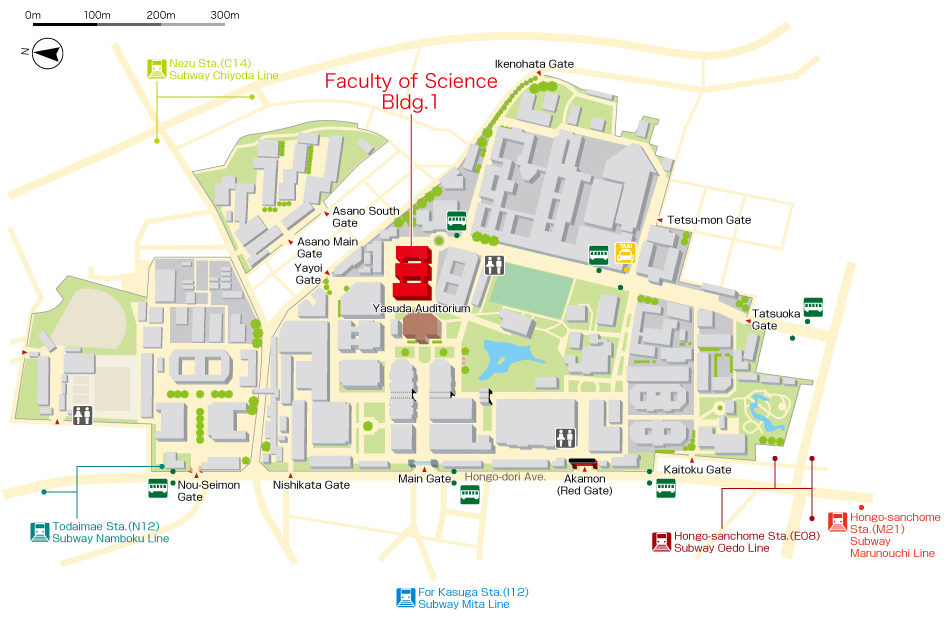
This is a joint seminar co-hosted by Institute for Physics of Intelligence (iπ), UTokyo, and the Venue is #1042,10F of Science Bldg.1
Optimal transport theory is a useful theoretical framework for geometrically characterizing the distance between probability distributions.
It is not only used in recent research on generative models but has also been applied to detect information-processing capabilities in biological systems from a statistical perspective, and to discuss thermodynamic efficiency. In this seminar, I will begin with an introduction to optimal transport theory, and also discuss our research on its various applications.
More specifically, I will discuss the following topics: 1) The problem of minimizing entropy production within a finite time and its experimental testing. 2) The application of optimal transport to the training of generative models, specifically diffusion models, and their optimal protocols. 3) Quantifying information processing performance using optimal transport in biological signal transduction.
References
- Mintu Nandi, Sosuke Ito, Decoding cell signaling via optimal transport and information theory, arXiv: 2602.18028
- Kotaro Ikeda, Tomoya Uda, Daisuke Okanohara, Sosuke Ito, Speed-Accuracy Relations for Diffusion Models: Wisdom from Nonequilibrium Thermodynamics and Optimal Transport, arXiv: 2407.04495
Venue: Faculty of Science Bldg.1, School of Science, The University of Tokyo, Hongo Campus / via Zoom
Event Official Language: English
Meeting
iTHEMS NOW & NEXT 2027
July 13 (Tue) - 15 (Thu) 2027
We will hold our annual gathering, **“iTHEMS NOW & NEXT 2027,” from July 13 to 15, 2027**.
iTHEMS NOW & NEXT has traditionally been a two-day in-house event, providing an important opportunity for all iTHEMS members, including visiting researchers and new members, to gain a comprehensive overview of current activities across iTHEMS, to learn about research beyond their own fields, and to discuss where iTHEMS should go next.
In 2027, we will **expand NOW & NEXT from two to three days** and, for the first time, invite leading researchers from outside iTHEMS across a broad range of research fields. While the first two days will retain the main character of our traditional in-house gathering, the extended three-day format is intended to create a broader opportunity for scientific exchange and, in particular, to enable leading researchers from outside iTHEMS to become better acquainted with our research activities and with the researchers who make up the iTHEMS community.
As in previous years, the program will present activities across iTHEMS, including those of its divisions, research teams, working groups, and study groups, together with research presentations and poster sessions by iTHEMS members. Particular emphasis will be placed on communication across disciplinary and organizational boundaries and on identifying emerging research directions and opportunities for new collaborations.
The additional third day will build on the presentations and discussions of the preceding two days and provide an opportunity for invited researchers to gain a deeper understanding of the breadth and strengths of research at iTHEMS and to interact directly with our members. We hope that these exchanges will not only introduce iTHEMS and its researchers more widely to leading scientists in different fields, but also bring new perspectives to our community and open possibilities for future scientific interactions and collaborations.
Through this expanded three-day NOW & NEXT 2027, we hope to share where iTHEMS is now and where it is heading next, both within our own community and with leading researchers from outside iTHEMS, and to explore together new possibilities for the future development of iTHEMS.
Venue: 2F Large Conference Room, Administrative Headquarters, RIKEN Wako Campus / via Zoom
Event Official Language: English
Upcoming Visitor
October 28 (Wed) - 31 (Sat) 2026 Yuefeng LiuAcademic Researcher, Institute for Advanced Study,, Kyushu University Visiting Place: Main Research Building |
Paper of the Week
Week 4, October 2026
2026-10-22
Title: Surface defects on lens space and transfer matrices
Author: Kazunobu Maruyoshi, Toshihiro Ota, Masahito Yamazaki
arXiv: http://arxiv.org/abs/2610.28165v1
Title: Hubble Susceptibility: Beyond Effective-Mass Spectroscopy in the Cosmological Collider
Author: Shuntaro Aoki, Masahide Yamaguchi
arXiv: http://arxiv.org/abs/2610.26014v1
Title: Andreev Beta Conversion and Bulk Viscosity in Superfluid Neutron-Star Matter
Author: Tingyu Zhang, Honoka Hoshino, Hiroyuki Tajima, Motoi Tachibana, Mariusz Sadzikowski
arXiv: http://arxiv.org/abs/2610.23581v1
Title: Jianmu-Q: Bridging Quantum Field Theory and Quantum Hardware with AI Agents
Author: Xiaolin Wang, Xingyu Guo, Jinyang Li, Tianyin Li, Enke Wang, Lingxiao Wang, Hongxi Xing
arXiv: http://arxiv.org/abs/2610.21942v1
Title: Diffusion Language Models as Open Quantum Systems
Author: Akinori Tanaka, Yukinao Akamatsu, Takuki Tomita, Yuji Hirono
arXiv: http://arxiv.org/abs/2610.21672v1
If you would like to cancel your subscription or change your email address,
please let us know via our contact form.
Copyright © iTHEMS, RIKEN. All rights reserved.