
Volume 379
Back to Newsletter List


Volume 379
October 24, 2025
Hot Topic

The tides are changing for white dwarfs
2025-10-22
A research team led by Lucy McNeill, a Hakubi Assistant Professor, at the Hakubi Center for Advanced Research, Kyoto University, and a Visiting Scientist at iTHEMS, has revealed that white dwarfs in compact binary systems can become significantly hotter and larger than previously predicted due to strong tidal forces.
This “tidal heating” causes white dwarfs to expand to about twice their theoretical size, reaching surface temperatures between 10,000 and 30,000 K. As a result, the onset of mass transfer between the stars may occur at orbital periods up to three times longer than expected.
The findings provide new insights into the evolution of white dwarfs and the origins of Type Ia supernovae.
For more details, please visit Kyoto University’s press release page via the related link below.
Hot Topic
Paper Accepted at NeurIPS 2025, One of the World’s Premier Conferences in AI
2025-10-20
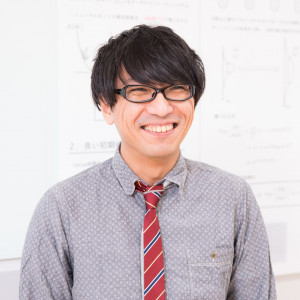
A paper by Tsubasa Masumura and Associate Professor Masato Taki (Visiting Scientist at iTHEMS), both from Rikkyo University, has been accepted for presentation at NeurIPS 2025, an international conference in the field of machine learning.
In this study, the authors proposed a new Transformer architecture that incorporates the principles of associative memory, successfully mitigating the issue known as “rank collapse” both theoretically and experimentally.
The proposed method improves model performance without introducing additional parameters, offering potential contributions to the further advancement of large language models and generative AI.
NeurIPS 2025 will be held in December 2025 in San Diego, USA.
For more details, please refer to the Rikkyo University press release via the related link below.
Award

Tomoki Ozawa received the Frontier Salon Nagase Prize (Special Prize)
2025-10-21
Prof. Tomoki Ozawa, Professor at the Advanced Institute for Materials Research (WPI-AIMR), Tohoku University, and Visiting Scientist at iTHEMS, has been awarded the 15th Frontier Salon Nagase Prize (Special Prize) by the Frontier Salon Foundation. This award honors outstanding young researchers who are expected to pioneer the future of science and technology and potentially become future Nobel laureates.
Prof. Ozawa is a theoretical physicist working in condensed matter physics. He applies the mathematical concept of topology, which focuses on the “shape” of systems, to discover universal physical principles shared among diverse systems—from metals and gases to light, sound, and even biological structures. His recent work extends these ideas into higher-dimensional topological frameworks, exploring new quantum states of light and matter. These studies are expected to contribute to the development of next-generation quantum and photonic technologies.
To commemorate the award, Prof. Ozawa delivered a lecture titled “Horizons of Physics Opened by Topology: Beyond Matter and Dimensions” at the Science Seminar for High School Students held on September 26, 2025, where he introduced the beauty of topological physics and inspired young students with the joy of discovery.
Upcoming Events
Seminar
Primordial black holes formation and its origin in inflation - Jianing Wang
October 30 (Thu) 14:15 - 16:00, 2025
Jianing Wang (Project Researcher, Kavli Institute for the Physics and Mathematics of the Universe (Kavli IPMU), The University of Tokyo)
Primordial black holes (PBHs) are thought to form through gravitational collapse of regions with excessively large density in the early universe, and they could serve as seeds for the formation of galaxies. They are also considered one of the important candidates for cold dark matter (DM). Detecting and constraining the abundance of PBHs can provide an effective constraint on realistic inflationary models. In this talk, I will combine inflation models with gravitational waves (GWs) to discuss cosmological phenomena related to primordial black holes. In particular, I will emphasize a simplified toy model of inflation, which naturally enhances the small-scale scalar perturbations by gluing together two linear potentials with different slopes. The enhanced perturbations can not only generate primordial black holes but also emit gravitational waves through higher-order perturbations. This research demonstrates the significant potential of primordial black hole studies, and it naturally leads to a crucial question of how to accurately estimate the PBH abundance. In the latter part of the talk, I will introduce how to use peaks theory to estimate the abundance of primordial black holes. Our new method works well for any form of the power spectrum, and considering the use of more systematic statistical methods, we believe it is currently the most precise approach in the academic community.
Venue: Hybrid Format (3F #359 and Zoom), Seminar Room #359, 3F Main Research Building, RIKEN
Event Official Language: English
Seminar
Introduction to Lean theorem prover
October 31 (Fri) 14:00 - 17:00, 2025
Yuma Mizuno (Postdoctoral Researcher, University College Cork, Ireland)
A theorem prover is a tool for the formalization of mathematics, that is, for rigorously expressing and verifying theorems and proofs on a computer. In recent years, the Lean theorem prover has seen progress in the formalization of a wide range of areas of mathematics. In this talk, I will explain formalization of mathematics in Lean from the basics and survey the formalized results achieved to date.
Venue: via Zoom / #359, Seminar Room #359, 3F Main Research Building, RIKEN
Event Official Language: English
Seminar

Quantum multi-body problems using unsupervised machine learning
November 5 (Wed) 15:00 - 16:00, 2025
Tomoya Naito (Project Assistant Professor, Department of Nuclear Engineering and Management, Graduate School of Engineering, The University of Tokyo)
I will introduce the recent development of a method to calculate the (anti)symmetrized wave functions and energies of the ground and low-lying excited states using the unsupervised machine learning technique. I will also introduce the recent attempts to consider the spin-isospin degrees of freedom and extend them to the Dirac equation.
References
- Tomoya Naito, Hisashi Naito, and Koji Hashimoto, Multi-body wave function of ground and low-lying excited states using unornamented deep neural networks, Phys. Rev. Research 5, 033189 (2023), doi: 10.1103/PhysRevResearch.5.033189, arXiv: 2302.08965
- Chuanxin Wang, Tomoya Naito, Jian Li, and Haozhao Liang, A neural network approach for two-body systems with spin and isospin degrees of freedom, arXiv: 2403.16819
- Chuanxin Wang, Tomoya Naito, Jian Li, and Haozhao Liang, A deep neural network approach to solve the Dirac equation, Eur. Phys. J. A 61, 162 (2025), doi: 10.1140/epja/s10050-025-01630-5, arXiv: 2412.03090
Venue: Seminar Room #359, 3F Main Research Building, RIKEN / via Zoom
Event Official Language: English
Seminar

Pairing in Bose-Fermi and Fermi-Fermi systems
November 6 (Thu) 15:00 - 16:30, 2025
Pierbiagio Pieri (Associate Professor, Dipartimento di Fisica e Astronomia “Augusto Righi”, Università di Bologna, Italy)
This seminar is co-hosted by GWX-EOS Working Group and iTHEMS-ABBL Joint Astro Study Group.
Abstract:
In the first part of my talk, I will review recent work on Bose-Fermi mixtures with an attractive interaction inducing pairing between bosons and fermions. After discussing a recent experiment on this system [1], which has confirmed predictions obtained by us some time ago within a many-body diagrammatic approach [2], I will present novel results for the compressibility [3] that suggest a metastable nature for the many-body phase observed in [1]. Then, I will discuss the extension of our calculations to two-dimensional Bose-Fermi mixtures [4,5]. The results obtained in 2D challenge previous beliefs formulated for 3D systems.
In the second part, I will discuss attractive polarized Fermi systems, for which the Fulde-Ferrell-Larkin-Ovchinnikov (FFLO) phase was proposed many years ago as a possible superfluid phase. I will discuss how significant precursor FFLO fluctuation effects appear already in the normal phase of polarized Fermi gases at finite temperature [6], and how they could be experimentally detected with ultracold gases. At zero temperature [7], I will discuss how the quasi-particle parameters of the normal Fermi gas change when approaching an FFLO quantum critical point, with a complete breakdown of the quasi-particle picture analogous to what found in heavy-fermion materials at an antiferromagnetic quantum critical point.
Finally, I will discuss a recent joint experimental-theoretical work on the motion of a vortex orbiting a pinned anti-vortex in a strongly interacting Fermi gas [8], highlighting the interplay between Andreev bound states in the vortex core and delocalized thermal excitations in shaping the vortex dynamics.
References
- M. Duda, X.-Y. Chen, A. Schindewolf, R. Bause, J. von Milczewski, R. Schmidt, I. Bloch, X.-Y. Luo, Transition from a polaronic condensate to a degenerate Fermi gas of heteronuclear molecules, Nature Physics 19, 720 (2023), doi: 10.1038/s41567-023-01948-1
- A. Guidini, G. Bertaina, D. E. Galli. Pieri, Condensed phase of Bose-Fermi mixtures with a pairing interaction, Phys. Rev. A 91, 023603 (2015), doi: 10.1103/PhysRevA.91.023603
- C. Gualerzi, L. Pisani, P. Pieri, Mechanical stability of resonant Bose-Fermi mixtures, SciPost Physics 19, 039 (2025), doi: 10.21468/SciPostPhys.19.2.039
- J. D’Alberto, L. Cardarelli, D.E. Galli, G. Bertaina, P. Pieri, Quantum Monte Carlo and perturbative study of two-dimensional Bose-Fermi mixtures, Phys. Rev. A 109, 053302 (2024), doi: 10.1103/PhysRevA.109.053302
- P. Bovini, L. Pisani, F. Pavan, P. Pieri, Boson-fermion pairing and condensation in two-dimensional Bose-Fermi mixtures, SciPost Physics 18, 076 (2025), doi: 10.21468/SciPostPhys.18.3.076
- M. Pini, P. Pieri, G. Calvanese Strinati, Strong Fulde-Ferrell Larkin-Ovchinnikov pairing fluctuations in polarized Fermi systems, Phys. Rev. Res. 3, 043068 (2021), doi: 10.1103/PhysRevResearch.3.043068
- M. Pini, P. Pieri, G. Calvanese Strinati, Evolution of an attractive polarized Fermi gas: From a Fermi liquid of polarons to a non-Fermi liquid at the Fulde-Ferrell-Larkin-Ovchinnikov quantum critical point, Phys. Rev. B 107, 054505 (2023), doi: 10.1103/PhysRevB.107.054505
- Nicola Grani, Diego Hernández-Rajkov, Cyprien Daix, Pierbiagio Pieri, Michele Pini, Piotr Magierski, Gabriel Wlazłowski, Marcia Frómeta Fernández, Francesco Scazza, Giulia Del Pace, Giacomo Roati, Mutual friction and vortex Hall angle in a strongly interacting Fermi superfluid, arXiv: 2503.21628
Venue: Hybrid Format (3F #359 and Zoom), Seminar Room #359, 3F Main Research Building, RIKEN
Event Official Language: English
Seminar
Rational function semifields of dimension one
November 7 (Fri) 13:30 - 15:30, 2025
JuAe Song (Assistant Professor, Faculty of Mathematics, Kyushu University)
Recently some researchers gave many studies toward algebro-geometric foundation for tropical geometry. I focused on rational function semifields of tropical curves and characterized them. With this characterization, in this talk, I suggest a definition of ``rational function semifield of dimension one". This definition can write out weight in the term of $\boldsymbol{T}$-algebra homomorphism, and can write balancing condition together with harmonic functions, where both weight and balancing condition are fundamental concepts for tropical varieties and $\boldsymbol{T}$ is the tropical semifield $(\boldsymbol{R} \cup \{-\infty\}, \operatorname{max}, +)$.
Venue: Seminar Room #359, 3F Main Research Building, RIKEN / via Zoom
Event Official Language: Japanese
Seminar
On the Role of Hidden States of Modern Hopfield Network in Transformer
November 10 (Mon) 14:00 - 15:00, 2025
Masato Taki (Associate Professor, Graduate School of Artificial Intelligence and Science, Rikkyo University)
Large language models such as ChatGPT are based on deep learning architectures known as Transformers. Owing to their remarkable performance and broad applicability, Transformers have become indispensable in modern AI development. However, it still remains an open question why Transformers perform so well and what the essential meaning of their unique structure is. One possible clue lies in the mathematical correspondence between Hopfield Networks and Transformers.
In this talk, I will first introduce the major developments over the past decade that have significantly increased the storage capacity of Hopfield Networks. I will then review the theoretical correspondence between Hopfield Networks and Transformers. Building on this background, I will present our recent findings: by extending this correspondence to include the hidden-state dynamics of Hopfield Networks, we discovered a new class of Transformers that can recursively propagate attention-score information across layers. Furthermore, we found, both theoretically and experimentally, that this new Transformer architecture resolves the “rank collapse” problem often observed in conventional multi-layer attention. As a result, when applied to language generation and image recognition tasks, it achieves performance surpassing that of existing Transformer-based models.
References
- Tsubasa Masumura, Masato Taki, On the Role of Hidden States of Modern Hopfield Network in Transformer, NeurIPS (2025)
- Hubert Ramsauer, etc., Hopfield Networks is All You Need, ICLR (2021), arXiv: 2008.02217
- Dmitry Krotov, John Hopfield, Large Associative Memory Problem in Neurobiology and Machine Learning, ICLR (2021), arXiv: 2008.06996
Venue: Seminar Room #359, Seminar Room #359, 3F Main Research Building, RIKEN / via Zoom
Event Official Language: English
Seminar
A genealogy-based framework to infer the demographic history, genetic structure, and phenotype association
November 11 (Tue) 14:00 - 15:00, 2025
Charleston Chiang (Associate Professor, University of Southern California, USA)
We propose a conceptual analogy in population genetics to the central dogma of molecular biology. While the central dogma describes the flow of information from DNA to RNA to protein, we posit that under neutrality, a population's demography shapes its underlying genealogy, which in turn determines patterns of genetic variation that give rise to phenotypic variation. At the center of this analogous dogma is the genetic genealogies. Recent advances in inferring the Ancestral Recombination Graph (ARG), a complete record of a population's genealogies, have enabled us to develop a suite of methods that interrogates each stage these fundamental and connected components:
- Genealogy → Demography: We developed gLike, a method that uses a graph-based summary of the ARG to accurately infer a population's demographic history.
- Genealogy → Genetic Variation: We created eGRM, which computes the expected genetic relatedness between individuals directly from the ARG, providing a precise characterization of genetic variation patterns, even in recently admixed populations.
- Genealogy → Genetic Variation → Phenotype: We devised sycamore, a framework that extends the eGRM to map quantitative trait loci, particularly where multiple alleles contribute to a phenotype.
We have benchmarked each method in simulations and validated them using empirical human datasets. While the performance of these tools relies on the accuracy and scalability of ARG inference, which is continuously improving, we demonstrate that our genealogy-based approach already enhances the analysis of demography, relatedness, and trait architecture in diverse human populations.
Venue: Seminar Room #359, 3F Main Research Building, RIKEN / via Zoom
Event Official Language: English
Seminar
Topological physics and its interdisciplinary influence
November 12 (Wed) 13:00 - 14:00, 2025
Tomoki Ozawa (Professor, Advanced Institute for Materials Research (AIMR), Tohoku University)
Topological insulators are materials which do not conduct current inside but do conduct at the surface or the edge. The name "topological" comes from the fact that the "shape" of the wavefunction of electrons in topological insulators show non-trivial twist, which can be mathematically characterized by the language of topology. Alongside the development of the study of topological insulators in solids, analogous phenomena were found to exist also in other systems such as photonics, mechanics, geophysics, and active matter. In this seminar, I discuss how the underlying concept of "topology of states" can have a broad impact applicable to various areas in physics, with some emphasis on my own contribution to the field. I aim to structure the first half of my seminar to be accessible to those outside physics, and latter half to be more specialized, covering cutting-edge results.
Venue: Hybrid Format (3F #359 and Zoom), Seminar Room #359, 3F Main Research Building, RIKEN
Event Official Language: English
Seminar

Chiral anomaly in Hamiltonian lattice gauge theory
November 18 (Tue) 10:00 - 12:00, 2025
Arata Yamamoto (Senior Research Scientist, Quantum Mathematical Science Team, Division of Applied Mathematical Science, RIKEN Center for Interdisciplinary Theoretical and Mathematical Sciences (iTHEMS))
The 4th quantum computing gathering organized by Quantum Computing Study Group
Venue: Seminar Room #359, 3F Main Research Building, RIKEN / via Zoom
Event Official Language: English
Lecture
9th QGG Intensive Lectures – Correlation Effects in Quantum Many-Body Systems: Some Prototypical Examples in Condensed Matter Physics
November 19 (Wed) - 20 (Thu) 2025
Norio Kawakami (Deputy Director, Fundamental Quantum Science Program, TRIP Headquarters, RIKEN)
The ninth installment of the Intensive Lecture Series, organized by the Quantum Gravity Gatherings (QGG) study group at RIKEN iTHEMS, will feature Prof. Norio Kawakami from the Fundamental Quantum Science Program (FQSP) under RIKEN's Transformative Research Innovative Platform (TRIP). Over the course of two days, Prof. Kawakami will deliver a lecture series on quantum many-body systems.
In recent years, insights from quantum many-body physics have become central to research in quantum gravity, where correlation effects induced by gravity play nontrivial roles. By bridging perspectives from gravitational physics and quantum many-body dynamics, one hopes to understand how macroscopic spacetime and its geometric properties emerge from the collective behavior of quantum constituents at microscopic scales.
In this lecture series, Prof. Kawakami will introduce the fundamental properties of correlation effects through representative examples in condensed matter physics. A distinctive aspect of this event is its joint organization with the Fundamental Quantum Science Program (FQSP) at RIKEN. The goal is to further strengthen connections between the quantum gravity, condensed matter, and quantum information communities.
The lectures will be delivered in a blackboard-style format (in English), designed to foster interaction, active participation, and in-depth Q&A discussions. In addition, short talk sessions will be held, giving participants the opportunity to present briefly on topics of their choice. Through this informal and dynamic setting, we hope to spark active interactions among participants and create an environment where ideas can be shared openly and enthusiastically.
Abstract:
Some examples of theoretical methods to treat strongly correlated systems in condensed matter physics are explained. We start with the Kondo effect, which is one of the most fundamental quantum many-body problems and has been intensively studied to date in a wide variety of topics such as dilute magnetic alloys, heavy fermion systems, quantum dot systems, etc. Dynamical mean-field theory (DMFT) is then introduced, which enables us to systematically treat strongly correlated materials such as a Mott insulator. It is shown that the essence of DMFT is closely related to the Kondo effect. Furthermore, we explain how to apply conformal field theory (CFT) to treat correlation effects in one-dimensional electron systems.
Topics of these lectures include:
- Introduction to quantum many-body systems in condensed matter physics
- The Kondo effect: a prototypical quantum many-body problem
- Dynamical mean-field theory: a generic method to study correlation effects
- Application of CFT to correlated electron systems in one dimension
For more information, please visit the event webpage from the links below.
Venue: #435-437, 4F, Main Research Building, RIKEN Wako Campus
Event Official Language: English
Seminar
Hamiltonian Learning and Dynamics Prediction via Machine Learning
November 26 (Wed) 15:00 - 16:00, 2025
Li Keren (Assistant Professor, College of Physics and Optoelectronic Engineering, Shenzhen University, China)
Accurate prediction of quantum Hamiltonian dynamics and identification of Hamiltonian parameters are crucial for advancements in quantum simulations, error correction, and control protocols. This talk introduces a machine learning model with dual capabilities: it can deduce time-dependent Hamiltonian parameters from observed changes in local observables within quantum many-body systems, and it can predict the evolution of these observables based on Hamiltonian parameters. The model’s validity was confirmed through theoretical simulations across various scenarios and further validated by two experiments. Initially, the model was applied to a Nuclear Magnetic Resonance quantum computer, where it accurately predicted the dynamics of local observables. The model was then tested on a superconducting quantum computer with initially unknown Hamiltonian parameters, successfully inferring them. We believe that machine learning techniques hold great promise for enhancing a wide range of quantum computing tasks, including parameter estimation, noise characterization, feedback control, and quantum control optimization.
References
- Zheng An, Jiahui Wu, Zidong Lin, Xiaobo Yang, Keren Li, and Bei Zeng, Dual-Capability Machine Learning Models for Quantum Hamiltonian Parameter Estimation and Dynamics Prediction, Physical Review Letters 134, no. 12, 120202. (2025), doi: 10.1103/PhysRevLett.134.120202, arXiv: 2405.13582
- Keren Li, Floquet-informed Learning of Periodically Driven Hamiltonians, arXiv: 2509.02331
Venue: via Zoom
Event Official Language: English
Paper of the Week
Week 4, October 2025
2025-10-23
Title: Krylov Complexity Under Hamiltonian Deformations and Toda Flows
Author: Kazutaka Takahashi, Pratik Nandy, Adolfo del Campo
arXiv: http://arxiv.org/abs/2510.19436v1
Title: The role of the secondary white dwarf in a double-degenerate double-detonation explosion, in the supernova remnant phase
Author: Gilles Ferrand, Rüdiger Pakmor, Yusei Fujimaru, Shiu-Hang Lee, Samar Safi-Harb, Shigehiro Nagataki, Friedrich K. Roepke, Anne Decourchelle, Ivo R. Seitenzahl, Daniel Patnaude
arXiv: http://arxiv.org/abs/2510.18800v1
Title: Modulated symmetries from generalized Lieb-Schultz-Mattis anomalies
Author: Hiromi Ebisu, Bo Han, Weiguang Cao
arXiv: http://arxiv.org/abs/2510.18689v1
Title: Functional renormalization group for classical liquids without recourse to hard-core reference systems: A study of three-dimensional Lennard-Jones liquids
Author: Takeru Yokota, Jun Haruyama, Osamu Sugino
arXiv: http://arxiv.org/abs/2510.16710v1
Title: Reviving, reproducing, and revisiting Axelrod's second tournament
Author: Vincent Knight, Owen Campbell, Marc Harper, T. J. Gaffney, Nikoleta E. Glynatsi
arXiv: http://arxiv.org/abs/2510.15438v1
Title: Absence of Majorana-Weyl fermions in $d=4$ and the theory of Majorana fermions
Author: Kazuo Fujikawa
arXiv: http://arxiv.org/abs/2510.14998v1
If you would like to cancel your subscription or change your email address,
please let us know via our contact form.
Copyright © iTHEMS, RIKEN. All rights reserved.