
Volume 368
Back to Newsletter List


Volume 368
August 8, 2025
Press Release
Discovery of Universal Laws of Quantum Entanglement Across Dimensions
2025-08-07
Unraveling the structure of quantum entanglement is a central challenge in both theoretical physics and quantum information science. However, much of the research to date has been limited to 1+1 dimensions. Analyzing entanglement structures becomes significantly more difficult beyond 1+1 dimensions, and new methods for investigating higher-dimensional entanglement structures have been long sought.
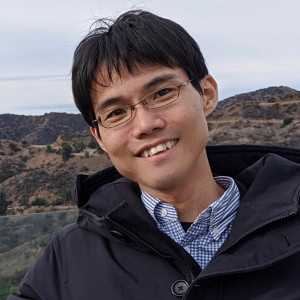
A collaborative research group including Yuya Kusuki (Visiting Scientist, iTHEMS) focused on a technique known as the "thermal effective theory," which has recently made significant advances in analyzing higher-dimensional theories in particle physics. By introducing this approach to quantum information, they successfully uncovered universal behaviors underlying the structure of quantum entanglement in quantum systems of arbitrary dimensions.
For more details, please refer to the related links.
Reference
- Yuya Kusuki, Hirosi Ooguri, Sridip Pal, Universality of Rényi Entropy in Conformal Field Theory, Phys. Rev. Lett. 135, 061603 (2025), doi: 10.1103/fsg7-bs7q
Hot Topic

RIKEN Wako Science Camp 2025 — High School Students Challenged the Violation of Bell’s Inequality with a Quantum Computer
2025-08-06
Sixteen high school students selected from across Japan gathered at RIKEN Wako Campus to participate in the "RIKEN Wako Science Camp 2025." Divided into three courses based on their applications, the students joined one of the following research units: Inter-Individual Brain Dynamics Collaboration Unit (CBS), Molecular Ligand Target Research Team (CSRS), and RIKEN Center for Interdisciplinary Theoretical and Mathematical Sciences (iTHEMS). Over the four-day program held from July 28 to 31, 2025, they experienced cutting-edge science and technology in an immersive camp-style setting.
At iTHEMS, Masazumi Honda and Ryo Namba led Course C: "Exploring the Quantum World – Observing the Violation of Bell’s Inequality on a Quantum Computer." In this course, students used an actual cloud-based quantum computer provided by IBM Quantum to investigate and experimentally verify the violation of Bell’s inequality, which demonstrates the fundamental departure of quantum theory from classical physics.
The students showed remarkable enthusiasm and drive. Despite the fact that the topic went far beyond the scope of high school-level mathematics and physics, they not only implemented the necessary programs on the quantum computer to verify the violation of Bell’s inequality, but also developed their own original methods, impressing the researchers in charge.
In addition to the hands-on activities, the students toured RIKEN’s in-house quantum computer "A" and supercomputer "HOKUSAI," experienced "A" through VR, and visited exhibitions at the Nishina Center. While deepening friendships with like-minded peers, they also interacted informally with other researchers at iTHEMS over lunch and coffee breaks, gaining firsthand insight into the life of a real scientist — sparking reflections on their own future paths.
The four-day program concluded by the students' presentations on what they had learned and experienced during the camp in front of fellow students and instructors, as well as RIKEN's president and executive directors, on the final day. RIKEN Wako Science Camp is an annual program by RIKEN for high school students, traditionally focused on experimental sciences. This year marked the first time a theoretical course was offered, with iTHEMS researchers taking on the role of instructors.
Upcoming Events
Seminar
Dynamic Scaling Analysis for Enzymatic Degradation and Network Growth of DNA Liquid Droplets
August 14 (Thu) 13:00 - 14:00, 2025
Michio Tateno (JSPS Overseas Research Fellow, Material Research Laboratory, University of California Santa Barbara, USA)
Event Official Language: English
Workshop
iTHEMS-NCTS Workshop
August 18 (Mon) - 21 (Thu) 2025
This workshop aims to strengthen collaboration between researchers at RIKEN iTHEMS and the National Center for Theoretical Sciences in Taiwan. It will be a four-day event, with the first two days dedicated to interdisciplinary topics. The last two days will focus on specialized areas, with one day devoted to condensed matter physics and the other to high-energy physics, including quantum gravity.
Venue: via Zoom / RIKEN Wako Campus
Event Official Language: English
Seminar
Femtoscopy: Probing Fundamental Matter Properties at the Fermi Scale
August 22 (Fri) 13:30 - 15:00, 2025
Yijie Wang (Postdoctoral Researcher, Tsinghua University, Beijin, China / Visiting Scientist, Radioactive Isotope Physics Laboratory, RIKEN Nishina Center for Accelerator-Based Science (RNC))
Femtoscopy, a cutting-edge technique grounded in intensity interferometry (correlation function analysis), enables in-depth exploration of fundamental properties of matter, including space, time, and interactions, at the Fermi scale. Originating from the Hanbury Brown and Twiss (HBT) correlation function, which was utilized in 1956 to measure the angular radius of Sirius, this method has been extended to the subatomic realm, emerging as a pivotal tool for deciphering space-time structures and particle interactions. This talk focuses on three representative femtoscopy studies: First, by combining femtoscopic interferometry with optical deblurring algorithms, it reveals the non-Gaussian freeze-out spatial distribution of protons and antiprotons in Au+Au relativistic heavy-ion collisions, challenging conventional wisdom [Chinese Physics Letters 42, 031401 (2025)]. Second, in the 30 MeV/u ⁴⁰Ar + ¹⁹⁷Au reaction, femtoscopy is employed to determine the proton emission timescale at approximately 100 fm/c and uncover the kinetic law of preferential emission of neutron-rich particles, making an “ultra-fast” video for heavy-ion collisions [Physics Letters B, 825, 136856 (2022)]. Third, using a high-resolution neutron array, femtoscopy accurately measures the neutron-neutron scattering length and effective range, as well as the space-time size of the neutron emission source, providing crucial data for the study of charge symmetry breaking in nuclear forces and nuclear symmetry energy [Physical Review Letter, 134, 222301 (2025)]. These achievements fully demonstrate the significant value of femtoscopy in advancing the frontiers of nuclear and particle physics, spanning from experimental observations to theoretical modeling.
Dr. Yijie Wang is the Post Doc of Tsinghua University and Visiting Scientist of RIKEN. He studied physics at Jilin University, China, and obtained his Ph. D. degree at Tsinghua University in 2021. Then, he continued researches in Tsinghua University as Post Doc up to now. His interests focus on heavy ion collision experiment, nuclear equation of state, advanced detection system development and femtoscopy.
Venue: #359, Seminar Room #359, 3F Main Research Building, RIKEN / via Zoom
Event Official Language: English
Seminar

Tamely Ramified Geometric Langlands Correspondence
August 22 (Fri) 15:00 - 19:00, 2025
Yuki Matsubara (Ph.D. Student, Centre for Quantum Mathematics, University of Southern Denmark, Denmark)
The geometric Langlands correspondence (GLC) is a geometric analogue of the Langlands conjecture in number theory, relating algebraic geometry, representation theory, and many other areas. Since A. Kapustin and E. Witten pointed out the relation between GLC and mirror symmetry, there have been various studies on GLC from a physics perspective as well as a mathematical perspective.
First talk: An introduction to Langlands conjecture for everyone
This is an entirely accessible overview of the Langlands conjecture. Starting from famous topics, such as the Pythagorean theorem and Fermat’s Last Theorem, I will introduce the statement and motivations behind the Langlands conjecture.
No prior background will be assumed, and technical details will often be sketched rather than fully developed, so that anyone with a general mathematical curiosity can follow along.
Second talk: On a certain tamely ramified geometric Langlands correspondence
In this talk, I will present my research. Arinkin’s 2001 result established the geometric Langlands correspondence for the case G = SL2 on the complex projective line P1 with four fixed regular singularities. When one attempts to extend this to five or more singularities, it turns out to be more natural to decompose the correspondence into a Radon transform-type correspondence and a “GLC‑like” correspondence.
I will report on the calculations of cohomology that support the proof of this GLC‑like correspondence in the P1 with five fixed regular singularities case.
References
- Yuki Matsubara, (Note 1) An introduction to Langlands conjecture for everyone
- Yuki Matsubara, (Note 2) On a certain tamely ramified Geometric Langlands Correspondence
- (Recording) Seminar Video
Venue: via Zoom / #359, Seminar Room #359, 3F Main Research Building, RIKEN
Event Official Language: English
Seminar

A Fresh Look at Late-Time Hawking Radiation
September 2 (Tue) 14:00 - 15:30, 2025
Wei-Hsiang Shao (Special Postdoctoral Researcher, Division of Fundamental Mathematical Science, RIKEN Center for Interdisciplinary Theoretical and Mathematical Sciences (iTHEMS))
There is now a common belief that non-perturbative quantum gravity effects are relevant for resolving the black hole information puzzle. But could such effects also largely alter Hawking radiation itself, the main culprit that led to the puzzle in the first place?
There are two main lessons that I would like to convey from this presentation: 1. For large black holes formed by dynamical collapse, the usual description of Hawking radiation in the low-energy effective theory breaks down at an early stage, signaling the need for a UV theory to describe the origin of late-time radiation. 2. In UV models of the radiation field that incorporate a form of nonlocality motivated by string theory, Hawking radiation becomes a transient phenomenon that occurs only for a brief period of time. This behavior suggests a major deviation from the conventional picture of black hole evaporation based on local quantum field theory.
Venue: via Zoom / #359, 3F, RIKEN Wako Campus
Event Official Language: English
Seminar

Geometry of 2d topological field theories and integrable hierarchies
September 4 (Thu) 15:00 - 17:00, 2025
Zhe Wang (Research Scientist, Division of Fundamental Mathematical Science, RIKEN Center for Interdisciplinary Theoretical and Mathematical Sciences (iTHEMS))
In this talk, I will explain a mathematical formulation of 2d topological field theories making use of integrable hierarchies, which is a framework initiated by B. Dubrovin and developed by many other mathematicians. The talk is divided into two parts. The first 45 minutes is a gentle introduction on how the mathematical structure called Frobenius manifolds naturally appears from topological field theories. The remaining part of the talk is devoted to explaining relationships between Frobenius manifolds and integrable hierarchies via the example of the KdV hierarchy.
Venue: #359, Seminar Room #359, 3F Main Research Building, RIKEN / via Zoom
Event Official Language: English
Seminar

Computer Algebra with Deep Learning
September 5 (Fri) 15:00 - 17:00, 2025
Yuki Ishihara (Assistant Professor, Department of Mathematics, College and Science Technology, Nihon University)
Computer algebra is a field that aims to perform various mathematical calculations on computers. In recent years, there has been a surge in efforts to accelerate computer algebra algorithms using deep learning models such as “Transformer,” which is used in ChatGPT. In this lecture, I will introduce the results of joint research with Professor Kera et al. on learning Gröbner bases with Transformer.
Reference
- Yuki Ishihara, Computer Algebra with Deep Learning
Venue: via Zoom / #359, Seminar Room #359, 3F Main Research Building, RIKEN
Event Official Language: English
Conference
XIIIth International Symposium on Nuclear Symmetry Energy (NuSym25)
September 8 (Mon) - 13 (Sat) 2025
[Scientific scope]
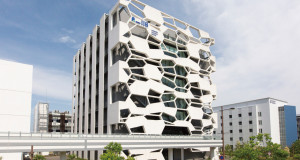
The symposium will address experimental and theoretical investigations of the equation-of-state (EoS) of nuclear matter at various isospin asymmetries. Such investigations include efforts in nuclear structure, nuclear reactions and heavy-ion collisions, as well as in astrophysical observations of compact stars and associated phenomena. An important role of the symposium is to unify efforts of the nuclear physics and astrophysics communities in addressing common research challenges.
Venue: Integrated Innovation Building (IIB), Kobe Campus, RIKEN
Event Official Language: English
Lecture
8th QGG Intensive Lecture: Quantum reference frames and their applications in high-energy physics
September 24 (Wed) - 26 (Fri) 2025
Philipp Höhn (Assistant Professor, Qubits and Spacetime Unit, Okinawa Institute of Science and Technology Graduate University (OIST))
Quantum reference frames (QRFs) are a universal tool for dealing with symmetries in quantum systems. Roughly speaking, they are internal subsystems that transform in some non-trivial way under the symmetry group of interest and constitute the means for describing quantum systems from the inside in purely relational terms. QRFs are thus crucial for describing and extracting physics whenever no external reference frame for the symmetry group is available. This is in particular the case when the symmetries are gauge, as in gauge theory and gravity, where QRFs arise whenever building physical observables. The choice of internal QRF is typically non-unique, giving rise to a novel quantum form of covariance of physical properties under QRF transformations. This lecture series will explore this novel perspective in detail with a specific emphasis on applications in high-energy physics and gravity.
I will begin by introducing QRFs in mechanical setups and explain how they give rise to quantum structures of covariance that mimic those underlying special relativity. I will explain how this leads to subsystem relativity, the insight that different QRF decompose the total system in different ways into gauge-invariant subsystems, and how this leads to the QRF dependence of correlations, entropies, and thermal properties. We will then explore how relational dynamics in Hamiltonian constrained systems and the infamous "problem of time" can be addressed with clocks identified as temporal QRFs. In transitioning to the field theory setting, we will first consider hybrid scenarios, where QRFs are quantum mechanical, but the remaining degrees of freedom are quantum fields including gravitons. I will explain how this encompasses the recent discussion of "observers", generalized entropies, and gravitational von Neumann algebras by Witten et al. and how subsystem relativity leads to the conclusion that gravitational entanglement entropies are observer dependent. We will then discuss the classical analog of QRFs in gauge theory and gravity and how they can be used to build gauge-invariant relational observables and to describe local subsystems. This will connect with discussions on edge and soft modes in the literature, the former of which turn out to be QRFs as well. This has bearing on entanglement entropies in gauge theories, which I will describe on the lattice, providing a novel relational construction that overcomes the challenges faced by previous constructions, which yielded non-distillable contributions to the entropy and can be recovered as the intersection of "all QRF perspectives". Finally, I will describe how the classical discussion of dynamical reference frames can be used to build a manifestly gauge-invariant path integral formulation that opens up novel relational perspectives on effective actions and the renormalization group in gravitational contexts, which is typically plagued by a lack of manifest diffeomorphism-invariance. I will conclude with open questions and challenges in the field.
Program:
September 24
10:15 - 10:30 Registration and reception with coffee
10:30 - 12:00 Lecture 1
12:00 - 13:30 Lunch
13:30 - 15:00 Lecture 2
15:00 - 16:00 Coffee break
16:00 - 17:00 Lecture 3
17:10 - 18:10 Short talk session
18:20 - 21.00 Banquet
September 25
10:15 - 10:30 Morning discussion with coffee
10:30 - 12:00 Lecture 4
12:00 - 13:30 Lunch
13:30 - 15:00 Lecture 5
15:00 - 16:00 Coffee break
16:00 - 17:00 Lecture 6
17:10 - 18:10 Short talk session
September 26
10:15 - 10:30 Morning discussion with coffee
10:30 - 12:00 Lecture 7
12:00 - 13:30 Lunch
13:30 - 15:00 Lecture 8
15:00 - 16:00 Coffee break
16:00 - 17:00 Lecture 9 & Closing
Venue: #435-437, 4F, Main Research Building, RIKEN Wako Campus
Event Official Language: English
Seminar
Confined Circumstellar Material as a Dust Formation Site in Type II Supernovae
September 26 (Fri) 14:00 - 15:15, 2025
Yuki Takei (Program-Specific Researcher, Yukawa Institute for Theoretical Physics, Kyoto University)
Some massive stars undergo episodic mass loss shortly before core-collapse, producing dense circumstellar material (CSM) in their immediate surroundings. If the supernova (SN) ejecta strongly interacts with such CSM, narrow emission lines appear in the spectrum, classifying the event as Type IIn. In these cases, efficient radiative cooling forms a cold, dense shell (CDS), providing ideal conditions for dust condensation. Infrared observations of several SNe IIn have indeed confirmed newly formed dust. Recent time-domain surveys, however, suggest that compact and dense CSM, often termed “confined CSM”, is also present around a broader class of Type II SN progenitors with hydrogen-rich envelopes, beyond the traditional Type IIn subclass. This raises the possibility that dust formation in dense CSM is more common among core-collapse SNe than previously thought. In this talk, I will demonstrate that CDS formation occurs robustly across a wide parameter space for confined CSM using numerical simulations based on the open-source code CHIPS. I will also discuss the resulting dust mass and infrared emission, as well as the potential contribution of this process to the galactic dust budget.
Venue: Hybrid Format (3F #359 and Zoom), Seminar Room #359, 3F Main Research Building, RIKEN
Event Official Language: English
Lecture

Lectures on General Probabilistic Theories: From Introduction to Research Participation
October 6 (Mon) - 9 (Thu) 2025
Hayato Arai (JSPS Research Fellow, Graduate School of Arts and Sciences, The University of Tokyo)
(The deadline of the registration is on Sep 30.)
100 years have passed since quantum mechanics was born. The mathematical model has been describing the physical world remarkably well. However, the foundations of this model still remain unclear. A comprehensive understanding of quantum theory, including its foundations, is becoming even more important in an era where the demands of realizing quantum information technologies pose significant theoretical and experimental challenges.
The framework of General Probabilistic Theories (GPTs) is a modern approach to the foundations of quantum theory. It deals with mathematical generalizations of both classical and quantum theories and has attracted increasing attention in recent years. Roughly speaking, research on GPTs has three major objectives: characterizing the models of classical and quantum theories, investigating the fundamental limits of physical and information-theoretic properties arising from operational requirements, and deepening our understanding of the mathematical structures underlying classical and quantum theories. The studies of GPTs have provided many new perspectives on these topics. However, at the same time, there remain many important open problems in the field. For this reason, more researchers are encouraged to enter and contribute to research on GPTs.
This intensive three-day lecture series is designed to provide researchers and graduate students with the essential knowledge necessary for research on GPTs, starting from an introduction to the subject. The lectures will cover the mathematical foundations, physical and information-theoretic concepts, and both the established results and future directions of GPT research. The 1st day will present the necessary mathematical structures, including convex geometry, positive cones, and the operational formulation of probabilistic models. The 2nd day will explore composite systems, information-theoretic quantities, symmetries, and Euclidean Jordan algebras. The 3rd day will survey key results on discrimination and communication tasks, the characterization of classical and quantum theories, and open problems that connect GPTs to quantum information science and beyond.
Note: The content of each lecture may extend into the next slot or be covered earlier, depending on the pace of discussion and participant questions.
The 1st day (6th Oct.): Mathematical Introduction to GPTs
Venue: Large Meeting Room, 2F, Wako Welfare & Conference Building
10:30-12:00 Lecture 1 (Introduction and Mathematics on Positive Cones)
12:00-13:30 Lunch time
13:30-15:00 Lecture 2 (Mathematics on Positive Cones)
15:00-15:30 Coffee break
15:30-17:00 Lecture 3 (Introduction to General Models and Relation between Operational Probability Theories)
The 2nd day (7th Oct.): Physical and Information Theoretical Concepts in GPTs
Venue: Large Meeting Room, 2F, Wako Welfare & Conference Building
10:30-12:00 Lecture 4 (Composite Systems in GPTs)
12:00-13:30 Lunch time
13:30-15:00 Lecture 5 (Information Quantities)
15:00-15:30 Coffee break
15:30-17:00 Lecture 6 (Dynamics, Symmetry, and Euclidean Jordan Algebras)
The 3rd day (8th Oct): Previous and Future Studies in GPTs
Venue: Meeting Room 435-437, 4F, Wako Main Research Building
10:30-12:00 Lecture 7 (Discrimination and Communication Tasks)
12:00-13:30 Lunch time
13:30-15:00 Lecture 8 (Characterization of Classical and Quantum Theories)
15:00-15:30 Coffee break
15:30-17:00 Lecture 9 (Other Topics, Open Problems, and Future Directions)
18:00- Dinner
The day of no lecture (9th Oct): Open Discussion and Q&A
Research discussions will take place between the lecturer and participants in areas such as the hallways on the 3rd and 4th floors of the Main Research Bldg, RIKEN Wako Campus.
Venue: Welfare and Conference Bldg. 2F Meeting Room, RIKEN Wako Campus / #435-437, Main Research Building, RIKEN Wako Campus
Event Official Language: English
Colloquium

Why do we sleep? — The Role of Calcium and Phosphorylation in Sleep
October 10 (Fri) 15:30 - 17:00, 2025
Hiroki R. Ueda (Professor, Systems Pharmacology, Graduate School of Medicine, The University of Tokyo / Professor, Department of Systems Biology, Institute of Life Science, Kurume University)
Sleep remains one of greatest remaining mysteries. At the Sleep 2012 conference, we conceived a shift from the concept of “sleep substances” to “wake substances” such as calcium, suggesting that sleep homeostasis may arise from the integration of wake-related activity. Inspired by Dr. Setsuro Ebashi’s work on calcium signaling, we investigated calcium’s role in sleep regulation.
Using our Triple-CRISPR method (Sunagawa et al. 2016), we screened 25 genes related to calcium channels and pumps, revealing calcium as a brake on brain activity to promote sleep (Tatsuki et al. 2016). We also developed a tissue-clearing method CUBIC (Susaki et al. 2014; Tainaka et al. 2014) to visualize calcium’s effects on neural circuits. Further work showed that calcium-dependent enzymes, CaMKIIα/β kinases, act as calcium “memory” devices, with phosphorylation sites controlling sleep onset, duration, and termination (Tone et al. 2022). Other direct and indirect calcium-dependent phosphatases, Calcineurin and PP1 (sleep-promoting), and opposing kinases, PKA (wake-promoting), function as synaptic sleep switches (Wang et al. 2024).
We also identified the ryanodine receptor 1, a calcium channel, as a molecular target of inhalational anesthetics, hinting at shared pathways between anesthesia and sleep (Kanaya et al. 2025). Lastly, we proposed the WISE (Wake Inhibition Sleep Enhancement) mechanism, where quiet wakefulness suppresses and deep sleep strengthens synaptic connections, explaining links between sleep, depression, and antidepressant effects (Kinoshita et al. 2025).
Venue: Okochi Hall, 1F Laser Science Laboratory, RIKEN / via Zoom
Event Official Language: English
Featured Paper of the Week

Threats to cycad biocultural heritage in the Amami Islands, Japan
2025-08-04
We are pleased to introduce this paper, which has been selected as an Editor’s Choice.
Species are products of evolution, and once they are lost due to extinction, they can’t be recovered. Unfortunately, the actions of humans have threatened species worldwide in various ways, and one indirect method has been the unintentional introduction of invasive species. A species is “invasive” when it enters a habitat that is not where it evolved. In the absence of natural predators, ecological pressures, or competitors, invasive species may proliferate without control, directly harming native species or indirectly consuming resources necessary for their survival. A case of biological invasion in Japan occurred recently in 2021, when the cycad aulacaspis scale (CAS) insect was detected on the Amami-Oshima and Okinawa-jima, in the Ryukyus. As its name suggests, CAS feeds on cycad plants —and is voracious—, consuming cycads until causing their death. Many places in the islands, historically abundantly populated by the native cycad Cycas revoluta, are now being devastated by this invasion. Many cycad populations are threatened and at risk of extirpation if the invasion is not controlled. But what does it mean when a species is threatened? Of course, losing a species due to the action of humans is a disgraceful event; a part of evolution is lost, and species removal may cause the extinction of other ecologically associated species (pollinators, for example). However, it is also important to consider cases where the threatened species is a significant symbol and a cornerstone of a culture's identity. This is the case of the cycads in the Ryukyus. Cycads have a strong historical significance for the culture of this region: people use them as a source of food, as materials to craft tools, and as a symbol of their local identity. The cycad culture in Japan is already in decline due to an aging demography, migration from rural to urban areas, and modernity in general. With the CAS invasion, the cycads and the culture around them are more threatened than ever, and conservation actions are necessary. In this article, we discuss that biological conservation is not only concerned with our responsibility to take care of nature, but also to take care of cultural identities. Cultures are entangled with their local biodiversity, and joining efforts from scientists in the natural and humanities sciences can help us see the whole picture. Interdisciplinarity is crucial in conservation.
Reference:
Joshua D. Englehardt, Michael D. Carrasco, José Said Gutiérrez-Ortega, Benjamin E. Deloso, Nobuyuki Matsubara
"Threats to cycad biocultural heritage in the Amami Islands, Japan"
Plant Species Biology
doi: 10.1111/1442-1984.12494
Paper of the Week
Week 2, August 2025
2025-08-07
Title: New computational methods in lattice gauge theory -- quantum computation and tensor networks
Author: Etsuko Itou
arXiv: http://arxiv.org/abs/2508.03126v1
Title: Lattice results for the equation of state in dense QCD-like theories
Author: Etsuko Itou
arXiv: http://arxiv.org/abs/2508.03090v1
Title: Bound states of $ _{c\bar{c}}^{9}$Be within $c\bar{c}+α+α$ cluster models based on state-of-the-art HAL QCD charmonium-nucleon interactions
Author: Faisal Etminan
arXiv: http://arxiv.org/abs/2508.02653v1
Title: Parametric pair production of collective excitations in a Bose-Einstein condensate
Author: Victor Gondret, Rui Dias, Clothilde Lamirault, Léa Camier, Amaury Micheli, Charlie Leprince, Quentin Marolleau, Scott Robertson, Denis Boiron, Christoph I. Westbrook
arXiv: http://arxiv.org/abs/2508.01654v1
Title: Universal Time Evolution of Holographic and Quantum Complexity
Author: Masamichi Miyaji, Shan-Ming Ruan, Shono Shibuya, Kazuyoshi Yano
arXiv: http://arxiv.org/abs/2507.23667v1
If you would like to cancel your subscription or change your email address,
please let us know via our contact form.
Copyright © iTHEMS, RIKEN. All rights reserved.