
Volume 362
Back to Newsletter List


Volume 362
July 4, 2025
Press Release
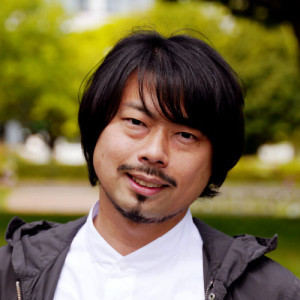
Using viral load tests to help predict mpox severity when skin lesions first appear
2025-07-03
A research group led by Shingo Iwami (Visiting Scientist, iTHEMS) has revealed through an international collaborative study that there is significant individual variation in the progression of skin lesions among patients infected with mpox (Clade Ia).
The study also suggests that the blood viral load at the time of onset may serve as a useful indicator for predicting the progression of these symptoms.
For more details, please refer to the related links.
Reference
- Takara Nishiyama, et al., Modeling lesion transition dynamics to clinically characterize patients with clade I mpox in the Democratic Republic of the Congo, Science Translational Medicine Vol 17, Issue 805 (2025), doi: 10.1126/scitranslmed.ads4773
Press Release


A New Intelligence Deciphering the Universe: Discovery of Anomalous Energy Emission Phenomena through Quantum × AI
2025-07-03
A research group, including Shigehiro Nagataki (Chief Scientist, Astrophysical Big Bang Laboratory, RIKEN PRI / Deputy Director, iTHEMS) and Shunji Matsuura (Senior Research Scientist, iTHEMS), has successfully detected 113 anomalous energy (X-ray) emission events. This was achieved by constructing and applying a quantum machine learning model that integrates quantum computing with machine learning to a large-scale dataset of X-ray variability in space accumulated over approximately 24 years by the X-ray astronomical satellite XMM-Newton, operated by the European Space Agency (ESA).
For more information, please refer to the related links below.
Reference
- Taiki Kawamuro, Shinya Yamada, Shigehiro Nagataki, Shunji Matsuura, Yusuke Sakai, and Satoshi Yamada, Quantum Machine Learning for Identifying Transient Events in X-Ray Light Curves, ApJ 987 105 (2025), doi: 10.3847/1538-4357/adda43
Press Release
Theoretical Discovery of Angular Momentum Reversal in Magnetic Vortical Matter
2025-07-03
A collaborative research group, including Kazuya Mameda (Visiting Scientist, iTHEMS) has theoretically discovered that in quantum systems where strong magnetic fields and rotation coexist, the polarization of angular momentum becomes dominated by orbital angular momentum—originating from the particles’ orbital motion—rather than spin. This leads to a reversed direction of polarization compared to conventional expectations.
For more information, please refer to the related links below.
Reference
- Kenji Fukushima, Koichi Hattori, Kazuya Mameda, Preponderant Orbital Polarization in Relativistic Magnetovortical Matter, Phys. Rev. Lett. 135, 011601 (2025), doi: 10.1103/PhysRevLett.135.011601
Press Release

AI-Driven High-Resolution Galaxy Simulations: Accelerating Galaxy Evolution Modeling from 8 Months to 2
2025-07-03
An international collaborative research group, including Keiya Hirashima (Special Postdoctoral Researcher, iTHEMS), has developed a surrogate model using deep learning, a form of artificial intelligence (AI), to predict the complex physical processes of supernova explosions. This model has been integrated into a galaxy simulation code for the first time.
This achievement marks the first instance of accelerating high-resolution "star-by-star" galaxy simulations by performing deep learning inference in real time during the simulation—something that was previously difficult to realize. The new method is expected to contribute to detailed analysis of supernova feedback in the formation and evolution of our own Milky Way galaxy.
For more information, please refer to the related links below.
Reference
- Keiya Hirashima, Kana Moriwaki, Michiko S. Fujii, Yutaka Hirai, Takayuki R. Saitoh, Junichiro Makino, Ulrich P. Steinwandel, and Shirley Ho, ASURA-FDPS-ML: Star-by-star Galaxy Simulations Accelerated by Surrogate Modeling for Supernova Feedback, ApJ 987 86 (2025), doi: 10.3847/1538-4357/add689
Hot Topic

Farewell message from Yuki Fujimoto
2025-07-03
Our colleague, Yuki Fujimoto, left iTHEMS on June 30 and has moved to Niigata University to take up a position as Assistant Professor. We thank him for his time at iTHEMS and wish him all the best in this new chapter.
Here is a message from Yuki Fujimoto:
As of June 30, I have left iTHEMS, and I would like to express my sincere gratitude to all the members of iTHEMS. I am moving to Niigata University to take up a position as an assistant professor.
I joined iTHEMS in October 2024 as a RIKEN-Berkeley Fellow and was primarily based at the RIKEN center at UC Berkeley. Although my time at the Wako campus was brief, I greatly enjoyed the interactions and discussions with colleagues from a wide range of fields.
I will continue to be affiliated with iTHEMS as a visiting scholar, and I look forward to seeing you all when I visit Wako. You are all very welcome to visit me in Niigata as well. I wish iTHEMS continued growth and success in the future.
Upcoming Events
Seminar

Computational Problems in Post-Quantum Cryptography
July 7 (Mon) 15:30 - 17:00, 2025
Tsuyoshi Takagi (Professor, Department of Mathematical Informatics, The University of Tokyo)
The security of current public-key cryptosystems relies on the hardness of factoring large integers or solving discrete logarithm problems. However, these computational problems can be solved in polynomial time using a quantum computer. This vulnerability has prompted research into post-quantum cryptography (PQC) using alternative mathematical problems that are secure in the era of quantum computers. In this talk, we give an overview of recent developments in the research on PQC. We explain a standardization project of PQC conducted by the National Institute of Standards and Technology (NIST). We then introduce an efficient digital signature, QR-UOV, based on the hardness of solving a system of multivariate quadratic polynomial equations over a finite field (the MQ problem). We also introduce a computational challenge problem, Fukuoka MQ Challenge, which aims at evaluating the hardness of the MQ problem with practical parameters.
Venue: Hybrid Format (3F #359 and Zoom), Seminar Room #359, 3F Main Research Building, RIKEN
Event Official Language: English
Seminar
On the Entanglement and Energy Dynamics of Continuous Floquet-driven CFTs
July 8 (Tue) 13:00 - 14:00, 2025
Yu-Xuan Zhang (Postdoctoral Fellow, Kavli Institute for Theoretical Sciences, University of Chinese Academy of Sciences, China)
A key approach to studying non-equilibrium quantum many-body systems is to suddenly alter their Hamiltonian and observe the resulting dynamical evolution. A single change is called a "quench", while periodic changes are termed "Floquet driving". Recently, Floquet driving protocols in two-dimensional conformal field theories (CFTs) have attracted widespread attention due to their exact solvability and rich phase structure. However, most studies are limited to discrete-type driving (e.g., as a square wave) and the associated stroboscopic dynamics (i.e., evolution at integer multiples of the driving period). A key obstacle is that a generic continuous driving is rarely analytically tractable. In this talk, I will introduce a class of exactly solvable continuous Floquet driving protocols. I will discuss the energy and entanglement dynamics under these protocols in 2D CFTs, as well as their holographic duals. Crucially, the results show that stroboscopic dynamics, if overinterpreted, can qualitatively misrepresent the system’s true continuous-time evolution.
Venue: via Zoom / #359, Seminar Room #359, 3F Main Research Building, RIKEN
Event Official Language: English
Seminar
Starobinsky Inflation and Primordial Black Holes Production in Light of ACT, Planck and Swampland
July 8 (Tue) 16:00 - 17:30, 2025
Sergei Ketov (Associate Professor, Department of Physics, Graduate School of Science, Tokyo Metropolitan University / Visiting Scientist, Kavli Institute for the Physics and Mathematics of the Universe (Kavli IPMU), The University of Tokyo)
After a review of Starobinsky inflation, it is demonstrated how it fits both Planck and ACT observations, even in the presence of production of primordial black holes (as dark matter) at smaller scales. The Swampland Program constraints on the Starobinsky inflation are resolved also. Further constraints to inflation in the supergravity framework, arising via renormalization of precision LHC physics on electroweak scales are briefly outlined.
Venue: Seminar Room #359, 3F Main Research Building, RIKEN / via Zoom
Event Official Language: English
Conference

RIKEN Theory Symposium
July 9 (Wed) - 10 (Thu) 2025
This symposium will bring together leading theorists from the fields of artificial intelligence, quantum information, quantum field theory, quantum gravity, and related areas of mathematics. It aims to stimulate interactions and collaborations across these diverse fields by fostering cross-disciplinary dialogue. It is organized by RIKEN's Pioneering Research Institute (PRI) together with the Center for Interdisciplinary Theoretical and Mathematical Sciences (iTHEMS), and the Center for Advanced Intelligence Project (AIP).
July, 9th (Wed.)
9:20- 9:30 Opening Remarks Dr. Hirosi Ooguri
9:30 - 10:15 Daniel Jafferis, “Tensor models for 3d gravity”
10:45 - 11:30 Sameer Murthy, “Supersymmetric index of black holes and black strings”
Transportation by bus from Wako-campus is available for up to 60 people.
Special AIP-PRI-iTHEMS joint seminar
Venue: Tokyo Open Space (RIKEN Nihonbashi Campus)
14:30 - 15:15 Sergei Gukov, “Math + AI = AGI”
15:15 - 16:00 Masazumi Honda, “Fracton topological phases and Foliated field theories”
16:30 - 17:15 Richard Kueng, “Learning to predict ground state properties of gapped Hamiltonians”
*Due to building access restrictions, this session is open only to participants of the morning session, RIKEN affiliates, or those who have completed the registration form.
If you wish to attend, please register via the Related Links section below.
July, 10th (Thur.)
9:30 - 10:15 Yifan Wang, “Pinning Defects, Fusion and Factorization”
10:45 - 11:30 Yichul Choi, “Non-Invertible Symmetry and Entanglement Entropy”
11:45 - 12:30 Yuya Kusuki, “Non-invertible Symmetries on Non-orientable Surfaces”
14:00 - 14:45 Heeyeon Kim, “3d TFTs from 4d N=2 BPS particles”
15:15 -16:00 Yuto Moriwaki, “On mathematical formulations of conformal field theory”
16:00 - 16:45 Kantaro Ohmori, “Higher Representation Theory and Excitations of Gauge Theories”
16:45 -16:55 Closing Remarks by Dr. Motoko Kotani
Organizer:
RIKEN Pioneering Research Institute (PRI)
Co-organizers:
RIKEN Center for Interdisciplinary Theoretical and Mathematical Sciences (iTHEMS)
RIKEN Center for Advanced Intelligence Project (AIP)
Venue: Suzuki Umetaro Hall, 1F Bioscience Building, RIKEN / Tokyo Open Space (COREDO Nihonbashi)
Event Official Language: English
Seminar

Birational Geometry, Iitaka Program, and Positivity of Canonical and Anticanonical Divisor
July 11 (Fri) 14:00 - 16:00, 2025
Chi-Kang Chang (Special Postdoctoral Researcher, Division of Fundamental Mathematical Science, RIKEN Center for Interdisciplinary Theoretical and Mathematical Sciences (iTHEMS))
In birational geometry, one of the very interesting question is the Iitaka Program, that is, we want to "factorize" a given variety into "basic type" varieties. "Basic type" varieties are varieties of general type (canonincal divisor is ample), varieties of Calabi-Yau type (canonical divisor is "trivial"), and Fano type (anti-canonical divisor is ample).
The (anti)canonical divisor is one of the most important ingredients of (projective) algebraic varieties. Even if the canonical divisor or anticanonical divisor of a given variety is not ample, if it is "positive" in some sense, then the positivity of the (anti)canonical divisor will provide us with important information about the geometry structure of the variety. On the other hand, given a morphism, it is also interesting to study the relation between the (anti)canonical divisor of the source space and the target space. In this talk, we will introduce some conjectures and known results around the positivity about varieties with positive (anti)canonical divisor in the few decades.
Venue: via Zoom / Seminar Room #359, 3F Main Research Building, RIKEN
Event Official Language: English
External Event


What is “Quantum”!?: RIKEN Symposium Commemorating 100 Years of Quantum Science
July 12 (Sat) 13:00 - 17:00, 2025
Makoto Kobayashi (Director Emeritus, Kobayashi-Maskawa Institute for the Origin of Particles and the Universe (KMI), Nagoya University)
Yasunori Nomura (Professor/Director, Berkeley Center for Theoretical Physics, University of California, Berkeley, USA)
Kenji Ito (Professor, Division of Contemporary Culture, Graduate School of Letters, Kyoto University)
Miho Hatanaka (Professor, Department of Chemistry, Faculty of Science and Technology, Keio University)
Norio Kawakami (Deputy Director, Fundamental Quantum Science Program, TRIP Headquarters, RIKEN)
Yasushi Okada (Deputy Director, RIKEN Center for Biosystems Dynamics Research (BDR))
Kouichi Hagino (Professor, Graduate School of Science, Kyoto University)
Shigeki Takeuchi (Professor, Graduate School of Engineering, Kyoto University)
Yasunobu Nakamura (Director, RIKEN Center for Quantum Computing (RQC))
Makoto Gonokami (President, RIKEN)
In celebration of the 100th anniversary of the birth of quantum science, the United Nations General Assembly has declared 2025 as the International Year of Quantum Science and Technology, coordinated by UNESCO.
To mark this occasion, we will host a public symposium entitled:
“What is “Quantum”!?: RIKEN Symposium Commemorating 100 Years of Quantum Science”, aimed at the general public.
The talks will be conducted in Japanese.
For more details and to register, please visit the official website via the related link.
Venue: via Zoom
Event Official Language: Japanese
Seminar
Thermal evolution of accreting neutron stars
July 20 (Sun) 16:00 - 17:30, 2025
Martin Javier Nava-Callejas (Postdoc, Université Libre de Bruxelles, Belgium)
Neutron stars undergoing mass accretion at low-mass X-ray binary systems (LMXBs) represent an outstanding opportunity to test our current models for nuclear matter and its properties, in particular those related to thermonuclear reactions at the surface, as well as the evolution of their ashes via weak reactions. While some aspects are relatively well understood, there are others which call out for further attention or a re-examination of what we so far know. In this talk I will discuss the current state-of-art regarding the modelling of thermal evolution of these objects and will introduce a new method aimed to simplify the calculation of thermal evolution during accreting episodes.
Venue: via Zoom
Event Official Language: English
Seminar
Detectability of post-Newtonian classical and quantum gravity via quantum clock interferometry
July 22 (Tue) 14:00 - 15:00, 2025
Eyuri Wakakuwa (Associate Professor, Department of Mathematical Informatics, Graduate School of Informatics, Nagoya University)
Understanding physical phenomena at the intersection of quantum mechanics and general relativity remains a major challenge in modern physics. While various experimental approaches have been proposed to probe quantum systems in curved spacetime, most focus on the Newtonian regime, leaving post-Newtonian effects such as frame dragging largely unexplored. In this study, we propose and theoretically analyze an experimental scheme to investigate how post-Newtonian gravity affects quantum systems. We consider two setups: (i) a quantum clock interferometry configuration designed to detect the gravitational field of a rotating mass, and (ii) a scheme exploring whether such effects could mediate entanglement between quantum systems. Due to the symmetry of the configuration, the proposed setup is insensitive to Newtonian gravitational contributions but remains sensitive to the frame-dragging effect. Assuming the validity of the quantum equivalence principle, this approach may provide insights not only into the quantum nature of gravity but also into whether spacetime itself exhibits quantum properties. However, our analysis reveals that, within realistic experimental parameters, the expected effects are too small to be detected. We discuss possible interpretations of this undetectability, and its implications for tests of quantum gravity.
Venue: #445--447, 4F, Main Research Building, RIKEN Wako Campus / via Zoom
Event Official Language: English
Seminar

Mesoscopic transport via one-dimensional chain with Localized two-body loss
July 23 (Wed) 10:00 - 11:30, 2025
Kensuke Kakimoto (Ph.D. Student, Faculty of Science and Engineering, School of Fundamental Science and Engineering, Waseda University)
Mesoscopic transport has long served as a powerful probe into the quantum behavior of matter; however, the role of dissipation in such systems remains unresolved. In recent years, quantum simulations of mesoscopic systems with ultracold atomic gases have made significant progress, particularly through the use of optical tweezers to induce local dissipation via atom loss. In this talk, we discuss a two-terminal mesoscopic system in which two-body loss occurs locally at the center of a one-dimensional chain, modeling a dissipative quantum point contact. To analyze this setup, we employ the Keldysh Green’s function formalism in combination with a noise-field representation of Lindblad dynamics. Our analysis reveals that the dissipation strength depends on the occupation number of the central dissipative site, leading to a weaker suppression of particle current in the weakly dissipative regime compared to the case of one-body loss.
Reference
- Kensuke Kakimoto and Shun Uchino, Quantum Point Contact with Local Two-body Loss (2025), arXiv:2505.24391 (2025), doi: 10.48550/arXiv.2505.24391, arXiv: 2505.24391
Venue: Hybrid Format (3F #359 and Zoom), Seminar Room #359, 3F Main Research Building, RIKEN
Event Official Language: English
Meeting
iTHEMS NOW & NEXT 2025
July 24 (Thu) - 25 (Fri) 2025
We will hold this fiscal year’s annual in-house gathering, “iTHEMS NOW & NEXT,” as follows.
This event is a rare opportunity for all iTHEMS members, including visiting researchers, to gain a comprehensive overview of iTHEMS’s current activities and future directions.
Program
July 24th
9:30-9:45 Opening by Director Iso
9:45-10:10 Keynote lecture Sonia Mahmoudi
10:10-10:35 Keynote lecture Masazumi Honda
10:35 20-min break
10:55
Fundamental Quantum Science Program (FQSP) introduction
Working Group introduction 5-min each
11:30 Lunch break
13:30 Teams introduction part 1
RIKEN-Berkeley Center RIKENーBerkeley Center (Shigehiro Nagataki)
Mathematical Application Research Team (Motoko Kotani / Tsukasa Tada)
13:50 11 SG Presentation 5 min each
14:45 break
15:00 Flash talks & Poster session
18:00 Reception
July 25th
9:30 Keynote lecture Yuto Yamamoto
9:55 Keynote lecture Kyosuke Adachi
10:20 break
10:40 Teams introduction part 2
Prediction Science Research Team (Takemasa Miyoshi)
Medical Science Deep Learning Team (Jun Seita)
Medical Science Data-driven Mathematics Team (Eiryo Kawakami)
Quantum Mathematical Science Team (Tetsuo Hatsuda)
Mathematical Social Science Team (Yohsuke Murase)
11:30 Lunch
13:30 Flash Talk & Poster presentation
16:30 Concluding remark
Venue: 2F Large Conference Room, Administrative Headquarters, RIKEN Wako Campus / via Zoom
Event Official Language: English
Workshop
The Theory of Periodic Tangles & Their Interdisciplinary Applications
July 28 (Mon) - August 1 (Fri) 2025
The mathematical characterization of entanglement holds immense potential for describing the mechanical functions of diverse physical systems and materials. A universal interdisciplinary study, involving scientists, engineers, and artists promises both advance of the field itself and significant contribution to the research and design of innovative solutions for textiles, medical devices, polymers, molecular chemistry, or construction materials among others. The program seeks an alternative to the trial–and–error approach, bringing together academia and industry to seek new sustainable solutions and inspiration, contributing to society. It will consist not only of scientific exchanges but will promote cultural impact by organizing exhibitions or hands–on workshops. Additionally, it will encourage several discussions by providing networking opportunities and utilizing the unique venue of House of Creativity at Tohoku University.
This workshop will gather researchers from various disciplines and include invited lectures, a poster session, roundtable discussions, and brainstorming activities. Our focus will be on exploring the connections between knot theory and its applications in areas such as polymers and soft matter, textile mechanics, graphic design, and more.
This event includes a joint symposium between the WPI–AIMR (Tohoku University) and WPI–SKCM2 (Hiroshima University) on Friday, August 1st, 2025: INTERWOVEN: A WPI–AIMR & WPI–SKCM2 Symposium, Towards a Universal Topological Model of Entangled Structures for Sustainable Metamaterials
Please fill in the registration form by June 16th 2025.
Confirmed speakers (alphabetical order):
Jörn Dunkel (Massachusetts Institute of Technology)
Yuanyuan Guo (Tohoku University)
Tatsuki Hayama (Keio University)
Louis H. Kauffman (University of Illinois at Chicago)
Yuka Kotorii (Hiroshima University)
Sofia Lambropoulou (National Technical University of Athens)
Eleni Panagiotou (Arizona State University)
Pedro M. Reis (École Polytechnique Fédérale de Lausanne)
Takahiro Sakaue (Aoyama Gakuin University)
Vanessa Sanchez (Rice University)
Henry Segerman (Oklahoma State University)
Koya Shimokawa (Ochanomizu University)
Hiroshi Suito (Tohoku University)
Ryuichi Tarumi (Osaka University)
Hirofumi Wada (Ritsumeikan University)
Please refer to the workshop website via the relevant link for more details.
We are looking forward to your participation and to welcoming you to Sendai!
Venue: TOKYO ELECTRON House of Creativity, Katahira Campus, Tohoku University
Event Official Language: English
Workshop
Recent Developments and Challenges in Tensor Networks: Algorithms, Applications to science, and Rigorous theories
July 28 (Mon) - August 8 (Fri) 2025
Venue: Panasonic Hall, Yukawa Institute for Theoretical Physics, Kyoto University
Event Official Language: English
Colloquium

Chemical and isotopic analyses of samples returned by the Hayabusa2 mission from the asteroid Ryugu
August 1 (Fri) 14:00 - 15:30, 2025
Tetsuya Yokoyama (Professor, Department of Earth and Planetary Sciences, School of Science, Institute of Science Tokyo)
The recent success of asteroid sample return missions has led to significant advances in Solar System science. JAXA's Hayabusa2 successfully retrieved and returned to Earth a total of 5.4 grams of samples from the C-type asteroid Ryugu. Sample return missions are critical to the scientific community, as they provide pristine, terrestrially unaltered extraterrestrial material. The analytical data obtained in laboratories for samples collected by space missions will facilitate the understanding of the formation and evolution of the Solar System. I was appointed deputy leader of the Initial Analysis Chemistry team of Hayabusa2 project, and was heavily involved in analyzing the chemical and isotopic compositions of Ryugu materials. A series of analyses of these samples indicated that the mineral, chemical, and isotopic compositions of Ryugu bear a strong resemblance to those of the Ivuna-type (CI) carbonaceous chondrites. CI chondrites have been recognized as a unique group of meteorites with a chemical composition similar to that of the solar photosphere except for highly volatile elements and Li. In the seminar, I will present the meaning and significance of the compositional similarity between Ryugu and CI chondrites. I will also present our recent activities in a new project called the Ryugu Reference Project, which was initiated to maximize the potential value of the returned samples.
Venue: 2F Large Conference Room, Administrative Headquarters, RIKEN Wako Campus / via Zoom
Event Official Language: English
Seminar
iTHEMS Cosmology Forum #4 - Evolving Cosmos: new physical insights from new spectroscopic data
August 4 (Mon) - 5 (Tue) 2025
Seshadri Nadathur (Associate Professor, University of Portsmouth, UK)
Andrei Cuceu (NASA Einstein Fellow, Lawrence Berkeley National Laboratory (LBNL), USA)
Gerrit Farren (Postdoc, Lawrence Berkeley National Laboratory (LBNL), USA)
Antonio De Felice (Associate Professor, Yukawa Institute for Theoretical Physics, Kyoto University)
Linda Blot (Project Assistant Professor, Kavli Institute for the Physics and Mathematics of the Universe (Kavli IPMU), The University of Tokyo)
Wen Yin (Associate Professor, Department of Physics, Graduate School of Science, Tokyo Metropolitan University)
iTHEMS Cosmology Forum Workshop is a series of short workshops, each focusing on an emerging topics in cosmology. The target audience is cosmologists, high-energy physicists and astronomers interested in learning about the subject, not just those who have already worked on the topic. The goal of the workshop is to provide working knowledge of the topic and leave dedicated time for discussions to encourage mutual interactions among participants.
The fourth workshop is dedicated to new physics discoveries enabled by new spectroscopic data. Nearly three decades after the discovery of accelerated expansion, there is at last compelling data pointing away from the simple cosmological constant. The results of new data hint at evolving dark energy, but the statistical significance and physical interpretation are both far from clear. Furthermore, another anticipated new physics measurement of the neutrino mass has also proven difficult. With this workshop, we aim to interrogate both the statistical evidence for new physics as well as the theoretical implications if these new results are confirmed.
This forum will consist of two days.
The workshop will be in English.
The workshops are organised by the iTHEMS Cosmology Forum working group, which is the successor of the Dark Matter Working Group at RIKEN iTHEMS.
Important dates:
July 18 - Registration deadline
August 4th, 5th - Workshop Days
Invited Speakers:
Sesh Nadathur (University of Portsmouth)
Andrei Cuceu (LBNL)
Gerrit Farren (LBNL)
Antonio De Felice (YITP)
Linda Blot (IPMU)
Wen Yin (TMU)
Venue: #435-437, 4F, Main Research Building, RIKEN Wako Campus
Event Official Language: English
Workshop
iTHEMS-NCTS Workshop
August 18 (Mon) - 21 (Thu) 2025
This workshop aims to strengthen collaboration between researchers at RIKEN iTHEMS and the National Center for Theoretical Sciences in Taiwan. It will be a four-day event, with the first two days dedicated to interdisciplinary topics. The last two days will focus on specialized areas, with one day devoted to condensed matter physics and the other to high-energy physics, including quantum gravity.
Venue: via Zoom / RIKEN Wako Campus
Event Official Language: English
Conference
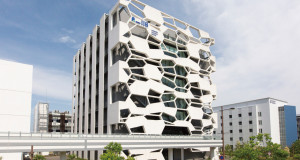
XIIIth International Symposium on Nuclear Symmetry Energy (NuSym25)
September 8 (Mon) - 13 (Sat) 2025
[Scientific scope]
The symposium will address experimental and theoretical investigations of the equation-of-state (EoS) of nuclear matter at various isospin asymmetries. Such investigations include efforts in nuclear structure, nuclear reactions and heavy-ion collisions, as well as in astrophysical observations of compact stars and associated phenomena. An important role of the symposium is to unify efforts of the nuclear physics and astrophysics communities in addressing common research challenges.
Venue: Integrated Innovation Building (IIB), Kobe Campus, RIKEN
Event Official Language: English
Lecture
8th QGG Intensive Lecture: Quantum reference frames and their applications in high-energy physics
September 24 (Wed) - 26 (Fri) 2025
Philipp Höhn (Assistant Professor, Qubits and Spacetime Unit, Okinawa Institute of Science and Technology Graduate University (OIST))
Quantum reference frames (QRFs) are a universal tool for dealing with symmetries in quantum systems. Roughly speaking, they are internal subsystems that transform in some non-trivial way under the symmetry group of interest and constitute the means for describing quantum systems from the inside in purely relational terms. QRFs are thus crucial for describing and extracting physics whenever no external reference frame for the symmetry group is available. This is in particular the case when the symmetries are gauge, as in gauge theory and gravity, where QRFs arise whenever building physical observables. The choice of internal QRF is typically non-unique, giving rise to a novel quantum form of covariance of physical properties under QRF transformations. This lecture series will explore this novel perspective in detail with a specific emphasis on applications in high-energy physics and gravity.
I will begin by introducing QRFs in mechanical setups and explain how they give rise to quantum structures of covariance that mimic those underlying special relativity. I will explain how this leads to subsystem relativity, the insight that different QRF decompose the total system in different ways into gauge-invariant subsystems, and how this leads to the QRF dependence of correlations, entropies, and thermal properties. We will then explore how relational dynamics in Hamiltonian constrained systems and the infamous "problem of time" can be addressed with clocks identified as temporal QRFs. In transitioning to the field theory setting, we will first consider hybrid scenarios, where QRFs are quantum mechanical, but the remaining degrees of freedom are quantum fields including gravitons. I will explain how this encompasses the recent discussion of "observers", generalized entropies, and gravitational von Neumann algebras by Witten et al. and how subsystem relativity leads to the conclusion that gravitational entanglement entropies are observer dependent. We will then discuss the classical analog of QRFs in gauge theory and gravity and how they can be used to build gauge-invariant relational observables and to describe local subsystems. This will connect with discussions on edge and soft modes in the literature, the former of which turn out to be QRFs as well. This has bearing on entanglement entropies in gauge theories, which I will describe on the lattice, providing a novel relational construction that overcomes the challenges faced by previous constructions, which yielded non-distillable contributions to the entropy and can be recovered as the intersection of "all QRF perspectives". Finally, I will describe how the classical discussion of dynamical reference frames can be used to build a manifestly gauge-invariant path integral formulation that opens up novel relational perspectives on effective actions and the renormalization group in gravitational contexts, which is typically plagued by a lack of manifest diffeomorphism-invariance. I will conclude with open questions and challenges in the field.
Program:
September 24
10:15 - 10:30 Registration and reception with coffee
10:30 - 12:00 Lecture 1
12:00 - 13:30 Lunch
13:30 - 15:00 Lecture 2
15:00 - 16:00 Coffee break
16:00 - 17:00 Lecture 3
17:10 - 18:10 Short talk session
18:20 - 21.00 Banquet
September 25
10:15 - 10:30 Morning discussion with coffee
10:30 - 12:00 Lecture 4
12:00 - 13:30 Lunch
13:30 - 15:00 Lecture 5
15:00 - 16:00 Coffee break
16:00 - 17:00 Lecture 6
17:10 - 18:10 Short talk session
September 26
10:15 - 10:30 Morning discussion with coffee
10:30 - 12:00 Lecture 7
12:00 - 13:30 Lunch
13:30 - 15:00 Lecture 8
15:00 - 16:00 Coffee break
16:00 - 17:00 Lecture 9 & Closing
Venue: #435-437, 4F, Main Research Building, RIKEN Wako Campus
Event Official Language: English
Paper of the Week
Week 1, July 2025
2025-07-03
Title: Susceptibilities of rotating quark matter in Fourier-Bessel basis
Author: Mamiya Kawaguchi, Kazuya Mameda
arXiv: http://arxiv.org/abs/2507.00494v1
Title: Topological Defect Propagation to Classify Knitted Fabrics
Author: Daisuke S. Shimamoto, Keiko Shimamoto, Sonia Mahmoudi, Samuel Poincloux
arXiv: http://arxiv.org/abs/2506.22369v1
Title: Universal framework with exponential speedup for the quantum simulation of quantum field theories including QCD
Author: Jad C. Halimeh, Masanori Hanada, Shunji Matsuura
arXiv: http://arxiv.org/abs/2506.18966v1
Title: Observation of entanglement in a cold atom analog of cosmological preheating
Author: Victor Gondret, Clothilde Lamirault, Rui Dias, Léa Camier, Amaury Micheli, Charlie Leprince, Quentin Marolleau, Jean-René Rullier, Scott Robertson, Denis Boiron, Christoph I. Westbrook
arXiv: http://arxiv.org/abs/2506.22024v1
If you would like to cancel your subscription or change your email address,
please let us know via our contact form.
Copyright © iTHEMS, RIKEN. All rights reserved.