
Volume 400
Back to Newsletter List


Volume 400
March 20, 2026
Award

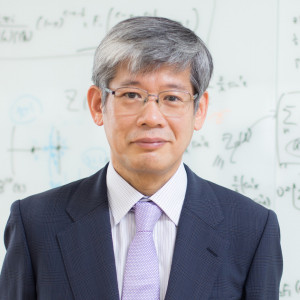
Team Director Motoko Kotani Receives the Japan Academy Prize
2026-03-17
Motoko Kotani, Team Director (concurrent) of the Mathematical Application Research Team, Division of Applied Mathematical Science, at the RIKEN Center for Interdisciplinary Theoretical and Mathematical Sciences (iTHEMS), has been selected as a recipient of the Japan Academy Prize. The Japan Academy announced on March 12, 2026, that the award recognizes the collaborative research “Discrete Geometric Analysis of Infinite Graphs with Symmetry” conducted with Toshikazu Sunada, Professor Emeritus of Meiji University and Professor Emeritus of Tohoku University.
According to the award citation, the research was highly recognized for introducing the concept of the “standard realization” of crystal lattices, for studies of random walks on crystal lattices based on that concept, in particular for establishing central limit theorems and large deviation principles, and for the rediscovery of the K4 crystal and the promotion of its applications to materials science. These achievements have made important contributions to the development of discrete geometric analysis and discrete algebraic geometry from both theoretical and applied perspectives.
The research recognized by this award is based on work that Team Director Kotani pursued while based at Tohoku University and the Advanced Institute for Materials Research (WPI-AIMR), Tohoku University. In 2018, iTHEMS and AIMR established the collaborative hub SUURI-COOL (Sendai): AIMR-iTHEMS Mathematical Science Laboratory. This laboratory, located on the third floor of the AIMR Main Building, aims to address fundamental questions in matter, life, and the universe, as well as basic problems in society, from the perspective of the mathematical sciences.
All of us at iTHEMS extend our heartfelt congratulations to Team Director Kotani on this distinguished achievement.
Upcoming Events
External Event

Useless Science & Art: The Value of “Useless” Science and Art
March 21 (Sat) 14:00 - 15:30, 2026
Satoshi Iso (Director, RIKEN Center for Interdisciplinary Theoretical and Mathematical Sciences (iTHEMS))
Tetsuo Hatsuda (Executive Director of Science, RIKEN)
Yoshihiro Kozuka (Creative Director, ADK Marketing Solutions Inc.)
Haruka Kodama (Experience Designer, ADK Marketing Solutions Inc.)
A talk event exploring the relationship between science and art will be held, inspired by the artwork “Black Hole Recorder,” which draws on ideas from quantum black hole theory.
Using this work as an entry point, scientists and creators will engage in dialogue on topics ranging from the 100-year history since the birth of quantum mechanics, to cutting-edge research in quantum cosmology, and even the question: “What should we leave for the future 1,500 years from now?”
Research and artistic expression that may at first seem impractical have, over long periods of time, often led to transformative innovations for the future. How do scientists’ curiosity about the unknown and artists’ imagination intersect to generate new ideas?
The event will introduce the concept and creative background of “Black Hole Recorder,” as well as recent developments in quantum black hole research. Through perspectives from both science and art, participants will discuss possibilities for the future. There will also be a special session where visitors can experience audio recordings made with the Black Hole Recorder itself.
We warmly invite you to join this unique dialogue where science and art meet.
Seminar

Data-Driven Stratification and Prediction of Complex Diseases
March 24 (Tue) 14:00 - 15:15, 2026
Eiryo Kawakami (Team Director, Medical Science Data-driven Mathematics Team, Division of Applied Mathematical Science, RIKEN Center for Interdisciplinary Theoretical and Mathematical Sciences (iTHEMS))
Many common diseases such as cancer, chronic heart failure, and diabetes exhibit substantial biological and clinical heterogeneity, which complicates diagnosis, risk assessment, and treatment decisions. In this talk, I introduce a data-driven framework for disease stratification and prediction using machine learning applied to multidimensional medical data. First, unsupervised machine learning methods are used to identify previously unrecognized disease subtypes based on clinical and biomarker data. These stratification approaches reveal hidden patient groups with distinct clinical characteristics and prognoses. To enable practical application in clinical datasets, we further develop supervised learning models that reproduce and generalize unsupervised clusters, allowing robust subtype estimation even in datasets with missing variables. Next, I present approaches for early disease detection using large-scale medical history data, focusing on combinations of comorbidities as early indicators of severe diseases. Finally, I discuss how large-scale deep learning models can be leveraged to predict disease prognosis from medical images and other high-dimensional data. These studies demonstrate how machine learning can redefine disease categories and enable earlier detection and more precise prediction in heterogeneous diseases.
Venue: Hybrid Format (3F #359 and Zoom), Main Research Building, RIKEN Wako Campus
Event Official Language: English
Seminar

Quantum States Over Time: From Foundations To Applications
March 24 (Tue) 15:30 - 17:00, 2026
Minjeong Song (Research Fellow, Centre for Quantum Technologies, National University of Singapore, Singapore)
In this talk, I will introduce quantum states over time (QSOT), a formalism for describing quantum systems over space-time. I will begin by reviewing how QSOT has emerged in the literature. While conventional density operator formalism has been effective across many areas of quantum information theory, QSOT was developed to meet more specialized research needs— most notably, as a key ingredient to develop a quantum version of Bayes’ theorem. I will end the first part of my talk by comparing various QSOT that have been proposed.
In the second part, I will discuss the causal compatibility problem as an application of QSOT. I will focus on the temporal compatibility problem, which asks the following: from correlations in measurement outcomes alone, can two otherwise isolated parties establish whether such correlations are atemporal (i.e., temporally incompatible)? That is, can they rule out that they have been given the same system at two different times? I will first explain how characterizing measurement statistics in a causal agnostic scenario is equivalent to characterizing a specific type of QSOT, known as pseudo-density operators. I will then present our recent findings obtained by analyzing pseudo-density operators; In particular, we demonstrate that atemporality is distinct from entanglement, though they appear to be equivalent at first glance. Specifically, we show atemporality implies entanglement, but not vice versa, thus revealing that atemporality is a strictly stronger form of quantum correlations than entanglement. Nevertheless, we also find that sufficiently strong entanglement does imply atemporality.
Venue: #359, Seminar Room #359, 3F Main Research Building, RIKEN
Event Official Language: English
Lecture
Quantum Simulation of Non-Abelian Gauge Theories: Correcting Common Misconceptions (1/3)
March 24 (Tue) 18:00 - 19:00, 2026
Masanori Hanada (Reader, School of Mathematical Sciences, Queen Mary University of London, UK)
Venue: Hybrid Format (3F #359 and Zoom), Seminar Room #359, 3F Main Research Building, RIKEN
Event Official Language: Japanese
Seminar

Toward a Mathematical Prehistory of Homo sapiens: Data Integration and Statistical Representation in PaleoAsiaDB
March 26 (Thu) 13:00 - 14:00, 2026
Kenji Okubo (Special Postdoctoral Researcher, Division of Fundamental Mathematical Science, RIKEN Center for Interdisciplinary Theoretical and Mathematical Sciences (iTHEMS))
This talk introduces PaleoAsiaDB, a curated database of lithic assemblages from Paleolithic Asia, and aims to initiate a discussion on its potential uses and methodological challenges. The database integrates information on tool typology, technological attributes, stratigraphy, and chronological ranges across multiple sites and periods.
Archaeological assemblage data are inherently heterogeneous, combining categorical variables with hierarchical structure and, in some cases, continuous measurements. In addition, temporal information is often represented as ranges rather than precise dates, and sampling intensity varies substantially across sites. These features make it non-trivial to define consistent procedures for comparison, aggregation, and quantitative analysis.
The goal of this session is to gather feedback on data representation and analysis strategies, and to clarify what types of quantitative approaches are most suitable for extracting robust patterns from archaeological assemblage data.
Reference
- Yoshihiro Nishiaki, Yasuhisa Kondo, Middle and Upper Paleolithic Sites in the Eastern Hemisphere, Replacement of Neanderthals by Modern Humans Series (2023), doi: 10.1007/978-981-99-3712-7
Venue: Seminar Room #359, 3F Main Research Building, RIKEN / via Zoom
Event Official Language: English
Seminar
QFT as a set of ODEs
March 27 (Fri) 13:30 - 15:30, 2026
Qiao Jiaxin (Project Researcher, Kavli Institute for the Physics and Mathematics of the Universe (Kavli IPMU), The University of Tokyo)
Correlation functions of local operators in Quantum Field Theory (QFT) on hyperbolic space can be fully characterized by the set of QFT data. These are the scaling dimensions of boundary operators, the boundary Operator Product Expansion (OPE) coefficients and the Boundary Operator Expansion (BOE) coefficients that characterize how each bulk operator can be expanded in terms of boundary operators. For simplicity, we focus on two dimensional QFTs and derive a universal set of first order Ordinary Differential Equations (ODEs) that encode the variation of the QFT data under an infinitesimal change of a bulk relevant coupling. In principle, our ODEs can be used to follow a renormalization group flow starting from a solvable QFT into a strongly coupled phase and to the flat space limit.
References
- Manuel Loparco, Grégoire Mathys, João Penedones, Jiaxin Qiao, Xiang Zhao, Locality constraints in AdS2 without parity, arXiv: 2511.20749
- Manuel Loparco, Grégoire Mathys, Joao Penedones, Jiaxin Qiao, Xiang Zhao, QFT as a set of ODEs, arXiv: 2601.04310
Venue: via Zoom / Seminar Room #359, 3F Main Research Building, RIKEN
Event Official Language: English
Lecture
Quantum Simulation of Non-Abelian Gauge Theories: Correcting Common Misconceptions (2/3)
March 31 (Tue) 18:00 - 19:00, 2026
Masanori Hanada (Reader, School of Mathematical Sciences, Queen Mary University of London, UK)
Venue: Hybrid Format (3F #359 and Zoom), Seminar Room #359, 3F Main Research Building, RIKEN
Event Official Language: Japanese
Seminar
A mathematical promenade in microscopic locomotion
April 2 (Thu) 13:00 - 14:00, 2026
Clément Moreau (CNRS Researcher, CNRS, France)
The microscopic world offers a fascinating diversity of locomotion strategies, relying primarily on the use of flagella and cilia. These slender structures, capable of complex periodic deformations, serve as a major source of inspiration for medical microrobotics.
At this scale, fluid dynamics is governed by the predominance of viscosity over inertia. This low-Reynolds number regime imposes strict physical constraints, summarized by the famous « scallop theorem »: a reciprocal deformation cannot produce any net displacement. Mathematically, this is framed by the Stokes connection, which links changes in body shape to net movement in space.
This presentation proposes a journey through the modeling principles of microscopic swimmers. We will see how to derive analytical solutions to the locomotion problem by simplifying degrees of freedom or by assuming small deformation amplitudes. I will then present the perspective of control theory to address the « controllability » property, i.e. the ability of a locomotor to reach any target position and shape.
Finally, I will question a classic hypothesis in the field: the inextensibility of flagella. Although the literature often assumes these structures are rigid in the longitudinal direction, certain micro-organisms and artificial robots exhibit significant compression variations. I will present recent results, based on classical modeling tools, exploring the influence of compression-curvature coupling on locomotion efficiency at low Reynolds numbers.
Venue: Hybrid Format (3F #359 and Zoom), Seminar Room #359, 3F Main Research Building, RIKEN
Event Official Language: English
Seminar
A Hybrid Pseudo-spectral–PINN Approach to Black Hole Quasinormal Modes
April 3 (Fri) 14:00 - 15:15, 2026
Alexandre M. Pombo (PD, Institute of Physics of the Czech Academy of Sciences, Czechia)
Gravitational-wave detections by the LIGO-Virgo-KAGRA network have turned compact-object mergers into precision probes of strong gravity. The post-merger ringdown is particularly incisive: it is governed by quasinormal modes (QNMs), the damped oscillations that encode the remnant's structure and provide a fingerprint of the final object. While current detectors constrain the dominant mode, next-generation observatories will resolve multiple modes with high precision, placing stringent demands on the accuracy of theoretical predictions. Computing QNMs for rotating black holes is, however, a non-trivial task, as it requires solving highly coupled, complex-valued perturbation equations where standard methods struggle. In this talk, I present SpectralPINN, a hybrid solver combining Pseudo-spectral methods with Physics-Informed Neural Networks, validated at 10⁻⁵ relative accuracy. I will present results for Kerr and Kerr-Newman black holes, demonstrating the method's robustness and accuracy across parameter space, and discuss its potential for extension to more exotic compact objects relevant to next-generation detector science.
Venue: Hybrid Format (3F #359 and Zoom), Seminar Room #359, 3F Main Research Building, RIKEN
Event Official Language: English
Lecture
Quantum Simulation of Non-Abelian Gauge Theories: Correcting Common Misconceptions (3/3)
April 7 (Tue) 18:00 - 19:30, 2026
Masanori Hanada (Reader, School of Mathematical Sciences, Queen Mary University of London, UK)
Venue: Hybrid Format (3F #359 and Zoom), Seminar Room #359, 3F Main Research Building, RIKEN
Event Official Language: Japanese
Seminar
Clumpy Outflows from Super-Eddington Accreting Black Holes
April 10 (Fri) 14:00 - 15:15, 2026
Haojie Hu (JSPS Research Fellow, University of Tsukuba)
Recent advances in X-ray spectroscopic observation have enabled researchers to reveal distinct clumpy structures in the super-Eddington outflows from the supermassive black hole in PDS 456 (XRISM Collaboration 2025), initiating detailed investigation of fine-scale structures in accretion-driven outflows. In this talk, I will introduce our high-resolution, two-dimensional radiation-hydrodynamics simulations with time-varying and anisotropic initial and boundary conditions that reproduce clumpy outflows from super-Eddington accretion flows. The resulting clumpy outflows extend across a wide range of radial distances and polar angles, exhibiting typical properties such as a size of ~10 rg (where rg is the gravitational radius), a velocity of ~0.05–0.2 c (where c is the speed of light), and about five clumps along the line of sight. Although the velocities are slightly smaller, these characteristics reasonably resemble those obtained from the XRISM observation. The gas density of the clumps is on the order of 10^-13–10^-12 g cm^-3, and their optical depth for electron scattering is approximately 1–10. The clumpy winds accelerated by radiation force are considered to originate from the region within <300 rg.
Venue: #220, 2F, Main Research Building, RIKEN Wako Campus / via Zoom
Event Official Language: English
Meeting
iTHEMS NOW & NEXT 2026
April 13 (Mon) - 14 (Tue) 2026
We will hold an annual in-house gathering, “iTHEMS NOW & NEXT,” for FY 2026.
The event provides a great opportunity for all iTHEMS members, including visiting researchers and, in particular, new arrivals, to gain a comprehensive overview of iTHEMS’s current activities and future directions.
The detailed program will be announced in due course, but there will be poster sessions for all members, so please be ready to present one.
Venue: 2F Large Conference Room, Administrative Headquarters, RIKEN Wako Campus / via Zoom
Event Official Language: English
Seminar

TJR-iTHEMS Joint Seminar: Golden Age of Neutron Stars
April 17 (Fri) 16:00 - 17:00, 2026
Gordon Baym (Professor Emeritus, University of Illinois, USA)
This is a TJR-iTHEMS Joint Seminar supported by ASPIRE Program
ABSTRACT
Neutron stars were first posited in the early thirties, and discovered as pulsars in the late sixties; however we are only recently beginning to understand the matter they contain. I will describe the ongoing development of a consistent picture of the liquid interiors of neutron stars, now driven by ever increasing observations as well as theoretical advances. These include observations of heavy neutron stars of about 2.0 solar masses and higher; ongoing inferences of masses and radii by the NICER telescope; and observations of binary neutron star mergers, through gravitational waves as well as across the electromagnetic spectrum. Theoretically an understanding is emerging in QCD of how nuclear matter can turn into deconfined quark matter, which I will illustrate with modern quark-hadron crossover equations of state.
BRIEF BIO
Gordon Baym is a Professor of Physics at the University of Illinois. Educated at Cornell and Harvard, he spent two years at the Niels Bohr Institute. His interests range from matter under extreme conditions to ultracold atomic physics, astrophysics, and nuclear physics. A pioneer in the study of pulsars and neutron stars, he is a member of the U.S. National Academy of Sciences and received the APS Medal for Exceptional Achievement in Research, the Hans Bethe and Lars Onsager Prizes, and the Eugene Feenberg Memorial Medal.
Venue: H701, The University of Osaka, Toyonaka Campus
Event Official Language: English
Paper of the Week
Week 4, March 2026
2026-03-19
Title: Toward bootstrapping tensor-network contractions
Author: Seishiro Ono, Yanbai Zhang, Hoi Chun Po
arXiv: http://arxiv.org/abs/2603.17856v1
Title: Crowdsourcing Gravitational Waves from Superradiant Axions
Author: Sebastian A. R. Ellis, Orion Ning, Nicholas L. Rodd, Jan Schütte-Engel
arXiv: http://arxiv.org/abs/2603.15734v1
Title: TracktorLive: an integrated real-time object tracking and response system
Author: Pranav Minasandra, Vivek Hari Sridhar, Dominique G Roche, Isaac Planas-Sitjà
Journal Reference: bioRxiv 2026.03.12.711471
doi: https://doi.org/10.64898/2026.03.12.711471
Title: Learning Quantum Operator Dynamics from Short-Time Data
Author: Jinyang Li, Satoshi Iso, Shunji Matsuura, Lingxiao Wang, Xiaoyang Wang
arXiv: http://arxiv.org/abs/2603.14699v1
Title: A low mass and radius neutron star candidate in XTE J1810-189?
Author: Shoutao Ban, Helei Liu, Zhaosheng Li, Yupeng Chen, Guoliang Lü, Akira Dohi, Tomoshi Takeda, Hongbin Fan, Chunhua Zhu, Renxin Xu
arXiv: http://arxiv.org/abs/2603.12962v1
Title: $\bar{D}$-meson Nucleon Scattering from Lattice QCD at the Physical Point
Author: Wren Yamada, Yan Lyu, Kotaro Murakami, Takumi Doi
arXiv: http://arxiv.org/abs/2603.12251v1
If you would like to cancel your subscription or change your email address,
please let us know via our contact form.
Copyright © iTHEMS, RIKEN. All rights reserved.