
Volume 381
Back to Newsletter List


Volume 381
November 7, 2025
Hot Topic

Miniature satellite NinjaSat discovers an unusually short X-ray burst cycle
2025-11-06
An international collaborative research group including Akira Dohi, Special Postdoctoral Researcher, has observed an X-ray binary system known as a “clock burster,” which produces X-ray bursts at regular intervals, using NinjaSat, the CubeSat X-ray satellite led by RIKEN. The team discovered that this object has the shortest burst recurrence time ever recorded, 1.6 hours.
For more details, please refer to the related link.
Reference
- Tomoshi Takeda, Toru Tamagawa, Teruaki Enoto, Wataru Iwakiri, Akira Dohi, Tatehiro Mihara, Hiromitsu Takahashi, Chin-Ping Hu, Amira Aoyama, Naoyuki Ota, Satoko Iwata, Takuya Takahashi, Kaede Yamasaki, Takayuki Kita, Soma Tsuchiya, Yosuke Nakano, Mayu Ichibakase, Nobuya Nishimura, and (NinjaSat collaboration), Return of the Clocked Burster: Exceptionally Short Recurrence Time in GS 1826−238, ApJL 993 L13 (2025), doi: 10.3847/2041-8213/ae0e75
Upcoming Events
Seminar
Towards the prediction of clusters of primordial black holes
November 7 (Fri) 16:00 - 17:30, 2025
Danilo Artigas (JSPS Postdoctoral Research Fellow, Department of Physics Ⅱ, Division of Physics and Astronomy, Graduate School of Science, Kyoto University)
Primordial black holes (PBHs) are a major candidate for dark matter, expected to form from the collapse of large density fluctuations generated during inflation. Their abundance is highly sensitive to non-linear effects, some of which can be described through the δN formalism. This approach models the universe as a set of locally homogeneous patches evolving independently throughout inflation. However, accounting for the spatial correlations between these patches is crucial to predicting the spatial distribution of PBHs and the formation of clusters. In this talk, after reviewing the δN formalism, I will show how to include spatial correlations within this framework. As an illustration, I will discuss the ultra-slow-roll model and compute the curvature perturbation ζ — necessary to determine PBH formation — and its spatial correlations at the end of inflation. In the future, this could enable the prediction of PBH binaries and clusters, which may leave observable imprints such as gravitational waves.
Venue: Hybrid Format (3F #359 and Zoom), Seminar Room #359, 3F Main Research Building, RIKEN
Event Official Language: English
Seminar
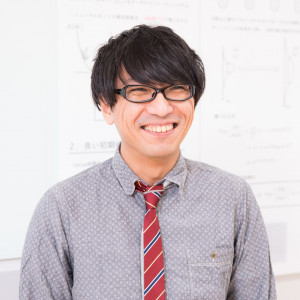
On the Role of Hidden States of Modern Hopfield Network in Transformer
November 10 (Mon) 14:00 - 15:00, 2025
Masato Taki (Associate Professor, Graduate School of Artificial Intelligence and Science, Rikkyo University)
Large language models such as ChatGPT are based on deep learning architectures known as Transformers. Owing to their remarkable performance and broad applicability, Transformers have become indispensable in modern AI development. However, it still remains an open question why Transformers perform so well and what the essential meaning of their unique structure is. One possible clue lies in the mathematical correspondence between Hopfield Networks and Transformers.
In this talk, I will first introduce the major developments over the past decade that have significantly increased the storage capacity of Hopfield Networks. I will then review the theoretical correspondence between Hopfield Networks and Transformers. Building on this background, I will present our recent findings: by extending this correspondence to include the hidden-state dynamics of Hopfield Networks, we discovered a new class of Transformers that can recursively propagate attention-score information across layers. Furthermore, we found, both theoretically and experimentally, that this new Transformer architecture resolves the “rank collapse” problem often observed in conventional multi-layer attention. As a result, when applied to language generation and image recognition tasks, it achieves performance surpassing that of existing Transformer-based models.
References
- Tsubasa Masumura, Masato Taki, On the Role of Hidden States of Modern Hopfield Network in Transformer, NeurIPS (2025)
- Hubert Ramsauer, etc., Hopfield Networks is All You Need, ICLR (2021), arXiv: 2008.02217
- Dmitry Krotov, John Hopfield, Large Associative Memory Problem in Neurobiology and Machine Learning, ICLR (2021), arXiv: 2008.06996
Venue: Seminar Room #359, Seminar Room #359, 3F Main Research Building, RIKEN / via Zoom
Event Official Language: English
Seminar
A genealogy-based framework to infer the demographic history, genetic structure, and phenotype association
November 11 (Tue) 14:00 - 15:00, 2025
Charleston Chiang (Associate Professor, University of Southern California, USA)
We propose a conceptual analogy in population genetics to the central dogma of molecular biology. While the central dogma describes the flow of information from DNA to RNA to protein, we posit that under neutrality, a population's demography shapes its underlying genealogy, which in turn determines patterns of genetic variation that give rise to phenotypic variation. At the center of this analogous dogma is the genetic genealogies. Recent advances in inferring the Ancestral Recombination Graph (ARG), a complete record of a population's genealogies, have enabled us to develop a suite of methods that interrogates each stage these fundamental and connected components:
- Genealogy → Demography: We developed gLike, a method that uses a graph-based summary of the ARG to accurately infer a population's demographic history.
- Genealogy → Genetic Variation: We created eGRM, which computes the expected genetic relatedness between individuals directly from the ARG, providing a precise characterization of genetic variation patterns, even in recently admixed populations.
- Genealogy → Genetic Variation → Phenotype: We devised sycamore, a framework that extends the eGRM to map quantitative trait loci, particularly where multiple alleles contribute to a phenotype.
We have benchmarked each method in simulations and validated them using empirical human datasets. While the performance of these tools relies on the accuracy and scalability of ARG inference, which is continuously improving, we demonstrate that our genealogy-based approach already enhances the analysis of demography, relatedness, and trait architecture in diverse human populations.
Venue: Seminar Room #359, 3F Main Research Building, RIKEN / via Zoom
Event Official Language: English
Seminar

Topological physics and its interdisciplinary influence
November 12 (Wed) 13:00 - 14:00, 2025
Tomoki Ozawa (Professor, Advanced Institute for Materials Research (AIMR), Tohoku University)
Topological insulators are materials which do not conduct current inside but do conduct at the surface or the edge. The name "topological" comes from the fact that the "shape" of the wavefunction of electrons in topological insulators show non-trivial twist, which can be mathematically characterized by the language of topology. Alongside the development of the study of topological insulators in solids, analogous phenomena were found to exist also in other systems such as photonics, mechanics, geophysics, and active matter. In this seminar, I discuss how the underlying concept of "topology of states" can have a broad impact applicable to various areas in physics, with some emphasis on my own contribution to the field. I aim to structure the first half of my seminar to be accessible to those outside physics, and latter half to be more specialized, covering cutting-edge results.
Venue: Hybrid Format (3F #359 and Zoom), Seminar Room #359, 3F Main Research Building, RIKEN
Event Official Language: English
Seminar
The Uchuu simulations data set: large-scale structures and galaxies - Tomoaki Ishiyama
November 13 (Thu) 14:00 - 15:30, 2025
Tomoaki Ishiyama (Associate Professor, Digital Transformation Enhancement Council, Chiba University)
I will introduce the Uchuu suite of large high-resolution cosmological N-body simulations. The largest simulation, named Uchuu, consists of 2.1 trillion dark matter particles in a box of side-length 2.0 Gpc/h, with particle mass of 3.27e8 Msun/h. The highest resolution simulation, Shin-Uchuu, consists of 262 billion particles in a box of side-length 140 Mpc/h, with particle mass of 8.97e5 Msun/h. Combining these simulations, we can follow the evolution of dark matter haloes and subhaloes spanning those hosting dwarf galaxies to massive galaxy clusters across an unprecedented volume from very high-z. We release N-body data (halo/subhalo catalogs and merger trees) and mock galaxy/AGN catalogs constructed using various models, which cover objects from z=0 to very high-z. These catalogs open a new window on understanding the large-scale structures and galaxy formation. In this presentation, I will also introduce results of cosmological simulations adopting a time-varying dark energy, conducted on the supercomputer Fugaku.
Venue: Hybrid Format (3F #359 and Zoom), Seminar Room #359, 3F Main Research Building, RIKEN
Event Official Language: English
Workshop
Mathematical Sciences Outreach Workshop 2025
November 14 (Fri) - 16 (Sun) 2025
This year's meeting on "Outreach of Mathematical Sciences" will be held from FRI NOV 14 12:30 to SUN NOV 16 15:00 as a face-to-face meeting at Institute of Mathematics for Industry of Kyushu University as "Outreach of Data Descriptive Science and Mathematical Sciences" supported by Grant-in-Aid for Transformative Research Areas (A), 2022-2026 "Establishing data descriptive science and its cross-disciplinary applications" in cooperation with RIKEN iTHEMS SUURI-COOL (Kyushu) using ZOOM for the necessary part as well.
Venue: W1-D-413, IMI Auditorium, Ito Campus, Kyushu University / via Zoom
Event Official Language: Japanese
Seminar
Contribution of star-forming galaxies to the cosmic gamma-ray background
November 14 (Fri) 14:00 - 15:15, 2025
Junling Chen (Ph.D. Student, Graduate School of Mathematical Sciences, The University of Tokyo)
Fermi Gamma-Ray Space Telescope has measured the diffuse extragalactic gamma-ray background (EGB) radiation in the energy range of 100 MeV to 820 GeV. Several candidate γ -ray sources have been proposed as the candidate components of the unresolved EGB, including active galactic nuclei (AGNs), millisecond pulsars, dark matter annihilation, and star-forming galaxies (SFGs), but their quantitative contribution has not yet been precisely determined. In this talk, I will introduce our latest physical model describing the gamma-ray emission mechanism from SFGs, and our estimate of the contribution of SFGs based on careful calibration with gamma-ray luminosities of nearby galaxies and physical quantities (star formation rate, stellar mass, and size) of galaxies observed by high-redshift galaxy surveys.
Venue: Hybrid Format (3F #359 and Zoom), Seminar Room #359, 3F Main Research Building, RIKEN
Event Official Language: English
Meeting
Mathematical Application Research Team Meeting #10
November 14 (Fri) 16:00 - 17:00, 2025
Yoshiko Ogata (Professor, Research Institute for Mathematical Sciences (RIMS), Kyoto University)
Mathematical Application Research Team invites Prof. Yoshiko Ogata from RIMS for this meeting. Her talk title will be announced later. You are welcome to join the meeting.
The title and the abstract of her talk are:
Title: Mixed state topological order: operator algebraic approach
Abstract: We consider anyons in mixed states of two-dimensional quantum spin systems within the operator-algebraic framework of quantum statistical mechanics. To each state satisfying a mixed-state version of approximate Haag duality, we associate a braided C*-tensor category, which we interpret as describing the anyonic excitations of the state. We then investigate how these anyonic structures behave under interactions with the environment.
Venue: #359, Seminar Room #359, 3F Main Research Building, RIKEN / via Zoom
Event Official Language: English
Seminar

Chiral anomaly in Hamiltonian lattice gauge theory
November 18 (Tue) 10:00 - 12:00, 2025
Arata Yamamoto (Senior Research Scientist, Quantum Mathematical Science Team, Division of Applied Mathematical Science, RIKEN Center for Interdisciplinary Theoretical and Mathematical Sciences (iTHEMS))
The 4th quantum computing gathering organized by Quantum Computing Study Group
Venue: Seminar Room #359, 3F Main Research Building, RIKEN / via Zoom
Event Official Language: English
Lecture
9th QGG Intensive Lectures – Correlation Effects in Quantum Many-Body Systems: Some Prototypical Examples in Condensed Matter Physics
November 19 (Wed) - 20 (Thu) 2025
Norio Kawakami (Deputy Director, Fundamental Quantum Science Program, TRIP Headquarters, RIKEN)
The ninth installment of the Intensive Lecture Series, organized by the Quantum Gravity Gatherings (QGG) study group at RIKEN iTHEMS, will feature Prof. Norio Kawakami from the Fundamental Quantum Science Program (FQSP) under RIKEN's Transformative Research Innovative Platform (TRIP). Over the course of two days, Prof. Kawakami will deliver a lecture series on quantum many-body systems.
In recent years, insights from quantum many-body physics have become central to research in quantum gravity, where correlation effects induced by gravity play nontrivial roles. By bridging perspectives from gravitational physics and quantum many-body dynamics, one hopes to understand how macroscopic spacetime and its geometric properties emerge from the collective behavior of quantum constituents at microscopic scales.
In this lecture series, Prof. Kawakami will introduce the fundamental properties of correlation effects through representative examples in condensed matter physics. A distinctive aspect of this event is its joint organization with the Fundamental Quantum Science Program (FQSP) at RIKEN. The goal is to further strengthen connections between the quantum gravity, condensed matter, and quantum information communities.
The lectures will be delivered in a blackboard-style format (in English), designed to foster interaction, active participation, and in-depth Q&A discussions. In addition, short talk sessions will be held, giving participants the opportunity to present briefly on topics of their choice. Through this informal and dynamic setting, we hope to spark active interactions among participants and create an environment where ideas can be shared openly and enthusiastically.
Abstract:
Some examples of theoretical methods to treat strongly correlated systems in condensed matter physics are explained. We start with the Kondo effect, which is one of the most fundamental quantum many-body problems and has been intensively studied to date in a wide variety of topics such as dilute magnetic alloys, heavy fermion systems, quantum dot systems, etc. Dynamical mean-field theory (DMFT) is then introduced, which enables us to systematically treat strongly correlated materials such as a Mott insulator. It is shown that the essence of DMFT is closely related to the Kondo effect. Furthermore, we explain how to apply conformal field theory (CFT) to treat correlation effects in one-dimensional electron systems.
Topics of these lectures include:
- Introduction to quantum many-body systems in condensed matter physics
- The Kondo effect: a prototypical quantum many-body problem
- Dynamical mean-field theory: a generic method to study correlation effects
- Application of CFT to correlated electron systems in one dimension
For more information, please visit the event webpage from the links below.
Venue: #435-437, 4F, Main Research Building, RIKEN Wako Campus
Event Official Language: English
Seminar
Adaptive navigation strategies in adversarial predator-prey contexts
November 20 (Thu) 13:00 - 14:00, 2025
Nozomi Nishiumi (Specially Appointed Associate Professor, Academic Assembly Institute of Science and Technology, Niigata University)
Animal navigation has long been a central topic in behavioral biology. In predator-prey systems, both predators and prey must navigate strategically - predators to capture prey and prey to reach safety - each evolving to outsmart the other through coevolution. To uncover the essence of these navigation strategies, I have investigated behavioral mechanisms across taxa. In bats, my collaborators and I found that they integrate multiple sensory and flight tactics to keep erratically flying moths within detection range. In pigeons, we discovered that individuals anticipating drone attacks adjust their positions toward the rear within the flock. I will also introduce an experimental framework that enables controlled interactions between real animals and virtual agents driven by reactive motion control, allowing quantitative tests of navigation efficiency. Through this seminar, I aim to highlight how studies of predator-prey navigation can bridge biology and engineering, providing insights into adaptive decision-making in dynamic environments.
Venue: Seminar Room #359, Seminar Room #359, 3F Main Research Building, RIKEN / via Zoom
Event Official Language: English
Seminar
Hamiltonian Learning and Dynamics Prediction via Machine Learning
November 26 (Wed) 15:00 - 16:00, 2025
Li Keren (Assistant Professor, College of Physics and Optoelectronic Engineering, Shenzhen University, China)
Accurate prediction of quantum Hamiltonian dynamics and identification of Hamiltonian parameters are crucial for advancements in quantum simulations, error correction, and control protocols. This talk introduces a machine learning model with dual capabilities: it can deduce time-dependent Hamiltonian parameters from observed changes in local observables within quantum many-body systems, and it can predict the evolution of these observables based on Hamiltonian parameters. The model’s validity was confirmed through theoretical simulations across various scenarios and further validated by two experiments. Initially, the model was applied to a Nuclear Magnetic Resonance quantum computer, where it accurately predicted the dynamics of local observables. The model was then tested on a superconducting quantum computer with initially unknown Hamiltonian parameters, successfully inferring them. We believe that machine learning techniques hold great promise for enhancing a wide range of quantum computing tasks, including parameter estimation, noise characterization, feedback control, and quantum control optimization.
References
- Zheng An, Jiahui Wu, Zidong Lin, Xiaobo Yang, Keren Li, and Bei Zeng, Dual-Capability Machine Learning Models for Quantum Hamiltonian Parameter Estimation and Dynamics Prediction, Physical Review Letters 134, no. 12, 120202. (2025), doi: 10.1103/PhysRevLett.134.120202, arXiv: 2405.13582
- Keren Li, Floquet-informed Learning of Periodically Driven Hamiltonians, arXiv: 2509.02331
Venue: via Zoom
Event Official Language: English
Colloquium

The 30th MACS Colloquium
November 28 (Fri) 14:45 - 18:00, 2025
Isao Ishikawa (Program-Specific Associate Professor, Center for Science Adventure and Collaborative Research Advancement (SACRA), Graduate School of Science, Kyoto University)
Ken-ichi Kurotani (Associate Professor, Center for Science Adventure and Collaborative Research Advancement (SACRA), Graduate School of Science, Kyoto University)
14:45-15:00 Teatime discussion
15:00–16:00 Talk by Dr. Isao Ishikawa (Program-Specific Associate Professor, Center for Science Adventure and Collaborative Research Advancement (SACRA), Graduate School of Science, Kyoto University)
16:15–17:15 Talk by Dr. Ken-ichi Kurotani (Associate Professor, Center for Science Adventure and Collaborative Research Advancement (SACRA), Graduate School of Science, Kyoto University)
17:15-18:00 Discussion
Venue: Science Seminar House (Map 9), Kyoto University
Event Official Language: Japanese
Colloquium

Measuring evolutionary forces of cultural change
January 13 (Tue) 14:00 - 15:30, 2026
Joshua B. Plotkin (Walter H. and Leonore C. Annenberg Professor of the Natural Sciences, University of Pennsylvania, USA)
I will describe how to measure the forces that drive cultural change, using inference tools from evolutionary theory. We study time series data from large corpora of parsed English texts to identify what drives language change over the course of centuries. We also measure frequency-dependent effects in time series of baby names and purebred dog preferences. The form of frequency dependence we infer helps to explain the diversity distribution of names, and it replicates across the United States, France, Norway and the Netherlands. We find different growth laws for male versus female names, attributable to different rates of innovation, whereas names from the bible enjoy a genuine advantage at all frequencies. Frequency dependence emerges from a host of underlying social and cultural mechanisms, including a preference for novelty that recapitulates fashion trends in dog owners. Studying culture through the lens of evolutionary theory provides a quantitative account of social pressures to conform or to be different; and it provides inference tools that may be used in biology as genetic and phenotypic time series are increasingly available.
Venue: Okochi Hall, 1F Laser Science Laboratory, RIKEN / via Zoom
Event Official Language: English
Person of the Week

Self-introduction: Riccardo Muolo
2025-11-04
Hello! I'm interested in nonlinear dynamics on networks and higher-order structures, synchronization, Turing pattern formation, control of dynamical systems and mathematical modeling. My background is in nonlinear physics and applied mathematics. I studied in Italy (BSc and MSc)and Belgium (PhD). Before joining iTHEMS, I was a postdoc at Science Tokyo.
Paper of the Week
Week 2, November 2025
2025-11-06
Title: Bounded domains in the 3-dimensional space
Author: Takashi Tsuboi
arXiv: http://arxiv.org/abs/2511.01278v1
Title: Transmission Coefficients from Phantom Currents
Author: Yuma Furuta, Yuya Kusuki, Toshiki Onagi
arXiv: http://arxiv.org/abs/2511.00356v1
Title: Prime and semiprime Lie ideals in C*-algebras
Author: Eusebio Gardella, Kan Kitamura, Hannes Thiel
arXiv: http://arxiv.org/abs/2506.11819v1
Title: Preface of Special Feature “Current topics on cycad biology: Deciphering the Rosetta Stone of plant evolution.” Part II: Perspectives from natural history
Author: José Said Gutiérrez-Ortega
Journal Reference: Plant Species Biology
doi: https://doi.org/10.1111/1442-1984.70032
Title: Classifying extended Higgs models through the trilinear Higgs boson coupling measurement at future colliders
Author: Nagisa Hiroshima, Mitsuru Kakizaki, Shuhei Ohzawa
arXiv: http://arxiv.org/abs/2510.27560v1
Title: One-pion exchange potential in a strong magnetic field
Author: Daiki Miura, Masaru Hongo, Hidetoshi Taya, Tetsuo Hatsuda
arXiv: http://arxiv.org/abs/2510.26544v1
If you would like to cancel your subscription or change your email address,
please let us know via our contact form.
Copyright © iTHEMS, RIKEN. All rights reserved.