
Volume 374
Back to Newsletter List


Volume 374
September 19, 2025
Upcoming Events
Workshop
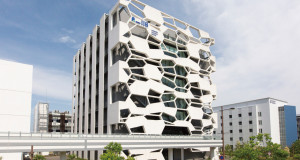
Japan-UK Workshop on Quantum Gravity
September 22 (Mon) - 26 (Fri) 2025
The universe at extremely early times is expected to be described by some theory of quantum gravity, although we still do not know precisely what quantum gravity actually is. In modern approaches to quantum gravity, the path integral point of view provides a fundamental framework towards answering this pressing question. However, an evaluation or even just a precise definition of the path-integral for a full-fledged quantum gravity is one of the most important open problems in modern theoretical physics.
With the "Japan-UK Workshop on Quantum Gravity" we want to bring together experts working on different aspects of the gravitational path-integral, such as
- Gravitational Scattering Amplitudes;
- Complex Geometries and Exact WKB;
- Quantum Cosmology;
- Exact Methods and Resurgence Analysis;
with the long-term goal of providing innovative ways of tackling modern problems in quantum gravity.
This workshop serves as the kick-off meeting for the Royal Society International Collaboration Award Grant "Re-PaInt: A Resurgence Path-Integral approach to quantum gravity" shared between Masazumi Honda at Riken iTHEMS and Daniele Dorigoni at Durham University, and aimed at fostering and developing an international partnership between the two institutes, as well as the greater Japan and UK theoretical physics communities working on quantum gravity, broadly intended.
Venue: 8F, Integrated Innovation Building (IIB), Kobe Campus, RIKEN
Event Official Language: English
Lecture
8th QGG Intensive Lecture: Quantum reference frames and their applications in high-energy physics
September 24 (Wed) - 26 (Fri) 2025
Philipp Höhn (Assistant Professor, Qubits and Spacetime Unit, Okinawa Institute of Science and Technology Graduate University (OIST))
Quantum reference frames (QRFs) are a universal tool for dealing with symmetries in quantum systems. Roughly speaking, they are internal subsystems that transform in some non-trivial way under the symmetry group of interest and constitute the means for describing quantum systems from the inside in purely relational terms. QRFs are thus crucial for describing and extracting physics whenever no external reference frame for the symmetry group is available. This is in particular the case when the symmetries are gauge, as in gauge theory and gravity, where QRFs arise whenever building physical observables. The choice of internal QRF is typically non-unique, giving rise to a novel quantum form of covariance of physical properties under QRF transformations. This lecture series will explore this novel perspective in detail with a specific emphasis on applications in high-energy physics and gravity.
I will begin by introducing QRFs in mechanical setups and explain how they give rise to quantum structures of covariance that mimic those underlying special relativity. I will explain how this leads to subsystem relativity, the insight that different QRF decompose the total system in different ways into gauge-invariant subsystems, and how this leads to the QRF dependence of correlations, entropies, and thermal properties. We will then explore how relational dynamics in Hamiltonian constrained systems and the infamous "problem of time" can be addressed with clocks identified as temporal QRFs. In transitioning to the field theory setting, we will first consider hybrid scenarios, where QRFs are quantum mechanical, but the remaining degrees of freedom are quantum fields including gravitons. I will explain how this encompasses the recent discussion of "observers", generalized entropies, and gravitational von Neumann algebras by Witten et al. and how subsystem relativity leads to the conclusion that gravitational entanglement entropies are observer dependent. We will then discuss the classical analog of QRFs in gauge theory and gravity and how they can be used to build gauge-invariant relational observables and to describe local subsystems. This will connect with discussions on edge and soft modes in the literature, the former of which turn out to be QRFs as well. This has bearing on entanglement entropies in gauge theories, which I will describe on the lattice, providing a novel relational construction that overcomes the challenges faced by previous constructions, which yielded non-distillable contributions to the entropy and can be recovered as the intersection of "all QRF perspectives". Finally, I will describe how the classical discussion of dynamical reference frames can be used to build a manifestly gauge-invariant path integral formulation that opens up novel relational perspectives on effective actions and the renormalization group in gravitational contexts, which is typically plagued by a lack of manifest diffeomorphism-invariance. I will conclude with open questions and challenges in the field.
Program:
September 24
10:15 - 10:30 Registration and reception with coffee
10:30 - 12:00 Lecture 1
12:00 - 13:30 Lunch
13:30 - 15:00 Lecture 2
15:00 - 16:00 Coffee break
16:00 - 17:00 Lecture 3
17:10 - 18:10 Short talk session
18:20 - 21.00 Banquet
September 25
10:15 - 10:30 Morning discussion with coffee
10:30 - 12:00 Lecture 4
12:00 - 13:30 Lunch
13:30 - 15:00 Lecture 5
15:00 - 16:00 Coffee break
16:00 - 17:00 Lecture 6
17:10 - 18:10 Short talk session
September 26
10:15 - 10:30 Morning discussion with coffee
10:30 - 12:00 Lecture 7
12:00 - 13:30 Lunch
13:30 - 15:00 Lecture 8
15:00 - 16:00 Coffee break
16:00 - 17:00 Lecture 9 & Closing
Venue: #435-437, 4F, Main Research Building, RIKEN Wako Campus
Event Official Language: English
Seminar
Confined Circumstellar Material as a Dust Formation Site in Type II Supernovae
September 26 (Fri) 14:00 - 15:15, 2025
Yuki Takei (Program-Specific Researcher, Yukawa Institute for Theoretical Physics, Kyoto University)
Some massive stars undergo episodic mass loss shortly before core-collapse, producing dense circumstellar material (CSM) in their immediate surroundings. If the supernova (SN) ejecta strongly interacts with such CSM, narrow emission lines appear in the spectrum, classifying the event as Type IIn. In these cases, efficient radiative cooling forms a cold, dense shell (CDS), providing ideal conditions for dust condensation. Infrared observations of several SNe IIn have indeed confirmed newly formed dust. Recent time-domain surveys, however, suggest that compact and dense CSM, often termed “confined CSM”, is also present around a broader class of Type II SN progenitors with hydrogen-rich envelopes, beyond the traditional Type IIn subclass. This raises the possibility that dust formation in dense CSM is more common among core-collapse SNe than previously thought. In this talk, I will demonstrate that CDS formation occurs robustly across a wide parameter space for confined CSM using numerical simulations based on the open-source code CHIPS. I will also discuss the resulting dust mass and infrared emission, as well as the potential contribution of this process to the galactic dust budget.
Venue: Hybrid Format (3F #359 and Zoom), Seminar Room #359, 3F Main Research Building, RIKEN
Event Official Language: English
Seminar

Spontaneous quasiparticle creation in an analogue preheating experiment
September 30 (Tue) 10:00 - 12:00, 2025
Amaury Micheli (Postdoctoral Researcher, Division of Fundamental Mathematical Science, RIKEN Center for Interdisciplinary Theoretical and Mathematical Sciences (iTHEMS))
Abstract:
First, I will briefly outline the motivations and concepts that underpin the analogue gravity program. Next, I will provide a detailed description of a specific experiment designed to simulate various features of the cosmological reheating era. Finally, I will present our recent experimental results from this setup, where we demonstrated the parametric creation of quasiparticle pairs from the quantum vacuum, drawing an analogy with the preheating phase of reheating.
References
- Victor Gondret, Clothilde Lamirault, Rui Dias, Léa Camier, Amaury Micheli, Charlie Leprince, Quentin Marolleau, Jean-René Rullier, Scott Robertson, Denis Boiron, Christoph I. Westbrook, Observation of entanglement in a cold atom analog of cosmological preheating, arXiv: 2506.22024
- Victor Gondret, Rui Dias, Clothilde Lamirault, Léa Camier, Amaury Micheli, Charlie Leprince, Quentin Marolleau, Scott Robertson, Denis Boiron, Christoph I. Westbrook, Parametric pair production of collective excitations in a Bose-Einstein condensate, arXiv: 2508.01654
- Amaury Micheli, Scott Robertson, Dissipative parametric resonance in a modulated 1D Bose gas, arXiv: 2412.07506
Venue: Hybrid Format (3F #359 and Zoom), Seminar Room #359, 3F Main Research Building, RIKEN
Event Official Language: English
Seminar

A Continuous Galactic Line Source of Axions: The Remarkable Case of 23Na
September 30 (Tue) 14:00 - 15:00, 2025
Wick C. Haxton (Professor, Department of Physics, University of California, Berkeley, USA)
While it is unusual for odd-A nuclear species to be abundant in massive stars, 23Na is an interesting exception. Typically 0.1 solar masses of 23Na is synthesized during the carbon burning phase of supernova and ONeMg white dwarf progenitors, then maintained at approximately 10^9 K for periods ranging up to 60,000 years. Under these conditions, 23Na can pump the thermal energy of the star into escaping axions: the mechanism is the Boltzmann occupation of and subsequent axion emission from the 440 keV level. We develop a galactic model to show that the resulting flux of line axions is continuous, arising from hundreds of contributing sources. As they travel through the intra-galactic
magnetic field, some of these axions convert to detectable gamma rays. Consequently, future all-sky detectors like COSI will be able to set new limits on light axion-like particles. Other interesting aspects of these axions will be discussed.
Venue: Hybrid Format (3F #359 and Zoom), Seminar Room #359, 3F Main Research Building, RIKEN
Event Official Language: English
Seminar

From Data to Discovery: Chronobiology in Translation
October 1 (Wed) 13:00 - 14:00, 2025
Bharath Ananthasubramaniam (Professor, Institute for Theoretical Biology, Humboldt University of Berlin, Germany)
Disruption of circadian rhythms is increasingly linked to a range of pathologies. To harness circadian biology for disease prevention and treatment, we must first establish causal relationships between rhythm disruption and the underlying clock mechanisms. This requires both the ability to quantify the “clock state” and to define what constitutes “disruption.” While significant progress has been made in model organisms, translating these insights to humans presents distinct challenges for quantitative chronobiology. In this talk, I will highlight how we have leveraged novel computational methods and high-throughput molecular datasets to begin addressing these obstacles.
Venue: Seminar Room #359, 3F Main Research Building, RIKEN / via Zoom
Event Official Language: English
Seminar
What constitutes a gravitational wave in an expanding universe?
October 1 (Wed) 16:00 - 17:30, 2025
Yi-Zen Chu (Professor, Department of Physics, National Central University, Taiwan)
Our understanding of gravitational waves produced by isolated astrophysical systems is primarily based on gravitational perturbation theory off a flat spacetime background. This leads to the common identification of gravitational radiation with massless spin-2 waves. In this talk, I will argue that gravitational waves may no longer be solely "spin-2" in character once the background spacetime is our expanding universe instead. As a result of the mixing between gravitational and other degrees of freedom, scalar "spin-0" gravitational waves may exist during the radiation-dominated epoch of our universe; as well as during its current accelerated expansion phase -- provided the main driver is not the cosmological constant, but some extra "Dark Energy" field. Moreover, during the radiation-dominated era, spin-0 Cherenkov gravitational waves may even be generated if its material source were traveling faster than 1/\sqrt{3}.
Venue: Hybrid Format (3F #359 and Zoom), Seminar Room #359, 3F Main Research Building, RIKEN
Event Official Language: English
Math Lecture
On ℓ_p-Vietoris-Rips complexes and blurred magnitude homology
October 7 (Tue) 11:00 - 13:00, 2025
Sergei O. Ivanov (Professor, Beijing Institute of Mathematical Sciences and Applications, China)
One of the main tools in topological data analysis is the notion of a persistence module. The most prominent example is the persistence module associated with the Vietoris–Rips complex of a finite metric space. On the other hand, the concept of magnitude has become increasingly well known in data analysis. Recently, Nina Otter introduced blurred magnitude homology, which is also a persistence module associated with a metric space. Govc and Hepworth showed that the magnitude of a finite metric space can be uniquely recovered from its blurred magnitude homology. For 1 ≤ p ≤ ∞, we define the ℓ_p-Vietoris–Rips complexes and the associated ℓ_p-persistent homology of metric spaces, and we study their fundamental properties. We show that for p=∞ this theory recovers the classical theory of Vietoris–Rips complexes and their persistent homology, while for p=1 it recovers the theory of blurred magnitude homology.
Venue: 3F 345-347 Seminar Room, Main Research Building, RIKEN Wako Campus / via Zoom
Event Official Language: English
Math Lecture
Bousfield-Kan completion as a codensity ∞-monad
October 3 (Fri) 15:00 - 17:00, 2025
Sergei O. Ivanov (Professor, Beijing Institute of Mathematical Sciences and Applications, China)
In this talk we recall the theory of codensity monads in ordinary category theory and tell about its generalization to the ∞-category setting. In particular, we show that the codensity ∞-monad of a full subcategory D of an ∞-category C satisfies a universal property: it is the terminal D-preserving ∞-monad. As an application, we show that the classical Bousfield-Kan R-completion functor can be described as the codensity ∞-monad of the full subcategory K(R) in the ∞-category of spaces spanned by the empty space and the products of Eilenberg-MacLane spaces of R-modules. As a corollary, we obtain that the Bousfield-Kan R-completion is the terminal K(R)-preserving ∞-monad.
Venue: Seminar Room #359, 3F Main Research Building, RIKEN / via Zoom
Event Official Language: English
Lecture

Lectures on General Probabilistic Theories: From Introduction to Research Participation
October 6 (Mon) - 9 (Thu) 2025
Hayato Arai (JSPS Research Fellow, Graduate School of Arts and Sciences, The University of Tokyo)
(The deadline of the registration is on Sep 30.)
100 years have passed since quantum mechanics was born. The mathematical model has been describing the physical world remarkably well. However, the foundations of this model still remain unclear. A comprehensive understanding of quantum theory, including its foundations, is becoming even more important in an era where the demands of realizing quantum information technologies pose significant theoretical and experimental challenges.
The framework of General Probabilistic Theories (GPTs) is a modern approach to the foundations of quantum theory. It deals with mathematical generalizations of both classical and quantum theories and has attracted increasing attention in recent years. Roughly speaking, research on GPTs has three major objectives: characterizing the models of classical and quantum theories, investigating the fundamental limits of physical and information-theoretic properties arising from operational requirements, and deepening our understanding of the mathematical structures underlying classical and quantum theories. The studies of GPTs have provided many new perspectives on these topics. However, at the same time, there remain many important open problems in the field. For this reason, more researchers are encouraged to enter and contribute to research on GPTs.
This intensive three-day lecture series is designed to provide researchers and graduate students with the essential knowledge necessary for research on GPTs, starting from an introduction to the subject. The lectures will cover the mathematical foundations, physical and information-theoretic concepts, and both the established results and future directions of GPT research. The 1st day will present the necessary mathematical structures, including convex geometry, positive cones, and the operational formulation of probabilistic models. The 2nd day will explore composite systems, information-theoretic quantities, symmetries, and Euclidean Jordan algebras. The 3rd day will survey key results on discrimination and communication tasks, the characterization of classical and quantum theories, and open problems that connect GPTs to quantum information science and beyond.
Note: The content of each lecture may extend into the next slot or be covered earlier, depending on the pace of discussion and participant questions.
The 1st day (6th Oct.): Mathematical Introduction to GPTs
Venue: Large Meeting Room, 2F, Wako Welfare & Conference Building
10:30-12:00 Lecture 1 (Introduction and Mathematics on Positive Cones)
12:00-13:30 Lunch time
13:30-15:00 Lecture 2 (Mathematics on Positive Cones)
15:00-15:30 Coffee break
15:30-17:00 Lecture 3 (Introduction to General Models and Relation between Operational Probability Theories)
The 2nd day (7th Oct.): Physical and Information Theoretical Concepts in GPTs
Venue: Large Meeting Room, 2F, Wako Welfare & Conference Building
10:30-12:00 Lecture 4 (Composite Systems in GPTs)
12:00-13:30 Lunch time
13:30-15:00 Lecture 5 (Information Quantities)
15:00-15:30 Coffee break
15:30-17:00 Lecture 6 (Dynamics, Symmetry, and Euclidean Jordan Algebras)
The 3rd day (8th Oct): Previous and Future Studies in GPTs
Venue: Meeting Room 435-437, 4F, Wako Main Research Building
10:30-12:00 Lecture 7 (Discrimination and Communication Tasks)
12:00-13:30 Lunch time
13:30-15:00 Lecture 8 (Characterization of Classical and Quantum Theories)
15:00-15:30 Coffee break
15:30-17:00 Lecture 9 (Other Topics, Open Problems, and Future Directions)
18:00- Dinner
The day of no lecture (9th Oct): Open Discussion and Q&A
Research discussions will take place between the lecturer and participants in areas such as the hallways on the 3rd and 4th floors of the Main Research Bldg, RIKEN Wako Campus.
Venue: Welfare and Conference Bldg. 2F Meeting Room, RIKEN Wako Campus / #435-437, Main Research Building, RIKEN Wako Campus
Event Official Language: English
Seminar
Discovering and harnessing symmetry with machine learning
October 6 (Mon) 16:00 - 17:30, 2025
Escriche Santos Eduardo (Ph.D. Student, Department of Computer Science, Technical University of Munich, Germany)
Incorporating symmetry-inspired inductive biases into machine learning models has led to many significant advances in the field, especially for its application to scientific data. However, recently, a trend has emerged that favors implicitly learning relevant symmetries from data instead of designing constrained equivariant architectures. In this talk, I will first introduce these different modelling alternatives, together with their associated benefits and limitations. Then, I will describe some examples of automatic symmetry discovery methods as a way of mitigating some of those limitations. Finally, I will present our recent work that integrates symmetry discovery and the definition of an equivariant model into a joint learnable end-to-end approach, which further alleviates some of the limitations of current equivariant modelling approaches.
Reference
- Eduardo Santos Escriche, Stefanie Jegelka, Learning equivariant models by discovering symmetries with learnable augmentations, arXiv: 2506.03914
Venue: via Zoom
Event Official Language: English
Lecture

Lectures on Neutron Star Structure I
October 7 (Tue) 15:30 - 17:00, 2025
Mark Alford (Professor, Washington University in St. Louis, USA)
This is a lecture series by Prof. Mark Alford (Washington University in St. Louis) on the structure of neutron stars.
Oct. 7 (Tues), 15:30-17:00
Lecture I: Quark matter: the high-density frontier
The densest predicted state of matter is color-superconducting quark matter, which has some affinities to electrical superconductors, but a much richer phase structure because quarks come in many varieties. This form of matter may well exist in the core of compact stars, and the search for signatures of its presence is currently proceeding. I will review the nature of color-superconducting quark matter, and discuss some ideas for finding it in nature.
Oct. 14 (Tues), 15:30-17:00
Lecture II: Solid quark matter
I will review three ways in which quark matter can occur in a solid phase, where translational invariance is broken by some sort of crystalline structure. These include a color superconductor of the Fulde-Ferrell-Larkin-Ovchinnikov type, mixed phases that can arise at a nuclear/quark matter interface, and the strangelet crystal crust of a strange star.
Oct. 21 (Tues), 15:30-17:00
Lecture III: Dissipation in neutron star mergers
In a neutron star merger, nuclear matter experiences dramatic changes in temperature and density that happen in milliseconds. Mergers therefore probe dynamical properties that may help us uncover the phase structure of ultra-dense matter. I will describe some of the relevant material properties, focusing on flavor equilibration and its consequences such as bulk viscosity and damping of oscillations.
Oct. 28 (Tues), 15:30-17:00
Lecture IV: Neutrinos in dense matter: beyond modified Urca
Neutrino absorption and emission (the "Urca process") is an essential aspect of the formation and cooling of neutron stars and of the dynamics of neutron star mergers. In this talk I will describe the traditional way of calculating Urca rates, explain its shortfalls, and propose an alternative approach, the nucleon width approximation.
Venue: Seminar Room #359, 3F Main Research Building, RIKEN / via Zoom
Event Official Language: English
Colloquium

Why do we sleep? — The Role of Calcium and Phosphorylation in Sleep
October 10 (Fri) 15:30 - 17:00, 2025
Hiroki R. Ueda (Professor, Systems Pharmacology, Graduate School of Medicine, The University of Tokyo / Professor, Department of Systems Biology, Institute of Life Science, Kurume University)
Sleep remains one of greatest remaining mysteries. At the Sleep 2012 conference, we conceived a shift from the concept of “sleep substances” to “wake substances” such as calcium, suggesting that sleep homeostasis may arise from the integration of wake-related activity. Inspired by Dr. Setsuro Ebashi’s work on calcium signaling, we investigated calcium’s role in sleep regulation.
Using our Triple-CRISPR method (Sunagawa et al. 2016), we screened 25 genes related to calcium channels and pumps, revealing calcium as a brake on brain activity to promote sleep (Tatsuki et al. 2016). We also developed a tissue-clearing method CUBIC (Susaki et al. 2014; Tainaka et al. 2014) to visualize calcium’s effects on neural circuits. Further work showed that calcium-dependent enzymes, CaMKIIα/β kinases, act as calcium “memory” devices, with phosphorylation sites controlling sleep onset, duration, and termination (Tone et al. 2022). Other direct and indirect calcium-dependent phosphatases, Calcineurin and PP1 (sleep-promoting), and opposing kinases, PKA (wake-promoting), function as synaptic sleep switches (Wang et al. 2024).
We also identified the ryanodine receptor 1, a calcium channel, as a molecular target of inhalational anesthetics, hinting at shared pathways between anesthesia and sleep (Kanaya et al. 2025). Lastly, we proposed the WISE (Wake Inhibition Sleep Enhancement) mechanism, where quiet wakefulness suppresses and deep sleep strengthens synaptic connections, explaining links between sleep, depression, and antidepressant effects (Kinoshita et al. 2025).
Venue: Okochi Hall, 1F Laser Science Laboratory, RIKEN / via Zoom
Event Official Language: English
Lecture
9th QGG Intensive Lectures – Correlation Effects in Quantum Many-Body Systems: Some Prototypical Examples in Condensed Matter Physics
November 19 (Wed) - 20 (Thu) 2025
Norio Kawakami (Deputy Director, Fundamental Quantum Science Program, TRIP Headquarters, RIKEN)
The ninth installment of the Intensive Lecture Series, organized by the Quantum Gravity Gatherings (QGG) study group at RIKEN iTHEMS, will feature Prof. Norio Kawakami from the Fundamental Quantum Science Program (FQSP) under RIKEN's Transformative Research Innovative Platform (TRIP). Over the course of two days, Prof. Kawakami will deliver a lecture series on quantum many-body systems.
In recent years, insights from quantum many-body physics have become central to research in quantum gravity, where correlation effects induced by gravity play nontrivial roles. By bridging perspectives from gravitational physics and quantum many-body dynamics, one hopes to understand how macroscopic spacetime and its geometric properties emerge from the collective behavior of quantum constituents at microscopic scales.
In this lecture series, Prof. Kawakami will introduce the fundamental properties of correlation effects through representative examples in condensed matter physics. A distinctive aspect of this event is its joint organization with the Fundamental Quantum Science Program (FQSP) at RIKEN. The goal is to further strengthen connections between the quantum gravity, condensed matter, and quantum information communities.
The lectures will be delivered in a blackboard-style format (in English), designed to foster interaction, active participation, and in-depth Q&A discussions. In addition, short talk sessions will be held, giving participants the opportunity to present briefly on topics of their choice. Through this informal and dynamic setting, we hope to spark active interactions among participants and create an environment where ideas can be shared openly and enthusiastically.
Abstract:
Some examples of theoretical methods to treat strongly correlated systems in condensed matter physics are explained. We start with the Kondo effect, which is one of the most fundamental quantum many-body problems and has been intensively studied to date in a wide variety of topics such as dilute magnetic alloys, heavy fermion systems, quantum dot systems, etc. Dynamical mean-field theory (DMFT) is then introduced, which enables us to systematically treat strongly correlated materials such as a Mott insulator. It is shown that the essence of DMFT is closely related to the Kondo effect. Furthermore, we explain how to apply conformal field theory (CFT) to treat correlation effects in one-dimensional electron systems.
Topics of these lectures include:
- Introduction to quantum many-body systems in condensed matter physics
- The Kondo effect: a prototypical quantum many-body problem
- Dynamical mean-field theory: a generic method to study correlation effects
- Application of CFT to correlated electron systems in one dimension
For more information, please visit the event webpage from the links below.
Venue: #435-437, 4F, Main Research Building, RIKEN Wako Campus
Event Official Language: English
Paper of the Week
Week 3, September 2025
2025-09-18
Title: Probing Direct Waves in Black Hole Ringdowns
Author: Naritaka Oshita, Sizheng Ma, Yanbei Chen, Huan Yang
arXiv: http://arxiv.org/abs/2509.09165v1
Title: Matrix product state classification of 1D multipole symmetry protected topological phases
Author: Takuma Saito, Weiguang Cao, Bo Han, Hiromi Ebisu
arXiv: http://arxiv.org/abs/2509.09244v1
Title: Incomplete Reputation Information and Punishment in Indirect Reciprocity
Author: Heejeong Kim, Yohsuke Murase
arXiv: http://arxiv.org/abs/2509.09181v1
Title: Index theory and bulk-boundary correspondence for inversion-symmetric second-order topological insulators
Author: Shin Hayashi
arXiv: http://arxiv.org/abs/2509.09240v1
Title: Exact conditions for evolutionary stability in indirect reciprocity under noise
Author: Nikoleta E. Glynatsi, Christian Hilbe, Yohsuke Murase
arXiv: http://arxiv.org/abs/2509.08006v1
If you would like to cancel your subscription or change your email address,
please let us know via our contact form.
Copyright © iTHEMS, RIKEN. All rights reserved.