
Volume 354
Back to Newsletter List


Volume 354
May 9, 2025
Upcoming Events
Seminar


iTHEMS Biology welcomes 2 new members!
May 15 (Thu) 13:00 - 14:15, 2025
Isaac Planas Sitja (Postdoctoral Researcher, Division of Fundamental Mathematical Science, RIKEN Center for Interdisciplinary Theoretical and Mathematical Sciences (iTHEMS))
Antoine Diez (Research Scientist, Mathematical Application Research Team, Division of Applied Mathematical Science, RIKEN Center for Interdisciplinary Theoretical and Mathematical Sciences (iTHEMS))
This meeting will be used to welcome 2 new members to the iTHEMS Biology Study Group; Postdoc Isaac Planas-Sitjà and Senior Researcher Antoine Diez. They will each give us a 15-20 min talk to introduce their research. If time permits, let's also use this time to catch up on each other's current research. I hope that many people will join us to welcome these new members and come meet them and hear about their research.
Venue: Hybrid format (4th floor public space & Zoom), Main Research Building, RIKEN Wako Campus
Event Official Language: English
Seminar
The index of lattice Dirac operators and K-theory
May 15 (Thu) 13:30 - 15:00, 2025
Hidenori Fukaya (Assistant Professor, Department of Physics, The University of Osaka)
We show that the Wilson Dirac operator in lattice gauge theory can be identified as a mathematical object in K-theory and that its associated spectral flow is equal to the index. In comparison to the standard lattice Dirac operator index, our formulation does not require the Ginsparg-Wilson relation and has broader applicability to systems with boundaries and to the mod-two version of the indices in general dimensions. We numerically verify that the K and KO group formulas reproduce the known index theorems in continuum theory. We examine the Atiyah-Singer index on a flat two-dimensional torus and, for the first time, demonstrate that the Atiyah-Patodi-Singer index with nontrivial curved boundaries, as well as the mod-two versions, can be computed on a lattice (This seminar is co-organized with FQSP).
Venue: Seminar Room #359, 3F Main Research Building, RIKEN / via Zoom
Event Official Language: English
Workshop


Mini-Workshop on Neuro Science
May 16 (Fri) 9:00 - 12:00, 2025
Satoshi Iso (Director, RIKEN Center for Interdisciplinary Theoretical and Mathematical Sciences (iTHEMS))
Takuya Isomura (Unit Leader, Brain Intelligence Theory Unit, RIKEN Center for Brain Science (CBS))
Taro Toyoizumi (Team Director, Laboratory for Neural Computation and Adaptation, RIKEN Center for Brain Science (CBS))
Kazuo Okanoya (Professor, Advanced Comprehensive Research Organization (ACRO), Teikyo University)
Atsushi Iriki (Specially Appointed Professor, Advanced Comprehensive Research Organization, Teikyo University)
Gary Shiu (Professor, Department of Physics, University of Wisconsin-Madison, USA)
[Program]
9:00am – 9:05am
Satoshi Iso (iTHEMS RIKEN)
“Opening Remarks”
9:05am – 9:35am
Takuya Isomura (CBS RIKEN)
“Triple equivalence integrates neural network dynamics,
statistical inference, and computation”
9:45m – 10:15am
Taro Toyoizumi (CBS RIKEN)
“Chaotic neural dynamics facilitate probabilistic
computations through sampling”
10:25am – 10:55am
Kazuo Okanoya (Teikyo University)
“Brain topography and auditory processing in birds and rats”
11:05am – 11:30am
Atsushi Iriki (Teikyo University, iTHEMS RIKEN)
“From Classical to Quantum: Rethinking Science, Consciousness, and Civilization”
11:30am –
Gary Shiu (University of Wisconsin)
“Summary: Mathematical Science and Brain”
Followed by a seminar 2:00pm – 3:30pm
Prof. Gary Shiu (University of Wisconsin)
Topology and Brain Science
Room 359, 3rd floor, Main Research Building, RIKEN
Venue: #345-347, Main Research Building, RIKEN Wako Campus / via Zoom
Event Official Language: English
Seminar

Topology and Brain Science
May 16 (Fri) 14:00 - 15:30, 2025
Shiu Gary (Professor, Department of Physics, University of Wisconsin-Madison, USA)
Venue: via Zoom
Event Official Language: English
Seminar

Stable homotopy theory of invertible quantum spin systems
May 16 (Fri) 16:00 - 18:00, 2025
Yosuke Kubota (Associate Professor, Graduate School of Science, Kyoto University)
In the past decade, A. Kitaev proposed that the set of invertible gapped quantum spin systems would form an \Omega-spectrum. This conjecture is considered to have potentially significant application to the study of SPT phases. Recently, we give a mathematically rigorous realization of this proposal with the language of functional analysis and operator algebra. This gives a unified proof of a series of existing researches. The proof also suggests to understand Kitaev's proposal from the viewpoint of coarse geometry of metric spaces. This association leads us to the concept of localization flow.
Reference
- Yosuke Kubota, Stable homotopy theory of invertible gapped quantum spin systems I: Kitaev's Ω-spectrum, arXiv: 2503.12618
Venue: Seminar Room #359, 3F Main Research Building, RIKEN / via Zoom
Event Official Language: English
Seminar

Universality class for driven interfaces and... integrable spin hydrodynamics?
May 19 (Mon) 15:00 - 17:00, 2025
Kazumasa A. Takeuchi (Associate Professor, Graduate School of Science, The University of Tokyo)
The Kardar-Parisi-Zhang (KPZ) universality class, originally formulated to describe driven systems such as growing interfaces, has undergone several paradigm shifts [1]. One major breakthrough was the discovery of exact solutions for one-dimensional models within the KPZ class — remarkable given their non-equilibrium and non-linear nature — enabled by underlying integrability. These exact results revealed nontrivial fluctuation properties, some closely linked to random matrix theory, which were subsequently observed in real experiments on driven interfaces. But more recently, the KPZ framework appears to be entering a new phase, extending unexpectedly to integrable spin chains at thermal equilibrium [2,3]. Although this connection was nearly dismissed when clear discrepancy in full counting statistics was reported, the speaker and collaborators numerically found that various two-point quantities agree precisely with KPZ exact solutions, so the KPZ class indeed governs integrable spin chains, yet only their two-point quantities [4]. I will also discuss a recent hydrodynamic theory aiming to bridge spin chains and KPZ, which, currently, falls short of fully explaining the numerical observations and calls for further refinement [2,3].
References
- Kazumasa A. Takeuchi, An appetizer to modern developments on the Kardar-Parisi-Zhang universality class, Physica A 504, 77 (2018), doi: 10.1016/j.physa.2018.03.009, arXiv: 1708.06060
- Vir B. Bulchandani, Sarang Gopalakrishnan, Enej Ilievski, Superdiffusion in spin chains, J. Stat. Mech. 084001 (2021), doi: 10.1088/1742-5468/ac12c7, arXiv: 2103.01976
- Sarang Gopalakrishnan, Romain Vasseur, Superdiffusion from nonabelian symmetries in nearly integrable systems, Annu. Rev. Condens. Matter Phys. 15, 159 (2024), doi: 10.1146/annurev-conmatphys-032922-110710, arXiv: 2305.15463
- Kazumasa A. Takeuchi, Kazuaki Takasan, Ofer Busani, Patrik L. Ferrari, Romain Vasseur, Jacopo De Nardis, Partial Yet Definite Emergence of the Kardar-Parisi-Zhang Class in Isotropic Spin Chains, Phys. Rev. Lett. 134, 097104 (2025), doi: 10.1103/PhysRevLett.134.097104, arXiv: 2406.07150
Venue: Hybrid Format (3F #359 and Zoom), Seminar Room #359, 3F Main Research Building, RIKEN
Event Official Language: English
Seminar
SISSI: Supernovae in a Shearing, Stratified Interstellar Medium
May 23 (Fri) 14:00 - 15:15, 2025
Leonard Romano (Ph.D. Student, Ludwig-Maximilians-Universität München, Germany)
Supernovae (SNe) are an important driver of the multiphase structure in the Interstellar Medium (ISM) and play an important role for regulating star formation. SNe inflate large bubbles of hot gas dubbed Supernova Remnants (SNRs) that can remain hot for several 10⁵-10⁶ years, contributing substantially to the volume filling hot phase, galactic outflows and the driving of turbulence in the ISM. In this talk, I am presenting the results of zoom-in simulations of SNRs embedded in a simulated isolated Milky-Way analogue, in order to investigate how environmental effects like shear, vertical stratification and a self-consistently generated ISM can affect various properties of SNRs. I find that initially microscopic SNRs, whose dynamics are dominated by local shock physics, after a few Myr enter a mesoscopic regime, where their dynamics are increasingly dominated by galactic scale processes. Based on these findings, I make predictions about SN-driven large-scale structure, such as galactic outflows and the geometry of large superbubbles in disk galaxies.
Venue: Hybrid Format (3F #359 and Zoom), Seminar Room #359, 3F Main Research Building, RIKEN
Event Official Language: English
Seminar

Ecology and Evolution of Mammal-Microbe Interactions
May 29 (Thu) 16:00 - 17:00, 2025
Taichi A Suzuki (Assistant Professor, Biodesign Center for Health Through Microbiomes, Arizona State University, USA)
A critical open question in microbiome research is identifying key host-microbial interactions that influence host fitness. While the disruption of coevolved host-microbial interactions is known to affect host fitness in simpler systems (e.g., insects and their symbionts), understanding the extent and consequences of host-microbial coevolution in more complex systems (e.g., mammals and their gut microbiota) remains a major challenge. My research has identified multiple species of gut microbes in adults and children that share a parallel evolutionary history with humans by analyzing paired human genotypes and bacterial strain genotypes. In another line of work, I applied a selection experiment demonstrating that selection and transmission of the microbiome and its metabolites can alter mouse locomotion behavior within four rounds of microbiome transfer, without any changes to the mouse genome. Finally, I will briefly outline my future plans to study the effects of disrupting evolutionary stable host-microbial associations on the phenotypes of deer mice (Peromyscus spp.) in the Madrean Sky Islands and genetically diverse human populations in Arizona.
Biosketch:
Assistant Professor at Arizona State University since 2023. MS at University of Arizona, PhD at University of California Berkeley, and Postdoc at Max Planck Institute for Biology. My group integrates evolutionary genomics, microbial ecology, and biomedical research to study host-microbial interactions using wild rodents and humans.
Venue: Hybrid Format (3F #359 and Zoom), Seminar Room #359, 3F Main Research Building, RIKEN / via Zoom
Event Official Language: English
Seminar

Extracting particle mass on quantum computers: state preparation and measurement
June 3 (Tue) 11:00 - 12:30, 2025
Xiaoyang Wang (Postdoctoral Researcher, Quantum Mathematical Science Team, Division of Applied Mathematical Science, RIKEN Center for Interdisciplinary Theoretical and Mathematical Sciences (iTHEMS))
In this seminar, I will introduce the procedure of extracting particle mass from the ab initio calculation using quantum computers, including two essential steps: state preparation and measurement.
For the measurement process, in our recent work "Computing n-time correlation functions without ancilla qubits" [arXiv:2504.12975], we developed a measurement method for correlation functions without ancilla qubits, circumventing longstanding hardware constraints of limited qubit connectivity and short-range control operations. We demonstrate our method using IBM quantum hardware and successfully reproduce the noiseless results of the Schwinger model hadron mass within a relative error of 0.18%, even in the presence of realistic hardware limitations and noise.
For the state preparation process, another work "Performance guarantees of light-cone variational quantum algorithms for the maximum cut problem" [arXiv:2504.12896] focused on the accuracy of the state preparation using variational quantum algorithms (VQAs). We propose a light-cone VQA with provable performance guarantees, whose single round has higher accuracy than the 3-round standard VQA for the maximum cut problem. We experimentally validated the single-round light-cone VQA using IBM quantum hardware with solution accuracy that exceeds the known classical hardness threshold in both a 72-qubit demonstration and a 148-qubit demonstration.
References
- Xiaoyang Wang, Long Xiong, Xiaoxia Cai, Xiao Yuan, Computing n-time correlation functions without ancilla qubits, arXiv: 2504.12975
- Xiaoyang Wang, Yuexin Su, Tongyang Li, Performance guarantees of light-cone variational quantum algorithms for the maximum cut problem, arXiv: 2504.12896
Venue: Seminar Room #359, 3F Main Research Building, RIKEN / via Zoom
Event Official Language: English
Seminar
From Galaxies to Cosmological Structures: The Multi-Scale Influence of Cosmic Rays
June 13 (Fri) 14:00 - 15:15, 2025
Ellis Owen (Special Postdoctoral Researcher, Astrophysical Big Bang Laboratory, RIKEN Pioneering Research Institute (PRI))
Cosmic rays interact with astrophysical systems over a broad range of scales. They go hand-in-hand with violent, energetic astrophysical environments, and are an active agent able to regulate the evolution and physical conditions of galactic and circum-galactic ecosystems. Depending on their energy, cosmic rays can also escape from their galactic environments of origin, and propagate into larger-scale cosmological structures. In this talk, I will discuss the impacts of cosmic rays retained in galaxies. I will show they can deposit energy and momentum to alter the initial conditions of star-formation, modify the circulation of baryons around galaxies, and have the potential to regulate long-term galaxy evolution. I will highlight some of the astrophysical consequences of contained hadronic and leptonic cosmic rays in and around galaxies, and how their influence can be probed using signatures including X-rays, gamma-rays and neutrinos. I will also discuss what happens to the cosmic rays that escape from galaxies, including their interactions with the magnetized large-scale structures of our Universe, and the fate of distant high-energy cosmic rays that do not reach us on Earth.
Venue: Hybrid Format (3F #359 and Zoom), Seminar Room #359, 3F Main Research Building, RIKEN
Event Official Language: English
Workshop
iTHEMS-TheoryCenter(KEK) Scientific Writing and DEI Workshop
June 24 (Tue) - 25 (Wed) 2025
Ashleigh Griffin (Professor, Department of Biology, University of Oxford, UK)
Stuart West (Professor, Department of Biology, University of Oxford, UK)
Ryosuke Iritani (Senior Research Scientist, Division of Fundamental Mathematical Science, RIKEN Center for Interdisciplinary Theoretical and Mathematical Sciences (iTHEMS))
This is a two-day KEK-iTHEMS workshop on scientific writing and diversity, equity, and inclusion.
For more details, please visit the workshop website via the relevant link.
Venue: 2F Large Conference Room, Administrative Headquarters, RIKEN Wako Campus
Event Official Language: English
Workshop
Recent Developments and Challenges in Tensor Networks: Algorithms, Applications to science, and Rigorous theories
July 28 (Mon) - August 8 (Fri) 2025
Venue: Panasonic Hall, Yukawa Institute for Theoretical Physics, Kyoto University
Event Official Language: English
Workshop
iTHEMS-NCTS Workshop
August 18 (Mon) - 21 (Thu) 2025
This workshop aims to strengthen collaboration between researchers at RIKEN iTHEMS and the National Center for Theoretical Sciences in Taiwan. It will be a four-day event, with the first two days dedicated to interdisciplinary topics. The last two days will focus on specialized areas, with one day devoted to condensed matter physics and the other to high-energy physics, including quantum gravity.
Venue: via Zoom / RIKEN Wako Campus
Event Official Language: English
Conference
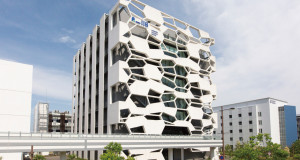
XIIIth International Symposium on Nuclear Symmetry Energy (NuSym25)
September 8 (Mon) - 13 (Sat) 2025
[Scientific scope]
The symposium will address experimental and theoretical investigations of the equation-of-state (EoS) of nuclear matter at various isospin asymmetries. Such investigations include efforts in nuclear structure, nuclear reactions and heavy-ion collisions, as well as in astrophysical observations of compact stars and associated phenomena. An important role of the symposium is to unify efforts of the nuclear physics and astrophysics communities in addressing common research challenges.
Venue: Integrated Innovation Building (IIB), Kobe Campus, RIKEN
Event Official Language: English
Upcoming Visitor
May 9 (Fri) - June 8 (Sun) 2025 Hrushikesh LoyaPostdoctoral Researcher, University of Oxford, UK Visiting Place: RIKEN Wako Campus |
Paper of the Week
Week 2, May 2025
2025-05-08
Title: ASURA-FDPS-ML: Star-by-star Galaxy Simulations Accelerated by Surrogate Modeling for Supernova Feedback
Author: Keiya Hirashima, Kana Moriwaki, Michiko S. Fujii, Yutaka Hirai, Takayuki R. Saitoh, Junnichiro Makino, Ulrich P. Steinwandel, Shirley Ho
arXiv: http://arxiv.org/abs/2410.23346v2
Title: Pole-Expansion of Two-Hadron Imaginary-Time Correlation Function -a new method of analysis for unstable states in lattice QCD-
Author: Wren Yamada, Osamu Morimatsu, Toru Sato, Koichi Yazaki
arXiv: http://arxiv.org/abs/2505.02878v1
Title: Smooth concordance of cables of the figure-eight knot
Author: Sungkyung Kang, JungHwan Park, Masaki Taniguchi
arXiv: http://arxiv.org/abs/2505.03720v1
Title: Unified exact WKB framework for resonance -- Zel'dovich and complex-scaling regularizations
Author: Okuto Morikawa, Shoya Ogawa
arXiv: http://arxiv.org/abs/2505.02301v1
Title: Symmetry-adapted sample-based quantum diagonalization: Application to lattice model
Author: Kosuke Nogaki, Steffen Backes, Tomonori Shirakawa, Seiji Yunoki, Ryotaro Arita
arXiv: http://arxiv.org/abs/2505.00914v1
Title: Shear and bulk viscosity for a pure glue theory using an effective matrix model
Author: Manas Debnath, Ritesh Ghosh, Najmul Haque, Yoshimasa Hidaka, Robert D. Pisarski
arXiv: http://arxiv.org/abs/2504.20138v1
If you would like to cancel your subscription or change your email address,
please let us know via our contact form.
Copyright © iTHEMS, RIKEN. All rights reserved.