
Volume 390
Back to Newsletter List


Volume 390
January 9, 2026
Hot Topic

RIKEN–IBS Joint Workshop on Mathematical Approaches to Nature Held in Daejeon, Korea, December 9–12, 2025
2026-01-08
In December 9–12, 2025, a collaborative workshop jointly organized by the Institute of Basic Science (IBS, Korea) and RIKEN was held in Daejeon, Korea. The workshop aimed to explore the unifying mathematical principles that underlie diverse natural phenomena—from the fundamental interactions that shape the universe to the complex behaviors observed in living systems. From RIKEN, iTHEMS researchers including Derek Inman, Ryo Namba, Alvaro Pastor Gutierrez, Shuntaro Aoki, Sungsik Kong, Amaury Micheli, Puttarak Jai-akson, Ryoko Oishi-Tomiyasu, Che-Yu Chen, and Christy Kelly delivered talks.
All the presentations were impressive and thoughtfully prepared so that researchers from different fields could follow and appreciate the content. Indeed, there were many stimulating cross-disciplinary questions, and we enjoyed lively discussions over lunches and dinners, accompanied by excellent (and wonderfully spicy) food. Although the workshop was originally designed to foster collaboration between RIKEN and IBS, connections were already present—for example, through Shuntaro Aoki, a physicist at iTHEMS formerly at IBS, and Shingo Gibo, a mathematical biologist at IBS formerly at iTHEMS. This workshop further strengthened these ties and created new ones.
The planning and local organization of the workshop were led by the center of Masahide Yamaguchi (IBS), Yusuke Yamada (IBS), and by Yuto Yamamoto and Ryo Namba at RIKEN iTHEMS, with strong support from IBS and the International Collaboration Section of the Global Strategy Division at RIKEN. We are deeply grateful for their dedicated efforts. I hope that the successful interactions fostered through this workshop will continue to develop even further.
(Photos: courtesy of Director Satoshi Iso, RIKEN iTHEMS.)
Reported by Gen Kurosawa
Award
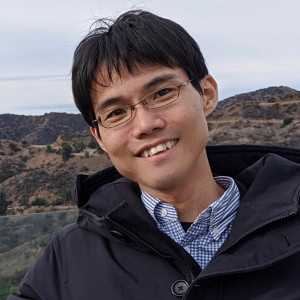
Yuya Kusuki Receives the 22nd (FY 2025) JSPS Prize
2026-01-06
Yuya Kusuki (Visiting Scientist, iTHEMS / Associate Professor, Institute for Advanced Study, Kyushu University) has received the 22nd (Fiscal Year 2025) Japan Society for the Promotion of Science (JSPS) Prize.
The JSPS Prize was established to recognize outstanding young researchers with exceptional creativity and research ability at an early stage of their careers, and to support their motivation and further development in research.
Kusuki has made significant contributions through his research on the development and application of new methods at the interface between quantum gravity and quantum many-body systems. This award recognizes the originality and academic impact of his research achievements.
The award ceremony is scheduled to be held on February 3, 2026, at the Japan Academy Hall.
Congratulations, Yuya!
Seminar Report

GW-EOS WG Seminar by Pierbiagio Pieri on November 6, 2025
2026-01-08
In this seminar, pairing phenomena in three kinds of quantum many-body systems were discussed. First, the speaker reviewed his work on the Bose-Fermi mixture, mainly focusing on the quasiparticles called Fermi-polarons. Second, inhomogeneous pairing fluctuations in a spin-polarized Fermi-Fermi mixture are reviewed. Finally, dissipations called mutual friction arising from interplay between Andreev bound states in the vortex core and delocalized thermal excitations were discussed for strongly interacting Fermi superfluids.
Reported by Yuta Sekino

Pairing in Bose-Fermi and Fermi-Fermi systems
November 6 (Thu) 15:00 - 16:30, 2025
Upcoming Events
Others
Visit by ASCENT-6E high school students (2026)
January 12 (Mon) 10:40 - 16:00, 2026
PROGRAMME
Visit of students enrolled in the ASCENT Program at Chiba University
Schedule
10:30-10:40 (10 min):
Arriving procedure
10:40-11:00 (20 min) at the meeting room on the 4th floor, Main Research Building
Introduction of students (to hear their names and scientific fields of interest). We will provide colour-coded badges for them to write their names, with each colour representing their field of interest (e.g., blue for biology, green for math, red for physics).
11:00-11:10 (10 min) Bathroom break
11:10-12:00 (50 min) at the meeting room on the 4th floor, Main Research Building
First set of talks by iTHEMS members (10 min each)
Catherine Beauchemin (Physics, biology)
Gen Kurosawa (Biology)
Yuta Sekino (Physics)
Isaac Planas-Sitja (Biology)
Wei-Hsiang Shao (Physics)
12:00-13:30 (90 min) at Common Space on the 4th floor of Main Research Building
Discussion Lunch with students
13:30-14:20 (50 min) at the meeting room on the 4th floor, Main Research Building
Second set of talks by iTHEMS members (10 min each)
Ryo Namba (Physics)
Sungsik Kong (Biology)
Kenji Okubo (Biology)
Steffen Backes (Physics)
Jose Gutierrez (Biology)
14:20-14:30 (10 min) at the meeting room on the 4th floor, Main Research Building
Brief overview of iTHEMS and RIKEN programmes (C.Beauchemin)
(e.g., JRA, IPA, SPDR, RS/SRS)
14:30-14:40 (10 min) Bathroom break
14:40-14:55 (15 min) at the meeting room on the 4th floor, Main Research Building
Short statements by Prof. Jun Nomura, Prof. Koji Tsuji, Prof. Kohei Watanabe, Prof. Yukiharu Akimoto, ASCENT program coordinators Qian Wang and Hina Morishige, graduate student Rin Chinen.
14:55-16:00 (65 min) at Common Space on the 4th floor of Main Research Building
Informal discussions among ASCENT program students and iTHEMS members over some snacks and coffee. iTHEMS members will spread out across different areas in the common space on the 3rd floor and display posters or conduct activities to facilitate discussion.
Venue: #435-437, Main Research Building, RIKEN Wako Campus
Event Official Language: English
Seminar
LEVERAGING EARTH OBSERVATIONS WITH MACHINE-LEARNING APPROACHES FOR WATER CYCLE MONITORING
January 13 (Tue) 10:30 - 12:00, 2026
Victor Pellet (Professor, Laboratoire de Météorologie dynamique (LMD-X), Ecole Polytechnique, France)
Earth observation satellites provide unprecedented information to monitor the different components of the water cycle, from soil moisture to river dynamics. However, fully exploiting these observations remains challenging due to sensor limitations, data heterogeneity, complex physical processes, and spatio-temporal resolution constraints. This seminar provides an overview of machine-learning approaches that accompany and enhance remote sensing for water cycle analysis. It illustrates how statistical and machine-learning techniques can improve the exploitation of Earth observation (EO) data at different processing levels, from Level 1 to Level 4. Four examples are presented: (i) compressing hyperspectral information to reduce observation dimensionality, (ii) improving the retrieval of soil moisture from space by exploiting spatial patterns and handling missing data, (iii) harmonizing multi-source EO at the global scale for consistent water cycle monitoring, and (iv) modeling river dynamics using data-driven approaches. Together, these examples highlight the potential of machine-learning techniques to better integrate observations and improve our understanding of hydrological processes.
Venue: R107, Computational Science Research Building, R-CCS, Kobe Campus, RIKEN
Event Official Language: English
Colloquium

Measuring evolutionary forces of cultural change
January 13 (Tue) 14:00 - 15:30, 2026
Joshua B. Plotkin (Walter H. and Leonore C. Annenberg Professor of the Natural Sciences, University of Pennsylvania, USA)
I will describe how to measure the forces that drive cultural change, using inference tools from evolutionary theory. We study time series data from large corpora of parsed English texts to identify what drives language change over the course of centuries. We also measure frequency-dependent effects in time series of baby names and purebred dog preferences. The form of frequency dependence we infer helps to explain the diversity distribution of names, and it replicates across the United States, France, Norway and the Netherlands. We find different growth laws for male versus female names, attributable to different rates of innovation, whereas names from the bible enjoy a genuine advantage at all frequencies. Frequency dependence emerges from a host of underlying social and cultural mechanisms, including a preference for novelty that recapitulates fashion trends in dog owners. Studying culture through the lens of evolutionary theory provides a quantitative account of social pressures to conform or to be different; and it provides inference tools that may be used in biology as genetic and phenotypic time series are increasingly available.
Venue: Okochi Hall, 1F Laser Science Laboratory, RIKEN / via Zoom
Event Official Language: English
Seminar
Classical Spinning Black Hole Scattering from Quantum Amplitudes
January 15 (Thu) 14:00 - 15:30, 2026
Dogan Akpinar (Ph.D. Student, Higgs Centre for Theoretical Physics, School of Physics and Astronomy, University of Edinburgh, UK)
Scattering amplitudes have recently become a powerful tool for extracting classical observables in two-body gravitational dynamics, with direct relevance for current and future gravitational-wave experiments. In this talk, I will review how quantum scattering amplitudes can be used to obtain classical black hole scattering observables. A key focus will be the inclusion of spin effects, modelled by treating black holes as point particles in fixed-spin representations. This approach introduces a subtle ambiguity in the separation between classical and quantum information, which we resolve using our spin interpolation method. Leveraging this, we obtain, for the first time, the classical two-loop amplitude accurate to quartic order in spin, from which we extract physical observables such as linear and angular impulses using covariant Dirac brackets. Remarkably, the resulting amplitude obeys a spin-shift symmetry, remaining invariant under a shift of the black hole spin by the momentum transfer in the scattering process. Motivated by this structure, we examine the conserved quantities governing scattering and show that—at least asymptotically—the probe dynamics remain integrable through quartic order in spin. Under this asymptotic integrability, together with the spin-shift symmetry, we demonstrate that the quartic-in-spin radial action is fully determined by the aligned-spin sector. Taken together, these results advance our understanding of spinning black hole scattering and illuminate new structural features of Kerr dynamics.
References
- Dogan Akpinar, Fernando Febres Cordero, Manfred Kraus, Michael S. Ruf, Mao Zeng, Spinning Black Hole Scattering at O(G^3 S^2): Casimir Terms, Radial Action and Hidden Symmetry, JHEP 03 (2025) 126, doi: 10.1007/JHEP03%282025%29126, arXiv: 2407.19005
- Dogan Akpinar, Fernando Febres Cordero, Manfred Kraus, Alexander Smirnov, Mao Zeng, First Look at Quartic-in-Spin Binary Dynamics at Third Post-Minkowskian Order, Phys.Rev.Lett. 135 (2025) 4, 041602, doi: 10.1103/c2dh-tj4v, arXiv: 2502.08961
- Dogan Akpinar, Graham R. Brown, Riccardo Gonzo, Mao Zeng, Unexpected Symmetries of Kerr Black Hole Scattering, doi: 10.48550/arXiv.2508.10761, arXiv: 2508.10761
Venue: Hybrid Format (3F #359 and Zoom), Seminar Room #359, 3F Main Research Building, RIKEN
Event Official Language: English
Seminar
A one-world interpretation of quantum mechanics
January 16 (Fri) 14:00 - 16:00, 2026
Isaac Layton (Postdoctoral Researcher, Department of Physics, Graduate School of Science, The University of Tokyo)
The measurement problem arises in trying to explain how the objective classical world emerges from a quantum one. In this talk I’ll advocate for an alternative approach, in which the existence of a classical system is assumed a priori. By asking that the standard rules of probability theory apply to it when it interacts with a system linearly evolving in Hilbert space, I’ll show that with a few additional assumptions one can recover the unitary dynamics, collapse and Born rule postulates
from quantum theory. This gives an interpretation of quantum mechanics in which classically definite outcomes are always assigned probabilities, rather than superpositions, giving one-world instead of many. The main technical tool used is a change of measure on the space of classical paths, the functional form of which characterises the quantum dynamics and Born rules of a class of quantum-like theories. Time allowing, I will also discuss how these results clarify which additional assumptions must be accepted if one wishes to seriously consider classical alternatives to quantum gravity.
Venue: #445-447, 4F, Main Research Building, RIKEN Wako Campus / via Zoom
Event Official Language: English
Seminar
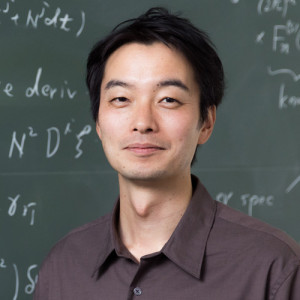
Introduction to the gravitational wave background from the primordial universe
January 16 (Fri) 16:00 - 17:15, 2026
Ryo Namba (Senior Research Scientist, Division of Fundamental Mathematical Science, RIKEN Center for Interdisciplinary Theoretical and Mathematical Sciences (iTHEMS))
Being genuine propagating degrees of freedom of the spacetime metric, gravitational waves (GWs) serve as an independent "eye" through which we can probe the evolution history of our universe. They are complementary to electromagnetic observables such as cosmic microwave background (CMB) and can act as direct messengers from the earliest stage of the universe, where conventional probes lose access. In particular, a stochastic background of GWs is widely regarded as a smoking gun of cosmic inflation.
In this talk, I introduce the basic theoretical framework for GWs produced in the primordial universe and discuss how they arise from vacuum fluctuations of the metric. I also outline additional production mechanisms sourced by matter fields in the early universe and contrast their characteristic observational signatures with those of vacuum tensor modes. The emphasis of my talk will be on physical intuition and analytic derivations, with the aim of making the subject accessible to non-specialists in the astrophysics community.
Venue: Hybrid Format (3F #359 and Zoom), Seminar Room #359, 3F Main Research Building, RIKEN
Event Official Language: English
Seminar
Evolution of sterile soldier castes in aphids
January 21 (Wed) 13:00 - 14:00, 2026
Keigo Uematsu (Assistant Professor, Keio University)
This seminar is jointly organized with the RIKEN Center for Sustainable Resource Science (CSRS).
Social evolution in aphids is tightly linked to the formation of galls on their host plants. Galls provide efficient colony defense and nutritionally rich feeding sites such that colony members need not forage outside, leading to high intra-group relatedness. Typically, social aphids form a gall on their primary host plant, after which winged morphs disperse to secondary host plants and establish a free-living, open colony. Remarkably, sterile soldier castes have independently evolved twice in these open colonies, where individuals live on plant surfaces without modifying their structure. These aphids raise intriguing questions about the prerequisites for eusocial evolution and the mechanisms by which two distinct social systems are maintained within a single genome.
In this talk, I will first provide an overview of the life cycle and the diversity of altruistic behaviors in gall-forming aphids, and then present our studies of the evolution of a sterile soldier caste in aphids inhabiting open colonies. From a developmental perspective, we tested the hypothesis that the sterile soldiers evolved through the co-option of pre-existing soldier phenotypes in a gall, based on similarity in morphology, transcriptome and behavior. From an ecological perspective, we investigated the kin structure and altruistic behavior of young nymphs in the open colonies of pre-eusocial species, and demonstrate that young aphids exhibit altruism by yielding feeding sites to older kin. Together, we propose that the open colonies of social aphids provide an ideal model system for studying the evolution of altruism.
Venue: Hybrid Format (3F #359 and Zoom), Seminar Room #359, 3F Main Research Building, RIKEN / via Zoom
Event Official Language: English
School
New computational methods in quantum field theory 2026
January 26 (Mon) - 28 (Wed) 2026
Recent developments in quantum computers and related theoretical/technical advancements have brought attention to "new computational methods in quantum field theory" in the fields of high energy/nuclear physics.
Main targets of this school are graduate students and postdocs. This school provides opportunities to discuss recent research trends and their applications through lectures by experts and presentations by participants.
Lecturers:
Junichi Haruna (University of Osaka) "Introduction to Quantum Error Correction (tentative)"
Yoshimasa Hidaka (Yukawa Institute for Theoretical Physics/RIKEN iTHEMS) “Introduction to Hamiltonian Lattice Gauge Theory (tentative)”
Tokiro Numasawa (University of Tokyo) "Open Majorana system (tentative)"
Venue: #435-437, 4F, Main Research Building, RIKEN Wako Campus
Event Official Language: English
Seminar



DEEP-IN-iPI Joint Meeting
January 26 (Mon) - 30 (Fri) 2026
Xingyu Guo (Lecturer, Institute of Quantum Matter, South China Normal University, China)
Gert Aarts (Professor, Department of Physics, Swansea University, UK)
Shuzhe Shi (Assistant Professor, Physics Department, Tsinghua University, Beijing, China)
Sung Hak Lim (Senior Researcher, Center for Theoretical Physics of the Universe (CTPU-PTC), Institute for Basic Science (IBS), Republic of Korea)
Jinyang Li (Ph.D. Student, Program of Particle and Nuclear Physics, The Graduate University for Advanced Studies (SOKENDAI))
Yingying Xu (Research fellow, Department of Mathematics and Statistics, University of Helsinki, Finland)
The series of DEEP-IN meetings (Jan 26–30, 2026) are joint with UTokyo Institute for Physics of Intelligence (iπ), which is a multi-day scientific program bringing together researchers to explore quantum simulations, machine learning physics, and applications in particle and nuclear physics.
The tentative schedule is,
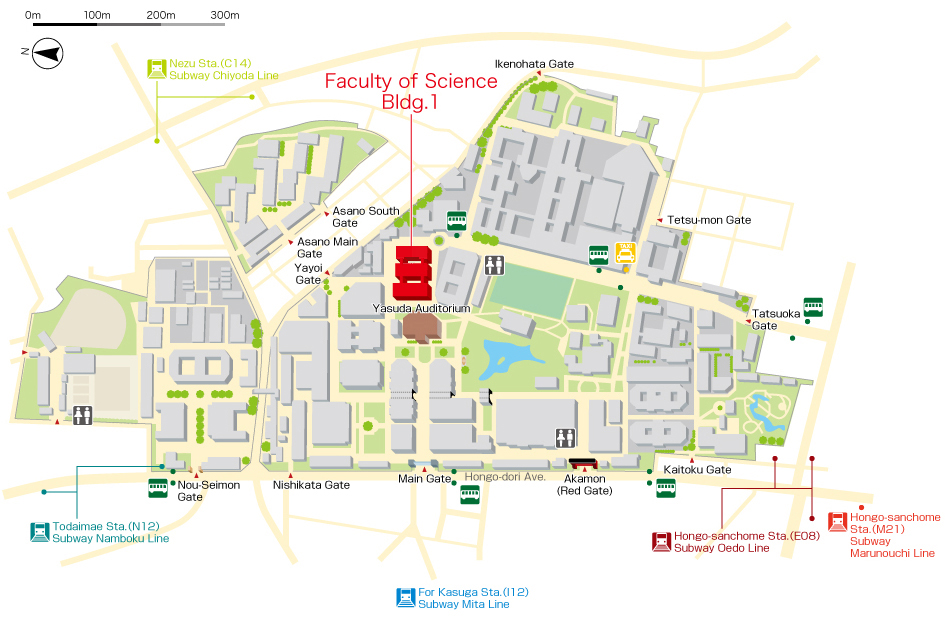
UTokyo-iπ Session (Venue: #512, Faculty of Science Bldg.1, School of Science, UTokyo)
Day 1: Jan 26 (Mon)
14:30–16:00 Onset of Bjorken flow in a quantum many-body simulation of the massive Schwinger model, Shuzhe Shi
Day 2: Jan 27 (Tue)
14:30–16:00 Physics of Diffusion Models, Gert Aarts
16:00–17:30 Discovering Symmetry from Energy-Based Diffusion Models, Jinyang Li
RIKEN-iTHEMS Session (Venue: Seminar Room #359, Main Research Building)
Day 3: Jan 28 (Wed)
14:30–16:00 Understanding Galactic Dark Matter with Generative Models, Sung Hak Lim
16:00–18:00 Free Discussion ML Physics-1
Day 4: Jan 29 (Thu)
10:00–11:30 Quantum Simulations of HEP and Beyond, Xingyu Guo
14:30–16:00 Physics of Machine Learning, Gert Aarts
16:00–17:30 Storage capacity of perceptron with variable selection, Yingying Xu
Day 5: Jan 30 (Fri)
11:00–14:00: Free Discussion ML Physics-2
Venue: via Zoom / Seminar Room #359, 3F Main Research Building, RIKEN / Faculty of Science Bldg.1, School of Science, The University of Tokyo, Hongo Campus
Event Official Language: English
Seminar
iTHEMS Cosmology Forum n°5 - Effective Field Theory approaches across the Universe
January 29 (Thu) 10:00 - 17:00, 2026
Katsuki Aoki (Research Assistant Professor, Yukawa Institute for Theoretical Physics, Kyoto University)
Toshifumi Noumi (Associate Professor, Graduate School of Arts and Sciences, The University of Tokyo)
Lucas Pinol (CNRS Researcher, Laboratoire de Physique de l’École Normale Supérieure (LPENS), CNRS/École Normale Supérieure, France)
This fifth workshop will bring together researchers exploring the effective field theory (EFT) framework in diverse cosmological contexts (https://indico2.riken.jp/event/5435/overview). Topics will include EFT formulations of interacting dark matter and dark energy, open EFTs for gravity, and multi-field inflationary dynamics. By highlighting recent progress and open questions, the workshop seeks to bridge insights from the early and late universe through the unifying language of EFT. In addition to the invited talks, the workshop will feature a panel discussion designed to promote interaction between the speakers and participants.
One of the key goals of this event is to foster collaboration among researchers working in neighboring fields, and to encourage participation from young and early-career researchers who are interested in, but may not yet have worked on, these themes. The workshop welcomes a broad audience with an interest in theoretical cosmology, gravitation, and quantum field theory.
The workshops are organised by the Cosmology Study Group at RIKEN iTHEMS.
Venue: Okochi Hall, 1F Laser Science Laboratory, RIKEN
Event Official Language: English
Seminar
Gauge fixing for open systems: A pathway to open gravity EFTs
January 30 (Fri) 14:00 - 16:00, 2026
Maria Mylova (Project Researcher, Kavli Institute for the Physics and Mathematics of the Universe (Kavli IPMU))
Understanding how to gauge-fix open quantum field theories is essential for building consistent open frameworks for cosmology and gravity, where gauge symmetry must coexist with dissipation and noise and decoherence. I will present our recent work developing explicit top-down constructions of open effective field theories (EFTs) for gauge degrees of freedom, with particular emphasis on the role of gauge fixing. We implement BRST quantisation on the Schwinger-Keldysh contour and show that the in-in boundary conditions reduce the doubled global BRST symmetry to a single diagonal copy. This diagonal BRST symmetry is nevertheless sufficient to guarantee that the influence functional remains gauge invariant under two independent gauge transformations, retarded and advanced, independently of the choice of initial state, the presence of symmetry-breaking phases, and whether the gauge theory is Abelian or non-Abelian. We further clarify how this is compatible with the decoupling limit, in which the global advanced symmetry is generically broken by the state. I will conclude by outlining bottom-up implications, and how these principles provide a systematic route to causal, gauge-invariant open EFTs suitable for cosmological and gravitational applications.
Venue: #445-447, 4F (Hybrid), Main Research Building, RIKEN Wako Campus
Event Official Language: English
Meeting

Mathematical Application Research Team Meeting #12
February 6 (Fri) 14:00 - 15:30, 2026
Riccardo Muolo (Special Postdoctoral Researcher, Division of Fundamental Mathematical Science, RIKEN Center for Interdisciplinary Theoretical and Mathematical Sciences (iTHEMS))
Mathematical Application Research Team invites Riccardo Muolo fom Division of Fundamental Mathematical Science to this meeting. You are welcome to join the meeting.
Title: Dynamics beyond nodes: a topological framework for oscillatory dynamics on higher-order networks
Abstract: In recent years, increasing attention has been given to dynamical processes taking place on higher-order networks, where interactions are not limited to links, but may involve also higher-dimensional simplices [1]. While classical network models assume that state variables live on nodes and interact through links, many real systems — including brain, climate, and transportation systems — cannot be fully described within this node-centric perspective [2]. In this seminar, I will introduce the framework of higher-order networks and the concept of topological signals, namely, dynamical variables defined on simplices of higher dimensions. I will briefly present the basic tools required for this setting, including elementary notions of discrete calculus, discrete topology and geometric algebra, which serve as the mathematical foundation for modeling dynamical processes beyond the node-based paradigm.
Next, I will discuss models of oscillatory dynamics extended to this framework. First, I will present the topological Kuramoto model [3], in which phases are not restricted to nodes but may also be associated with links, and where the coupling arises from the combinatorial structure of the simplicial complex. Then, I will introduce the discrete Hodge Laplacian and the Dirac-Bianconi operator [4], the former generalizing diffusive interactions to the higher-order setting, while the latter provides cross-talk between signals defined on simplices of different dimensions. Finally, I will introduce the notion of Dirac-Bianconi driven oscillators, where the dynamics of node- and link-signals coexist, interact and may give rise to collective oscillatory behaviors [5].
References
- Ginestra Bianconi, Higher‑Order Networks: An Introduction to Simplicial Complexes. Elements in the Structure and Dynamics of Complex Networks, Cambridge University Press (2021), doi: 10.1017/9781108770996
- Ana P. Millán, Hanlin Sun, Lorenzo Giambagli, Riccardo Muolo, Timoteo Carletti, Joaquín J. Torres, Filippo Radicchi, Jürgen Kurths & Ginestra Bianconi, Topology shapes dynamics of higher-order networks, Nature Physics volume 21, pages 353–361 (2025), doi: 10.1038/s41567-024-02757-w
- Ana P. Millán, Joaquín J. Torres, Ginestra Bianconi, Explosive Higher-Order Kuramoto Dynamics on Simplicial Complexes, Phys. Rev. Lett. 124, 218301 (2020), doi: 10.1103/PhysRevLett.124.218301
- Ginestra Bianconi, The topological Dirac equation of networks and simplicial complexes, J. Phys. Complex., 2(3): 035022 (2021), doi: 10.1088/2632-072X/ac19be
- Riccardo Muolo, Iván León, Yuzuru Kato, Hiroya Nakao, Synchronization of Dirac-Bianconi driven oscillators, arXiv: 2506.20163
Venue: #359, 3F, Main Research Building, RIKEN Wako Campus / via Zoom
Event Official Language: English
Seminar

What can we learn from kilonovae about nucleosynthesis and high-density matter?
February 9 (Mon) 14:00 - 15:15, 2026
Oliver Just (Postdoctoral Researcher, GSI Helmholtzzentrum für Schwerionenforschung, Germany)
The electromagnetic transients accompanying neutron-star mergers (NSMs), called kilonovae, are powered by the radioactive decay of freshly synthesized heavy elements. As such they should contain rich information about the ejected matter and the properties of the extremely dense meta-stable neutron-star remnant formed right after the collision. However, extracting such information from observed kilonova light curves and spectra remains a challenging endeavor, which requires sophisticated models of various hydrodynamic processes and neutrino transport effects, detailed knowledge of nuclear and atomic physics, as well as complex radiative transfer calculations. In this talk I will report recent efforts from our "HeavyMetal" collaboration aimed at deciphering kilonovae.
Venue: Hybrid Format (3F #359 and Zoom), Seminar Room #359, 3F Main Research Building, RIKEN
Event Official Language: English
Colloquium

The 31th MACS Colloquium & 2025 MACS Achievement Report Meeting
February 18 (Wed) 14:45 - 18:00, 2026
Yujiro Eto (Associate Professor, Center for Science Adventure and Collaborative Research Advancement (SACRA), Graduate School of Science, Kyoto University)
14:45-15:00 Teatime discussion
[15:00-16:00 The 31th MACS Colloquium]
Talk by Dr. Yujiro Eto (Associate Professor, Center for Science Adventure and Collaborative Research Advancement (SACRA), Graduate School of Science, Kyoto University)
[16:10-18:30 2025 MACS Achievement Report Meeting]
16:10-17:10 Flash Talks to report results
17:10-18:00 Poster Session by SG participating students
Venue: #401, Graduate School of Science Bldg. No.6 , Kyoto University
Event Official Language: Japanese
Seminar
Testing the quantum nature of gravity with optomechanical systems
February 26 (Thu) 10:00 - 12:00, 2026
Yuta Michimura (Assistant Professor, Department of Physics, Graduate School of Science, The University of Tokyo)
Quantum gravity remains one of the major challenges in modern physics. Even at the most fundamental level, there is no experimental confirmation of whether a mass placed in a spatial superposition generates a corresponding superposition of gravitational fields. In recent years, experiments aiming to create gravity-induced quantum entanglement have attracted significant attention as a way to probe the quantum nature of non-relativistic gravity. In particular, optomechanical systems, which exploit the interaction between light and mechanical oscillators, provide a promising platform for such studies. We are pursuing experiments at the milligram scale, which lies between the smallest mass scale at which classical gravity has been tested and the largest mass scale at which quantum states of mechanical oscillators have been realized [1]. In this seminar, I will discuss experimental approaches to testing the quantum nature of gravity using suspended and levitated mirrors. I will also discuss our recent proposal to use inverted oscillators to enhance gravity-induced entanglement exponentially [2].
References
- Yuta Michimura, Kentaro Komori, Quantum sensing with milligram scale optomechanical systems, The European Physical Journal D 74, 126 (2020), arXiv: 2003.13906
- Tomohiro Fujita, Youka Kaku, Akira Matsumura, Yuta Michimura, Inverted Oscillators for Testing Gravity-induced Quantum Entanglement, Classical and Quantum Gravity 42, 165003 (2025), arXiv: 2308.14552
Venue: Hybrid Format (3F #359 and Zoom), Seminar Room #359, 3F Main Research Building, RIKEN
Event Official Language: English
Workshop
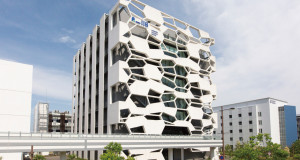
RIKEN iTHEMS-Kyoto University joint workshop on Asymptotics in Astrophysics and Cosmology
March 2 (Mon) - 4 (Wed) 2026
This joint workshop will bring together physicists and mathematicians who work with asymptotics and perturbation theory techniques. This includes theorists in cosmology, high energy physics, quantum gravity, solar physics, astrophysics.
Workshop overview
Over three days, there will be approximately 15 invited (1 hour slot) or contributed (20-30 min slot) talks about:
Fundamental asymptotics and perturbation theory techniques used in theoretical physics. Various applications of asymptotics and perturbation theory techniques in (wave transport or oscillation related) astrophysics and cosmology eigenvalue problems.
The workshop will also feature hands-on Mathematica and Python tutorials introducing:
Practical use of WKB methods in applied mathematics for any “Schrodinger-like” wave equations, Resummation methods in high energy theory, Deriving normal modes in stars, and their application to tidal evolution in binary star or planet systems, Eigenvalue problems in core collapse supernova theory.
Venue: 8F, Integrated Innovation Building (IIB), Kobe Campus, RIKEN
Event Official Language: English
Workshop
KEK-iTHEMS Workshop “Concepts of Quantum and Spacetime”
March 9 (Mon) - 12 (Thu) 2026
The two fundamental questions—“What is quantum?” and “What is spacetime?”—are deeply intertwined. On one hand, the formulation and interpretation of quantum theory depend both implicitly and explicitly on our conceptions of time and space. On the other hand, we believe that fully taking into account the quantum character of nature will force us to revise our understanding of spacetime. These two conceptual problems lie at the heart of the unsolved challenge of how to quantize classical spacetime, and conversely, how (semi-) classical descriptions of spacetime emerge from quantum theory. Furthermore, if the entire matter-spacetime system is a kind of quantum many-body system, thermodynamics—which governs its statistical behaviors—should play a key role in elucidating these problems.
This workshop will discuss the question “How can quantum theory and spacetime be understood in a consistent manner?” from a fundamental and broad perspective. To tackle this challenge, we gather researchers in foundations of quantum theory, quantum gravity, and related fields from around the world, providing a "space and time" to share various ideas with open minds and engage in lively discussions. By exploring new concepts and principles, we hope to uncover directions to guide quantum theory over the next 100 years.
This workshop covers…
Foundations of quantum theory
Quantum gravity and emergence of spacetime
Formulation of semi-classical gravity
Experimental aspects of fundamental properties in nature and quantum gravity
Foundations of quantum many-body systems and thermodynamics
Other related topics are welcome.
We welcome short talk presentations and poster presentations.
This event is a workshop jointly organized by KEK Theory Center and RIKEN iTHEMS.
Venue: Seminar Hall, Building 3, KEK
Event Official Language: English
Workshop
Perspectives and applications of Koopman Operator Theory
March 19 (Thu) 9:00 - 18:00, 2026
Yoshihiko Susuki (Professor, Graduate School of Engineering, Kyoto University)
Hiroya Nakao (Professor, Department of Systems and Control Engineering, Institute of Science Tokyo)
Alexandre Mauroy (Associate Professor, Mathematics, University of Namur, Belgium)
Yuzuru Kato (Associate Professor, Department of Complex and Intelligent Systems, School of Systems Information Science, Future University-Hakodate)
PROGRAM:
9h45 - 10h15 Registration & Coffee
10h15 - 10h20 Opening Remarks - Satoshi Iso (RIKEN), Director of iTHEMS
10h20 - 11h20 SESSION 1 - Chair: Tetsuo Hatsuda (RIKEN)
Yoshihiko Susuki (Kyoto University): Koopman resolvents in dynamical systems and control
11h20 -11h40 Free Discussions
11h40 - 13h00 Lunch Break & Discussions
13h00-14h00 SESSION 2 - Chair: Narumi Fujii (Institute of Science Tokyo)
Alexandre Mauroy (University of Namur, Belgium): Analytic EDMD method for spectral analysis of fixed point dynamics
14h00 - 14h30 Coffee Break & Discussions
14h30 - 15h30 SESSION 3 - Chair: Tetsuo Hatsuda (RIKEN)
Hiroya Nakao (Institute of Science Tokyo): Koopman operator analysis of coupled oscillator systems
15h30 - 16h00 Coffee Break & Discussions
16h00 - 17h00 SESSION 4 - Chair: Riccardo Muolo (RIKEN)
Yuzuru Kato (Future University Hakodate): Analysis of quantum nonlinear oscillators on the basis of Koopman operator theory
17h00 - 17h05 Closing Remarks - Tetsuo Hatsuda, Chair of the Workshop
17h05 - 18h00 Free Discussions
Venue: Room 535-537, 5F, Main Research Building, RIKEN Wako Campus
Event Official Language: English
Seminar
Clumpy Outflows from Super-Eddington Accreting Black Holes
April 10 (Fri) 14:00 - 15:15, 2026
Haojie Hu (JSPS Research Fellow, University of Tsukuba)
Recent advances in X-ray spectroscopic observation have enabled researchers to reveal distinct clumpy structures in the super-Eddington outflows from the supermassive black hole in PDS 456 (XRISM Collaboration 2025), initiating detailed investigation of fine-scale structures in accretion-driven outflows. In this talk, I will introduce our high-resolution, two-dimensional radiation-hydrodynamics simulations with time-varying and anisotropic initial and boundary conditions that reproduce clumpy outflows from super-Eddington accretion flows. The resulting clumpy outflows extend across a wide range of radial distances and polar angles, exhibiting typical properties such as a size of ~10 rg (where rg is the gravitational radius), a velocity of ~0.05–0.2 c (where c is the speed of light), and about five clumps along the line of sight. Although the velocities are slightly smaller, these characteristics reasonably resemble those obtained from the XRISM observation. The gas density of the clumps is on the order of 10^-13–10^-12 g cm^-3, and their optical depth for electron scattering is approximately 1–10. The clumpy winds accelerated by radiation force are considered to originate from the region within <300 rg.
Venue: #220, 2F, Main Research Building, RIKEN Wako Campus / via Zoom
Event Official Language: English
Paper of the Week
Week 2, January 2026
2026-01-08
Title: Phases of the $q$-deformed $\mathrm{SU}(N)$ Yang-Mills theory at large $N$
Author: Tomoya Hayata, Yoshimasa Hidaka, Hiromasa Watanabe
arXiv: http://arxiv.org/abs/2601.03843v1
Title: Revisiting Spherically Symmetric Spacetime I: Geometro-Hydrodynamics
Author: Puttarak Jai-akson, Yuki Yokokura
arXiv: http://arxiv.org/abs/2601.03077v1
Title: Exceptional Lines and Excitation of (Nearly) Double-Pole Quasinormal Modes: A Semi-Analytic Study in the Nariai Black Hole
Author: Nao Nakamoto, Naritaka Oshita
arXiv: http://arxiv.org/abs/2601.00704v1
Title: Gauge Symmetry in Quantum Simulation
Author: Masanori Hanada, Shunji Matsuura, Andreas Schafer, Jinzhao Sun
arXiv: http://arxiv.org/abs/2512.22932v1
If you would like to cancel your subscription or change your email address,
please let us know via our contact form.
Copyright © iTHEMS, RIKEN. All rights reserved.