
Volume 360
Back to Newsletter List


Volume 360
June 20, 2025
Upcoming Events
Seminar

Categorification and K-theory
June 20 (Fri) 15:30 - 17:30, 2025
Vladimir Sosnilo (Research Scientist, Division of Fundamental Mathematical Science, RIKEN Center for Interdisciplinary Theoretical and Mathematical Sciences (iTHEMS))
In this talk, I will explain and motivate the concept of categorification and present various examples. The Euler characteristic is an invariant of a topological space, that serves as a shadow of a more refined category theoretic invariant—homology—which retains significantly more information. The existence of such a categorical construction underlying a numerical one is a common phenomenon in topology and algebra. I will also discuss Khovanov's question on the existence of categorification of arbitrary rings.
Venue: Seminar Room #359, 3F Main Research Building, RIKEN
Event Official Language: English
Seminar
Spectral flow and applications
June 23 (Mon) 14:00 - 16:00, 2025
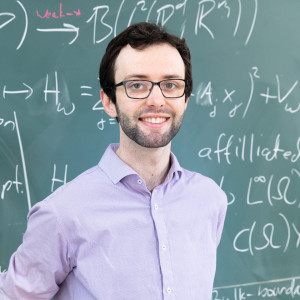
Christopher Bourne (Associate Professor, Institute of Liberal Arts and Sciences, Nagoya University)
Given a family of symmetric matrices indexed by a parameter (e.g. time, external field), changing this parameter will cause the eigenvalues to move along the real axis. The spectral flow tracks these eigenvalues and counts how many cross the point 0. This idea turns out to be very useful for both pure mathematics as well as applications to physics and elsewhere. In this talk, I will introduce the spectral flow and how it can be generalised to a variety of settings that are also relevant for applications in quantum physics.
Venue: Hybrid Format (3F #359 and Zoom), Main Research Building, RIKEN Wako Campus / via Zoom
Event Official Language: English
Seminar
LLM-based physics analysis assistant at BESIII
June 23 (Mon) 15:00 - 16:00, 2025
Yipu Liao (Ph.D. Student, Institute of High Energy Physics, Chinese Academy of Sciences, China)
The data processing and analyzing is one of the main challenges at HEP experiments. To accelerate the physics analysis and drive new physics discovery, the rapidly developing Large Language Model (LLM) is the most promising approach, it have demonstrated astonishing capabilities in recognition and generation of text while most parts of physics analysis can be benefitted. In this talk we will discuss the construction of a dedicated intelligent agent, an AI assistant names Dr.Sai at BESIII based on LLM, the potential usage to boost the data analysis. I will also provide a brief overview of the construction of the AI platform at the Institute of High Energy Physics (ai.ihep.ac.cn) and outline the roadmap for AI4HEP.
Yipu Liao (廖一朴) is a Ph.D. student at the Institute of High Energy Physics, Chinese Academy of Sciences. His research is centered on particle physics data analysis, with a special emphasis on Charmonium(-like) and tau physics within the BESIII and Belle II experiments. He is actively engaged in the development of the AI assistant project (DrSai) for the BESIII experiment, and leads the design and evaluation of automated processes.
Reference
- Zhengde Zhang, Yiyu Zhang, Haodong Yao, Jianwen Luo, Rui Zhao, Bo Huang, Jiameng Zhao, Yipu Liao, Ke Li, Lina Zhao, Jun Cao, Fazhi Qi, Changzheng Yuan, Xiwu: A Basis Flexible and Learnable LLM for High Energy Physics, (2024), arXiv: 2404.08001
Venue: #345-347, Main Research Building, RIKEN Wako Campus / via Zoom
Event Official Language: English
Workshop
iTHEMS-TheoryCenter(KEK) Scientific Writing and DEI Workshop
June 24 (Tue) - 25 (Wed) 2025
Ashleigh Griffin (Professor, Department of Biology, University of Oxford, UK)
Stuart West (Professor, Department of Biology, University of Oxford, UK)
Ryosuke Iritani (Senior Research Scientist, Division of Fundamental Mathematical Science, RIKEN Center for Interdisciplinary Theoretical and Mathematical Sciences (iTHEMS))
This is a two-day KEK-iTHEMS workshop on scientific writing and diversity, equity, and inclusion.
For more details, please visit the workshop website via the relevant link.
Venue: 2F Large Conference Room, Administrative Headquarters, RIKEN Wako Campus
Event Official Language: English
Seminar
ComSHeL introductions meeting
June 24 (Tue) 14:00 - 15:30, 2025
Following our Launch Meeting on May 1st, in this second meeting of our study group we plan for each member of the ComSHeL Study Group and anyone who joins us that day to introduce their research briefly to get to know one another's focus and expertise. If you are interested in possibly collaborating with ComSHeL members and/or you would like to get to know some of the researchers who joined us as part of iTHEMS new Division of Applied Mathematical Science, please join us. I extended the duration to 90 min (from our usual 60 min) to make sure we have enough time to hear from everyone.
Each attendee will have approximately 4 minutes to explain their past, current, or upcoming research and time will be kept strictly. Time might be adjusted on the day of the meeting based on the number of applicants. If you would like to show some slides (max 3 slides), please prepare them in advance and send them to cbeau@riken.jp in PDF format no later than June 20. But no one should feel they must prepare slides: it is fine to speak freely and informally about your work.
Venue: Hybrid Format (3F #359 and Zoom), Seminar Room #359, 3F Main Research Building, RIKEN
Event Official Language: English
Seminar
Condensed-Matter Physics of Neutron Stars 1
June 25 (Wed) 10:00 - 12:30, 2025
Hiroyuki Tajima (Assistant Professor, Graduate School of Science, The University of Tokyo)
Neutron stars, the most compact stars in the Universe, are composed of various matter. However, due to their extremely low temperatures and high densities, they exhibit strong interactions and condensed states. Knowledge of condensed-matter physics is essential for describing such quantum matter. In this lecture, theoretical aspects of condensed-matter physics relevant with neutron stars, through active discussion with participants.
Venue: Seminar Room #359, 3F Main Research Building, RIKEN / via Zoom
Event Official Language: Japanese
Seminar
Condensed-Matter Physics of Neutron Stars 2
June 25 (Wed) 14:00 - 16:30, 2025
Daisuke Inotani (Postdoctoral Researcher, Research and Education Center for Natural Sciences, Keio University)
Neutron stars, the most compact stars in the Universe, are composed of various matter. However, due to their extremely low temperatures and high densities, they exhibit strong interactions and condensed states. Knowledge of condensed-matter physics is essential for describing such quantum matter. In this lecture, theoretical aspects of condensed-matter physics relevant with neutron stars, through active discussion with participants.
Venue: #359, 3F, RIKEN Wako Campus / via Zoom
Event Official Language: Japanese
Seminar

Generative Models for Statistical Field Theories
June 25 (Wed) 15:00 - 16:00, 2025
Lingxiao Wang (Research Scientist, Division of Fundamental Mathematical Science, RIKEN Center for Interdisciplinary Theoretical and Mathematical Sciences (iTHEMS))
In the final talk of the DEEP-IN series, we will explore the role of generative models in learning phase transitions and sampling in lattice systems. First, we demonstrate how generative models can serve as global samplers by learning the underlying probability distributions. This enables the sampling of configurations more efficiently for lattice field theories. We will also demonstrate how the ferromagnetic phase transition, the Kosterlitz-Thouless transition, and quantum phase transitions can be identified from generative models. I will briefly introduce generative diffusion models, which can be interpreted as a stochastic quantization scheme. This opens a new path for understanding deep generative models.
This is an informal seminar, we will start with the methodology and some practical examples, and finally reserve time for everyone interested to discuss it together.
References
- Q. Zhu, G. Aarts, W. Wang, K. Zhou, and L. Wang, Physics-Conditioned Diffusion Models for Lattice Gauge Theory, (2025), arXiv: 2502.05504
- L. Wang, G. Aarts, and K. Zhou, Diffusion models as stochastic quantization in lattice field theory, JHEP 05, 060 (2024), doi: 10.1007/JHEP05(2024)060
- T. Xu, L. Wang, L. He, K. Zhou, and Y. Jiang, Building imaginary-time thermal filed theory with artificial neural networks, Chin. Phys. C 48, 103101 (2024), doi: 10.1088/1674-1137/ad5f80
- S. Chen, O. Savchuk, S. Zheng, B. Chen, H. Stoecker, L. Wang, and K. Zhou, Fourier-flow model generating Feynman paths, Phys. Rev. D 107, 056001 (2023), doi: 10.1103/PhysRevD.107.056001
- L. Wang, Y. Jiang, L. He, and K. Zhou, Continuous-mixture autoregressive networks learning the Kosterlitz-Thouless transition, Chin. Phys. Lett. 39, 120502 (2022), doi: 10.1088/0256-307X/39/12/120502
Venue: #345-347, Main Research Building, RIKEN Wako Campus / via Zoom
Event Official Language: English
Seminar

Simulating the spread of infection in networks with quantum computers
June 26 (Thu) 13:00 - 14:00, 2025
Xiaoyang Wang (Postdoctoral Researcher, Quantum Mathematical Science Team, Division of Applied Mathematical Science, RIKEN Center for Interdisciplinary Theoretical and Mathematical Sciences (iTHEMS))
Many classical stochastic processes can be modeled as Markovian processes, including the spreading of infection in networks. Simulating the Markovian processes using classical computers is generally unscalable for large networks. In this seminar, I will introduce the Hamiltonian evolution on quantum computers and how the Markovian spreading of infection can be efficiently simulated using the Hamiltonian evolution. In particular, we analytically and numerically analyze the evolution of a specifically designed Hamiltonian, and prove that the evolution simulates a classical Markovian process, which describes the well-known epidemiological stochastic susceptible and infectious (SI) model. As an example, we simulate the infection spreading process of the SARS-CoV-2 variant Omicron in a small-world network. The simulation results are qualitative consistent with the infection spreading in the west coast of USA.
Reference
- X. Wang, Y. Lyu, C. Yao, and X. Yuan, Simulating the Spread of Infection in Networks with Quantum Computers, Phys. Rev. Applied (2023), doi: 10.1103/PhysRevApplied.19.064035
Venue: via Zoom / Seminar Room #359, 3F Main Research Building, RIKEN
Event Official Language: English
Seminar
Universal Pseudo-Goldstone Damping from the Real-Time Functional Renormalization Group
June 26 (Thu) 15:00 - 16:00, 2025
Yang-Yang Tan (Ph.D. Candidate, Dalian University of Technology, China)
Strongly correlated systems, from QCD matter to condensed matter, exhibit universal dynamics near phase transitions. However, despite the successes of various theoretical approaches, systematic treatments of fluctuations are scarce. This talk unveils a novel universal damping mechanism for pseudo-Goldstone modes in systems with spontaneously broken approximate symmetries. I will introduce the real-time functional renormalization group (fRG) method, a powerful non-perturbative framework for studying real-time dynamics near critical points. Using this approach within a critical O(N) model, we uncover a new universal scaling for pseudo-Goldstone damping. Different from the conventional damping found in holography and hydrodynamics, the new one is controlled by critical fluctuations, hence is invisible in mean-field systems or strongly correlated systems with classical gravity duals. Since the critical damping depends solely on the universalities of the critical point, irrespective of the microscopic details, our conclusion should be applicable to a wide class of interacting systems.
Reference
- Yang-yang Tan, Yong-rui Chen, Wei-jie Fu and Wei-Jia Li, Universality of pseudo-Goldstone damping near critical points, Nature Commun. 16 (2025) 1, 2916, doi: 10.1038/s41467-025-58170-1, arXiv: 2403.03503
Venue: Seminar Room #359, 3F Main Research Building, RIKEN / via Zoom
Event Official Language: English
Seminar

Exact WKB as unified analytic structure for resonance physics
June 27 (Fri) 15:00 - 17:00, 2025
Okuto Morikawa (Special Postdoctoral Researcher, Division of Fundamental Mathematical Science, RIKEN Center for Interdisciplinary Theoretical and Mathematical Sciences (iTHEMS))
We develop a unified framework for analyzing quantum mechanical resonances using the exact WKB method. The non-perturbative formulation based on the exact WKB method works for incorporating well-established phenomenological regularizations, the ABC theorem (proof of the completeness of Hilbert space), and the rigged Hilbert space in resonant phenomena. By examining the inverted Rosen-Morse potential, we illustrate how the exact WKB analysis captures resonant phenomena rigorously. Also, we clarify the corresponding linear spaces defined in each step of the exact WKB manipulations. The complementarity between the essential analyticity for resonance and the ABC theorem leads us to construct a modified Hilbert space called the rigged Hilbert space within the exact WKB framework. This offers a deeper understanding of resonant states and their analytic structures. Our results provide a concrete demonstration of the non-perturbative accuracy of exact WKB methods in unstable quantum systems.
Venue: Seminar Room #359, 3F Main Research Building, RIKEN / via Zoom
Event Official Language: English
Seminar

Quantum Computing Algorithms and Institute of Mathematics-for-Industry
July 3 (Thu) 15:30 - 17:00, 2025
Hiroyuki Ochiai (Professor, Institute of Mathematics for Industry, Kyushu University)
This is the kickoff talk of the Kyushu University Collaboration Team, which aims to foster communication between iTHEMS and IMI. I will introduce some of IMI's activities and organization, as well as my own work, including research on quantum algorithms that began with the launch of the Quantum Computing System Center in 2022.
Venue: #345-347, 3F, Main Research Building, RIKEN Wako Campus
Event Official Language: English
Seminar
Boundary Scattering and Non-invertible Symmetries in 1+1 Dimensions
July 4 (Fri) 14:00 - 15:00, 2025
Soichiro Shimamori (Ph.D. Student, Graduate School of Science, Osaka University)
Recent studies by Copetti, Córdova and Komatsu have revealed that when non-invertible symmetries are spontaneously broken, the conventional crossing relation of the S-matrix is modified by the effects of the corresponding topological quantum field theory (TQFT). We extend these considerations to (1+1)-dimensional quantum field theories (QFTs) with boundaries. In the presence of a boundary, one can define not only the bulk S-matrix but also the boundary S-matrix, which is subject to a consistency condition known as the boundary crossing relation. We show that when the boundary is weakly-symmetric under the non-invertible symmetry, the conventional boundary crossing relation also receives a modification due to the TQFT effects. As a concrete example of the boundary scattering, we analyze kink scattering in the gapped theory obtained from the Φ(1,3)-deformation of a minimal model. We explicitly construct the boundary S-matrix that satisfies the Ward-Takahashi identities associated with non-invertible symmetries. This talk is based on the collaboration with Satoshi Yamaguchi.
Venue: Hybrid Format (3F #359 and Zoom), Seminar Room #359, 3F Main Research Building, RIKEN
Event Official Language: English
Colloquium

The 29th MACS Colloquium
July 4 (Fri) 14:45 - 18:00, 2025
Takashi Sakajo (Professor, Division of Mathematics and Mathematical Sciences, Graduate School of Science, Kyoto University)
Shinichi Sasa (Professor, Division of Physics and Astronomy, Graduate School of Science, Kyoto University)
14:45-15:00 Teatime discussion
15:00–15:50 Talk by Prof. Takashi Sakajo (Professor, Division of Mathematics and Mathematical Sciences, Graduate School of Science, Kyoto University)
16:00–16:50 Talk by Prof. Shinichi Sasa (Professor, Division of Physics and Astronomy, Graduate School of Science, Kyoto University)
17:15-18:00 Discussion
Venue: Science Seminar House (Map 9), Kyoto University
Event Official Language: Japanese
Seminar

Computational Problems in Post-Quantum Cryptography
July 7 (Mon) 15:30 - 17:00, 2025
Tsuyoshi Takagi (Professor, Department of Mathematical Informatics, The University of Tokyo)
The security of current public-key cryptosystems relies on the hardness of factoring large integers or solving discrete logarithm problems. However, these computational problems can be solved in polynomial time using a quantum computer. This vulnerability has prompted research into post-quantum cryptography (PQC) using alternative mathematical problems that are secure in the era of quantum computers. In this talk, we give an overview of recent developments in the research on PQC. We explain a standardization project of PQC conducted by the National Institute of Standards and Technology (NIST). We then introduce an efficient digital signature, QR-UOV, based on the hardness of solving a system of multivariate quadratic polynomial equations over a finite field (the MQ problem). We also introduce a computational challenge problem, Fukuoka MQ Challenge, which aims at evaluating the hardness of the MQ problem with practical parameters.
Venue: Hybrid Format (3F #359 and Zoom), Seminar Room #359, 3F Main Research Building, RIKEN
Event Official Language: English
Conference

RIKEN Theory Symposium
July 9 (Wed) - 10 (Thu) 2025
This symposium will bring together leading theorists from the fields of artificial intelligence, quantum information, quantum field theory, quantum gravity, and related areas of mathematics. It aims to stimulate interactions and collaborations across these diverse fields by fostering cross-disciplinary dialogue. It is organized by RIKEN's Pioneering Research Institute (PRI) together with the Center for Interdisciplinary Theoretical and Mathematical Sciences (iTHEMS), and the Center for Advanced Intelligence Project (AIP).
July, 9th (Wed.)
9:20- 9:30 Opening Remarks Dr. Hirosi Ooguri
9:30 - 10:15 Daniel Jafferis, “Tensor models for 3d gravity”
10:45 - 11:30 Sameer Murthy, “Supersymmetric index of black holes and black strings”
Transportation by bus from Wako-campus is available for up to 60 people.
Special AIP-PRI-iTHEMS joint seminar
Venue: Tokyo Open Space (RIKEN Nihonbashi Campus)
14:30 - 15:15 Sergei Gukov, “Math + AI = AGI”
15:15 - 16:00 Masazumi Honda, “Fracton topological phases and Foliated field theories”
16:30 - 17:15 Richard Kueng, “Learning to predict ground state properties of gapped Hamiltonians”
*Due to building access restrictions, this session is open only to participants of the morning session, RIKEN affiliates, or those who have completed the registration form.
If you wish to attend, please register via the Related Links section below.
July, 10th (Thur.)
9:30 - 10:15 Yifan Wang, “Pinning Defects, Fusion and Factorization”
10:45 - 11:30 Yichul Choi, “Non-Invertible Symmetry and Entanglement Entropy”
11:45 - 12:30 Yuya Kusuki, “Non-invertible Symmetries on Non-orientable Surfaces”
14:00 - 14:45 Heeyeon Kim, “3d TFTs from 4d N=2 BPS particles”
15:15 -16:00 Yuto Moriwaki, “On mathematical formulations of conformal field theory”
16:00 - 16:45 Kantaro Ohmori, “Higher Representation Theory and Excitations of Gauge Theories”
16:45 -16:55 Closing Remarks by Dr. Motoko Kotani
Organizer:
RIKEN Pioneering Research Institute (PRI)
Co-organizers:
RIKEN Center for Interdisciplinary Theoretical and Mathematical Sciences (iTHEMS)
RIKEN Center for Advanced Intelligence Project (AIP)
Venue: Suzuki Umetaro Hall, 1F Bioscience Building, RIKEN / Tokyo Open Space (COREDO Nihonbashi)
Event Official Language: English
External Event


What is “Quantum”!?: RIKEN Symposium Commemorating 100 Years of Quantum Science
July 12 (Sat) 13:00 - 17:00, 2025
Makoto Kobayashi (Director Emeritus, Kobayashi-Maskawa Institute for the Origin of Particles and the Universe (KMI), Nagoya University)
Yasunori Nomura (Professor/Director, Berkeley Center for Theoretical Physics, University of California, Berkeley, USA)
Kenji Ito (Professor, Division of Contemporary Culture, Graduate School of Letters, Kyoto University)
Miho Hatanaka (Professor, Department of Chemistry, Faculty of Science and Technology, Keio University)
Norio Kawakami (Deputy Director, Fundamental Quantum Science Program, TRIP Headquarters, RIKEN)
Yasushi Okada (Deputy Director, RIKEN Center for Biosystems Dynamics Research (BDR))
Kouichi Hagino (Professor, Graduate School of Science, Kyoto University)
Shigeki Takeuchi (Professor, Graduate School of Engineering, Kyoto University)
Yasunobu Nakamura (Director, RIKEN Center for Quantum Computing (RQC))
Makoto Gonokami (President, RIKEN)
In celebration of the 100th anniversary of the birth of quantum science, the United Nations General Assembly has declared 2025 as the International Year of Quantum Science and Technology, coordinated by UNESCO.
To mark this occasion, we will host a public symposium entitled:
“What is “Quantum”!?: RIKEN Symposium Commemorating 100 Years of Quantum Science”, aimed at the general public.
The talks will be conducted in Japanese.
For more details and to register, please visit the official website via the related link.
Venue: via Zoom
Event Official Language: Japanese
Seminar

Mesoscopic transport via one-dimensional chain with Localized two-body loss
July 23 (Wed) 10:00 - 11:30, 2025
Kensuke Kakimoto (Ph.D. Student, Faculty of Science and Engineering, School of Fundamental Science and Engineering, Waseda University)
Mesoscopic transport has long served as a powerful probe into the quantum behavior of matter; however, the role of dissipation in such systems remains unresolved. In recent years, quantum simulations of mesoscopic systems with ultracold atomic gases have made significant progress, particularly through the use of optical tweezers to induce local dissipation via atom loss. In this talk, we discuss a two-terminal mesoscopic system in which two-body loss occurs locally at the center of a one-dimensional chain, modeling a dissipative quantum point contact. To analyze this setup, we employ the Keldysh Green’s function formalism in combination with a noise-field representation of Lindblad dynamics. Our analysis reveals that the dissipation strength depends on the occupation number of the central dissipative site, leading to a weaker suppression of particle current in the weakly dissipative regime compared to the case of one-body loss.
Reference
- Kensuke Kakimoto and Shun Uchino, Quantum Point Contact with Local Two-body Loss (2025), arXiv:2505.24391 (2025), doi: 10.48550/arXiv.2505.24391, arXiv: 2505.24391
Venue: Hybrid Format (3F #359 and Zoom), Seminar Room #359, 3F Main Research Building, RIKEN
Event Official Language: English
Workshop
The Theory of Periodic Tangles & Their Interdisciplinary Applications
July 28 (Mon) - August 1 (Fri) 2025
The mathematical characterization of entanglement holds immense potential for describing the mechanical functions of diverse physical systems and materials. A universal interdisciplinary study, involving scientists, engineers, and artists promises both advance of the field itself and significant contribution to the research and design of innovative solutions for textiles, medical devices, polymers, molecular chemistry, or construction materials among others. The program seeks an alternative to the trial–and–error approach, bringing together academia and industry to seek new sustainable solutions and inspiration, contributing to society. It will consist not only of scientific exchanges but will promote cultural impact by organizing exhibitions or hands–on workshops. Additionally, it will encourage several discussions by providing networking opportunities and utilizing the unique venue of House of Creativity at Tohoku University.
This workshop will gather researchers from various disciplines and include invited lectures, a poster session, roundtable discussions, and brainstorming activities. Our focus will be on exploring the connections between knot theory and its applications in areas such as polymers and soft matter, textile mechanics, graphic design, and more.
This event includes a joint symposium between the WPI–AIMR (Tohoku University) and WPI–SKCM2 (Hiroshima University) on Friday, August 1st, 2025: INTERWOVEN: A WPI–AIMR & WPI–SKCM2 Symposium, Towards a Universal Topological Model of Entangled Structures for Sustainable Metamaterials
Please fill in the registration form by June 16th 2025.
Confirmed speakers (alphabetical order):
Jörn Dunkel (Massachusetts Institute of Technology)
Yuanyuan Guo (Tohoku University)
Tatsuki Hayama (Keio University)
Louis H. Kauffman (University of Illinois at Chicago)
Yuka Kotorii (Hiroshima University)
Sofia Lambropoulou (National Technical University of Athens)
Eleni Panagiotou (Arizona State University)
Pedro M. Reis (École Polytechnique Fédérale de Lausanne)
Takahiro Sakaue (Aoyama Gakuin University)
Vanessa Sanchez (Rice University)
Henry Segerman (Oklahoma State University)
Koya Shimokawa (Ochanomizu University)
Hiroshi Suito (Tohoku University)
Ryuichi Tarumi (Osaka University)
Hirofumi Wada (Ritsumeikan University)
Please refer to the workshop website via the relevant link for more details.
We are looking forward to your participation and to welcoming you to Sendai!
Venue: TOKYO ELECTRON House of Creativity, Katahira Campus, Tohoku University
Event Official Language: English
Workshop
Recent Developments and Challenges in Tensor Networks: Algorithms, Applications to science, and Rigorous theories
July 28 (Mon) - August 8 (Fri) 2025
Venue: Panasonic Hall, Yukawa Institute for Theoretical Physics, Kyoto University
Event Official Language: English
Colloquium

Chemical and isotopic analyses of samples returned by the Hayabusa2 mission from the asteroid Ryugu
August 1 (Fri) 14:00 - 15:30, 2025
Tetsuya Yokoyama (Professor, Department of Earth and Planetary Sciences, School of Science, Institute of Science Tokyo)
The recent success of asteroid sample return missions has led to significant advances in Solar System science. JAXA's Hayabusa2 successfully retrieved and returned to Earth a total of 5.4 grams of samples from the C-type asteroid Ryugu. Sample return missions are critical to the scientific community, as they provide pristine, terrestrially unaltered extraterrestrial material. The analytical data obtained in laboratories for samples collected by space missions will facilitate the understanding of the formation and evolution of the Solar System. I was appointed deputy leader of the Initial Analysis Chemistry team of Hayabusa2 project, and was heavily involved in analyzing the chemical and isotopic compositions of Ryugu materials. A series of analyses of these samples indicated that the mineral, chemical, and isotopic compositions of Ryugu bear a strong resemblance to those of the Ivuna-type (CI) carbonaceous chondrites. CI chondrites have been recognized as a unique group of meteorites with a chemical composition similar to that of the solar photosphere except for highly volatile elements and Li. In the seminar, I will present the meaning and significance of the compositional similarity between Ryugu and CI chondrites. I will also present our recent activities in a new project called the Ryugu Reference Project, which was initiated to maximize the potential value of the returned samples.
Venue: 2F Large Conference Room, Administrative Headquarters, RIKEN Wako Campus / via Zoom
Event Official Language: English
Seminar
iTHEMS Cosmology Forum #4 - Evolving Cosmos: new physical insights from new spectroscopic data
August 4 (Mon) - 5 (Tue) 2025
Seshadri Nadathur (Associate Professor, University of Portsmouth, UK)
Andrei Cuceu (NASA Einstein Fellow, Lawrence Berkeley National Laboratory (LBNL), USA)
Gerrit Farren (Postdoc, Lawrence Berkeley National Laboratory (LBNL), USA)
Antonio De Felice (Associate Professor, Yukawa Institute for Theoretical Physics, Kyoto University)
Linda Blot (Project Assistant Professor, Kavli Institute for the Physics and Mathematics of the Universe (Kavli IPMU), The University of Tokyo)
Wen Yin (Associate Professor, Department of Physics, Graduate School of Science, Tokyo Metropolitan University)
iTHEMS Cosmology Forum Workshop is a series of short workshops, each focusing on an emerging topics in cosmology. The target audience is cosmologists, high-energy physicists and astronomers interested in learning about the subject, not just those who have already worked on the topic. The goal of the workshop is to provide working knowledge of the topic and leave dedicated time for discussions to encourage mutual interactions among participants.
The fourth workshop is dedicated to new physics discoveries enabled by new spectroscopic data. Nearly three decades after the discovery of accelerated expansion, there is at last compelling data pointing away from the simple cosmological constant. The results of new data hint at evolving dark energy, but the statistical significance and physical interpretation are both far from clear. Furthermore, another anticipated new physics measurement of the neutrino mass has also proven difficult. With this workshop, we aim to interrogate both the statistical evidence for new physics as well as the theoretical implications if these new results are confirmed.
This forum will consist of two days.
The workshop will be in English.
The workshops are organised by the iTHEMS Cosmology Forum working group, which is the successor of the Dark Matter Working Group at RIKEN iTHEMS.
Important dates:
July 18 - Registration deadline
August 4th, 5th - Workshop Days
Invited Speakers:
Sesh Nadathur (University of Portsmouth)
Andrei Cuceu (LBNL)
Gerrit Farren (LBNL)
Antonio De Felice (YITP)
Linda Blot (IPMU)
Wen Yin (TMU)
Venue: #435-437, 4F, Main Research Building, RIKEN Wako Campus
Event Official Language: English
Workshop
iTHEMS-NCTS Workshop
August 18 (Mon) - 21 (Thu) 2025
This workshop aims to strengthen collaboration between researchers at RIKEN iTHEMS and the National Center for Theoretical Sciences in Taiwan. It will be a four-day event, with the first two days dedicated to interdisciplinary topics. The last two days will focus on specialized areas, with one day devoted to condensed matter physics and the other to high-energy physics, including quantum gravity.
Venue: via Zoom / RIKEN Wako Campus
Event Official Language: English
Conference
XIIIth International Symposium on Nuclear Symmetry Energy (NuSym25)
September 8 (Mon) - 13 (Sat) 2025
[Scientific scope]
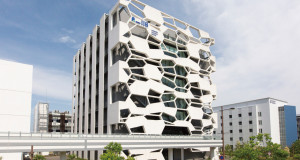
The symposium will address experimental and theoretical investigations of the equation-of-state (EoS) of nuclear matter at various isospin asymmetries. Such investigations include efforts in nuclear structure, nuclear reactions and heavy-ion collisions, as well as in astrophysical observations of compact stars and associated phenomena. An important role of the symposium is to unify efforts of the nuclear physics and astrophysics communities in addressing common research challenges.
Venue: Integrated Innovation Building (IIB), Kobe Campus, RIKEN
Event Official Language: English
Paper of the Week
Week 4, June 2025
2025-06-19
Title: On 3-periodic tangled networks and their untangling number
Author: Toky Andriamanalina, Sonia Mahmoudi, Myfanwy E. Evans
arXiv: http://arxiv.org/abs/2506.15252v1
Title: Quantitative predictions of alpha-charmonium correlation functions in high-energy collisions
Author: Faisal Etminan
arXiv: http://arxiv.org/abs/2506.14724v1
Title: Enhancement of axial anomaly effects in hot two-color QCD: FRG approach in the linear sigma model
Author: Gergely Fejős, Daiki Suenaga
arXiv: http://arxiv.org/abs/2506.14010v1
Title: Scalable Simulation of Quantum Many-Body Dynamics with Or-Represented Quantum Algebra
Author: Lukas Broers, Rong-Yang Sun, Seiji Yunoki
arXiv: http://arxiv.org/abs/2506.13241v1
Title: Unpolarized prethermal discrete time crystal
Author: Takeru Yokota, Tatsuhiko N. Ikeda
arXiv: http://arxiv.org/abs/2501.09461v2
Title: Schwinger-Keldysh approach to tunneling transport at a hadron-quark interface
Author: Tingyu Zhang, Hiroyuki Tajima, Motoi Tachibana
arXiv: http://arxiv.org/abs/2506.09725v1
If you would like to cancel your subscription or change your email address,
please let us know via our contact form.
Copyright © iTHEMS, RIKEN. All rights reserved.