
Volume 435
Back to Newsletter List


Volume 435
November 20, 2026
Hot Topic

Majorana Modes: Fundamentals, Status & Directions on October 13, 2026
2026-11-16
The international workshop “Majorana Modes: Fundamentals, Status & Directions” took place at Okochi Hall, RIKEN Wako Campus, on October 14–16, 2026, preceded by a tutorial on October 13. Nearly 100 researchers from Japan, China, Korea, Europe, the United States, and Australia came together to assess the current status of Majorana physics and to discuss its future directions, including topological quantum computing. The program had four tutorial lectures, 5 plenary talks, 33 invited talks, and a poster session with 17 presenters.
We were especially glad to see so many RIKEN researchers take part. Many of them registered, mainly from CEMS, iTHEMS, RQC and FQSP, and experimentalists and theorists from these centers continued their discussions through the coffee breaks, the poster session and the banquet. We hope the workshop stimulates further development of Majorana physics and leads to new collaborations.
The preparation was not easy. Participants from China needed a security export control screening before their visa documents could be issued, and the last screening was completed less than three weeks before the workshop. RIKEN also introduced a new campus entry system shortly before the workshop and revised it more than once, so every outside participant had to be registered individually for a QR code. Stable rules announced well in advance would make it much easier to host international workshops at RIKEN.
We thank Tomoko Iwanami, who carried most of the administrative work, and our co-organizers Thore Posske and Yuichi Kasahara. We also thank the iTHEMS assistant office, the iTHEMS promotion office, the iTHEMS workshop committee and the iTHEMS researchers who helped on site, as well as our colleagues at RIKEN CEMS, RQC and FQSP, and our advisors. The workshop was supported by JST PRESTO (Grant No. JPMJPR2357), RIKEN iTHEMS, and the RIKEN Pioneering Project “Mathematical Foundation of Quantum Information”.
Reported by Ching-Kai Chiu

Majorana Modes: Fundamentals, Status & Directions
October 13 (Tue) - 16 (Fri) 2026
Upcoming Events
Seminar
Monodromy defects, anomalies, and spontaneous symmetry breaking
November 24 (Tue) 13:00 - 14:00, 2026
Michele Tortora (Ph.D. Student, International School for Advanced Studies (SISSA), Italy)
Monodromy defects are defects on which open topological symmetry operators end, and are ubiquitous in statistical and quantum systems. In this talk, I will explore how ’t Hooft anomalies of the bulk theory constrain monodromy defects in conformal theories. In particular, I will show that anomaly inflow can require the spontaneous breaking of certain discrete symmetries on the defect.
Venue: Hybrid Format (3F #359 and Zoom), Main Research Building, RIKEN Wako Campus
Event Official Language: English
Seminar
Quantum Simulation of Non-Equilibrium Dynamics in SU(2) and SU(3) Lattice Gauge Theories
November 24 (Tue) 15:00 - 16:30, 2026
Xiaojun Yao (Research Assistant Professor, University of Washington, USA)
Venue: Seminar Room #359, 3F, Main Research Building, RIKEN / via Zoom
Event Official Language: English
Workshop

KEK(-iTHEMS) Theory Workshop 2026
November 25 (Wed) - 27 (Fri) 2026
Hirotaka Hayashi (Professor, Department of Physics, School of Science, Tokai University)
Hikaru Kawai (Visiting Professor, Nambu Yoichiro Institute of Theoretical and Experimental Physics (NITEP), Osaka Metropolitan University)
Takato Mori (Assistant Professor, Department of Physics, Faculty of Science, Rikkyo University)
Masaya Nakagawa (Assistant Professor, Department of Physics, Graduate School of Science, The University of Tokyo)
Masaki Shigemori (Professor, Department of Physics, Graduate School of Science, Nagoya University)
Tadashi Takayanagi (Professor, Yukawa Institute for Theoretical Physics, Kyoto University)
Norihiro Tanahashi (Program-Specific Associate Professor, Department of physics, Graduate School of Science, Kyoto University)
Tatsuya Yamaoka (Ph.D. Student, Department of Physics, Graduate School of Science, The University of Osaka)
The KEK Theory Workshop is an annual workshop on string theory and quantum field theory.
Since 2014, it has been held every winter as an international workshop and has become one of the major annual events in the high-energy physics community in Japan.
This year’s workshop will be held on site at the KEK Tsukuba Campus from November 25 to 27, and it will be jointly organized with RIKEN iTHEMS.
The workshop this year aims to provide a forum for extensive discussions on recent developments in string theory, matrix models, gauge/gravity duality, black-hole microstates, lattice constructions of chiral gauge theories, and open quantum systems.
Venue: Seminar Hall, Building 3, KEK Tsukuba Campus
Register: Event registration form
Event Official Language: English
Seminar
Rare k-mers reveal centromere haplogroups underlying human diversity and cancer translocation
November 26 (Thu) 13:00 - 14:00, 2026
Yuichi Shiraishi (Chief, Division of Genome Analysis Platform Development, National Cancer Center Japan)
Centromeres are highly variable and rapidly evolving regions of the human genome, and are frequently implicated in various cancers. Human centromeres consist of highly repetitive DNA sequences known as α-satellite higher-order repeats (HORs), which makes their analysis using conventional genome sequencing approaches extremely challenging. Although long-read sequencing technologies now enable near-complete sequencing of centromeres, applying these methods to large numbers of samples remains difficult. As a result, our understanding of centromere diversity across populations and its role in chromosomal rearrangements in cancer has remained limited.
In this study, by focusing on rare k-mer markers, we demonstrate that α-satellite HOR haplotypes cluster into genetically related haplogroups. We further developed a software tool, ascairn, to accurately infer these haplogroups from common short-read whole-genome sequencing (WGS) data. Applying our approach to a dataset of more than 3,300 human samples revealed extensive centromere diversity and geographic variation.
We also applied the rare k-mer–based approach to centromere sequences from 104 Japanese individuals generated as part of the Japanese Pangenome Project. This analysis revealed characteristic patterns of centromere evolution in the Japanese population and provided new insights into Japanese-specific centromere variation.
In addition, we used this method to investigate class-defining chromosomal translocations, specifically der(1;19), also known as 1p/19q co-deletion, in oligodendrogliomas. By analyzing 142 samples from TCGA, we hypothesized that the breakpoints occurred on the p-arm side of D1Z7 and the q-arm side of D19Z3. This hypothesis was subsequently validated through extensive long-read sequencing in two cases, indicating that der(1;19) results in a dicentric chromosome containing two functional centromeres. We also observed that chromosomal rearrangements preferentially occurred in haplotypes with longer repetitive arrays on either the q-arm or p-arm side of the centromere. Furthermore, we identified specific centromere haplogroups associated with either increased or decreased likelihoods of der(1;19) translocations.
Our findings show that rare k-mer analysis is a powerful approach for investigating centromere complexity and clarifying the mechanisms underlying centromere-associated abnormalities in cancer.
Venue: via Zoom / Seminar Room #359, 3F, Main Research Building, RIKEN
Event Official Language: English
Seminar
Quantum Geometry from Matrices: Framework and Applications
November 30 (Mon) 15:00 - 16:30, 2026
Harold Steinacker (Senior Scientist, Faculty of Physics, University of Vienna, Austria)
I will discuss the general framework of matrix geometry, which is a version of quantum geometry defined by a set of almost-commuting matrices. This framework allows for an efficient description of manifolds embedded in some target or feature space, which is particularly efficient for high-dimensional manifolds. I will discuss some applications in data science as well as in fundamental physics, notably how spacetime and gravity can emerge from the IKKT or IIB matrix model in this framework.
References
- Alexander G. Abanov, Luca Candelori, Harold C. Steinacker, Martin T. Wells, Jerome R. Busemeyer, Cameron J. Hogan, Vahagn Kirakosyan, Nicola Marzari, Sunil Pinnamaneni, Dario Villani, Mengjia Xu, Kharen Musaelian, Quantum Geometry of Data, arXiv: 2507.21135
- Harold C. Steinacker, Quantum spacetime and gravity from the IKKT matrix model: an invitation, arXiv: 2609.08955
Venue: Hybrid Format (3F #359 and Zoom), Main Research Building, RIKEN Wako Campus / via Zoom
Event Official Language: English
Workshop
Workshop on Hydrometeorological Predictions and Warning Communications for Vulnerable Regions
December 2 (Wed) - 3 (Thu) 2026
Prediction Science Research Team of RIKEN is pleased to announce the Workshop on Hydrometeorological Predictions and Warning Communications for Vulnerable Regions to be held in a hybrid format at RIKEN RCCS Kobe facilities on December the 2nd and 3rd.
To participate, please register at the registrar form URL.
Venue: RIKEN Center for Computational Science, 1F Seminar room
Register: Event registration form
Event Official Language: English
Seminar

Chiral Anomaly, Neutral-Pion Lifetime and Axion–Photon Coupling
December 7 (Mon) 15:00 - 16:30, 2026
Xu Feng (Professor, Director, Institute of Theoretical Physics, School of Physics, Peking University, China)
The chiral anomaly provides one of the rare opportunities to test QCD in the confinement regime at the percent level and beyond. A prime example is the neutral pion lifetime: after two decades of PrimEx measurements reaching 1.5% precision, future experiments at an upgraded 22 GeV JLab aim at the sub-percent level, calling for a comparably precise first-principles QCD prediction.
The same anomaly also governs the QCD contribution to the axion–photon coupling, a key quantity connecting axion models to experimental searches for one of the leading dark-matter candidates. In this talk, I will present our recent lattice QCD studies of these two quantities, going beyond the chiral limit.
Venue: Hybrid Format (3F #359 and Zoom), Seminar Room #359, 3F, Main Research Building, RIKEN / via Zoom
Event Official Language: English
Seminar
Hamiltonian simulation: Standard algorithms and recent developments
December 17 (Thu) 10:30 - 17:00, 2026
Kaoru Mizuta (Associate Professor, Center for Quantum Information and Quantum Biology, The University of Osaka)
This is a lecture-style seminar of quantum computation. The tentative schedule consists of three slots: 10:30-12:00, 13:30-15:00, and 15:30-17:00. Due to equipment limitations, the blackboard might not be visible on Zoom, so we recommend attending in person.
Venue: Seminar Room #359, 3F, Main Research Building, RIKEN / via Zoom
Event Official Language: English
Seminar

Binary Neutron Star Mergers as the source of UHECRs
December 18 (Fri) 14:00 - 15:30, 2026
Glennys Farrar (Professor of Physics, New York University, USA)
I will show that Ultrahigh Energy Cosmic Ray data points to binary neutron star mergers as the source of UHECRs, and discuss several unique predictions which confirm this scenario:
Venue: Seminar Room #359, 3F, Main Research Building, RIKEN / via Zoom
Event Official Language: English
Seminar

Exact module categories over the representation category of small quantum $SL_2$
January 14 (Thu) 14:00 - 15:30, 2027
Kenichi Shimizu (Professor, Department of Mathematical Sciences, College of Systems Engineering and Science, Shibaura Institute of Technology)
As is the case with many algebraic structures, studying ""representations"" of tensor categories is important both for understanding the tensor categories themselves and for exploring their various applications. A ""representation"" of a tensor category is described mathematically by a module category. Module categories over fusion categories (i.e., finite semisimple tensor categories) have been extensively studied, partly motivated by their connections with mathematical physics, including their roles in describing boundary conditions and defects in topological phases of matter. Beyond the semisimple setting, non-semisimple tensor categories and their module categories have also attracted attention in various contexts, including logarithmic conformal field theory. From both mathematical and physical perspectives, it is therefore natural to investigate the structure of module categories over non-semisimple finite tensor categories.
In the non-semisimple setting, exact module categories, introduced by Etingof and Ostrik, provide an important framework for studying finite tensor categories. Among non-semisimple finite tensor categories, the representation category of the small quantum group $u_q(\mathfrak{sl}_2)$ at a root of unity provides a fundamental example to study. In joint work with Daisuke Nakamura and Taiki Shibata, we classified exact module categories over $\mathrm{Rep}(u_q(\mathfrak{sl}_2))$ using various techniques from the theory of finite-dimensional Hopf algebras and finite tensor categories. However, the classification is somewhat complicated, making the overall structure of these module categories difficult to understand. More recently, in joint work with Harshit Yadav, we have computed the orbits of exact module categories under the action of a certain algebraic group. This has revealed some underlying geometric structure in the collection of exact module categories. In this talk, I will explain these results and discuss what they tell us about the global structure of module categories over $\mathrm{Rep}(u_q(\mathfrak{sl}_2))$.
Additional host comments: This is an advanced seminar for mathematical researchers.
Venue: Seminar Room #359, 3F, Main Research Building, RIKEN
Event Official Language: English
Seminar

Optimal transport: Thermodynamics, biological information processing and generative models
January 18 (Mon) 13:30 - 15:00, 2027
Sosuke Ito (Associate Professor, Graduate School of Science, The University of Tokyo)
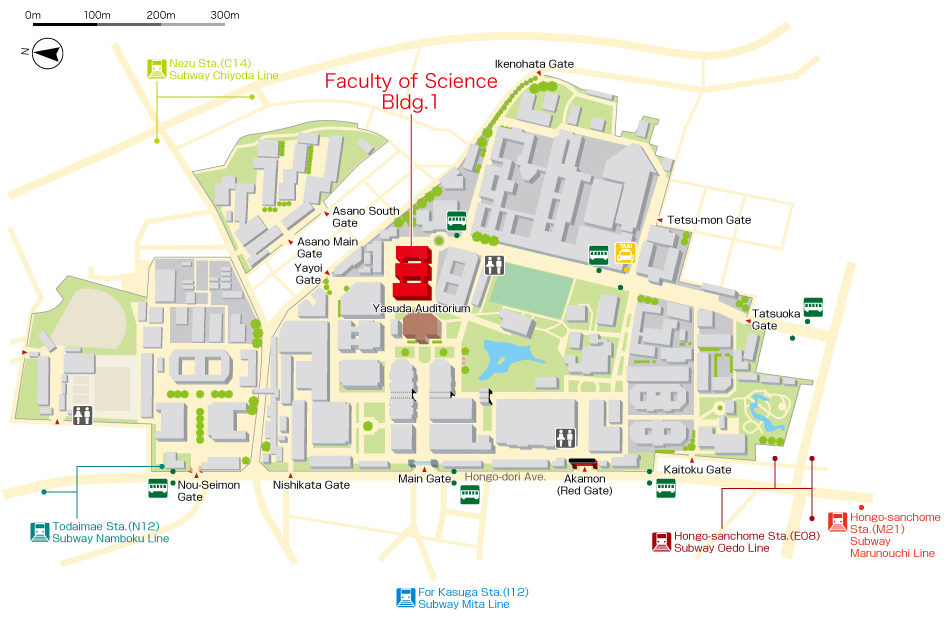
This is a joint seminar co-hosted by Institute for Physics of Intelligence (iπ), UTokyo, and the Venue is #1042,10F of Science Bldg.1
Optimal transport theory is a useful theoretical framework for geometrically characterizing the distance between probability distributions.
It is not only used in recent research on generative models but has also been applied to detect information-processing capabilities in biological systems from a statistical perspective, and to discuss thermodynamic efficiency. In this seminar, I will begin with an introduction to optimal transport theory, and also discuss our research on its various applications.
More specifically, I will discuss the following topics: 1) The problem of minimizing entropy production within a finite time and its experimental testing. 2) The application of optimal transport to the training of generative models, specifically diffusion models, and their optimal protocols. 3) Quantifying information processing performance using optimal transport in biological signal transduction.
References
- Mintu Nandi, Sosuke Ito, Decoding cell signaling via optimal transport and information theory, arXiv: 2602.18028
- Kotaro Ikeda, Tomoya Uda, Daisuke Okanohara, Sosuke Ito, Speed-Accuracy Relations for Diffusion Models: Wisdom from Nonequilibrium Thermodynamics and Optimal Transport, arXiv: 2407.04495
Venue: Faculty of Science Bldg.1, School of Science, The University of Tokyo, Hongo Campus / via Zoom
Event Official Language: English
Workshop
Quantum Computation SG in Kobe
January 26 (Tue) 13:00 - 17:00, 2027
13:00-13:30 Masahiro Takahashi (R-CCS) “Digital quantum simulation of non-Hermitian many-body quench dynamics”
13:30-14:00 Himadri Pathak (R-CCS) "Quantum-Centric Approaches to Strongly Correlated Molecular Systems"
14:00-14:30 Yahui Chai (iTHEMS) "Meson Structure from State Construction to Parton Distributions"
14:30-15:00 Tianyin Li (iTHEMS) “Jianmu-Q: Bridging Quantum Field Theory and Quantum Hardware with AI Agents”
15:00-15:30 Break
15:30-16:00 Anshuman Bhardwaj (R-CCS) "Lindblad Dynamics of Spin-Boson Models on Quantum Computers"
16:00-16:30 Zeqing Wang (R-CCS) "Simulating the Dynamics of Markovian Quantum Processes by Quantum Collision Models on Quantum Computers"
16:30-17:00 Xiaoyang Wang (iTHEMS) “Study phase transition on quantum computers and its difficulties”
Venue: iTHEMS Lounge, Room S704-S705, 7F, Integrated Innovation Building (IIB), RIKEN Kobe Campus
Event Official Language: English
Meeting
iTHEMS NOW & NEXT 2027
July 13 (Tue) - 15 (Thu) 2027
We will hold our annual gathering, **“iTHEMS NOW & NEXT 2027,” from July 13 to 15, 2027**.
iTHEMS NOW & NEXT has traditionally been a two-day in-house event, providing an important opportunity for all iTHEMS members, including visiting researchers and new members, to gain a comprehensive overview of current activities across iTHEMS, to learn about research beyond their own fields, and to discuss where iTHEMS should go next.
In 2027, we will **expand NOW & NEXT from two to three days** and, for the first time, invite leading researchers from outside iTHEMS across a broad range of research fields. While the first two days will retain the main character of our traditional in-house gathering, the extended three-day format is intended to create a broader opportunity for scientific exchange and, in particular, to enable leading researchers from outside iTHEMS to become better acquainted with our research activities and with the researchers who make up the iTHEMS community.
As in previous years, the program will present activities across iTHEMS, including those of its divisions, research teams, working groups, and study groups, together with research presentations and poster sessions by iTHEMS members. Particular emphasis will be placed on communication across disciplinary and organizational boundaries and on identifying emerging research directions and opportunities for new collaborations.
The additional third day will build on the presentations and discussions of the preceding two days and provide an opportunity for invited researchers to gain a deeper understanding of the breadth and strengths of research at iTHEMS and to interact directly with our members. We hope that these exchanges will not only introduce iTHEMS and its researchers more widely to leading scientists in different fields, but also bring new perspectives to our community and open possibilities for future scientific interactions and collaborations.
Through this expanded three-day NOW & NEXT 2027, we hope to share where iTHEMS is now and where it is heading next, both within our own community and with leading researchers from outside iTHEMS, and to explore together new possibilities for the future development of iTHEMS.
Venue: 2F Large Conference Room, Administrative Headquarters, RIKEN Wako Campus / via Zoom
Event Official Language: English
Paper of the Week
Week 4, November 2026
2026-11-19
Title: TIBECG: Temporal Information Bottleneck for Lead-Specific Demographic Privacy in ECG Waveform Release
Author: Tsai-Min Chen, Jun Seita
arXiv: http://arxiv.org/abs/2611.21694v1
Title: Residual ellipticity driven by intense magnetic stress in the hot neutron star era
Author: Yasufumi Kojima, Akira Dohi, Kotaro Fujisawa, Shota Kisaka
arXiv: http://arxiv.org/abs/2611.16636v1
Title: Renormalization Group Flow from 4d Chern-Simons Theory
Author: Meer Ashwinkumar, Masahito Yamazaki
arXiv: http://arxiv.org/abs/2611.19517v1
Title: Calculating correlation functions in integrable spin chains from local conserved charges and currents
Author: Kohei Fukai
arXiv: http://arxiv.org/abs/2611.20181v1
Title: Analytic spread complexity in three-level systems and the spacing-ratio distribution
Author: Pratik Nandy
arXiv: http://arxiv.org/abs/2611.17417v1
Title: Exponential Lower Bounds for the Spherically Averaged Density of Atoms
Author: Yukimi Goto
arXiv: http://arxiv.org/abs/2611.17969v2
Title: Metastable vortex string decay in a brane picture
Author: Akifumi Chitose, Hajime Fukuda, Kantaro Ohmori
arXiv: http://arxiv.org/abs/2611.18019v1
Title: $NΩ$ Dibaryon near Unitarity from Physical-Point Lattice QCD
Author: Liang Zhang, Yan Lyu, Sinya Aoki, Takumi Doi, Tetsuo Hatsuda, Song Zhang, Yu-Gang Ma
arXiv: http://arxiv.org/abs/2611.16989v1
Title: Silent Heavy Fields: An Exclusion Rule for the Cosmological Collider
Author: Shuntaro Aoki, Zhehan Qin, Masahide Yamaguchi, Yuhang Zhu
arXiv: http://arxiv.org/abs/2611.16029v1
Title: De Sitter Gravity and Emergent Time from Fusion Matrix Product States and SYK
Author: Shinsei Ryu, Yu-ki Suzuki
arXiv: http://arxiv.org/abs/2611.17045v1
Title: Hump around 30 keV in Suzaku spectra of Aquila X-1 -- Possible evidence of strong rapid-proton capture process --
Author: M. Kubota, A. Dohi, T. Tamagawa, K. Makishima, S. Fujimoto
arXiv: http://arxiv.org/abs/2611.16127v1
If you would like to cancel your subscription or change your email address,
please let us know via our contact form.
Copyright © iTHEMS, RIKEN. All rights reserved.