
Volume 433
Back to Newsletter List


Volume 433
November 6, 2026
Hot Topic

Reproducing Long-Term Variations in Venus's Atmospheric Superrotation
2026-10-30
A joint research team including Takemasa Miyoshi, Team Director at the RIKEN Interdisciplinary Theoretical and Mathematical Sciences Program (iTHEMS), has successfully reproduced long-term variations in the wind speeds of Venus's atmospheric "superrotation," a phenomenon characterized by extremely fast atmospheric circulation, using the Venus atmospheric data assimilation system ALEDAS-V.
By incorporating wind observation data from the cloud tops collected by the Venus Climate Orbiter Akatsuki into numerical simulations, the team reproduced observed wind speed variations and differences between the northern and southern hemispheres. The researchers also estimated the three-dimensional structure of Venus's atmosphere, including altitudes where direct observations are unavailable.
These findings demonstrate the potential of data assimilation techniques to reveal planetary atmospheric circulation patterns from limited observational data and are expected to contribute to future Venus exploration and planetary atmospheric research.
For more details, please see the related links.
Reference
- Fujisawa, Y., Sugimoto, N., Komori, N. et al., Reconstructing a long-term atmospheric circulation of Venus from sparse observations, npj Space Explor. 2, 40 (2026), doi: 10.1038/s44453-026-00061-w
Hot Topic

Farewell message from Muzi Hong
2026-11-05
Our colleague, Muzi Hong, left iTHEMS on October 11, 2026, and has joined Fermilab as a Research Associate. We all miss her and wish her the best of luck in her new endeavor.
Here is a message from Muzi:
I had a wonderful time at iTHEMS. It was always a pleasure to discuss ideas with people from various fields and attend seminars on a wide range of topics. I enjoyed every Coffee Meeting. I also made many friends along the way. The secretaries were always kind and helpful. I would like to thank all my colleagues for creating such a friendly, welcoming, and professional environment at iTHEMS. I always look back on my time there with warmth and fond memories.
I have now moved to Fermilab as a postdoc, but I will remain affiliated with iTHEMS as a visiting scientist. You are always welcome to visit me at Fermilab!
Upcoming Events
Workshop
Holography and Observables in Quantum Gravity
November 9 (Mon) - 13 (Fri) 2026
Keiichiro Furuya (Project Researcher, Kavli Institute for the Physics and Mathematics of the Universe (Kavli IPMU), The University of Tokyo)
Moshe Rozali (Professor, The University of British Columbia, Canada)
Tadashi Takayanagi (Professor, Yukawa Institute for Theoretical Physics, Kyoto University)
Mengyang Zhang (Project Researcher, Kavli Institute for the Physics and Mathematics of the Universe (Kavli IPMU), The University of Tokyo)
Martin Sasieta (Postdoctoral Researcher, University of California, Berkeley, USA)
Pawel Caputa (Professor, Stockholm University, Sweden)
Kristan Jensen (Professor, University of Victoria, Canada)
Kotaro Shinmyo (Ph.D. Student, Kyoto University)
七海 中村 (Ph.D. Student, Yukawa Institute for Theoretical Physics, Kyoto University)
Ahmed Abdalla (Ph.D. Student, University of California, Berkeley, USA)
In the past 20 years, there has been significant progress in our understanding of quantum gravity based on AdS/CFT. Recently, study of quantum gravity beyond AdS/CFT attracts a lot of attention, where there is no longer an asymptotically AdS boundary on which we can perform measurements with infinite accuracy. Thus it is important to understand observables in gravitational spacetimes with no asymptotic AdS boundaries, what an observer experiences and measures in such a spacetime, and what is the microscopic theory that describes them. This workshop aims to gather researchers in the this subject to exchange cutting edge ideas, aiming to establish new research directions and collaborations.
Venue: via Zoom / Okochi Hall, 1F, Laser Science Laboratory, RIKEN / Thursday only, Suzuki Umetaro Hall, 1F, Bioscience Building, RIKEN
Event Official Language: English
Seminar

Topological properties of empirical fitness landscapes from merge trees
November 9 (Mon) 13:00 - 14:00, 2026
Igors Dubanevics (Ph.D. Student, Okinawa Institute of Science and Technology Graduate University (OIST))
How evolution navigates sequence space depends on the shape of the fitness landscape. Viewed as a scalar field over a discrete genotype graph, theoretical landscapes range from single-peaked to rugged and fragmented, with very different mutational accessibility. Which shapes real biological sequences occupy remains an open empirical question. Deep mutational scanning now measures sequence–function maps across complete combinatorial regions of sequence space, but the resulting landscapes are large, noisy, and hard to compare across studies. Existing analyses typically reduce each dataset to a few summary statistics, discarding which peaks connect to which, and through which saddles.
We are developing a two-layer toolkit for empirical sequence–function landscapes. A statistical layer models overdispersed sequencing counts directly to separate genuine phenotypic differences from measurement noise, pruning spurious topological features before analysis. A topological layer then summarises the landscape as a merge tree of peaks, saddles, and the high-fitness ridges that link them, using persistence as a natural scale to distinguish global structure from minor ruggedness.
I will first illustrate this approach on the largest published combinatorially complete protein-coding landscape, spanning over 260,000 sequences. Filtering by measurement uncertainty and persistence simplifies an apparently rugged surface, revealing that major peaks remain connected through high-fitness saddles rather than isolated by deep valleys. I will then present preliminary findings from a comparative atlas of more than 150 combinatorially complete sequence–function landscapes spanning DNA, RNA, and protein. By comparing merge-tree structure across this collection, we ask whether high-fitness ridges that bypass rugged regions recur across unrelated sequences, and whether landscapes group by the biological function they encode.
Venue: via Zoom / Hybrid Format (3F #359 and Zoom), Seminar Room #359, 3F, Main Research Building, RIKEN
Event Official Language: English
Workshop
Good Enough Coding in Science
November 10 (Tue) 10:00 - 15:00, 2026
Igors Dubanevics (Ph.D. Student, Okinawa Institute of Science and Technology Graduate University (OIST))
Many of us write software for research without much training in software development. A quick script and a few clever fixes can get us surprisingly far—until the project grows, a collaborator joins, or, heaven forbid, a paper revision means rerunning everything six months later. AI coding assistants make creating and changing software easier, but a well-organised project helps both humans and AI work with it. So what does “well-organised” actually mean? That’s what this hands-on workshop is about. Through small, approachable examples, we’ll explore practical habits for collaboration, reproducible environments, testing whether code does what we intend, and automating repetitive tasks—and how to use AI coding assistants to support those habits. You’ll leave with a repository and tutorial you can adapt to your own research projects.
Venue: #359, 3F, Seminar Room #359, 3F, Main Research Building, RIKEN
Event Official Language: English
Workshop
Meeting on Outreach of Data Descriptive Science and Mathematical Sciences 2026@IMI Kyushu&Zoom
November 13 (Fri) - 15 (Sun) 2026
The Journalists-in-Residence Program started in 2010 in cooperation with the Mathematical Society of Japan, and since then by this program many journalists were invited to stay at the places of researchers. In order to accelerate the bilateral information exchange between researchers and journalists which has been developed in JIR program, we have been organizing meetings on outreach since 2011. These are meetings where researchers and science journalists, science writers, ... get together. Researchers explain their research to journalists, ... and science journalists and writers talk about their experiences. This year we have the “Meeting on Outreach of Data Descriptive Science and Mathematical Sciences 2026@IMI Kyushu&Zoom” by the support of Transformative Research Areas (A), 2022–2026 “Establishing data descriptive science and its cross-disciplinary applications” as explained below. For the participation, please send an e-mail to the organizer.
Venue: W1-D-413, IMI Auditorium, Ito Campus, Kyushu University / via Zoom
Event Official Language: Japanese
Seminar
Lorentzian geometry beyond smoothness and the space of Cauchy hypersurfaces
November 13 (Fri) 14:00 - 15:15, 2026
Keita Takahashi (Postdoctoral Researcher, Mathematical Application Research Team, Division of Applied Mathematical Science, RIKEN Center for Interdisciplinary Theoretical and Mathematical Sciences (iTHEMS))
Lorentzian geometry is the study of manifolds equipped with a metric of signature $(-,+,\dots,+)$. It provides the mathematical foundation of general relativity, in which gravity is described by the curvature of spacetime. As exemplified by the singularity theorems of Hawking and Penrose in the 1960s, the field has developed through a close interplay between mathematics and physics.
Although Lorentzian geometry looks formally similar to Riemannian geometry, it behaves very differently. The Lorentzian metric does not induce a distance in the usual metric-space sense. Instead, the time separation satisfies a reverse triangle inequality for causally ordered points, and causal relations play a central role in the global geometry of spacetime. In recent years, ideas from metric geometry, in particular synthetic theories of curvature bounds such as Alexandrov spaces and RCD spaces, have been brought into Lorentzian geometry. This has given rise to the rapidly developing theory of Lorentzian length spaces and their synthetic curvature bounds.
In this talk, I will introduce Lorentzian geometry for non-specialists, emphasizing the differences from Riemannian geometry and surveying recent developments. I will then discuss my work on the space of Cauchy hypersurfaces of a globally hyperbolic spacetime, viewed as a metric space in its own right.
Venue: Hybrid Format (3F #359 and Zoom), Main Research Building, RIKEN Wako Campus / via Zoom
Event Official Language: English
Colloquium

MACS Study Group Introduction and Networking Session
November 13 (Fri) 14:45 - 18:30, 2026
14:45-15:00 Teatime Discussion
15:00-17:30 MACS Study Group Introduction and Networking Session (at each study group's booth)
17:30-18:30 Discussion
Venue: Science Seminar House (Map 9), Kyoto University
Event Official Language: Japanese
Seminar

A non-negative matrix factorization-based approach to integrating multimodal omics data with automatically tuned hyperparameters
November 16 (Mon) 14:00 - 15:00, 2026
Dorothy Ellis (Postdoctoral Researcher, Laboratory for Integrative Genomics, RIKEN Center for Integrative Medical Sciences (IMS))
Venue: via Zoom
Event Official Language: English
Seminar
Real-time calculations for excited state tunneling
November 17 (Tue) 14:00 - 15:30, 2026
Thomas Steingasser (Postdoctoral Fellow, Institute of Theoretical Physics (IFT), Spain)
Quantum tunnelling is conventionally formulated through Euclidean instantons, obscuring the role of physical time and complicating non-vacuum initial states. I will review the steadyon picture, in which infinitesimally regulated real-time path integrals are controlled by complex saddles whose projections recover familiar instantons. I will summarize its applications to finite-temperature decay, resonance states and states carrying conserved Noether charge, highlighting an emerging unified description of tunnelling beyond the false vacuum.
Venue: Hybrid Format (3F #359 and Zoom), Seminar Room #359, 3F, Main Research Building, RIKEN / via Zoom
Event Official Language: English
Seminar
Quantum Simulation of Non-Equilibrium Dynamics in SU(2) and SU(3) Lattice Gauge Theories
November 24 (Tue) 15:00 - 16:30, 2026
Xiaojun Yao (Research Assistant Professor, University of Washington, USA)
Venue: Seminar Room #359, 3F, Main Research Building, RIKEN / via Zoom
Event Official Language: English
Workshop

KEK(-iTHEMS) Theory Workshop 2026
November 25 (Wed) - 27 (Fri) 2026
Hirotaka Hayashi (Professor, Department of Physics, School of Science, Tokai University)
Hikaru Kawai (Visiting Professor, Nambu Yoichiro Institute of Theoretical and Experimental Physics (NITEP), Osaka Metropolitan University)
Takato Mori (Assistant Professor, Department of Physics, Faculty of Science, Rikkyo University)
Masaya Nakagawa (Assistant Professor, Department of Physics, Graduate School of Science, The University of Tokyo)
Masaki Shigemori (Professor, Department of Physics, Graduate School of Science, Nagoya University)
Tadashi Takayanagi (Professor, Yukawa Institute for Theoretical Physics, Kyoto University)
Norihiro Tanahashi (Program-Specific Associate Professor, Department of physics, Graduate School of Science, Kyoto University)
Tatsuya Yamaoka (Ph.D. Student, Department of Physics, Graduate School of Science, The University of Osaka)
The KEK Theory Workshop is an annual workshop on string theory and quantum field theory.
Since 2014, it has been held every winter as an international workshop and has become one of the major annual events in the high-energy physics community in Japan.
This year’s workshop will be held on site at the KEK Tsukuba Campus from November 25 to 27, and it will be jointly organized with RIKEN iTHEMS.
The workshop this year aims to provide a forum for extensive discussions on recent developments in string theory, matrix models, gauge/gravity duality, black-hole microstates, lattice constructions of chiral gauge theories, and open quantum systems.
Venue: Seminar Hall, Building 3, KEK Tsukuba Campus
Register: Event registration form
Event Official Language: English
Seminar
Rare k-mers reveal centromere haplogroups underlying human diversity and cancer translocation
November 26 (Thu) 13:00 - 14:00, 2026
Yuichi Shiraishi (Chief, Division of Genome Analysis Platform Development, National Cancer Center Japan)
Centromeres are highly variable and rapidly evolving regions of the human genome, and are frequently implicated in various cancers. Human centromeres consist of highly repetitive DNA sequences known as α-satellite higher-order repeats (HORs), which makes their analysis using conventional genome sequencing approaches extremely challenging. Although long-read sequencing technologies now enable near-complete sequencing of centromeres, applying these methods to large numbers of samples remains difficult. As a result, our understanding of centromere diversity across populations and its role in chromosomal rearrangements in cancer has remained limited.
In this study, by focusing on rare k-mer markers, we demonstrate that α-satellite HOR haplotypes cluster into genetically related haplogroups. We further developed a software tool, ascairn, to accurately infer these haplogroups from common short-read whole-genome sequencing (WGS) data. Applying our approach to a dataset of more than 3,300 human samples revealed extensive centromere diversity and geographic variation.
We also applied the rare k-mer–based approach to centromere sequences from 104 Japanese individuals generated as part of the Japanese Pangenome Project. This analysis revealed characteristic patterns of centromere evolution in the Japanese population and provided new insights into Japanese-specific centromere variation.
In addition, we used this method to investigate class-defining chromosomal translocations, specifically der(1;19), also known as 1p/19q co-deletion, in oligodendrogliomas. By analyzing 142 samples from TCGA, we hypothesized that the breakpoints occurred on the p-arm side of D1Z7 and the q-arm side of D19Z3. This hypothesis was subsequently validated through extensive long-read sequencing in two cases, indicating that der(1;19) results in a dicentric chromosome containing two functional centromeres. We also observed that chromosomal rearrangements preferentially occurred in haplotypes with longer repetitive arrays on either the q-arm or p-arm side of the centromere. Furthermore, we identified specific centromere haplogroups associated with either increased or decreased likelihoods of der(1;19) translocations.
Our findings show that rare k-mer analysis is a powerful approach for investigating centromere complexity and clarifying the mechanisms underlying centromere-associated abnormalities in cancer.
Venue: via Zoom / Seminar Room #359, 3F, Main Research Building, RIKEN
Event Official Language: English
Seminar
Quantum Geometry from Matrices: Framework and Applications
November 30 (Mon) 15:00 - 16:30, 2026
Harold Steinacker (Senior Scientist, Faculty of Physics, University of Vienna, Austria)
I will discuss the general framework of matrix geometry, which is a version of quantum geometry defined by a set of almost-commuting matrices. This framework allows for an efficient description of manifolds embedded in some target or feature space, which is particularly efficient for high-dimensional manifolds. I will discuss some applications in data science as well as in fundamental physics, notably how spacetime and gravity can emerge from the IKKT or IIB matrix model in this framework.
References
- Alexander G. Abanov, Luca Candelori, Harold C. Steinacker, Martin T. Wells, Jerome R. Busemeyer, Cameron J. Hogan, Vahagn Kirakosyan, Nicola Marzari, Sunil Pinnamaneni, Dario Villani, Mengjia Xu, Kharen Musaelian, Quantum Geometry of Data, arXiv: 2507.21135
- Harold C. Steinacker, Quantum spacetime and gravity from the IKKT matrix model: an invitation, arXiv: 2609.08955
Venue: Hybrid Format (3F #359 and Zoom), Main Research Building, RIKEN Wako Campus / via Zoom
Event Official Language: English
Seminar

Chiral Anomaly, Neutral-Pion Lifetime and Axion–Photon Coupling
December 7 (Mon) 15:00 - 16:30, 2026
Xu Feng (Professor, Director, Institute of Theoretical Physics, School of Physics, Peking University, China)
The chiral anomaly provides one of the rare opportunities to test QCD in the confinement regime at the percent level and beyond. A prime example is the neutral pion lifetime: after two decades of PrimEx measurements reaching 1.5% precision, future experiments at an upgraded 22 GeV JLab aim at the sub-percent level, calling for a comparably precise first-principles QCD prediction.
The same anomaly also governs the QCD contribution to the axion–photon coupling, a key quantity connecting axion models to experimental searches for one of the leading dark-matter candidates. In this talk, I will present our recent lattice QCD studies of these two quantities, going beyond the chiral limit.
Venue: Hybrid Format (3F #359 and Zoom), Seminar Room #359, 3F, Main Research Building, RIKEN / via Zoom
Event Official Language: English
Seminar
Hamiltonian simulation: Standard algorithms and recent developments
December 17 (Thu) 10:30 - 17:00, 2026
Kaoru Mizuta (Associate Professor, Center for Quantum Information and Quantum Biology, The University of Osaka)
This is a lecture-style seminar of quantum computation. The tentative schedule consists of three slots: 10:30-12:00, 13:30-15:00, and 15:30-17:00. Due to equipment limitations, the blackboard might not be visible on Zoom, so we recommend attending in person.
Venue: Seminar Room #359, 3F, Main Research Building, RIKEN / via Zoom
Event Official Language: English
Seminar

Optimal transport: Thermodynamics, biological information processing and generative models
January 18 (Mon) 13:30 - 15:00, 2027
Sosuke Ito (Associate Professor, Graduate School of Science, The University of Tokyo)
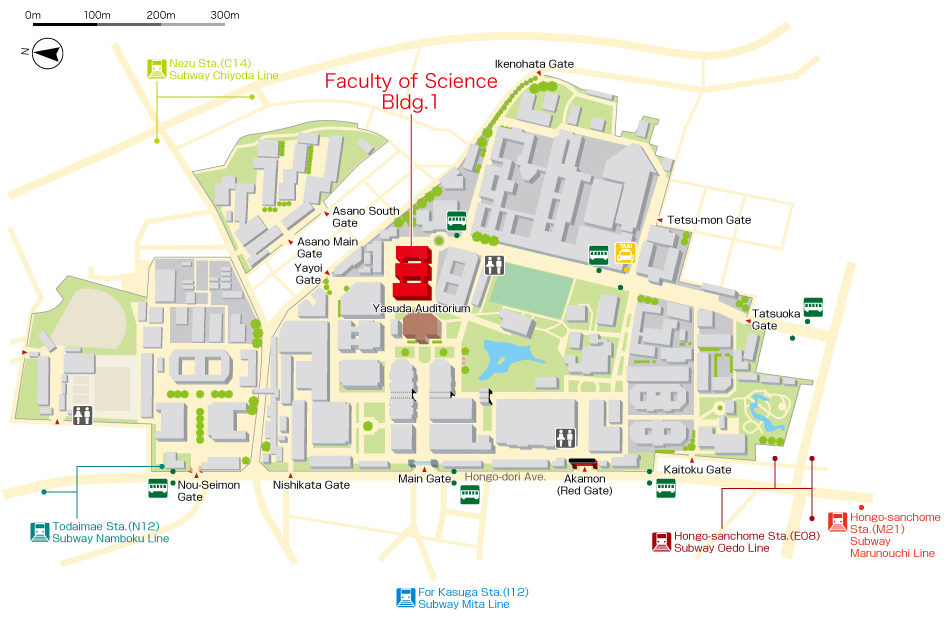
This is a joint seminar co-hosted by Institute for Physics of Intelligence (iπ), UTokyo, and the Venue is #1042,10F of Science Bldg.1
Optimal transport theory is a useful theoretical framework for geometrically characterizing the distance between probability distributions.
It is not only used in recent research on generative models but has also been applied to detect information-processing capabilities in biological systems from a statistical perspective, and to discuss thermodynamic efficiency. In this seminar, I will begin with an introduction to optimal transport theory, and also discuss our research on its various applications.
More specifically, I will discuss the following topics: 1) The problem of minimizing entropy production within a finite time and its experimental testing. 2) The application of optimal transport to the training of generative models, specifically diffusion models, and their optimal protocols. 3) Quantifying information processing performance using optimal transport in biological signal transduction.
References
- Mintu Nandi, Sosuke Ito, Decoding cell signaling via optimal transport and information theory, arXiv: 2602.18028
- Kotaro Ikeda, Tomoya Uda, Daisuke Okanohara, Sosuke Ito, Speed-Accuracy Relations for Diffusion Models: Wisdom from Nonequilibrium Thermodynamics and Optimal Transport, arXiv: 2407.04495
Venue: Faculty of Science Bldg.1, School of Science, The University of Tokyo, Hongo Campus / via Zoom
Event Official Language: English
Meeting
iTHEMS NOW & NEXT 2027
July 13 (Tue) - 15 (Thu) 2027
We will hold our annual gathering, **“iTHEMS NOW & NEXT 2027,” from July 13 to 15, 2027**.
iTHEMS NOW & NEXT has traditionally been a two-day in-house event, providing an important opportunity for all iTHEMS members, including visiting researchers and new members, to gain a comprehensive overview of current activities across iTHEMS, to learn about research beyond their own fields, and to discuss where iTHEMS should go next.
In 2027, we will **expand NOW & NEXT from two to three days** and, for the first time, invite leading researchers from outside iTHEMS across a broad range of research fields. While the first two days will retain the main character of our traditional in-house gathering, the extended three-day format is intended to create a broader opportunity for scientific exchange and, in particular, to enable leading researchers from outside iTHEMS to become better acquainted with our research activities and with the researchers who make up the iTHEMS community.
As in previous years, the program will present activities across iTHEMS, including those of its divisions, research teams, working groups, and study groups, together with research presentations and poster sessions by iTHEMS members. Particular emphasis will be placed on communication across disciplinary and organizational boundaries and on identifying emerging research directions and opportunities for new collaborations.
The additional third day will build on the presentations and discussions of the preceding two days and provide an opportunity for invited researchers to gain a deeper understanding of the breadth and strengths of research at iTHEMS and to interact directly with our members. We hope that these exchanges will not only introduce iTHEMS and its researchers more widely to leading scientists in different fields, but also bring new perspectives to our community and open possibilities for future scientific interactions and collaborations.
Through this expanded three-day NOW & NEXT 2027, we hope to share where iTHEMS is now and where it is heading next, both within our own community and with leading researchers from outside iTHEMS, and to explore together new possibilities for the future development of iTHEMS.
Venue: 2F Large Conference Room, Administrative Headquarters, RIKEN Wako Campus / via Zoom
Event Official Language: English
Featured Paper of the Week

When a little “group pressure” helps oscillators fall into step
2026-11-05
A paper by Riccardo Muolo (iTHEMS), Hiroya Nakao (Institute of Science Tokyo), and Marco Coraggio (Scuola Superiore Meridionale, Italy), published in Chaos, has been selected as an Editor’s Pick and featured in AIP Publishing’s SciLight.
Synchronization is everywhere in nature: fireflies flashing in unison, neurons firing together, power grids running at a common frequency. The standard way to study it mathematically is the Kuramoto model, in which many oscillators, each with its own natural rhythm, nudge one another towards a common beat. Traditionally, these nudges are assumed to happen in pairs. In many real systems, however, interactions involve three or more units at once. These group interactions, also called higher-order or nonpairwise interactions, are naturally described by hypergraphs rather than ordinary networks.
Previous research on synchronization had painted a mostly pessimistic picture. Higher-order interactions make the synchronous state harder to reach, because they shrink the set of starting conditions that lead to it. The authors showed that this picture is incomplete. In fact, a systematic numerical study of Kuramoto oscillators on various hypergraph topologies confirmed that, indeed, strong higher-order interactions do work against synchronization. However, weak higher-order interactions, combined with pairwise ones, can instead enhance it, even when the oscillators start out completely disordered. This also appears in the thermodynamic limit, which shows that it is not a finite-size effect.
The authors then asked a practical question. If the budget for connections is limited, how should it be split between pairwise and nonpairwise interactions? The answer is that a mixed allocation achieves stronger synchronization than investing everything in either type alone.
Both these results clarify the role of higher-order interactions in collective dynamics and, most importantly, suggest design principles for engineering synchronization in complex systems.
For further details, please see the article in Chaos and the SciLight feature listed in the References.
References
- Riccardo Muolo, Hiroya Nakao, Marco Coraggio, When higher-order interactions enhance synchronization: The case of the Kuramoto model, Chaos 36, 113106 (2026), doi: 10.1063/5.0354134
- Anashe Bandari, Identifying how group interactions can help a system synchronize, Scilight 2026, 451103 (2026), doi: 10.1063/10.0047490
Paper of the Week
Week 2, November 2026
2026-11-05
Title: Statistical mechanics and hierarchy of learnability in quantum codes: From generalized symmetries to non-Abelian topological orders
Author: Hiromi Ebisu, Masazumi Honda
arXiv: http://arxiv.org/abs/2611.06154v1
Title: Quantum Computing for Entanglement Asymmetry and the Quantum Mpemba Effect in Field Theory
Author: Keisuke Fujii, Harunobu Fujimura, Masazumi Honda, Duc Truyen Le
arXiv: http://arxiv.org/abs/2611.05987v1
Title: Quantum 6j-symbols arising from a subfactor of finite index and finite depth and the zipper condition for 4-tensors in two-dimensional topological order
Author: Yasuyuki Kawahigashi
arXiv: http://arxiv.org/abs/2611.02582v1
Title: Enforced Gaplessness by Combining Non-Anomalous Symmetries
Author: Takamasa Ando, Kantaro Ohmori
arXiv: http://arxiv.org/abs/2611.03164v1
Title: Inner Product of Closed Universe from Gravitational Path-integral
Author: Masamichi Miyaji, Sunil Sake, Kotaro Shinmyo
arXiv: http://arxiv.org/abs/2611.03789v1
Title: Counting irreducible skew polynomials $x^{2n}+ax^n+1$
Author: Tomoya Hayata, Takahiro Tsushima
arXiv: http://arxiv.org/abs/2611.04767v1
Title: Generalizable Equivariant Diffusion Models for Non-Abelian Lattice Gauge Theory: Analytical Foundations and Numerical Scaling Tests
Author: Gert Aarts, Diaa E. Habibi, Andreas Ipp, David I. Müller, Thomas R. Ranner, Lingxiao Wang, Wei Wang, Qianteng Zhu
arXiv: http://arxiv.org/abs/2611.03530v1
Title: Summing over Seifert Manifolds in Narain Ensemble Averages
Author: Kei Kaneda, Masahito Yamazaki
arXiv: http://arxiv.org/abs/2611.02515v1
Title: Root-of-unity limit of the $A_{n-1}$ lens elliptic gamma function solution of the star-star relation
Author: Masahito Yamazaki
arXiv: http://arxiv.org/abs/2610.41438v1
If you would like to cancel your subscription or change your email address,
please let us know via our contact form.
Copyright © iTHEMS, RIKEN. All rights reserved.