
Volume 428
Back to Newsletter List


Volume 428
October 2, 2026
Hot Topic

Workshop “Quantum Information: Entanglement of Mathematics & Physics” Held at UBC
2026-09-30
From September 21 to 23, 2026, iTHEMS held the workshop “Quantum Information: Entanglement of Mathematics & Physics” at the University of British Columbia (UBC) in Vancouver, Canada.
The workshop brought together researchers in mathematics and physics to foster cross-disciplinary discussion through the shared lens of quantum information. Its wide-ranging program covered operator algebras, quantum resource theories, quantum gravity, condensed-matter physics, quantum computing, and quantum error correction. Participants discussed entanglement in these different fields and the mathematical structures underlying quantum information.
Approximately 40 researchers from iTHEMS, UBC, and other universities and research institutions in Japan and Canada participated in the workshop. Over the three days, 21 talks were presented. Generous time was also allocated each day for discussion, allowing participants from different fields to share their perspectives and research methods and to engage in lively exchanges.
Viewing the participants’ research through the common perspective of quantum information revealed many concrete ways in which insights and methods from distinct fields can complement one another. The broad range of expertise represented by researchers from Japan and Canada gave depth to the discussions and enabled an organic exchange of ideas, with candid questions and challenges addressed across disciplinary boundaries.
On the final day, a plenary discussion entitled “Entanglement across mathematics and physics; future iTHEMS–UBC collaboration” explored how the exchanges initiated at the workshop could lead to future research collaboration between iTHEMS and UBC. The workshop also provided a valuable opportunity to build relationships toward sustained academic exchange and a possible Memorandum of Understanding (MOU) between the two institutions.
By connecting diverse areas of mathematics and physics through quantum information, the workshop expanded opportunities for new exchanges and collaborative research, while further strengthening the partnership between iTHEMS and UBC.
Hot Topic

Mathematical Genomics RIKEN ECL Research Unit Joins OIST Mirror Lab
2026-09-29
The Mathematical Genomics RIKEN ECL Research Unit, led by RIKEN ECL Unit Leader Leo Speidel at iTHEMS, has joined an OIST Mirror Lab together with research groups from the Okinawa Institute of Science and Technology (OIST), the Max Planck Institute, and Karolinska Institutet.
Mirror Labs are a framework established by OIST to foster long-term research partnerships with institutions in Japan and abroad. Through joint research, researcher exchanges, and the development of early-career researchers, Mirror Labs promote sustained collaboration that brings together the complementary expertise of participating research groups.
The newly established “The Evolutionary History of Archaic and Modern Humans Mirror Lab” brings together research groups from OIST, the Max Planck Institute, Karolinska Institutet, and RIKEN to investigate human evolution and population history using genomic data from Neanderthals, Denisovans, and modern humans. The collaboration will explore topics including genetic admixture between archaic and modern humans and the more recent population history of modern humans, particularly in the Japanese Archipelago.
The unit will contribute its expertise in population genetic analyses to research on human migration, admixture, and evolution through analyses of modern and ancient genomes.
Hot Topic

AI for Science Summer School 2026 Held on August 25–27, 2026
2026-09-25
The AI for Science Summer School was held on August 25–27, 2026, at RIKEN Wako Campus, with online participation via Zoom. Jointly organized by the AI as Science Team and the DEEP-IN Working Group, the three-day school brought together more than 40 participants for lectures and hands-on coding sessions exploring how artificial intelligence can support scientific research. The program focused on three practical questions concerning where AI can help address scientific problems, how to choose appropriate methods, and how to apply them effectively.
Masato Taki (Rikkyo University/RIKEN) introduced machine learning fundamentals, and Lingxiao Wang (RIKEN/The University of Tokyo) discussed generative modeling. Vinicius Massami Mikuni (Nagoya University) presented foundation models and parameter inference. Naoya Takeishi (The University of Tokyo) covered simulation-based inference. Akinori Tanaka (RIKEN) and Conglong Li (Google DeepMind) explored large language models and their applications to scientific discovery.
Hands-on tutorials complemented the lectures. Tutors included Yang-yang Tan (The University of Tokyo), Jinyang Li (KEK/RIKEN), Victor Kawasaki-Borruat (EPFL), and Jingzong Zhang (Fudan University). The sessions covered supervised and unsupervised learning, generative models, data generation, and AI-assisted research workflows. These tutorials connected the lecture material with practical implementation.
By combining conceptual introductions with practical exercises, the school offered participants an opportunity to explore how AI methods could be incorporated into their own research. Its emphasis on scientific questions connected the different topics, from interpreting data and generating samples to assisting the research process itself. We thank all lecturers, tutors, participants, and iTHEMS staff for their contributions and support.
Reported by Lingxiao Wang

AI for Science Summer School
August 25 (Tue) - 27 (Thu) 2026
Hot Topic

Farewell message from Osamu Fukushima
2026-10-01
Our colleague, Osamu Fukushima, will be joining the Faculty of Science and Engineering, Doshisha University, as an Assistant Professor. We will all miss him and wish him the best of luck in his new endeavor.
Here is a message from Osamu:
I would like to express my sincere gratitude to everyone at iTHEMS as I leave my position as a Special Postdoctoral Researcher.
During my time at iTHEMS, I greatly benefited from its open and interdisciplinary research environment. My research has mainly focused on theoretical and mathematical physics, but interactions with researchers from a wide range of fields encouraged me to broaden my perspective and explore new research directions.
I especially appreciated the many stimulating discussions, seminars, and informal conversations at iTHEMS. They often gave me new ideas and perspectives that I would not have encountered within my own field.
I would like to thank all the researchers, assistants, and staff for their support and for making iTHEMS such a welcoming place to work. Although I am leaving iTHEMS, I hope to stay connected and continue interacting and collaborating with its members in the future. It has been a great pleasure to be part of the iTHEMS community.
Upcoming Events
Seminar

Adaptive Regulation through Model-Observation Mismatch: From Process Control to Cognitive Neurorobotics
October 8 (Thu) 13:00 - 14:00, 2026
Henrique Oyama (Postdoctoral Researcher, Cognitive Neurorobotics Research Unit, Okinawa Institute of Science and Technology Graduate University (OIST))
Adaptive behavior requires biological and artificial systems to respond when their internal models no longer match what they observe. How can such discrepancies be used not only to correct predictions, but also to regulate how a system interacts with its environment?
In this talk, I will explore this question across two research directions spanning process control and cognitive neurorobotics. First, I will introduce a model predictive control framework in which a controller actively guides a nonlinear process toward informative conditions to distinguish among competing models while maintaining safe operation. I will then move to cognitive neurorobotics, where brain-inspired computational principles are used to investigate perception, prediction, and action in embodied artificial agents. In physical human-robot interaction, I will show how a predictive-coding-inspired recurrent neural network enables a humanoid robot to regulate the balance between its learned expectations and sensory information arising from human-guided movements. In particular, recent mismatches between sensory observations and the robot's internal model are used to regulate how strongly it relies on its learned dynamics or accommodates ongoing interaction. Together, these studies illustrate how model-observation mismatch can provide a general signal for adaptive regulation, connecting ideas from control engineering, artificial intelligence, neuroscience, and embodied cognition.
Venue: Hybrid Format (3F #359 and Zoom), Main Research Building, RIKEN Wako Campus / via Zoom
Event Official Language: English
Workshop
Quantum Computing for Nuclear Physics (QC-NP 2026)
October 13 (Tue) - 16 (Fri) 2026
Join us for a comprehensive workshop on the application of quantum computing to nuclear physics, bringing together experts from around the world to share the latest developments and advancements in this rapidly evolving field. The workshop will cover a broad range of topics, including quantum algorithms, quantum computing hardware, and their applications to lattice field theories, gauge field theories, scattering, nuclear structure, and nuclear astrophysics.
The workshop will provide ample opportunities for participants to exchange ideas, share their research, and initiate new collaborations. Through a combination of presentations and interactive discussion sessions, we aim to foster a collaborative environment that drives innovation and advances our understanding of the intersection of quantum computing and nuclear physics.
[Workshop Schedule]
The workshop will start from the morning of October 13
The banquet will be held on the evening of October 15
[Important Dates]
Registration deadline with oral presentation: August 31, 2026
Recommended to register by: August 31, 2026
[Invited Speakers]
A. Baha Balantekin (University of Wisconsin Madison)
Raul Briceño (University of California Berkeley/Lawrence Berkeley National Laboratory)
Philipp Höhn (Okinawa Institute of Science and Technology
Etsuko Itou (Kyoto University)
Dima Kharzeev (Brookhaven National Laboratory/Stony Brook University)
Yuta Kikuchi (Quantinuum)
Denis Lacroix (IJCLab)
Dean Lee (Michigan State University)
Mario Motta (IBM Quantum)
Takeshi Sato (University of Tokyo)
Ionel Stetcu (Los Alamos National Laboratory)
Paul Stevenson (University of Surrey)
Nathan Wiebe (University of Toronto)
Seiji Yunoki (RIKEN)
[Organizers]
Ermal Rrapaj (Lawrence Berkeley National Laboratory/RIKEN, Chair)
Carlo Barbieri (University of Milan)
Tetsuo Hatsuda (RIKEN)
Masaaki Kimura (RIKEN/University of Tokyo)
Haozhao Liang (University of Tokyo)
Tomoya Naito (University of Tokyo/RIKEN)
Enrico Prati (University of Milan)
Alessandro Roggero (University of Trento)
Takeshi Sato (University of Tokyo)
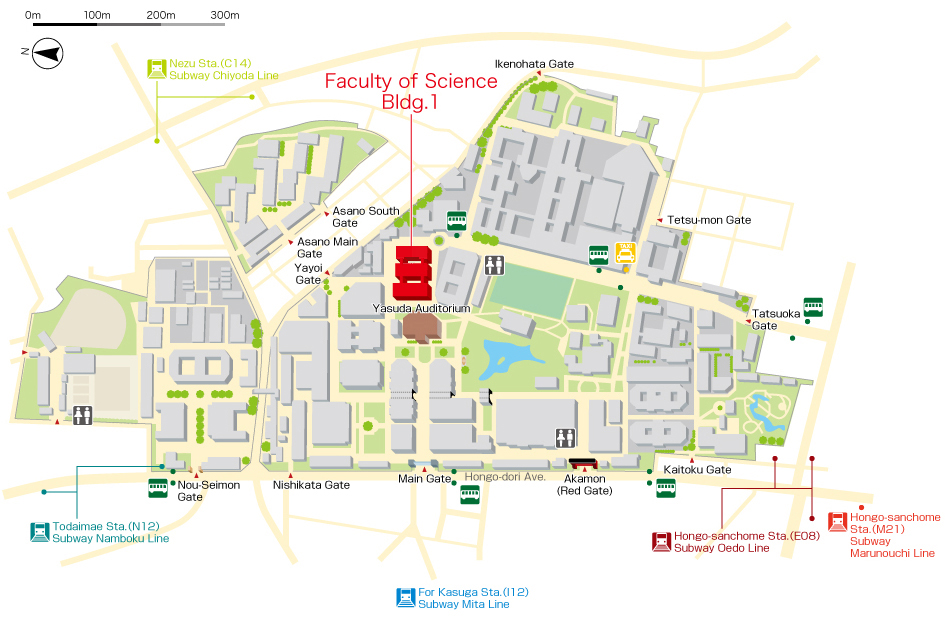
Venue: Faculty of Science Bldg.1, School of Science, The University of Tokyo, Hongo Campus
Register: Event registration form
Event Official Language: English
Seminar
From data to cohomologies of digraphs, to representations of categories
October 13 (Tue) 10:30 - 12:00, 2026
Luigi Caputi (Research Fellow, Department of Mathematics, University of Bologna, Italy)
Motivated by applications to topological data analysis, in the last years we have been witnessing a growing interest in new (topological, homological, categorical) features associated to graphs. The aim of the talk is to describe a recently developed (co)homology theory of directed graphs, called multipath cohomology, whose definition is inspired by Khovanov homology of knots. We will show its relations with more established invariants, such as chromatic homology of graphs, Hochschild homology of algebras, and matching complexes. If time allows it, we will show that the ranks of multipath cohomology, when restricted to graphs with bounded genus, grow at most polynomially in the number of edges, and that the order of its torsion is bounded. This will depend upon structural properties of (the representation category of) graphs, such as its Noetherianity properties.
Venue: #359, 3F, Main Research Building, RIKEN Wako Campus / via Zoom
Event Official Language: English
Workshop

Majorana Modes: Fundamentals, Status & Directions
October 13 (Tue) - 16 (Fri) 2026
Workshop Overview
Majorana modes lie at the heart of contemporary condensed-matter physics, exhibiting non-Abelian exchange statistics; when protected by topology, they are robust against environmental perturbations. Here, “Majorana mode” is used broadly to include a localized zero-energy Majorana state (a Majorana zero mode) and chiral Majorana edge states with gapless dispersion crossing zero energy.
This three-day in-person workshop returns to fundamentals and open questions. It opens with a tutorial session on the afternoon of October 13 for non-experts and adjacent fields, and emphasizes rigorous theory–experiment dialogue, robust methodology, and concrete benchmarks for realizing and testing Majorana modes.
Participants
Experimentalists and theorists working on Majorana modes
Researchers in adjacent fields (quantum materials, superconductivity, mesoscopic physics)
Graduate students and postdocs interested in entering the field
Topics include (non-exhaustive)
Majorana zero modes in a variety of nanostructures
Chiral Majorana edge states in quantum spin liquids and other platforms
Disorder, interactions, and realistic device modeling
Experimental diagnostics and “smoking gun” signatures
Topological Quantum Spin Systems
Venue: Okochi Hall, 1F Laser Science Laboratory, RIKEN
Register: Event registration form
Event Official Language: English
Seminar
Finding your rhythm in a complex acoustic environment
October 14 (Wed) 13:00 - 14:00, 2026
Kim Hoke (Professor, Department of Biology, Colorado State University, USA)
My lab integrates genetic, transcriptomic, morphological, and physiological mechanisms to understand the striking diversity of behavior. This talk will focus on recent work on frog acoustic communication. Although the basic acoustic features of frog calls differ reliably among species, individual males of the same species differ in some acoustic properties and female frogs use those male-male differences in mate choice. And for many species, this communication is occurring in very dense choruses which can reach hundreds of males! Our current work assesses which features of calls are characteristic of individuals and how males adjust their calling based on their social environments. We hope to trace how overall chorus dynamics emerge from individual call strategies playing out in time and space, and link those individual strategies to neurobiological mechanisms. We also address the complementary question of female preferences: how do females integrate over a series of signals in this cacophony to make mate choice decisions? Together these lines of research adopt a systems approach to understand how the robust genetic and developmental processes that produce species-specific behaviors have evolved to generate the striking diversity of communication strategies frogs employ.
Venue: Seminar Room #359, Seminar Room #359, 3F Main Research Building, RIKEN / via Zoom
Event Official Language: English
Seminar

AI and Scientific Discovery
October 19 (Mon) 13:00 - 14:00, 2026
Joseph Ledsam (Google Health Lead, Japan, Google Japan)
Artificial intelligence is having a transformative impact on health and scientific discovery. This presentation will trace the evolution from foundational breakthroughs to the sophisticated capabilities of today's large-scale AI models. It will explore how these advanced systems are creating new possibilities across the healthcare landscape, from accelerating therapeutic development to enhancing diagnostic processes and interpreting complex medical data. The session will also take a deeper look at the future possibilities for AI in health and explore the emerging role of agentic AI in scientific discovery. The core theme is the responsible development of AI to create tools that assist scientists, support healthcare professionals, and empower users.
Bio:
Dr Joseph Ledsam leads Google Health in Japan, where he works across AI research, digital health and health in Google products. He has led research in medical AI, genomics and drug discovery published in journals including Nature, Nature Medicine and Nature Methods. Before moving to Japan he worked as a medical doctor in the UK, and founded the Health Research and Genomics teams in Google DeepMind. He obtained his medical degree from The University of Leeds, UK, and was a research fellow at University College London during his clinical residency.
Venue: #435-437, Main Research Building, RIKEN Wako Campus / via Zoom
Event Official Language: English
Seminar
Data assimilation with the full covariance on a fault-tolerant quantum computer
October 21 (Wed) 15:00 - 16:30, 2026
Takemasa Miyoshi (Team Principal, Data Assimilation Research Team, RIKEN Center for Computational Science (R-CCS))
Data assimilation (DA) is the core of numerical weather prediction, estimating an accurate state of the weather model by combining forecast and observations. DA provides a general approach and is being applied to various problems beyond weather. The state estimation is a linear solve where the background error covariance B is essential. Since B is an N × N matrix with N ~ 10^8 to 10^9 for the weather model, the full B has never been used. For decades the community has approximated B by parameterized covariance models or by low-rank ensembles with localization and thereby discards genuine structures that we know exist from large-ensemble experiments. Fault-tolerant quantum computing (FTQC) could remove this constraint, since quantum linear system solvers scale polylogarithmically in N. However, the DA equations cannot be applied naively: the observation-space form squares the block-encoding normalization factor for observations with wide footprints, and the state-space form contains B^{-1}, whose condition number ~10^8. This talk presents a combined state-observation formulation that avoids both difficulties: it contains no B^{-1}, and its condition number is governed by the observation error covariance R rather than by B. Numerical experiments with the Lorenz-96 model reproduce the exact solution with the full B and outperform localized ensemble Kalman filters. The formulation assumes that B and the observation operator are provided as block-encoded oracles, and how to construct such oracles without ever storing the matrices is the open problem. A first concrete target is an end-to-end demonstration with Lorenz-96 on a quantum simulator with only seven data qubits, which I would like to discuss with the iTHEMS community.
Reference
- Miyoshi, T., Quantum-ready formulation for uncompromised data assimilation with high-rank covariances, Phys. Rev. Research 8, 033287 (2026), doi: 10.1103/x91t-v327
Venue: Seminar Room #359, 3F Main Research Building, RIKEN / via Zoom
Event Official Language: English
Seminar
Maximal Enhancements in Eight-Dimensional Non-Supersymmetric Heterotic Strings
October 30 (Fri) 10:30 - 12:00, 2026
Yuefeng Liu (Academic Researcher, Institute for Advanced Study,, Kyushu University)
We classify maximally enhanced, rank-preserving non-supersymmetric heterotic strings in eight dimensions by studying orbifolds of supersymmetric heterotic strings on T^2.We first review the construction in nine dimensions, where it reproduces the 95 maximally semisimple enhancement points obtained from previous extended-Dynkin analyses. We then start from the maximally enhanced supersymmetric Narain points in eight dimensions and use Kac's theorem to enumerate candidate order-two inner actions, retaining only those that lift to consistent Narain-lattice shifts. This gives 1210 maximal enhancement points, of which 71 are tachyon-free, and 25 have neither tachyons nor shifted-sector massless scalars. For each entry we determine the gauge algebra and the low-lying scalar and fermion spectra, and for the tachyon-free cases we evaluate the one-loop cosmological constant. For the 25 subcases without shifted-sector massless scalars, we further compute the Hessian of the one-loop potential and test the refined de Sitter swampland conjecture.
Venue: Seminar Room #359, Seminar Room #359, 3F Main Research Building, RIKEN / via Zoom
Event Official Language: English
Seminar
Quantum Creation of the Universe: Reassessing the No-Boundary and Tunneling Proposals
October 30 (Fri) 14:00 - 15:00, 2026
Hiroki Matsui (Researcher, Osaka Central Advanced Mathematical Institute, Osaka Metropolitan University)
How was our Universe created? This is one of the most fundamental questions in cosmology. Quantum cosmology attempts to answer it by using a "wave function of the Universe," and for four decades the discussion has been dominated by two proposals: the no-boundary proposal of Hartle and Hawking, and the tunneling proposal of Vilenkin. The two predict very different initial states for our Universe, yet for a long time there was no common framework in which they could be exactly analyzed and compared.
In this talk I will begin with a pedagogical introduction to the wave function of the Universe and to the Lorentzian path integral formulation based on Picard-Lefschetz theory, which makes the gravitational path integral well defined without the ambiguities of the traditional Euclidean approach and allows both proposals to be treated on the same footing. I will then present our recent results. Using Lefschetz-thimble analysis together with resurgence theory, we resolve the Stokes-line ambiguity that had obscured earlier analyses and show that the path integral uniquely yields the tunneling wave function rather than the no-boundary one. The no-boundary saddles nevertheless leave a trace: their contributions exactly cancel the Borel ambiguity of the perturbative quantum-gravity corrections around the tunneling saddle, demonstrating that resurgence is at work in quantum cosmology. I will also discuss what changes beyond general relativity, using Hořava-Lifshitz gravity as a concrete UV-complete example.
Venue: Hybrid Format (3F #359 and Zoom), Main Research Building, RIKEN Wako Campus / via Zoom
Event Official Language: English
Meeting
Mathematical Application Research Team Meeting #20
October 30 (Fri) 15:30 - 16:45, 2026
Yuya Kodama (Assistant Professor, Graduate School of Science and Engineering, Kagoshima University)
Mathematical Application Research Team is delighted to welcome Prof. Kodama Yuya from Kagoshima University for an upcoming team meeting. We warmly invite everyone to join us to hear his talk.
Title: Thompson's groups and knot theory
Abstract:
Thompson’s groups were introduced by Richard Thompson in the 1960s. They first appeared in mathematical logic, but they have since been studied in many other areas of mathematics. For example, they were rediscovered in homotopy theory, and some researchers have tried to use them in cryptography. In 2014, Vaughan Jones found an interesting connection between Thompson’s groups and knot theory. In this talk, I will first introduce Thompson’s groups and some of their connections with other areas. I will then explain the basic idea of Jones’s theory. If time permits, I will also mention my joint work with Takano of Osaka University.
Venue: via Zoom / #359, 3F, Seminar Room #359, 3F Main Research Building, RIKEN
Event Official Language: English
Seminar
Scaling regimes of the 1D Kuramoto-Sivashinsky equation
November 5 (Thu) 17:00 - 18:30, 2026
Liubov Gosteva (Ph.D. Student, LPMMC, Université Grenoble Alpes, France)
The Kuramoto-Sivashinsky (KS) equation describes various phenomena exhibiting chaos and instabilities, including flames, reaction-diffusion processes, and thin liquid film flows. It resembles the Kardar-Parisi-Zhang (KPZ) equation, with the key difference being the negative "viscosity" in the KS equation. The KS equation is known to belong to the KPZ universality class: at large scales, its statistical properties are governed by the KPZ fixed point, characterized by the dynamical exponent $z=3/2$ and a known PDF of fluctuations. In this talk, I will analyze the stochastic KS equation using the functional renormalization group (FRG). In this framework, attractive fixed points of the FRG equation determine large-scale universal behavior, while unstable fixed points govern small-scale universal behavior. I will show that the two-point correlation function exhibits, besides the KPZ scaling at large scale, another universal scaling regime at small scale, with $z=1$. This scaling is very robust as it is intrinsic to the KS dynamics. It arises from the vanishing of the effective viscosity when evolving from its microscopic negative KS value, to its macroscopic effective positive KPZ value. I will also present results from direct numerical simulations, which confirm these findings.
References
- L. Gosteva, D. Roy, N. Wschebor, and L. Canet, Inviscid scaling in the Kuramoto-Sivashinsky equation from functional renormalization group and direct numerical simulations, arXiv: 2605.23364
- L. Gosteva, N. Wschebor, and L. Canet, Scaling regimes of the Kuramoto-Sivashinsky equation from the functional renormalization group, arXiv: 2607.15784
Venue: via Zoom
Event Official Language: English
Seminar

A non-negative matrix factorization-based approach to integrating multimodal omics data with automatically tuned hyperparameters
November 16 (Mon) 14:00 - 15:00, 2026
Dorothy Ellis (Postdoctoral Researcher, Laboratory for Integrative Genomics, RIKEN Center for Integrative Medical Sciences (IMS))
Venue: via Zoom
Event Official Language: English
Workshop

KEK(-iTHEMS) Theory Workshop 2026
November 25 (Wed) - 27 (Fri) 2026
Hirotaka Hayashi (Professor, Department of Physics, School of Science, Tokai University)
Hikaru Kawai (Visiting Professor, Nambu Yoichiro Institute of Theoretical and Experimental Physics (NITEP), Osaka Metropolitan University)
Takato Mori (Assistant Professor, Department of Physics, Faculty of Science, Rikkyo University)
Masaya Nakagawa (Assistant Professor, Department of Physics, Graduate School of Science, The University of Tokyo)
Masaki Shigemori (Professor, Department of Physics, Graduate School of Science, Nagoya University)
Tadashi Takayanagi (Professor, Yukawa Institute for Theoretical Physics, Kyoto University)
Norihiro Tanahashi (Program-Specific Associate Professor, Department of physics, Graduate School of Science, Kyoto University)
Tatsuya Yamaoka (Ph.D. Student, Department of Physics, Graduate School of Science, The University of Osaka)
The KEK Theory Workshop is an annual workshop on string theory and quantum field theory.
Since 2014, it has been held every winter as an international workshop and has become one of the major annual events in the high-energy physics community in Japan.
This year’s workshop will be held on site at the KEK Tsukuba Campus from November 25 to 27, and it will be jointly organized with RIKEN iTHEMS.
The workshop this year aims to provide a forum for extensive discussions on recent developments in string theory, matrix models, gauge/gravity duality, black-hole microstates, lattice constructions of chiral gauge theories, and open quantum systems.
Venue: Seminar Hall, Building 3, KEK Tsukuba Campus
Register: Event registration form
Event Official Language: English
Seminar
Hamiltonian simulation: Standard algorithms and recent developments
December 17 (Thu) 10:30 - 17:00, 2026
Kaoru Mizuta (Associate Professor, Center for Quantum Information and Quantum Biology, The University of Osaka)
This is a lecture-style seminar of quantum computation. The tentative schedule consists of three slots: 10:30-12:00, 13:30-15:00, and 15:30-17:00. Due to equipment limitations, the blackboard might not be visible on Zoom, so we recommend attending in person.
Venue: Seminar Room #359, 3F Main Research Building, RIKEN / via Zoom
Event Official Language: English
Seminar

Optimal transport: Thermodynamics, biological information processing and generative models
January 18 (Mon) 13:30 - 15:00, 2027
Sosuke Ito (Associate Professor, Graduate School of Science, The University of Tokyo)
This is a joint seminar co-hosted by Institute for Physics of Intelligence (iπ), UTokyo, and the Venue is #1042,10F of Science Bldg.1
Optimal transport theory is a useful theoretical framework for geometrically characterizing the distance between probability distributions.
It is not only used in recent research on generative models but has also been applied to detect information-processing capabilities in biological systems from a statistical perspective, and to discuss thermodynamic efficiency. In this seminar, I will begin with an introduction to optimal transport theory, and also discuss our research on its various applications.
More specifically, I will discuss the following topics: 1) The problem of minimizing entropy production within a finite time and its experimental testing. 2) The application of optimal transport to the training of generative models, specifically diffusion models, and their optimal protocols. 3) Quantifying information processing performance using optimal transport in biological signal transduction.
References
- Mintu Nandi, Sosuke Ito, Decoding cell signaling via optimal transport and information theory, arXiv: 2602.18028
- Kotaro Ikeda, Tomoya Uda, Daisuke Okanohara, Sosuke Ito, Speed-Accuracy Relations for Diffusion Models: Wisdom from Nonequilibrium Thermodynamics and Optimal Transport, arXiv: 2407.04495
Venue: Faculty of Science Bldg.1, School of Science, The University of Tokyo, Hongo Campus / via Zoom
Event Official Language: English
Meeting
iTHEMS NOW & NEXT 2027
July 13 (Tue) - 15 (Thu) 2027
We will hold our annual gathering, **“iTHEMS NOW & NEXT 2027,” from July 13 to 15, 2027**.
iTHEMS NOW & NEXT has traditionally been a two-day in-house event, providing an important opportunity for all iTHEMS members, including visiting researchers and new members, to gain a comprehensive overview of current activities across iTHEMS, to learn about research beyond their own fields, and to discuss where iTHEMS should go next.
In 2027, we will **expand NOW & NEXT from two to three days** and, for the first time, invite leading researchers from outside iTHEMS across a broad range of research fields. While the first two days will retain the main character of our traditional in-house gathering, the extended three-day format is intended to create a broader opportunity for scientific exchange and, in particular, to enable leading researchers from outside iTHEMS to become better acquainted with our research activities and with the researchers who make up the iTHEMS community.
As in previous years, the program will present activities across iTHEMS, including those of its divisions, research teams, working groups, and study groups, together with research presentations and poster sessions by iTHEMS members. Particular emphasis will be placed on communication across disciplinary and organizational boundaries and on identifying emerging research directions and opportunities for new collaborations.
The additional third day will build on the presentations and discussions of the preceding two days and provide an opportunity for invited researchers to gain a deeper understanding of the breadth and strengths of research at iTHEMS and to interact directly with our members. We hope that these exchanges will not only introduce iTHEMS and its researchers more widely to leading scientists in different fields, but also bring new perspectives to our community and open possibilities for future scientific interactions and collaborations.
Through this expanded three-day NOW & NEXT 2027, we hope to share where iTHEMS is now and where it is heading next, both within our own community and with leading researchers from outside iTHEMS, and to explore together new possibilities for the future development of iTHEMS.
Venue: 2F Large Conference Room, Administrative Headquarters, RIKEN Wako Campus / via Zoom
Event Official Language: English
Paper of the Week
Week 1, October 2026
2026-10-01
Title: Higher-dimensional full vertex algebras and systems of conformally covariant correlation functions
Author: Yuto Moriwaki
arXiv: http://arxiv.org/abs/2609.37949v1
Title: Emergent Symmetries in Ensemble Averages
Author: Masahito Yamazaki
arXiv: http://arxiv.org/abs/2609.36542v1
Title: Dimensional (In)dependence of Lorentzian Quantum Cosmology
Author: Masazumi Honda, Hiroki Matsui, Kota Numajiri, Kazumasa Okabayashi, Takahiro Terada
arXiv: http://arxiv.org/abs/2609.33452v1
Title: A gravitational realization of Courant-Hilbert deformations
Author: Osamu Fukushima, Miyabi Kurihara, Takaki Matsumoto, Kentaroh Yoshida
arXiv: http://arxiv.org/abs/2609.35452v1
Title: Local Combinatorial Criteria for Geometric Hyper-ideal Triangulations via Combinatorial Ricci Flow
Author: Soichiro Uemura
arXiv: http://arxiv.org/abs/2609.34108v1
Title: Dyonic edge modes in Abelian gauge theory
Author: Keito Shimizu, Sotaro Sugishita
arXiv: http://arxiv.org/abs/2609.30964v1
Title: Mitochondrial genetic diversity and population structure of the Gila eremica lineage across river basins in Sonora, northwestern Mexico
Author: Carlos A., Ballesteros-Córdova, Alejandro Varela-Romero, Gorgonio Ruiz-Campos, Lloyd T. Findley, José Said Gutiérrez-Ortega, José M. Grijalva-Chon, Luis E. Gutiérrez-Millán
Journal Reference: Environmental Biology of Fishes
doi: https://doi.org/10.1007/s10641-026-01914-9
If you would like to cancel your subscription or change your email address,
please let us know via our contact form.
Copyright © iTHEMS, RIKEN. All rights reserved.