
Volume 402
Back to Newsletter List


Volume 402
April 3, 2026
Press Release
Observation of Regular Oscillations in Magnetization with a Quantum Computer
2026-04-02
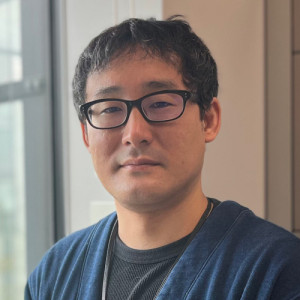
A research group including Senior Research Scientist Tomonori Shirakawa demonstrated that discrete time crystals and discrete time quasicrystals can be stably realized for up to 100 time steps on a 133-qubit two-dimensional lattice using IBM’s superconducting quantum computer (here, one time step corresponds to one period of the drive).
This result is expected to contribute to experimental validation toward digital quantum simulation of two-dimensional nonequilibrium quantum many-body systems, which are difficult to simulate using classical computation.
For further details, please refer to the related link.
Hot Topic

KEK-iTHEMS Workshop “Concepts of Quantum and Spacetime” on March 9, 2026
2026-04-02
We held the workshop “Concepts of Quantum and Spacetime” (at KEK in Japan from 9 to 12 March 2026), a joint workshop organized by KEK Theory Center and RIKEN iTHEMS.
The two fundamental questions, “What is quantum?” and “What is spacetime?”, are deeply intertwined. The workshop discussed the question “How can quantum theory and spacetime be understood in a consistent manner?” from a fundamental and broad perspective and shared various ideas with open minds, to find directions guiding quantum theory over the next 100 years. The topics were diverse: foundations of quantum theory, quantum gravity, emergence of spacetime, formulation of semi-classical gravity, experimental aspects of fundamental properties in nature, and foundations of quantum many-body systems and thermodynamics.
Around 90 researchers from various countries, generations, and fields came together. (Around 40% of these were from overseas.) The 14 keynote speakers—many of whom are rarely seen in Japan—shared their visions on quantum theory and spacetime. (The talk slides are available in the website.) The 13 selected short talks and the 22 poster presentations were of a high standard, leading to lively discussions; we also held a poster award competition.
Interestingly, the disagreements and confusion arising from differences in their expertise and viewpoints actually gave rise to new discussions and ideas. This was likely due to the open atmosphere of sincere engagement that emerged because the thema was not confined to specific methods or theoretical frameworks.
Furthermore, small yet significant touches—such as providing boxed lunches to keep the lively atmosphere of the lecture hall going during the lunch break, and setting up whiteboards in open spaces to encourage discussion—proved effective. These efforts fostered constant, natural interaction and lively discussion throughout the venue. Participants did not merely listen; they truly shaped the workshop. (Visit the website to see photos during the event.)
Many participants commented that it was an interesting and wonderful workshop. We also received feedback such as, “I gained ideas for future research,” and “This provided valuable insights for organizing future workshops.”
These are the result of the deep curiosity shared by all participants regarding fundamental questions, “What is quantum?” and “What is spacetime?” It is precisely such curiosity that will naturally give rise to new ideas and collaborative research and connect the world. I hope that workshops embodying a similar spirit will be held around the world on a variety of themes in the future.
Reported by Yuki Yokokura, chair of organizing committee.
KEK-iTHEMS Workshop “Concepts of Quantum and Spacetime”
March 9 (Mon) - 12 (Thu) 2026
Hot Topic

Farewell message from Takashi Satomi
2026-03-31
Our colleague, Takashi Satomi, will be joining Tokyo Denki University as a Lecturer starting April 2026. We will all miss him and wish him the best of luck in this new endeavor.
Here is a message from Takashi:
I would like to share that I will be leaving my position as an SPDR at iTHEMS.
Although my term was originally planned to continue, I have decided to end it early as I will start a new position as a lecturer at Tokyo Denki University from April.
I have been a member of iTHEMS as an SPDR from April 2024 to March 2026.
During this time, I greatly enjoyed the open and interdisciplinary environment.
Discussions with researchers from different fields gave me many new ideas and perspectives, and these experiences have been very valuable for my research.
I would like to express my sincere thanks to all the members at iTHEMS for their support and kindness.
From April, I will continue to be affiliated with iTHEMS as a visiting researcher.
I hope to continue discussions and collaborations in the future.
Thank you very much for everything.
Hot Topic

Farewell message from Ryosuke Iritani
2026-03-31
Our colleague, Ryosuke Iritani, will be joining the Graduate School of Science, The University of Tokyo, as a Project Associate Professor starting April 1, 2026. We will all miss him and wish him the best of luck in this new endeavor.
Here is a message from Ryosuke:
I have spent a rewarding seven years at iTHEMS. My research interests and vision have broadened significantly thanks to the research environment here.
Since joining iTHEMS in 2019, I have become increasingly interested in learning and applying mathematics to biological questions. Whenever I encounter new mathematical techniques, I naturally consider how they might be applied to biological systems and how they can bridge our fields. Through this process, I have come to appreciate the truly interdisciplinary nature of science. This shift in my mindset was made possible by the opportunity to interact with such a diverse group of researchers. My goal over the next decade is to conduct biological research that also inspires other communities, such as mathematics and physics. I look forward to seeing where this path leads.
The year 2020 was an unprecedented time, not only for iTHEMS but for society as a whole. During that period, we frequently discussed how to maintain an open and productive community, considering various ways to foster engagement within iTHEMS. As we move past the pandemic, I realize that navigating those challenges was an invaluable experience. It served as an important reminder that our research is fundamentally driven by human connection, passion, and well-being, and that we are individuals first and foremost.
Finally, I would like to thank all the colleagues, technical staff, assistants, promotion office staff, and directors with whom I have been fortunate to work, discuss, chat, and dine. While I cannot list everyone by name here, I am deeply grateful for every interaction that enriched my time at iTHEMS. Special thanks to Adachi-san and Hamazaki-san for our continued collaboration; to Biology Seminar, Math Seminar, and Information Theory WG members for sharing their time and ideas through our daily interactions; to Catherine, Hatsuda-san, and Iso-san for their encouragement and for fostering such a great environment; and finally, to Wada-san for the continuous support in almost all aspects of my time at iTHEMS.
Hot Topic
Farewell message from Ryo Namba
2026-03-31
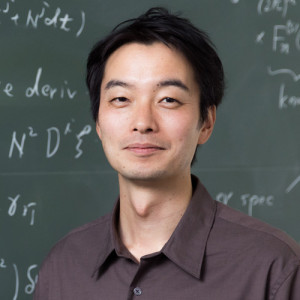
Our colleague, Ryo Namba, will be joining the Department of Physics, Faculty of Science, Shizuoka University, as a Lecturer starting April 1, 2026. We will all miss him and wish him the best of luck in this new endeavor.
Here is a message from Ryo:
It has been an incredibly stimulating and encouraging five years since I joined iTHEMS in 2021. When I first arrived, restrictions due to COVID-19 limited how often we could come to the office, and I did not have many opportunities to meet other iTHEMS members in person. However, through online meetings and seminars, I sensed a strong and growing enthusiasm for intellectual exchange within the community. Once these constraints were relaxed, people naturally began to gather, and I had many valuable opportunities to interact with colleagues across a wide range of disciplines, including particle and nuclear physics, biology, and mathematics.
It was during this time that I was able to expand my research directions significantly. I had the opportunity to participate in study camps with mathematicians and to organize a couple of intensive lecture series spanning physics and mathematics. These experiences have played a central role in shaping my current research focus. iTHEMS offers a truly unique research environment -- not only in its interdisciplinary nature, but also in its openness to member-driven initiatives such as workshops, seminars, and other academic activities.
I am deeply grateful for my time at iTHEMS, and I look forward to building on these experiences in my research and educational aspects at Shizuoka University. I sincerely wish for the continued flourishing and development of iTHEMS, and for its current and future members to enjoy their own vibrant and productive time there.
Hot Topic
Farewell message from Sotaro Sugishita
2026-03-31
Our colleague, Sotaro Sugishita, will be joining Hokkaido University as an Associate Professor starting April 1st, 2026. We will all miss him and wish him the best of luck in this new endeavor.
Here is a message from Sotaro:
I joined iTHEMS in April 2025 as a research scientist in a cross-appointment position with Kyoto University. Although my time at iTHEMS has been short, I am very grateful for the opportunity to have been part of this unique and inspiring group.
Due to my busy work and life in Kyoto, it is a little unfortunate that I did not have many opportunities to visit the Wako campus in person. Nevertheless, every time I visited, I was reminded of what a remarkable place iTHEMS is. There are so many outstanding researchers at iTHEMS, and each visit provided me with new stimulation. The open and interdisciplinary atmosphere of iTHEMS is truly special, and I feel fortunate to have had the experience.
I would also like to express my sincere appreciation to the assistants at iTHEMS. Their support was always thoughtful and incredibly supportive, and it helped me greatly throughout. I am deeply grateful not only for the academic environment, but also for the professional and welcoming support system that makes iTHEMS such a pleasant place.
I would like to thank everyone at iTHEMS.
From April 2026, I will join Hokkaido University as an associate professor. I will also be affiliated with iTHEMS as a visiting researcher. I sincerely look forward to staying in touch and to future interactions and collaborations.
Hot Topic

Farewell message from Yuta Sekino
2026-03-31
Our colleague, Yuta Sekino, will be joining the Institute for Advanced Research at Nagoya University as a YLC Assistant Professor starting April 1st, 2026. We will all miss him and wish him the best of luck in this new endeavor.
Here is a message from Yuta:
I have been at RIKEN for seven years.
Starting this April, I will join the Institute for Advanced Research at Nagoya University as a YLC Assistant Professor.
I first joined the Quantum Hadron Physics Laboratory (Hatsuda Lab.) at the Nishina Center in April 2019 as a JSPS fellow, and from that time I also began attending iTHEMS activities.
In October 2021, I moved to the Astrophysical Big Bang Laboratory (Nagataki Lab.) at RIKEN Cluster for Pioneering Research and started a concurrent position in iTHEMS.
In July 2024, I officially became a member of iTHEMS as a postdoctoral researcher associated with RIKEN Quantum, and a concurrent member in Hamzaki Hakubi Research Team.
During my seven years at RIKEN, I have greatly enjoyed the research environment embracing the iTHEMS spirit of "under one roof."
Since I was an undergraduate student, I have been interested in interdisciplinary studies because my main research field, cold atoms, is strongly influenced by other subfields of physics, such as solid-state, nuclear, and particle physics.
Therefore, I have greatly enjoyed interactions with researchers not only in physics, but also in mathematics, biology, and data science.
I have also appreciated the availability of quantum computing resources.
Although I am moving to Nagoya University, I will remain affiliated as a visiting scientist.
I would like to continue participating in iTHEMS activities, and I look forward to further interactions with everyone.
Finally, I would like to express my sincere appreciation to all the researchers and assistants of iTHEMS for their kind support throughout my time at RIKEN.
Hot Topic

Farewell message from Shigenori Otsuka
2026-03-31
Our colleague, Shigenori Otsuka, will be joining the Center for Environmental Remote Sensing, Chiba University, as an Associate Professor starting March 2026. We will all miss him and wish him the best of luck in this new endeavor.
Here is a message from Shigenori:
I came to RIKEN in January 2013 as a postdoctoral researcher at R-CCS, and I joined iTHEMS as a concurrent member in April 2018. Since then, I have learned a lot from various iTHEMS activities, such as the iTHEMS colloquium series, the lecture series at Nara Women's University, coffee meetings, and collaborations between iTHEMS and Kyoto University. Although my research field, meteorology, has not been a major topic within iTHEMS, I found that we shared many common interests, including fluid dynamics, chaos, data assimilation, and machine learning. After my 13-year career at RIKEN, I moved to Chiba University in March 2026 as an associate professor at the Center for Environmental Remote Sensing. In May 2026, I will return to iTHEMS as a visiting scientist in the Prediction Science Research Team, so please keep in touch. Thank you very much!
Award

Yuta Sekino received FY2025 RIKEN Research and Technology Incentive Award (RIKEN OHBU Award 理研桜舞賞)
2026-04-01
Yuta Sekino (Postdoctoral Researcher, iTHEMS) has been awarded the FY2025 RIKEN Research and Technology Incentive Award (RIKEN OHBU Award).
The RIKEN Ohbu Award is presented to early-career researchers and staff members at RIKEN who have demonstrated outstanding achievements in research and development, research support, or contributions to the promotion and dissemination of research outcomes, through active research activities.
Sekino was recognized for his proposal entitled “Quantum simulation of spin transport using ultracold atomic gases.” This work presents a novel theoretical framework for simulating and understanding spin transport phenomena in quantum many-body systems using ultracold atom platforms, and is expected to contribute to the advancement of quantum simulation and quantum condensed matter physics.
Congratulations, Yuta!
Upcoming Events
Seminar
Physics-based eruption forecasting at Kīlauea volcano using an Ensemble Kalman Filter
April 7 (Tue) 13:00 - 14:30, 2026
Kyle R. Anderson (Research Geophysicist, California Volcano Observatory, U.S. Geological Survey (USGS), USA)
Today, most forecasts of volcanic eruptions are based on expert opinion, making them fundamentally subjective. Such forecasts have often proven successful but have clear limitations. Novel quantitative forecasting techniques have shown promise in experimental settings (hindcasting) but face numerous operational challenges and most have rarely if ever been applied to real-world eruptions (forecasting).
In this talk I will discuss efforts to forecast a remarkable ongoing series of more than 40 high lava fountain eruptions at Kīlauea volcano, Hawaii, using a simple physics-based model in an Ensemble Kalman Filter (EnKF) data assimilation algorithm. Using this method, which is believed to be the first implementation of a physics-based EnKF eruption forecast, the times of Kīlauea’s lava fountain eruptions can be forecast days to weeks in advance. The method assimilates geodetic data to constrain the evolving state of the system, provides insight into the eruption mechanism and rate of magma supply to the volcano, and produces fully probabilistic forecasts. These forecasts are combined with other information, including forecasts based on machine learning algorithms, to derive forecast windows, which are disseminated to the public and to partner agencies for hazards mitigation activities. In this way, novel eruption forecasting tools are continually developed which serve an important public need while also improving understanding of the volcanic system.
Venue: Hybrid Format (RIKEN R-CCS room C107 and Zoom)
Event Official Language: English
Seminar
Quantum Computation SG seminar 2026
April 7 (Tue) 15:00 - 17:00, 2026
Self-introductions (name + research interests) and discussion about study group activities in FY2026.
Venue: Seminar Room #359, 3F Main Research Building, RIKEN / via Zoom
Event Official Language: English
Lecture
Quantum Simulation of Non-Abelian Gauge Theories: Correcting Common Misconceptions (3/3)
April 7 (Tue) 18:00 - 19:30, 2026
Masanori Hanada (Reader, School of Mathematical Sciences, Queen Mary University of London, UK)
Venue: Hybrid Format (3F #359 and Zoom), Seminar Room #359, 3F Main Research Building, RIKEN
Event Official Language: Japanese
Seminar


Biology Starter Meeting & Welcome 4 New Members!
April 9 (Thu) 13:00 - 15:00, 2026
Alba Nieto Heredia (Postdoctoral Researcher, Mathematical Genomics RIKEN ECL Research Unit, Division of Fundamental Mathematical Science, RIKEN Center for Interdisciplinary Theoretical and Mathematical Sciences (iTHEMS))
Takehiro Tottori (Special Postdoctoral Researcher, RIKEN Center for Brain Science (CBS))
Mariia Ivonina (Postdoctoral Researcher, Division of Fundamental Mathematical Science, RIKEN Center for Interdisciplinary Theoretical and Mathematical Sciences (iTHEMS))
Satsuki Hirasawa (Ph.D. Student, Graduate School of Information Science and Technology, Hokkaido University)
This is a special 2 h event of our newly renewed Biology Study Group! This year, 4 new members are joining iTHEMS Biology. They will each give us a 15 min introduction to their research. All participants will also take 2-3 min to introduce themselves and their research topic to the new members. If time permits, we'll hold a brief organizational meeting to review the running of the biology seminars in the new fiscal year.
We strongly encourage all iTHEMS members, not just biology-interested ones, to join our session at least in the 1st hour, to meet the new members and learn about their research.
Venue: Hybrid Format (3F #359 and Zoom), Main Research Building, RIKEN Wako Campus
Event Official Language: English
Seminar
Clumpy Outflows from Super-Eddington Accreting Black Holes
April 10 (Fri) 14:00 - 15:15, 2026
Haojie Hu (JSPS Research Fellow, University of Tsukuba)
Recent advances in X-ray spectroscopic observation have enabled researchers to reveal distinct clumpy structures in the super-Eddington outflows from the supermassive black hole in PDS 456 (XRISM Collaboration 2025), initiating detailed investigation of fine-scale structures in accretion-driven outflows. In this talk, I will introduce our high-resolution, two-dimensional radiation-hydrodynamics simulations with time-varying and anisotropic initial and boundary conditions that reproduce clumpy outflows from super-Eddington accretion flows. The resulting clumpy outflows extend across a wide range of radial distances and polar angles, exhibiting typical properties such as a size of ~10 rg (where rg is the gravitational radius), a velocity of ~0.05–0.2 c (where c is the speed of light), and about five clumps along the line of sight. Although the velocities are slightly smaller, these characteristics reasonably resemble those obtained from the XRISM observation. The gas density of the clumps is on the order of 10^-13–10^-12 g cm^-3, and their optical depth for electron scattering is approximately 1–10. The clumpy winds accelerated by radiation force are considered to originate from the region within <300 rg.
Venue: #220, 2F, Main Research Building, RIKEN Wako Campus / via Zoom
Event Official Language: English
Seminar

From Classical Definiteness to Geometric Predictability: Complementarity, Coherence, and Thermodynamic Triality
April 10 (Fri) 15:30 - 17:00, 2026
Ezra Acalapati Madani (Ph.D. Student, Laboratoire de Physique de l'École Normale Supérieure, France)
Wave–particle complementarity is one of the central principles of quantum mechanics, traditionally quantified through the Englert–Greenberger–Yasin relation between which-way information and interference visibility. In higher-dimensional and resource-theoretic settings, however, visibility is no longer unique, and it becomes natural to reformulate complementarity in terms of basis-dependent predictability, coherence, and mixedness.
In this talk, I present two related works along this line. First, I discuss an exact complementarity relation between classical definiteness and quantumness, where definiteness is defined operationally through the resilience of a quantum state under nonselective dichotomic yes/no measurements, while the complementary quantum contribution is quantified using a Kirkwood–Dirac-based notion of coherence/interference motivated by recent KD-based coherence measures. Second, I introduce a geometric predictability defined by the Bures distance between the dephased state and the maximally mixed state. This predictability depends only on the observed measurement statistics and admits a closed form in terms of the Bhattacharyya overlap. For pure states, it satisfies an exact complementarity relation with nonclassical Kirkwood–Dirac coherence; for mixed states, this motivates a convex-roof extension whose operational meaning is the classically irreducible part of measurement randomness, with implications for guessing probability and min-entropy. Finally, motivated by the decomposition of entropy production into population and coherence contributions in quantum thermodynamics, and by standard wave–particle–mixedness triality relations, I show how the usual predictability–coherence duality can be promoted into a triality relation involving predictability, coherence, and mixedness.
Altogether, the talk connects wave–particle duality, coherence resource theories, operational guessing tasks, and thermodynamic balance relations within a unified framework.
Venue: #359, Seminar Room #359, 3F Main Research Building, RIKEN
Event Official Language: English
Meeting
iTHEMS NOW & NEXT 2026
April 13 (Mon) - 14 (Tue) 2026
We will hold an annual in-house gathering, “iTHEMS NOW & NEXT,” for FY 2026.
The event provides a great opportunity for all iTHEMS members, including visiting researchers and, in particular, new arrivals, to gain a comprehensive overview of iTHEMS’s current activities and future directions.
The detailed program will be announced in due course, but there will be poster sessions for all members, so please be ready to present one.
Venue: 2F Large Conference Room, Administrative Headquarters, RIKEN Wako Campus / via Zoom
Event Official Language: English
Seminar
RIKEN Seminar: Formulation of Life Phenomena from Quantum Theory
April 16 (Thu) 14:00 - 16:05, 2026
13:45 Opening
14:00-14:05 Introduction
Atsushi Iriki (Teikyo University Advanced Comprehensive Research Organization Division of Artificial Intelligence, RIKEN Center for Interdisciplinary Theoretical and Mathematical Sciences (iTHEMS))
14:05-14:35 "Interpretation of Life Phenomena Using Quantum Wave Functions and Field Theory"
Kazuhiro Sakurada (Keio University Medical School and RIKEN Center for Integrative Medical Sciences (IMS), Predictive Medicine Special Project (PMSP))
14:35-14:45 Q&A
14:45-15:30 "Bridging neurophysiology and quantum-like cognition"
Andrei Khrennikov (Center for Mathematical Modeling in Physics and Cognitive Sciences Linnaeus University)
15:30-15:45 Q&A
15:45-16:00 "Quantum-Like Measurement"
Masanao Ozawa (RIKEN Center for Interdisciplinary Theoretical and Mathematical Sciences (iTHEMS), RIKEN TRIP FQSP, and Nagoya University)
16:00-16:05 Closing Remarks
Satoshi Iso (Director, RIKEN Center for Interdisciplinary Theoretical and Mathematical Sciences (iTHEMS))
Host Laboratory: Predictive Medicine Special Project, RIKEN Center for Integrative Medical Sciences (IMS) / RIKEN Center for Interdisciplinary Theoretical and Mathematical Science (iTHEMS)
*Registration is required by April 14 via the registration form.
Contact: Predictive Medicine Special Project (pmsp-web@ml.riken.jp)
Venue: Meeting Room 305, Brain Science Ikenohata Research Bldg. (C56), RIKEN Wako Campus
Event Official Language: English
Seminar

TJR-iTHEMS Joint Seminar: Golden Age of Neutron Stars
April 17 (Fri) 16:00 - 17:00, 2026
Gordon Baym (Professor Emeritus, University of Illinois, USA)
This is a TJR-iTHEMS Joint Seminar supported by ASPIRE Program
ABSTRACT
Neutron stars were first posited in the early thirties, and discovered as pulsars in the late sixties; however we are only recently beginning to understand the matter they contain. I will describe the ongoing development of a consistent picture of the liquid interiors of neutron stars, now driven by ever increasing observations as well as theoretical advances. These include observations of heavy neutron stars of about 2.0 solar masses and higher; ongoing inferences of masses and radii by the NICER telescope; and observations of binary neutron star mergers, through gravitational waves as well as across the electromagnetic spectrum. Theoretically an understanding is emerging in QCD of how nuclear matter can turn into deconfined quark matter, which I will illustrate with modern quark-hadron crossover equations of state.
BRIEF BIO
Gordon Baym is a Professor of Physics at the University of Illinois. Educated at Cornell and Harvard, he spent two years at the Niels Bohr Institute. His interests range from matter under extreme conditions to ultracold atomic physics, astrophysics, and nuclear physics. A pioneer in the study of pulsars and neutron stars, he is a member of the U.S. National Academy of Sciences and received the APS Medal for Exceptional Achievement in Research, the Hans Bethe and Lars Onsager Prizes, and the Eugene Feenberg Memorial Medal.
Venue: H701, The University of Osaka, Toyonaka Campus
Event Official Language: English
Special Lecture

iTHEMS x academist Online Event "World of Mathematical Sciences 2026"
April 18 (Sat) 10:00 - 15:30, 2026
Junnosuke Koizumi (Special Postdoctoral Researcher, Division of Fundamental Mathematical Science, RIKEN Center for Interdisciplinary Theoretical and Mathematical Sciences (iTHEMS))
Osamu Fukushima (Special Postdoctoral Researcher, Division of Fundamental Mathematical Science, RIKEN Center for Interdisciplinary Theoretical and Mathematical Sciences (iTHEMS))
Muzi Hong (Postdoctoral Researcher, Division of Fundamental Mathematical Science, RIKEN Center for Interdisciplinary Theoretical and Mathematical Sciences (iTHEMS))
Kenji Okubo (Special Postdoctoral Researcher, Division of Fundamental Mathematical Science, RIKEN Center for Interdisciplinary Theoretical and Mathematical Sciences (iTHEMS))
Venue: via Zoom
Event Official Language: Japanese
Seminar

The math that shows a perfect democracy is impossible
April 23 (Thu) 10:30 - 11:30, 2026
Brian Andrew Mintz (Postdoctoral Researcher, Mathematical Social Science Team, Division of Applied Mathematical Science, RIKEN Center for Interdisciplinary Theoretical and Mathematical Sciences (iTHEMS))
Groups need to make decisions, and there are a wide variety of ways this can be done, each maximizing different notions of fairness. Social Choice Theory provides a mathematical framework to investigate these possibilities rigorously. Infamous for its many impossibility results, this topic reveals some fundamental limits to democracy. Beyond this, we'll discuss potential resolutions to these problems, as well as their real world implications.
Venue: Seminar Room #359, 3F Main Research Building, RIKEN / via Zoom
Event Official Language: English
Seminar
From Birkhoff's Polytope to Petz Recovery: Unistochastic Matrices, Quantum Channels, and Approximate Markov Chains
May 13 (Wed) 13:30 - 15:00, 2026
Claude Gravel (Assistant Professor, Department of Computer Science, Toronto Metropolitan University, Canada)
A doubly stochastic matrix is unistochastic if its entries correspond to the squared moduli of a unitary matrix. Determining which n × n doubly stochastic matrices admit such a representation remains an open problem at the intersection of convex geometry, combinatorics, and quantum information. For 3 × 3 matrices, elegant triangle inequalities provide a complete characterization: the unistochastic set occupies approximately 75% of the Birkhoff polytope and exhibits deltoid cross-sections. For n ≥ 4, the characterization problem remains unresolved and is influenced in unexpected ways by the prime factorization of n via the defect of the Fourier matrix. This presentation surveys these results and then establishes a connection to a second, seemingly unrelated question: given a tripartite quantum state with small conditional mutual information, to what extent can one subsystem be recovered from the others? The Petz recovery map and its rotated variants offer a universal solution. These two topics are linked through coherification, which concerns when a classical stochastic process can be elevated to coherent quantum dynamics, and through the conditional mutual information as a continuous measure of non-unistochasticity. The talk concludes with open problems at this interface, including the star-shapedness conjecture for n = 4 and the pursuit of tighter recovery bounds.
Venue: #359, Seminar Room #359, 3F Main Research Building, RIKEN
Event Official Language: English
Upcoming Visitor
April 3 (Fri) - May 1 (Fri) 2026 Gordon BaymSenior Visiting Scientist, Division of Fundamental Mathematical Science, RIKEN Center for Interdisciplinary Theoretical and Mathematical Sciences (iTHEMS) / Professor Emeritus, University of Illinois, USA Research fields: Quantum Many-body Theory Visiting Place: Main Research Building |

Person of the Week

Self-introduction: Muzi Hong
2026-04-02
I am doing research in cosmology, especially in early universe physics. Recently, I have been working on topics such as inflation, cosmological perturbations, baryogenesis, and dark energy. Cosmology is an interdisciplinary field, and I look forward to discussing various topics in physics with researchers from other fields.
Paper of the Week
Week 1, April 2026
2026-04-02
Title: Nonlocal operators on the lattice for the Higgs-confinement phase transition
Author: Yusuke Shimada, Arata Yamamoto
Journal Reference: J.Subatomic Part.Cosmol. 5, 100267 (2026)
doi: https://doi.org/10.1016/j.jspc.2025.100267
Title: The 'Forgotten' Neutrons: Implications for the Propagation of High-Energy Cosmic Rays in Magnetized Astrophysical and Cosmological Structures
Author: Ellis R. Owen, Kinwah Wu, Yoshiyuki Inoue, Tatsuki Fujiwara, Qin Han, Hayden P. H. Ng
arXiv: http://arxiv.org/abs/2603.25060v1
Title: Josephson effects in an interaction-asymmetric junction across the BCS-BEC crossover
Author: Tingyu Zhang, Hiroyuki Tajima
arXiv: http://arxiv.org/abs/2603.25577v1
If you would like to cancel your subscription or change your email address,
please let us know via our contact form.
Copyright © iTHEMS, RIKEN. All rights reserved.