
Volume 405
Back to Newsletter List


Volume 405
April 24, 2026
Hot Topic

The third RIKEN Quantum internal meeting on March 30, 2026
2026-04-23
On Monday, March 30, the third RIKEN Quantum internal meeting was held in the Large Conference Room (2F, Administrative Headquarters) at RIKEN, Wako, attended by a total of over 50 RIKEN Quantum members and related researchers.
At this meeting, Yahui Chai and Danny Jammooa, who were invited from overseas, gave presentations on their recent research, 'Quantum Simulation of Particle Scattering' and 'Parametric Matrix Models,' respectively. Furthermore, Jian Xu, who recently joined RIKEN Quantum, presented the research he plans to pursue at the institute. In addition, 12 researchers from various fields associated with RIKEN Quantum, who also serve as RIKEN TRIP visiting scientists for collaborative projects, gave short talks to introduce their work.
At the banquet following the meeting, members, including those meeting for the first time, exchanged ideas in a relaxed atmosphere, leading to fruitful discussions for the further development of RIKEN Quantum.
Reported by Shinichiro Fujii
The third RIKEN Quantum internal meeting
March 30 (Mon) 15:00 - 20:00, 2026
Award


Keiya Hirashima received FY2025 RIKEN Research and Technology Incentive Award (RIKEN OHBU Award 理研桜舞賞)
2026-04-21
Keiya Hirashima (Special Postdoctoral Researcher, iTHEMS) has been awarded the FY2025 RIKEN Research and Technology Incentive Award (RIKEN OHBU Award).
The RIKEN OHBU Award is presented to early-career researchers and staff members at RIKEN who have demonstrated outstanding achievements in research and development, research support, or contributions to the promotion and dissemination of research outcomes, through active research activities.
Hirashima was recognized for his work entitled “Establishment of galaxy simulations resolving individual stars through the integration of AI surrogate models and large-scale parallel computing.” This work integrates advanced AI surrogate modeling with large-scale parallel computation to enable high-resolution galaxy simulations that resolve individual stars, contributing to a deeper understanding of galaxy formation and evolution.
Congratulations, Keiya!
Award


Masazumi Honda received FY2025 RIKEN Excellent Achievement Award (RIKEN BAIHO Award 理研梅峰賞)
2026-04-21
Masazumi Honda (Senior Research Scientist, iTHEMS) has been awarded the FY2025 RIKEN Excellent Achievement Award (RIKEN BAIHO Award).
The RIKEN BAIHO Award is presented by the President of RIKEN to individuals who have achieved original and outstanding research and development results that are expected to receive high recognition in academic communities, or who have made distinguished contributions to research support both within and outside the institute.
Honda was recognized for his work entitled “Development of non-perturbative methods in quantum field theory and quantum gravity.” This work develops novel theoretical approaches to analyze strongly coupled phenomena in quantum field theory and quantum gravity, and is expected to contribute to the advancement of fundamental physics through a deeper understanding of non-perturbative dynamics.
Congratulations, Masazumi!
Award

Leo Speidel, RIKEN ECL Research Unit Leader, Receives the SMBE Early-Career Excellence Award
2026-04-21
Leo Speidel, RIKEN ECL Research Unit Leader of the Mathematical Genomics RIKEN ECL Research Unit, Division of Fundamental Mathematical Science, RIKEN iTHEMS, has been awarded the 2026 SMBE Early-Career Excellence Award on March 12, 2026.
This award is presented by the Society for Molecular Biology and Evolution (SMBE) to researchers who have made significant contributions to the advancement of the field through innovative research and who embody the values of the society through activities such as education and outreach.
He has advanced research on genetic data analysis using mathematical approaches, providing new insights into molecular evolution and population genetics. This award recognizes his research achievements and contributions to the field.
Congratulations, Leo!
Upcoming Events
Seminar

Cooking up holographic black holes
April 27 (Mon) 13:30 - 15:00, 2026
Daichi Takeda (Special Postdoctoral Researcher, Division of Fundamental Mathematical Science, RIKEN Center for Interdisciplinary Theoretical and Mathematical Sciences (iTHEMS))
I have recently been investigating holography for open systems and have developed a method to compute correlation functions of a CFT governed by the Lindblad equation from its gravitational dual. In an open system, the state of the subsystem of interest cannot remain pure, and one naively expects its entropy to grow over time. It is then natural to expect that this thermalization process is accompanied, on the gravity side, by black hole formation. In this talk, after giving an overview of holography for open systems, I will present a numerical nonperturbative analysis of the dynamics of JT gravity coupled to a scalar field, and show that black holes indeed form in this setup.
Venue: via Zoom / Hybrid Format (3F #359 and Zoom), Seminar Room #359, 3F Main Research Building, RIKEN
Event Official Language: English
Seminar
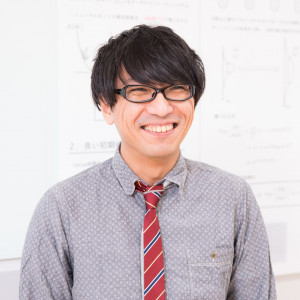
DEEP-IN WG Sarter Meeting 2026
April 27 (Mon) 15:30 - 17:00, 2026
Tae-Geun Kim (Postdoc, Fudan University, China)
Yang-Yang Tan (Postdoctoral Researcher, Institute for Physics of Intelligence, Graduate School of Science, The University of Tokyo)
Masato Taki (Associate Professor, Graduate School of Artificial Intelligence and Science, Rikkyo University)
15:30–16:00
NOW&NEXT of DEEP-IN WG (Lingxiao Wang)
Self-Introduction of Members
16:00–16:20
AI Team and DEEP-IN (Masato Taki)
16:20–16:40
Inverse Problems in HEP (Tae-Geun Kim, FudanU)
16:40–17:00
Inverse Modeling Distributions (Yang-yang Tan, UTokyo)
Venue: #359, Seminar Room #359, 3F Main Research Building, RIKEN / via Zoom
Event Official Language: English
Seminar
Uniform Matrix Product States for Hamiltonian Lattice Gauge Theories: Methods and Applications
April 28 (Tue) 16:00 - 17:30, 2026
Kohei Fujikura (Research Assistant Professor, Yukawa Institute for Theoretical Physics, Kyoto University)
Venue: Seminar Room #359, 3F Main Research Building, RIKEN / via Zoom
Event Official Language: English
Seminar
Building autonomous AI physicists for frontier physics research
April 30 (Thu) 15:00 - 16:00, 2026
Tingjia Miao (Ph.D. Student, School of Artificial Intelligence, Shanghai Jiao Tong University, China)
Advances in LLMs have led to agents with knowledge and operational capabilities comparable to human scientists, suggesting potential to assist, accelerate, and automate research. Physics, especially theoretical and computational physics, which requires integrating analytical reasoning, code-based computation, and profound domain expertise, is well suited for verifying the end-to-end research capabilities of AI scientists. Accordingly, we construct a general-purpose AI physicist PhysMaster, equipped with a layered academic knowledge base, adapted to the agent skill ecosystem, and adopting an adaptive exploration strategy that balances efficiency and exploration, enabling robust performance in ultra-long-horizon tasks; PhysMaster has been open-sourced. Meanwhile, we introduce PRL-Bench (Physics Research by LLMs), a benchmark with 100 tasks adapted from recent Physical Review Letters papers, covering astrophysics, condensed matter physics, high-energy physics, quantum information, and statistical physics. Evaluation across frontier models shows that failures are dominated by conceptual and formulaic errors, and that exploration and derivations remain unstable over long horizons. In addition, we develop domain-specialized AI scientists, including LQCD Master, which integrates Lattice QCD workflows and expert skills, enabling automated generation and submission of lattice computation scripts from concise physics goals.
References
- Miao, Tingjia and others, PhysMaster: Building an Autonomous AI Physicist for Theoretical and Computational Physics Research, arXiv: 2512.19799
- Tan, Jin-Xin, Miao, Ting-Jia and others, Automated Extraction of Collins-Soper Kernel from Lattice QCD using An Autonomous AI Physicist System, arXiv: 2603.22471
- Miao, Tingjia and others, PRL-Bench: A Comprehensive Benchmark Evaluating LLMs' Capabilities in Frontier Physics Research, arXiv: 2604.15411
Venue: via Zoom
Event Official Language: English
Seminar

Six operations in differential topology
May 8 (Fri) 15:00 - 17:00, 2026
Takumi Maegawa (Special Postdoctoral Researcher, Division of Fundamental Mathematical Science, RIKEN Center for Interdisciplinary Theoretical and Mathematical Sciences (iTHEMS))
The formalism of six operations, pioneered by Grothendieck and Verdier, serves as a unifying framework for studying cohomological phenomena. This language realizes Poincaré-type duality and transfer maps as certain adjunctions between stable $\infty$-categories of sheaves. In this talk, we highlight the theory of six operations in topology and apply it to provide an intrinsic version of the Pontryagin-Thom construction. We then discuss the intrinsic construction of invariants coming from Seiberg-Witten theory, which is based on the speaker's previous work.
Venue: via Zoom / Seminar Room #359, 3F Main Research Building, RIKEN
Event Official Language: English
Seminar

Introduction to quantum resource theories (1)
May 11 (Mon) 13:30 - 17:00, 2026
Ryuji Takagi (Associate Professor, Graduate School of Arts and Sciences, The University of Tokyo)
[Registration Closed]
Due to high demand and venue capacity limits, registration for this course is now closed as of April 25. If you wish to be placed on a waiting list in case of cancellations, please contact us via the inquiry form at the bottom of this page.
One of the central goals of quantum information theory is to quantitatively clarify the relationship between the performance of quantum information processing and the valuable quantum features that underlie it. In this lecture, we will discuss quantum resource theories, a framework that provides a useful approach to this question. By presenting concrete examples—starting with entanglement theory, the most representative resource theory—as well as recent research results, we will see how perspectives and tools from information theory enable the quantification of quantum resources and the characterization of their convertibility. Beyond entanglement theory, we plan to discuss other key settings such as quantum thermodynamics, resource theory of asymmetry, and quantum magic—relevant resource in fault-tolerant quantum compuation. The overall aim of this lecture is to provide new analytical viewpoints that can be applied to a wide range of systems and quantum information processing tasks.
While we do not plan to change the overall start and end times for each day, the detailed lecture schedule is subject to change. The intensive course will be held over three days. Please register for the course using the form.
The registration deadline is May 7 (Thu).
Please note that the registration form is the same for all three days, so you only need to register once.
The 1st day: May 11 (Mon)
13:30-15:00 Lecture 1
15:00-15:30 Coffee break
15:30-17:00 Lecture 2
This event is in-person only.
Venue: #435-437, 4F, Main Research Building, RIKEN Wako Campus
Event Official Language: English
Seminar
Introduction to quantum resource theories (2)
May 12 (Tue) 9:00 - 17:00, 2026
Ryuji Takagi (Associate Professor, Graduate School of Arts and Sciences, The University of Tokyo)
[Registration Closed]
Due to high demand and venue capacity limits, registration for this course is now closed as of April 25. If you wish to be placed on a waiting list in case of cancellations, please contact us via the inquiry form at the bottom of this page.
One of the central goals of quantum information theory is to quantitatively clarify the relationship between the performance of quantum information processing and the valuable quantum features that underlie it. In this lecture, we will discuss quantum resource theories, a framework that provides a useful approach to this question. By presenting concrete examples—starting with entanglement theory, the most representative resource theory—as well as recent research results, we will see how perspectives and tools from information theory enable the quantification of quantum resources and the characterization of their convertibility. Beyond entanglement theory, we plan to discuss other key settings such as quantum thermodynamics, resource theory of asymmetry, and quantum magic—relevant resource in fault-tolerant quantum compuation. The overall aim of this lecture is to provide new analytical viewpoints that can be applied to a wide range of systems and quantum information processing tasks.
While we do not plan to change the overall start and end times for each day, the detailed lecture schedule is subject to change. The intensive course will be held over three days. Please register for the course using the form.
The registration deadline is May 7 (Thu).
Please note that the registration form is the same for all three days, so you only need to register once.
The 2nd day: May 12 (Tue)
9:00–10:30 Lecture 3
10:30–11:00 Coffee break
11:00–12:30 Lecture 4
12:30-13:30 Lunch time
13:30-15:00 Lecture 5
15:00-15:30 Coffee break
15:30-17:00 Lecture 6
This event is in-person only.
Venue: #435-437, 4F, Main Research Building, RIKEN Wako Campus
Event Official Language: English
Seminar
From Birkhoff's Polytope to Petz Recovery: Unistochastic Matrices, Quantum Channels, and Approximate Markov Chains
May 13 (Wed) 13:30 - 15:00, 2026
Claude Gravel (Assistant Professor, Department of Computer Science, Toronto Metropolitan University, Canada)
A doubly stochastic matrix is unistochastic if its entries correspond to the squared moduli of a unitary matrix. Determining which n × n doubly stochastic matrices admit such a representation remains an open problem at the intersection of convex geometry, combinatorics, and quantum information. For 3 × 3 matrices, elegant triangle inequalities provide a complete characterization: the unistochastic set occupies approximately 75% of the Birkhoff polytope and exhibits deltoid cross-sections. For n ≥ 4, the characterization problem remains unresolved and is influenced in unexpected ways by the prime factorization of n via the defect of the Fourier matrix. This presentation surveys these results and then establishes a connection to a second, seemingly unrelated question: given a tripartite quantum state with small conditional mutual information, to what extent can one subsystem be recovered from the others? The Petz recovery map and its rotated variants offer a universal solution. These two topics are linked through coherification, which concerns when a classical stochastic process can be elevated to coherent quantum dynamics, and through the conditional mutual information as a continuous measure of non-unistochasticity. The talk concludes with open problems at this interface, including the star-shapedness conjecture for n = 4 and the pursuit of tighter recovery bounds.
Venue: #359, Seminar Room #359, 3F Main Research Building, RIKEN
Event Official Language: English
Seminar

Stochastic Schrödinger Diffusion Models for Pure-State Ensemble Generation
May 14 (Thu) 14:30 - 15:30, 2026
Jian Xu (Postdoctoral Researcher, Quantum Mathematical Science Team, Division of Applied Mathematical Science, RIKEN Center for Interdisciplinary Theoretical and Mathematical Sciences (iTHEMS))
In quantum machine learning (QML), classical data are often encoded as quantum pure states and processed directly as quantum representations, motivating \emph{representation-level generative modeling} that samples new quantum states from an underlying pure-state ensemble rather than re-preparing them from perturbed classical inputs. However, extending \emph{score-based} diffusion models with well-defined reverse-time samplers to quantum pure-state ensembles remains challenging, due to the non-Euclidean geometry of the complex projective space $\mathbb{CP}^{d-1}$ and the intractability of transition densities. We propose \emph{Stochastic Schr\"odinger Diffusion Models} (SSDMs), an intrinsic score-based generative framework on $\mathbb{CP}^{d-1}$ endowed with the Fubini--Study (FS) metric. SSDMs formulate a forward Riemannian diffusion with a stochastic Schr\"odinger equation (SSE) realization, and derive reverse-time dynamics driven by the Riemannian score $\nabla_{\mathrm{FS}} \log p_t$. To enable training without analytic transition densities, we introduce a local-time objective based on a local Euclidean Ornstein--Uhlenbeck approximation in FS normal coordinates, yielding an analytic teacher score mapped back to the manifold. Experiments show that SSDMs faithfully capture target pure-state ensemble statistics, including observable moments, overlap-kernel MMD, and entanglement measures, and that SSDM-generated quantum representations improve downstream QML generalization via representation-level data augmentation.
Venue: #359, Seminar Room #359, 3F Main Research Building, RIKEN / via Zoom
Event Official Language: English
Seminar
Introduction to quantum resource theories (3)
May 15 (Fri) 9:00 - 17:00, 2026
Ryuji Takagi (Associate Professor, Graduate School of Arts and Sciences, The University of Tokyo)
[Registration Closed]
Due to high demand and venue capacity limits, registration for this course is now closed as of April 25. If you wish to be placed on a waiting list in case of cancellations, please contact us via the inquiry form at the bottom of this page.
One of the central goals of quantum information theory is to quantitatively clarify the relationship between the performance of quantum information processing and the valuable quantum features that underlie it. In this lecture, we will discuss quantum resource theories, a framework that provides a useful approach to this question. By presenting concrete examples—starting with entanglement theory, the most representative resource theory—as well as recent research results, we will see how perspectives and tools from information theory enable the quantification of quantum resources and the characterization of their convertibility. Beyond entanglement theory, we plan to discuss other key settings such as quantum thermodynamics, resource theory of asymmetry, and quantum magic—relevant resource in fault-tolerant quantum compuation. The overall aim of this lecture is to provide new analytical viewpoints that can be applied to a wide range of systems and quantum information processing tasks.
While we do not plan to change the overall start and end times for each day, the detailed lecture schedule is subject to change. The intensive course will be held over three days. Please register for the course using the form.
The registration deadline is May 7 (Thu).
Please note that the registration form is the same for all three days, so you only need to register once.
The 3rd day: May 15 (Fri)
9:00–10:30 Lecture 7
10:30–11:00 Coffee break
11:00–12:30 Lecture 8
12:30-13:30 Lunch time
13:30-15:00 Lecture 9
15:00-15:30 Coffee break
15:30-17:00 Seminar (or Lecture 10)
This event is in-person only.
Venue: #435-437, 4F, Main Research Building, RIKEN Wako Campus
Event Official Language: English
Seminar

Singularities of differentiable maps and Thom polynomials
May 22 (Fri) 15:00 - 17:30, 2026
Masato Tanabe (Special Postdoctoral Researcher, Division of Fundamental Mathematical Science, RIKEN Center for Interdisciplinary Theoretical and Mathematical Sciences (iTHEMS))
Singularities are locations where something is exceptional. In particular, singularities of differentiable maps are mathematical concepts corresponding to stationary points of functions and apparent contours of surfaces under projection onto the retina. These are unavoidable in general, but important to study the shape of spaces and behavior of maps. The theory for them was initiated by R. Thom in 1950's, and have been deeply studied by many researchers.
Venue: Room 359, RIKEN Wako Campus / via Zoom
Event Official Language: English
Workshop
The First RIKEN Quantum International Workshop on Frontiers of Quantum Computing Applications and Quantum-HPC Integration
May 25 (Mon) - 26 (Tue) 2026
This two-day workshop will bring together leading experts from academia, industry, and national laboratories to explore the rapidly evolving frontiers of quantum computing applications and their integration with high-performance computing (HPC) platforms.
Hosted by RIKEN Quantum, the event will provide a forum for discussing recent advances, practical challenges, and future directions toward achieving utility-scale quantum computations and robust quantum–HPC hybrid workflows.
The workshop is primarily an in-person event, but a special session on quantum computing in chemistry and life sciences will also be accessible via Zoom.
Venue: 2F Large Conference Room, Administrative Headquarters, RIKEN Wako Campus
Event Official Language: English
Seminar
Bootstrapping Cosmological Correlators
May 28 (Thu) 16:00 - 18:00, 2026
Mang Hei Gordon Lee (Post-Doctoral fellow, Leung Center for Cosmology and Particle Astrophysics, National Taiwan University, Taiwan)
Currently there are hundreds of models describing inflation, a period of accelerated expansion in our universe. Each model lead to different imprints in cosmological observables, and for the purpose of testing the idea of inflation itself, it is essential to understand which predictions are model independent. This lead to the idea of cosmological bootstrap, a set of constraints from physical principles and symmetries alone.
In this talk I will give an overview on the cosmological bootstrap program. I will first explain how locality, unitarity and symmetry can constrain the kinematics of cosmological correlators. I will then talk about some recent progress on constructing positivity bounds on cosmology, which places constraints on the interactions of fields in inflation.
Venue: Hybrid Format (3F #359 and Zoom), Main Research Building, RIKEN Wako Campus
Event Official Language: English
Seminar

AI and Scientific Discovery
October 19 (Mon) 13:00 - 14:00, 2026
Joseph Ledsam (Google Health Lead, Japan, Google Japan)
Artificial intelligence is having a transformative impact on health and scientific discovery. This presentation will trace the evolution from foundational breakthroughs to the sophisticated capabilities of today's large-scale AI models. It will explore how these advanced systems are creating new possibilities across the healthcare landscape, from accelerating therapeutic development to enhancing diagnostic processes and interpreting complex medical data. The session will also take a deeper look at the future possibilities for AI in health and explore the emerging role of agentic AI in scientific discovery. The core theme is the responsible development of AI to create tools that assist scientists, support healthcare professionals, and empower users.
Bio:
Dr Joseph Ledsam leads Google Health in Japan, where he works across AI research, digital health and health in Google products. He has led research in medical AI, genomics and drug discovery published in journals including Nature, Nature Medicine and Nature Methods. Before moving to Japan he worked as a medical doctor in the UK, and founded the Health Research and Genomics teams in Google DeepMind. He obtained his medical degree from The University of Leeds, UK, and was a research fellow at University College London during his clinical residency.
Venue: #435-437, Main Research Building, RIKEN Wako Campus / via Zoom
Event Official Language: English
Paper of the Week
Week 4, April 2026
2026-04-23
Title: Interaction between nuclear clusters and superfluid phonons in the neutron-star inner crust
Author: Masayuki Matsuo, Arata Nishiwaki, Toshiyuki Okihashi, Masaru Hongo
arXiv: http://arxiv.org/abs/2604.20725v1
Title: Complex scaling approach to quasinormal modes of Schwarzschild and Reissner--Nordström black holes
Author: Shoya Ogawa, Takuya Hirose, Okuto Morikawa
arXiv: http://arxiv.org/abs/2604.20442v1
Title: Understanding supernova gravitational waves with protoneutron star asteroseismology
Author: Hajime Sotani
arXiv: http://arxiv.org/abs/2604.19557v1
Title: Merger rate of initially clustered primordial black holes for the two-body channel
Author: Kentaro Kasai, Masahiro Kawasaki, Kai Murai, Shunsuke Neda
arXiv: http://arxiv.org/abs/2604.19316v1
Title: A unified framework for efficient quantum simulation of nonlinear spectroscopy
Author: Long Xiong, Xiaoyang Wang, Xiaoxia Cai, Xiao Yuan
arXiv: http://arxiv.org/abs/2604.16164v1
Title: PSMC-FAC: Automated Optimization of False-Negative Rate Corrections for Low-Coverage PSMC-Based Demographic Inference
Author: Francisco Iglesias-Santos, Alba Nieto, Sònia Casillas, Antonio Barbadilla, Carlos Sarabia
Journal Reference: Biology 2026, 15(8), 631
doi: https://doi.org/10.3390/biology15080631
If you would like to cancel your subscription or change your email address,
please let us know via our contact form.
Copyright © iTHEMS, RIKEN. All rights reserved.