
Volume 403
Back to Newsletter List


Volume 403
April 10, 2026
Award

Ryo Sawada Receives the Young Investigator Award from the Japan Forum of Nuclear Astrophysics (UKAKUREN)
2026-04-09
Ryo Sawada, a Special Postdoctoral Researcher at RIKEN iTHEMS, received the 2nd Young Investigator Award from the Japan Forum of Nuclear Astrophysics (UKAKUREN) on March 31, 2026.
The research recognized with this award concerns the impact of cosmic-ray environments originating from past supernovae on the formation of Earth-like planets [1].
Congratulations Ryo!
Reference
- Ryo Sawada et al., Cosmic-ray bath in a past supernova gives birth to Earth-like planets., Sci. Adv. 11, eadx7892 (2025), doi: 10.1126/sciadv.adx7892
Award
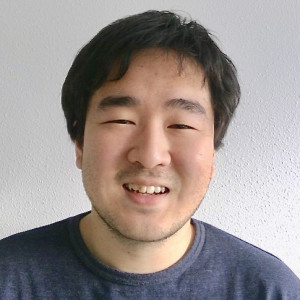
Akira Dohi Receives the Young Investigator Award from the Japan Forum of Nuclear Astrophysics (UKAKUREN)
2026-04-09
Akira Dohi, a Special Postdoctoral Researcher at the RIKEN Pioneering Research Institute (PRI) and concurrently affiliated with RIKEN iTHEMS, received the 2nd Young Investigator Award from the Japan Forum of Nuclear Astrophysics (UKAKUREN) on March 31, 2026.
The paper [1], recognized with this award, presents a theoretical study of clocked X-ray bursters. This work also represents the scientific result from NinjaSat, the world’s first ultra-small general-purpose X-ray satellite, launched on November 11, 2023 under the leadership of the Tamagawa High-Energy Astrophysics Laboratory at RIKEN PRI. For further details, please refer to the press release issued by RIKEN PRI via the related link.
Congratulations Akira!
Reference
- Akira Dohi, et al., Evidence of non-Solar elemental composition in the clocked X-ray burster SRGA J144459.2-604207, Publications of the Astronomical Society of Japan 77, L17-L23 (2025), doi: 10.1093/pasj/psae117
Upcoming Events
Seminar

From Classical Definiteness to Geometric Predictability: Complementarity, Coherence, and Thermodynamic Triality
April 10 (Fri) 15:30 - 17:00, 2026
Ezra Acalapati Madani (Ph.D. Student, Laboratoire de Physique de l'École Normale Supérieure, France)
Wave–particle complementarity is one of the central principles of quantum mechanics, traditionally quantified through the Englert–Greenberger–Yasin relation between which-way information and interference visibility. In higher-dimensional and resource-theoretic settings, however, visibility is no longer unique, and it becomes natural to reformulate complementarity in terms of basis-dependent predictability, coherence, and mixedness.
In this talk, I present two related works along this line. First, I discuss an exact complementarity relation between classical definiteness and quantumness, where definiteness is defined operationally through the resilience of a quantum state under nonselective dichotomic yes/no measurements, while the complementary quantum contribution is quantified using a Kirkwood–Dirac-based notion of coherence/interference motivated by recent KD-based coherence measures. Second, I introduce a geometric predictability defined by the Bures distance between the dephased state and the maximally mixed state. This predictability depends only on the observed measurement statistics and admits a closed form in terms of the Bhattacharyya overlap. For pure states, it satisfies an exact complementarity relation with nonclassical Kirkwood–Dirac coherence; for mixed states, this motivates a convex-roof extension whose operational meaning is the classically irreducible part of measurement randomness, with implications for guessing probability and min-entropy. Finally, motivated by the decomposition of entropy production into population and coherence contributions in quantum thermodynamics, and by standard wave–particle–mixedness triality relations, I show how the usual predictability–coherence duality can be promoted into a triality relation involving predictability, coherence, and mixedness.
Altogether, the talk connects wave–particle duality, coherence resource theories, operational guessing tasks, and thermodynamic balance relations within a unified framework.
Venue: #359, Seminar Room #359, 3F Main Research Building, RIKEN
Event Official Language: English
Meeting
iTHEMS NOW & NEXT 2026
April 13 (Mon) - 14 (Tue) 2026
We will hold an annual in-house gathering, “iTHEMS NOW & NEXT,” for FY 2026.
The event provides a great opportunity for all iTHEMS members, including visiting researchers and, in particular, new arrivals, to gain a comprehensive overview of iTHEMS’s current activities and future directions.
The detailed program will be announced in due course, but there will be poster sessions for all members, so please be ready to present one.
Venue: 2F Large Conference Room, Administrative Headquarters, RIKEN Wako Campus / via Zoom
Event Official Language: English
Seminar

Understanding Biological Clocks Using Methods from Applied Mathematics and Theoretical Physics
April 16 (Thu) 12:30 - 13:30, 2026
Gen Kurosawa (Senior Research Scientist, Division of Fundamental Mathematical Science, RIKEN Center for Interdisciplinary Theoretical and Mathematical Sciences (iTHEMS))
Imagine that you are in a room with no information about time. The room is located in a cave, where temperature and light intensity remain constant. In such an environment, would you be able to wake up tomorrow or the day after?
In fact, most humans can wake up at roughly similar times on successive days. This is because we possess internal daily rhythms, known as circadian rhythms. Biological experiments have shown that such rhythms are not unique to humans, but are shared by many species on Earth.
In this talk, I will introduce some open problems related to these daily rhythms, and discuss approaches based on dynamical systems theory and the renormalization group method, from the perspectives of applied mathematics and theoretical physics.
Reference
- Shingo Gibo, Teiji Kunihiro, Tetsuo Hatsuda, Gen Kurosawa, Waveform distortion for temperature compensation and synchronization in circadian rhythms: An approach based on the renormalization group method, PLOS Computational Biology (2025), doi: 10.1371/journal.pcbi.1013246
Venue: via Zoom / Seminar Room #359, 3F Main Research Building, RIKEN
Event Official Language: English
Seminar
RIKEN Seminar: Formulation of Life Phenomena from Quantum Theory
April 16 (Thu) 14:00 - 16:05, 2026
13:45 Opening
14:00-14:05 Introduction
Atsushi Iriki (Teikyo University Advanced Comprehensive Research Organization Division of Artificial Intelligence, RIKEN Center for Interdisciplinary Theoretical and Mathematical Sciences (iTHEMS))
14:05-14:35 "Interpretation of Life Phenomena Using Quantum Wave Functions and Field Theory"
Kazuhiro Sakurada (Keio University Medical School and RIKEN Center for Integrative Medical Sciences (IMS), Predictive Medicine Special Project (PMSP))
14:35-14:45 Q&A
14:45-15:30 "Bridging neurophysiology and quantum-like cognition"
Andrei Khrennikov (Center for Mathematical Modeling in Physics and Cognitive Sciences Linnaeus University)
15:30-15:45 Q&A
15:45-16:00 "Quantum-Like Measurement"
Masanao Ozawa (RIKEN Center for Interdisciplinary Theoretical and Mathematical Sciences (iTHEMS), RIKEN TRIP FQSP, and Nagoya University)
16:00-16:05 Closing Remarks
Satoshi Iso (Director, RIKEN Center for Interdisciplinary Theoretical and Mathematical Sciences (iTHEMS))
Host Laboratory: Predictive Medicine Special Project, RIKEN Center for Integrative Medical Sciences (IMS) / RIKEN Center for Interdisciplinary Theoretical and Mathematical Science (iTHEMS)
*Registration is required by April 14 via the registration form.
Contact: Predictive Medicine Special Project (pmsp-web@ml.riken.jp)
Venue: Meeting Room 305, Brain Science Ikenohata Research Bldg. (C56), RIKEN Wako Campus
Event Official Language: English
Seminar

Searching For Anomalies with Foundation Models
April 16 (Thu) 14:00 - 15:30, 2026
Vinicius Massami Mikuni (Associate Professor, Kobayashi-Maskawa Institute for the Origin of Particles and the Universe (KMI), Nagoya University)
This is a joint seminar with Institute for Physics of Intelligence (iπ), UTokyo
Anomaly detection relaxes the assumptions of how new physics should look and extends the reach of what we can discover. However, interpreting the data and estimating backgrounds remains a challenge. In this new work, we investigate anomalous events selected by the OmniLearned Foundation model across different model sizes, performing a full analysis using CMS Open Data. Surprisingly, models of different sizes, trained on the same data with the same loss functions, select entirely different collisions. In particular, the large OmniLearned model (500M parameters) selects events that are not well described by our background model.
Reference
- Mikuni, Vinicius and Nachman, Benjamin, Searching for Anomalies with Foundation Models, arXiv: 2603.23593
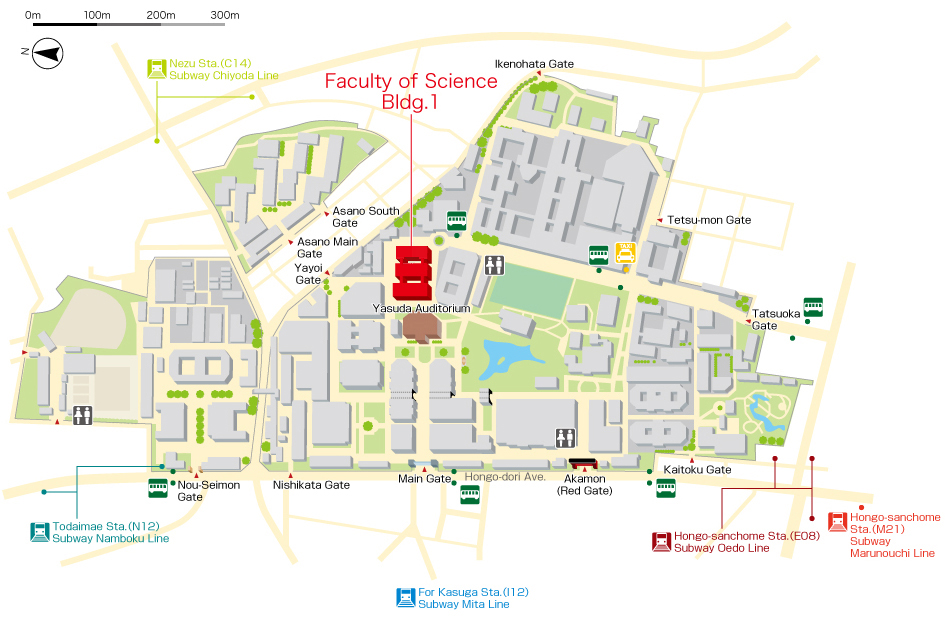
Venue: Faculty of Science Bldg.1, School of Science, The University of Tokyo, Hongo Campus / via Zoom
Event Official Language: English
Seminar

TJR-iTHEMS Joint Seminar: Golden Age of Neutron Stars
April 17 (Fri) 16:00 - 17:00, 2026
Gordon Baym (Professor Emeritus, University of Illinois, USA)
This is a TJR-iTHEMS Joint Seminar supported by ASPIRE Program
ABSTRACT
Neutron stars were first posited in the early thirties, and discovered as pulsars in the late sixties; however we are only recently beginning to understand the matter they contain. I will describe the ongoing development of a consistent picture of the liquid interiors of neutron stars, now driven by ever increasing observations as well as theoretical advances. These include observations of heavy neutron stars of about 2.0 solar masses and higher; ongoing inferences of masses and radii by the NICER telescope; and observations of binary neutron star mergers, through gravitational waves as well as across the electromagnetic spectrum. Theoretically an understanding is emerging in QCD of how nuclear matter can turn into deconfined quark matter, which I will illustrate with modern quark-hadron crossover equations of state.
BRIEF BIO
Gordon Baym is a Professor of Physics at the University of Illinois. Educated at Cornell and Harvard, he spent two years at the Niels Bohr Institute. His interests range from matter under extreme conditions to ultracold atomic physics, astrophysics, and nuclear physics. A pioneer in the study of pulsars and neutron stars, he is a member of the U.S. National Academy of Sciences and received the APS Medal for Exceptional Achievement in Research, the Hans Bethe and Lars Onsager Prizes, and the Eugene Feenberg Memorial Medal.
Venue: H701, The University of Osaka, Toyonaka Campus
Event Official Language: English
Special Lecture

iTHEMS x academist Online Event "World of Mathematical Sciences 2026"
April 18 (Sat) 10:00 - 15:30, 2026
Junnosuke Koizumi (Special Postdoctoral Researcher, Division of Fundamental Mathematical Science, RIKEN Center for Interdisciplinary Theoretical and Mathematical Sciences (iTHEMS))
Osamu Fukushima (Special Postdoctoral Researcher, Division of Fundamental Mathematical Science, RIKEN Center for Interdisciplinary Theoretical and Mathematical Sciences (iTHEMS))
Muzi Hong (Postdoctoral Researcher, Division of Fundamental Mathematical Science, RIKEN Center for Interdisciplinary Theoretical and Mathematical Sciences (iTHEMS))
Kenji Okubo (Special Postdoctoral Researcher, Division of Fundamental Mathematical Science, RIKEN Center for Interdisciplinary Theoretical and Mathematical Sciences (iTHEMS))
Venue: via Zoom
Event Official Language: Japanese
Seminar
Quantum Computing of Molecular Properties for Fundamental Physics
April 21 (Tue) 16:30 - 18:00, 2026
Pradyot Pritam Sahoo (Graduate International Research Student, Graduate School of Science, The University of Tokyo)
This is the self-introduction talk by Pradyot Pritam Sahoo. Pradyot is a Student Trainee in iTHEMS.
Venue: Seminar Room #359, 3F Main Research Building, RIKEN / via Zoom
Event Official Language: English
Seminar

The math that shows a perfect democracy is impossible
April 23 (Thu) 10:30 - 11:30, 2026
Brian Andrew Mintz (Postdoctoral Researcher, Mathematical Social Science Team, Division of Applied Mathematical Science, RIKEN Center for Interdisciplinary Theoretical and Mathematical Sciences (iTHEMS))
Groups need to make decisions, and there are a wide variety of ways this can be done, each maximizing different notions of fairness. Social Choice Theory provides a mathematical framework to investigate these possibilities rigorously. Infamous for its many impossibility results, this topic reveals some fundamental limits to democracy. Beyond this, we'll discuss potential resolutions to these problems, as well as their real world implications.
Venue: Seminar Room #359, 3F Main Research Building, RIKEN / via Zoom
Event Official Language: English
Meeting
Mathematical Application Research Team Meeting #14
April 24 (Fri) 14:00 - 15:30, 2026
Shin-ichi Ohta (Professor, School of Science, The University of Osaka)
Mathematical Application Research Team is honored to invite Prof. Shin-ichi Ohta from the University of Osaka to this meeting. Everyone is welcome to join the meeting to listen to his seminar.
Title: Synthetic and comparison Lorentzian geometry
Abstract: In this talk we review recent developments of synthetic geometric approaches to Lorentzian geometry, motivated by the theory of less regular spacetimes in general relativity as well as comparison geometry in the Riemannian setting. Among others, optimal transport theory plays a vital role.
Venue: #359, 3F, Main Research Building, RIKEN Wako Campus / via Zoom
Event Official Language: English
Seminar

Introduction to quantum resource theories (1)
May 11 (Mon) 13:30 - 17:00, 2026
Ryuji Takagi (Associate Professor, Graduate School of Arts and Sciences, The University of Tokyo)
[Registration Closed]
Due to high demand and venue capacity limits, registration for this course is now closed as of April 25. If you wish to be placed on a waiting list in case of cancellations, please contact us via the inquiry form at the bottom of this page.
One of the central goals of quantum information theory is to quantitatively clarify the relationship between the performance of quantum information processing and the valuable quantum features that underlie it. In this lecture, we will discuss quantum resource theories, a framework that provides a useful approach to this question. By presenting concrete examples—starting with entanglement theory, the most representative resource theory—as well as recent research results, we will see how perspectives and tools from information theory enable the quantification of quantum resources and the characterization of their convertibility. Beyond entanglement theory, we plan to discuss other key settings such as quantum thermodynamics, resource theory of asymmetry, and quantum magic—relevant resource in fault-tolerant quantum compuation. The overall aim of this lecture is to provide new analytical viewpoints that can be applied to a wide range of systems and quantum information processing tasks.
While we do not plan to change the overall start and end times for each day, the detailed lecture schedule is subject to change. The intensive course will be held over three days. Please register for the course using the form.
The registration deadline is May 7 (Thu).
Please note that the registration form is the same for all three days, so you only need to register once.
The 1st day: May 11 (Mon)
13:30-15:00 Lecture 1
15:00-15:30 Coffee break
15:30-17:00 Lecture 2
This event is in-person only.
Venue: #435-437, 4F, Main Research Building, RIKEN Wako Campus
Event Official Language: English
Seminar
Introduction to quantum resource theories (2)
May 12 (Tue) 9:00 - 17:00, 2026
Ryuji Takagi (Associate Professor, Graduate School of Arts and Sciences, The University of Tokyo)
[Registration Closed]
Due to high demand and venue capacity limits, registration for this course is now closed as of April 25. If you wish to be placed on a waiting list in case of cancellations, please contact us via the inquiry form at the bottom of this page.
One of the central goals of quantum information theory is to quantitatively clarify the relationship between the performance of quantum information processing and the valuable quantum features that underlie it. In this lecture, we will discuss quantum resource theories, a framework that provides a useful approach to this question. By presenting concrete examples—starting with entanglement theory, the most representative resource theory—as well as recent research results, we will see how perspectives and tools from information theory enable the quantification of quantum resources and the characterization of their convertibility. Beyond entanglement theory, we plan to discuss other key settings such as quantum thermodynamics, resource theory of asymmetry, and quantum magic—relevant resource in fault-tolerant quantum compuation. The overall aim of this lecture is to provide new analytical viewpoints that can be applied to a wide range of systems and quantum information processing tasks.
While we do not plan to change the overall start and end times for each day, the detailed lecture schedule is subject to change. The intensive course will be held over three days. Please register for the course using the form.
The registration deadline is May 7 (Thu).
Please note that the registration form is the same for all three days, so you only need to register once.
The 2nd day: May 12 (Tue)
9:00–10:30 Lecture 3
10:30–11:00 Coffee break
11:00–12:30 Lecture 4
12:30-13:30 Lunch time
13:30-15:00 Lecture 5
15:00-15:30 Coffee break
15:30-17:00 Lecture 6
This event is in-person only.
Venue: #435-437, 4F, Main Research Building, RIKEN Wako Campus
Event Official Language: English
Seminar
From Birkhoff's Polytope to Petz Recovery: Unistochastic Matrices, Quantum Channels, and Approximate Markov Chains
May 13 (Wed) 13:30 - 15:00, 2026
Claude Gravel (Assistant Professor, Department of Computer Science, Toronto Metropolitan University, Canada)
A doubly stochastic matrix is unistochastic if its entries correspond to the squared moduli of a unitary matrix. Determining which n × n doubly stochastic matrices admit such a representation remains an open problem at the intersection of convex geometry, combinatorics, and quantum information. For 3 × 3 matrices, elegant triangle inequalities provide a complete characterization: the unistochastic set occupies approximately 75% of the Birkhoff polytope and exhibits deltoid cross-sections. For n ≥ 4, the characterization problem remains unresolved and is influenced in unexpected ways by the prime factorization of n via the defect of the Fourier matrix. This presentation surveys these results and then establishes a connection to a second, seemingly unrelated question: given a tripartite quantum state with small conditional mutual information, to what extent can one subsystem be recovered from the others? The Petz recovery map and its rotated variants offer a universal solution. These two topics are linked through coherification, which concerns when a classical stochastic process can be elevated to coherent quantum dynamics, and through the conditional mutual information as a continuous measure of non-unistochasticity. The talk concludes with open problems at this interface, including the star-shapedness conjecture for n = 4 and the pursuit of tighter recovery bounds.
Venue: #359, Seminar Room #359, 3F Main Research Building, RIKEN
Event Official Language: English
Seminar
Introduction to quantum resource theories (3)
May 15 (Fri) 9:00 - 17:00, 2026
Ryuji Takagi (Associate Professor, Graduate School of Arts and Sciences, The University of Tokyo)
[Registration Closed]
Due to high demand and venue capacity limits, registration for this course is now closed as of April 25. If you wish to be placed on a waiting list in case of cancellations, please contact us via the inquiry form at the bottom of this page.
One of the central goals of quantum information theory is to quantitatively clarify the relationship between the performance of quantum information processing and the valuable quantum features that underlie it. In this lecture, we will discuss quantum resource theories, a framework that provides a useful approach to this question. By presenting concrete examples—starting with entanglement theory, the most representative resource theory—as well as recent research results, we will see how perspectives and tools from information theory enable the quantification of quantum resources and the characterization of their convertibility. Beyond entanglement theory, we plan to discuss other key settings such as quantum thermodynamics, resource theory of asymmetry, and quantum magic—relevant resource in fault-tolerant quantum compuation. The overall aim of this lecture is to provide new analytical viewpoints that can be applied to a wide range of systems and quantum information processing tasks.
While we do not plan to change the overall start and end times for each day, the detailed lecture schedule is subject to change. The intensive course will be held over three days. Please register for the course using the form.
The registration deadline is May 7 (Thu).
Please note that the registration form is the same for all three days, so you only need to register once.
The 3rd day: May 15 (Fri)
9:00–10:30 Lecture 7
10:30–11:00 Coffee break
11:00–12:30 Lecture 8
12:30-13:30 Lunch time
13:30-15:00 Lecture 9
15:00-15:30 Coffee break
15:30-17:00 Seminar (or Lecture 10)
This event is in-person only.
Venue: #435-437, 4F, Main Research Building, RIKEN Wako Campus
Event Official Language: English
Seminar

Singularities of differentiable maps and Thom polynomials
May 22 (Fri) 15:00 - 17:30, 2026
Masato Tanabe (Special Postdoctoral Researcher, Division of Fundamental Mathematical Science, RIKEN Center for Interdisciplinary Theoretical and Mathematical Sciences (iTHEMS))
Singularities are locations where something is exceptional. In particular, singularities of differentiable maps are mathematical concepts corresponding to stationary points of functions and apparent contours of surfaces under projection onto the retina. These are unavoidable in general, but important to study the shape of spaces and behavior of maps. The theory for them was initiated by R. Thom in 1950's, and have been deeply studied by many researchers.
Venue: Room 359, RIKEN Wako Campus / via Zoom
Event Official Language: English
Person of the Week

Self-introduction: Yuta Hamada
2026-04-06
I am interested in particle physics such as string theory and early universe cosmology. Recently, I am working on identifying consistent gravitational effective field theories that can be ultraviolet completed.
Additionally, I am interested in applying AI and quantum computing to string theory and quantum field theory.
Paper of the Week
Week 2, April 2026
2026-04-09
Title: Twisted doughnuts: Thick disk torus around equatorial asymmetric black hole
Author: Che-Yu Chen, Eva Hackmann, Audrey Trova
arXiv: http://arxiv.org/abs/2604.05604v1
Title: Gauss law codes and vacuum codes from lattice gauge theories
Author: Javier P. Lacambra, Aidan Chatwin-Davies, Masazumi Honda, Philipp A. Hoehn
arXiv: http://arxiv.org/abs/2604.06087v1
Title: Reconstruction of fast-rotating neutron star observables with the neural network
Author: Wen Liu, Lingxiao Wang, Zhenyu Zhu
arXiv: http://arxiv.org/abs/2604.05428v1
Title: Electroweak Doublet Dark Matter for a Galactic Halo Gamma-Ray Excess
Author: Yasunori Nomura, Tomonori Totani
arXiv: http://arxiv.org/abs/2604.05016v1
Title: Cosmological collider signals of modular spontaneous CP breaking
Author: Shuntaro Aoki, Alessandro Strumia
arXiv: http://arxiv.org/abs/2604.05548v1
Title: Mechanochemical instabilities drive digit morphogenesis in organoids
Author: Rio Tsutsumi, Antoine Diez, Steffen Plunder, Ryuichi Kimura, Shinya Oki, Kaori Takizawa, Rei Nakano, Haruhiko Akiyama, Ritsuko Takada, Shinji Takada, Marco Musy, James Sharpe, Mototsugu Eiraku
doi: https://doi.org/10.1101/2025.08.31.673315
Title: Multi-field oscillons/I-balls in the Friedberg-Lee-Sirlin model
Author: Kai Murai, Tatsuya Ogawa, Fuminobu Takahashi
arXiv: http://arxiv.org/abs/2604.04494v1
Title: Exponentially Long Evaporation of Noncommutative Black Hole
Author: Pei-Ming Ho, Wei-Hsiang Shao, Takuya Yoda
arXiv: http://arxiv.org/abs/2604.04774v1
Title: Type-IV 't Hooft Anomalies on the Lattice: Emergent Higher-Categorical Symmetries and Applications to LSM Systems
Author: Tsubasa Oishi, Hiromi Ebisu
arXiv: http://arxiv.org/abs/2604.02856v1
Title: Continuous-time evolution via probabilistic angle interpolation and its applications
Author: Tomoya Hayata, Yuta Kikuchi
arXiv: http://arxiv.org/abs/2604.02854v1
Title: Phase transitions in parametrized quantum circuits
Author: Xiaoyang Wang, Han Xu, Lukas Broers, Tomonori Shirakawa, Seiji Yunoki
arXiv: http://arxiv.org/abs/2603.27532v1
Title: Angular momentum transport in the convection zone of a 3D MHD simulation of a rapidly rotating core-collapse progenitor
Author: Ryota Shimada, Lucy O. McNeill, Vishnu Varma, Keiichi Maeda, Takaaki Yokoyama, Bernhard Müller
arXiv: http://arxiv.org/abs/2603.26550v1
Title: Cosmology from asymptotically safe Proca theories
Author: Carlos Pastor-Marcos, Lavinia Heisenberg, Álvaro Pastor-Gutiérrez, Jan M. Pawlowski, Manuel Reichert
arXiv: http://arxiv.org/abs/2604.01090v1
Title: Lindbladian Simulation with Commutator Bounds
Author: Xinzhao Wang, Shuo Zhou, Xiaoyang Wang, Yi-Cong Zheng, Shengyu Zhang, Tongyang Li
arXiv: http://arxiv.org/abs/2603.28602v1
Title: Disentangling the interactive effects of anthropogenic disturbances on biodiversity
Author: Isaac Planas-Sitjà, Ryosuke Iritani, Adam L. Cronin
arXiv: http://arxiv.org/abs/2603.29116v1
Title: Gravitational waves from gaps of neutron stars
Author: Akira Dohi, Asuka Ito, Shota Kisaka
arXiv: http://arxiv.org/abs/2603.29514v1
Title: Universal Non-Gaussian Signatures from Transient Instabilities
Author: Shuntaro Aoki, Diederik Roest, Denis Werth
arXiv: http://arxiv.org/abs/2604.01035v1
Title: Evaluating Phylogenetic Comparative Methods under Reticulate Evolutionary Scenarios
Author: Lydia Morley, Emma Lehmberg, Sungsik Kong
arXiv: http://arxiv.org/abs/2603.25986v1
Title: Segmentation of monotone data by Kobayashi-Warren-Carter type total variation energies
Author: Yoshikazu Giga, Ayato Kubo, Hirotoshi Kuroda, Koya Sakakibara
arXiv: http://arxiv.org/abs/2603.28078v2
Title: Zeta Zeros in a Narrow Vertical Box
Author: Daniel A. Goldston, Ade Irma Suriajaya
arXiv: http://arxiv.org/abs/2603.28104v1
Title: Finite-nuclear-size effect for hydrogenlike ions under high external pressure
Author: Dengshan Liu, Huihui Xie, Pengxiang Du, Tianshuai Shang, Jian Li, Jiguang Li, Tomoya Naito
arXiv: http://arxiv.org/abs/2603.22901v1
If you would like to cancel your subscription or change your email address,
please let us know via our contact form.
Copyright © iTHEMS, RIKEN. All rights reserved.