
Volume 394
Back to Newsletter List


Volume 394
February 6, 2026
Hot Topic

“Black Hole Recorder” Exhibited in “Mission ∞ Infinity | Space + Quantum + Art”
2026-02-03
ADK Marketing Solutions Inc. is exhibiting the interactive science-art installation “Black Hole Recorder”, created in collaboration with iTHEMS, as part of the special exhibition “Mission ∞ Infinity | Space + Quantum + Art”, currently being held at the Museum of Contemporary Art Tokyo from January 31 to May 6, 2026.
This work is a prototype model of a future information storage device inspired by quantum black hole theory. Using the black hole as a metaphor for an object capable of containing enormous amounts of data, the installation invites visitors to record human voices and sounds, imagining them being delivered into the distant future or even into space.
Through artworks that merge space science, quantum theory, and artistic expression, the exhibition offers a unique opportunity to experience the invisible world and explore new possibilities for the future.
For more information, please see the related links.
Award
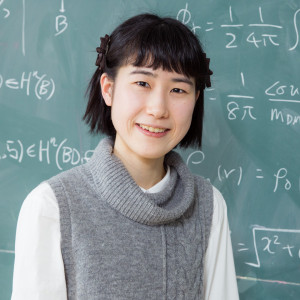
Nagisa Hiroshima Receives the 7th (2026) Fumiko Yonezawa Memorial Prize
2026-02-05
Nagisa Hiroshima (Visiting Scientist, iTHEMS / Associate Professor, Yokohama National University) has received the 7th (2026) Fumiko Yonezawa Memorial Prize.
The Fumiko Yonezawa Memorial Prize was established by the Physical Society of Japan to recognize and encourage outstanding research achievements by early- to mid-career women physicists. In principle, the prize is awarded to researchers within 15 years of obtaining their final degree, and each year a small number of recipients (approximately five) are selected.
Hiroshima has been engaged in theoretical research on dark matter, using astrophysical observations and theoretical models to investigate its properties. Her series of research achievements in dark matter studies employing astrophysical approaches was highly recognized, leading to this award.
Congratulations, Nagisa!
Upcoming Events
Seminar

What can we learn from kilonovae about nucleosynthesis and high-density matter?
February 9 (Mon) 14:00 - 15:15, 2026
Oliver Just (Postdoctoral Researcher, GSI Helmholtzzentrum für Schwerionenforschung, Germany)
The electromagnetic transients accompanying neutron-star mergers (NSMs), called kilonovae, are powered by the radioactive decay of freshly synthesized heavy elements. As such they should contain rich information about the ejected matter and the properties of the extremely dense meta-stable neutron-star remnant formed right after the collision. However, extracting such information from observed kilonova light curves and spectra remains a challenging endeavor, which requires sophisticated models of various hydrodynamic processes and neutrino transport effects, detailed knowledge of nuclear and atomic physics, as well as complex radiative transfer calculations. In this talk I will report recent efforts from our "HeavyMetal" collaboration aimed at deciphering kilonovae.
Venue: Hybrid Format (3F #359 and Zoom), Seminar Room #359, 3F Main Research Building, RIKEN
Event Official Language: English
Seminar

Finite-size effects on the QCD critical point
February 9 (Mon) 15:30 - 17:30, 2026
Gyozo Kovacs (Research Fellow, Institute of Theoretical Physics, University of Wroclaw, Poland)
[Joint seminar hosted by QMS Team (iTHEMS) and FTR Team (R-CCS)]
While effective approaches are important tools in the search for the QCD critical point, the physical systems they describe differ in several aspects from those in heavy-ion collisions and from unextrapolated lattice QCD. A primary discrepancy is the system size, which is infinite only in effective model calculations. Various implementations exist to account for the resulting finite-size effects. Beyond the frequently used methods, we present a comprehensive mean-field approach that allows for both infinite- and finite-size calculations, even within a complex parameter space. We discuss the general impact of finite-size effects on key observables, such as conserved charge fluctuations, and on the analytic structure of the thermodynamic potential.
15:30-16:30 Lecture
16:30-17:30 Discussion with coffee
References
- Győző Kovács, Pok Man Lo, Krzysztof Redlich, Chihiro Sasaki, Finite size effects and scaling properties of charge fluctuations, arXiv: 2510.24507
- Győző Kovács, Péter Kovács, Pok Man Lo, Krzysztof Redlich, György Wolf, Sensitivity of finite size effects to the boundary conditions and the vacuum term, Phys.Rev.D 108, 7, 076010 (2023), doi: 10.1103/PhysRevD.108.076010
Venue: #359, Main Research Building, RIKEN Wako Campus / via Zoom
Event Official Language: English
Seminar
Quantum Electrodynamics of Strong Laser-Matter Interaction: The Ongoing Journey and Beyond
February 10 (Tue) 10:00 - 12:00, 2026
Ciappina Marcelo (Professor, Guangdong Technion, China)
Venue: Seminar Room #359, 3F Main Research Building, RIKEN / via Zoom
Event Official Language: English
Seminar
Monitoring the complexity and dynamics of mitochondrial translation
February 12 (Thu) 16:00 - 17:00, 2026
Taisei Wakigawa (Research Associate, RNA Systems Biochemistry Laboratory, RIKEN Pioneering Research Institute (PRI))
Since mitochondrial translation leads to the synthesis of the essential oxidative phosphorylation (OXPHOS) subunits, exhaustive and quantitative delineation of mitoribosome traversal is needed. Here, we developed a variety of high-resolution mitochondrial ribosome profiling derivatives and revealed the intricate regulation of mammalian mitochondrial translation. Harnessing a translation inhibitor, retapamulin, our approach assessed the stoichiometry and kinetics of mitochondrial translation flux, such as the number of mitoribosomes on a transcript, the elongation rate, and the initiation rate. We also surveyed the impacts of modifications at the anticodon stem loop in mitochondrial tRNAs (mt-tRNAs), including all possible modifications at the 34th position, in cells deleting the corresponding enzymes and derived from patients, as well as in mouse tissues. Moreover, a retapamulin-assisted derivative and mito-disome profiling revealed mitochondrial translation initiation factor (mtIF) 3-mediated translation initiation from internal open reading frames (ORFs) and programmed mitoribosome collision sites across the mitochondrial transcriptome. Our work provides a useful platform for investigating protein synthesis within the energy powerhouse of the cell.
Reference
- Taisei Wakigawa, Mari Mito, Yushin Ando, Haruna Yamashiro, Kotaro Tomuro, Haruna Tani, Kazuhito Tomizawa, Takeshi Chujo, Asuteka Nagao, Takeo Suzuki, Osamu Nureki, Fan-Yan Wei, Yuichi Shichino, Yuzuru Itoh, Tsutomu Suzuki, Shintaro Iwasaki, Monitoring the complexity and dynamics of mitochondrial translation, Molecular Cell 85, 4279 (2025), doi: 10.1016/j.molcel.2025.10.022
Venue: Hybrid Format (3F #359 and Zoom), Seminar Room #359, 3F Main Research Building, RIKEN
Event Official Language: English
Seminar
Persistent homology and its applications
February 17 (Tue) 11:00 - 12:00, 2026
Yuichi Ike (Associate Professor, Graduate School of Mathematical Sciences, The University of Tokyo)
Persistent homology is one of the main tools in topological data analysis (TDA), which encodes the topological features of given data into persistence diagrams. It has been successfully applied to various fields such as material science and computer graphics. In this talk, I will provide an overview of persistent homology and its applications. Furthermore, I will also discuss its integration with machine learning, specifically how persistent-homology-based loss functions can be used to regularize the topological structure of parameters.
Venue: Seminar Room #359, 3F Main Research Building, RIKEN
Event Official Language: English
Seminar
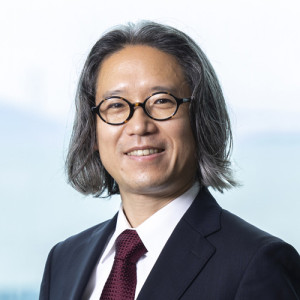
Taming the Butterfly: A New "Duality Principle" Turns Chaos into Control
February 18 (Wed) 13:00 - 14:00, 2026
Takemasa Miyoshi (Team Principal, Data Assimilation Research Team, RIKEN Center for Computational Science (R-CCS))
Data Assimilation (DA) is the backbone of modern weather forecasting. It integrates observational data into computer simulations to synchronize the model with nature. The Duality Principle posits that chaos control is mathematically the "twin" (dual) of DA.
Data Assimilation: Uses observations to synchronize the Model to Nature.
Chaos Control: Uses interventions to synchronize Nature to a desired Model ("target trajectory").
"The butterfly effect has long been a symbol of unpredictability," says Dr. Miyoshi. "But I asked a simple question: If a butterfly's wings can change the future, does that not imply that with the right, tiny push, we could choose a better future?"
Instead of suppressing the chaotic system with massive force, this method acts like mathematical judo—leveraging the system's inherent instability. By applying minute, calculated "interventions" (analogous to the butterfly's flap), the system can be guided toward a "target trajectory"—for instance, shifting real-world conditions just enough to align with a model-simulated scenario where a typhoon causes no damage. Once synchronized, control becomes much easier to maintain.
This study establishes the theoretical foundation for "Control Simulation Experiments" (CSE), a framework previously proposed by Miyoshi’s team. It provides a roadmap for future disaster prevention research, moving beyond passive prediction to active mitigation. Beyond meteorology, this general framework is expected to serve as a universal tool for studying interventions in various chaotic systems, from ecosystems to economics.
Following the seminar, we will hold an informal discussion (brainstorming) on data assimilation with quantum computing in the same room from 2-4 pm.
Reference
- A duality principle for chaotic systems: from data assimilation to efficient control, Takemasa Miyoshi, Nonlinear Dyn 114, 105 (2026), doi: 10.1007/s11071-025-12021-2
Venue: Hybrid Format (3F #359 and Zoom), Seminar Room #359, 3F Main Research Building, RIKEN
Event Official Language: English
Internal Meeting
Brainstorming session on data assimilation with quantum computing
February 18 (Wed) 14:00 - 16:00, 2026
Takemasa Miyoshi (Team Principal, Data Assimilation Research Team, RIKEN Center for Computational Science (R-CCS))
We will discuss the potential of quantum computing for applications in data assimilation.
Venue: #359, Seminar Room #359, 3F Main Research Building, RIKEN
Event Official Language: English
Colloquium

The 31th MACS Colloquium & 2025 MACS Achievement Report Meeting
February 18 (Wed) 14:45 - 18:00, 2026
Yujiro Eto (Associate Professor, Center for Science Adventure and Collaborative Research Advancement (SACRA), Graduate School of Science, Kyoto University)
14:45-15:00 Teatime discussion
[15:00-16:00 The 31th MACS Colloquium]
Talk by Dr. Yujiro Eto (Associate Professor, Center for Science Adventure and Collaborative Research Advancement (SACRA), Graduate School of Science, Kyoto University)
[16:10-18:30 2025 MACS Achievement Report Meeting]
16:10-17:10 Flash Talks to report results
17:10-18:00 Poster Session by SG participating students
Venue: #401, Graduate School of Science Bldg. No.6 , Kyoto University
Event Official Language: Japanese
Seminar
The sample complexity of species tree estimation: How many genes does it take to infer a species tree?
February 19 (Thu) 13:00 - 14:00, 2026
Max Hill (Assistant Professor, University of Hawaiʻi, USA)
In this talk, I will discuss the problem of inferring an evolutionary tree from DNA sequence data. The main focus will be on the sample complexity of this problem---i.e., the question of how much data is required to achieve high probability of correct inference. After introducing a standard stochastic model of gene and DNA evolution, I will highlight some surprising features of DNA sequence data that complicate inference. Finally, I will present an impossibility result which takes the form of an information-theoretic lower bound on the minimum amount of data needed for accurate inference when genes exhibit variation in mutation rates. No prior knowledge of phylogenetics or information theory is assumed. Based on joint work with Sebastien Roch.
Venue: Seminar Room #359, 3F Main Research Building, RIKEN / via Zoom
Event Official Language: English
Seminar
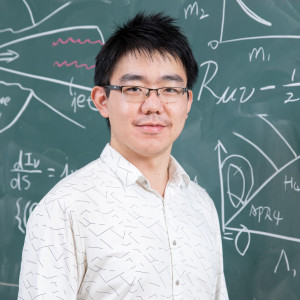
Binary neutron Star Merger as a Probe of Hadron-Quark Transition
February 19 (Thu) 14:00 - 15:00, 2026
Yongjia Huang (Research Associate, Purple Mountain Observatory, Chinese Academy of Sciences, China)
This seminar is a joint seminar between GWX-EOS and the iTHEMS-ABBL Joint Astro SG.
The recent rise of multi-messenger astronomy—including radius measurements from NICER, tidal deformability constraints from gravitational-wave events GW170817, and first-principles calculations from chiral effective field theory (χEFT) and perturbative QCD—has significantly tightened constraints on the neutron star equation of state. These advances consistently point to a non-monotonic sound speed in dense matter, suggesting that the cores of massive neutron stars may host exotic phases such as quark matter. However, the masquerade effect in static neutron stars makes it difficult to directly probe the nature of the transition (e.g., a smooth crossover or a sharp phase transition) near the core through observation alone.
Venue: #345, 3F, Main Research Building, RIKEN Wako Campus / via Zoom
Event Official Language: English
Seminar

Spectral Codes : A Geometric Formalism for QEC
February 19 (Thu) 15:00 - 16:30, 2026
Satoshi Kanno (Researcher, Research Institute of Advanced Technology, SoftBank Corp.)
In this talk, I will introduce a novel geometric framework for quantum error correction based on spectral triples in noncommutative geometry. In this formulation, quantum error-correcting codes are described as spectral projections onto the low-energy eigenspaces of Dirac-type operators, where the separation between logical information and local errors is captured geometrically. This approach provides a unified spectral and geometric understanding of key properties such as code distance and error thresholds. Moreover, it accommodates various existing codes, including classical linear codes, stabilizer codes, GKP codes, and topological codes. This geometric perspective also suggests intriguing connections to deformation quantization and holographic quantum error correction, offering promising directions for future research.
Reference
- Satoshi Kanno, Yoshi-aki Shimada, Spectral Codes: A Geometric Formalism for Quantum Error Correction, arXiv: 2601.19765
Venue: #359, Seminar Room #359, 3F Main Research Building, RIKEN
Event Official Language: English
Seminar
Testing the quantum nature of gravity with optomechanical systems
February 26 (Thu) 10:00 - 12:00, 2026
Yuta Michimura (Assistant Professor, Department of Physics, Graduate School of Science, The University of Tokyo)
Quantum gravity remains one of the major challenges in modern physics. Even at the most fundamental level, there is no experimental confirmation of whether a mass placed in a spatial superposition generates a corresponding superposition of gravitational fields. In recent years, experiments aiming to create gravity-induced quantum entanglement have attracted significant attention as a way to probe the quantum nature of non-relativistic gravity. In particular, optomechanical systems, which exploit the interaction between light and mechanical oscillators, provide a promising platform for such studies. We are pursuing experiments at the milligram scale, which lies between the smallest mass scale at which classical gravity has been tested and the largest mass scale at which quantum states of mechanical oscillators have been realized [1]. In this seminar, I will discuss experimental approaches to testing the quantum nature of gravity using suspended and levitated mirrors. I will also discuss our recent proposal to use inverted oscillators to enhance gravity-induced entanglement exponentially [2].
References
- Yuta Michimura, Kentaro Komori, Quantum sensing with milligram scale optomechanical systems, The European Physical Journal D 74, 126 (2020), arXiv: 2003.13906
- Tomohiro Fujita, Youka Kaku, Akira Matsumura, Yuta Michimura, Inverted Oscillators for Testing Gravity-induced Quantum Entanglement, Classical and Quantum Gravity 42, 165003 (2025), arXiv: 2308.14552
Venue: Hybrid Format (3F #359 and Zoom), Seminar Room #359, 3F Main Research Building, RIKEN
Event Official Language: English
Seminar

The career talk: From Quarks to Cinematic Sparks
February 27 (Fri) 15:00 - 16:30, 2026
Agnes Mocsy (Professor, Department of Mathematics and Science, Pratt Institute, USA)
While my career began in a linear way, it gradually opened into a non-traditional path through unexpected mergings, where theoretical nuclear physics, filmmaking, and creative public and academic engagement intertwined. I will share how scientific inquiry, artistic practice, and storytelling began shaping one another, opening new ways to explore complexity, emotion, and connection. Drawing on work from my physics research to cinema projects like Rare Connections, I will reflect on how curiosity and creative thinking move freely across science and art, deepening each and expanding how we understand the human experience. My aim is to offer a perspective on the possibilities that emerge when we allow our multitudes to meet and transform one another.
Venue: Hybrid Format (3F #359 and Zoom), Seminar Room #359, 3F Main Research Building, RIKEN
Event Official Language: English
Workshop

RIKEN iTHEMS-Kyoto University joint workshop on Asymptotics in Astrophysics and Cosmology
March 2 (Mon) - 4 (Wed) 2026
This joint workshop will bring together physicists and mathematicians who work with asymptotics and perturbation theory techniques. This includes theorists in cosmology, high energy physics, quantum gravity, solar physics, astrophysics.
Workshop overview
Over three days, there will be approximately 15 invited (1 hour slot) or contributed (20-30 min slot) talks about:
Fundamental asymptotics and perturbation theory techniques used in theoretical physics. Various applications of asymptotics and perturbation theory techniques in (wave transport or oscillation related) astrophysics and cosmology eigenvalue problems.
The workshop will also feature hands-on Mathematica and Python tutorials introducing:
Practical use of WKB methods in applied mathematics for any “Schrodinger-like” wave equations, Resummation methods in high energy theory, Deriving normal modes in stars, and their application to tidal evolution in binary star or planet systems, Eigenvalue problems in core collapse supernova theory.
Venue: 8F, Integrated Innovation Building (IIB), Kobe Campus, RIKEN
Event Official Language: English
Workshop
KEK-iTHEMS Workshop “Concepts of Quantum and Spacetime”
March 9 (Mon) - 12 (Thu) 2026
The two fundamental questions—“What is quantum?” and “What is spacetime?”—are deeply intertwined. On one hand, the formulation and interpretation of quantum theory depend both implicitly and explicitly on our conceptions of time and space. On the other hand, we believe that fully taking into account the quantum character of nature will force us to revise our understanding of spacetime. These two conceptual problems lie at the heart of the unsolved challenge of how to quantize classical spacetime, and conversely, how (semi-) classical descriptions of spacetime emerge from quantum theory. Furthermore, if the entire matter-spacetime system is a kind of quantum many-body system, thermodynamics—which governs its statistical behaviors—should play a key role in elucidating these problems.
This workshop will discuss the question “How can quantum theory and spacetime be understood in a consistent manner?” from a fundamental and broad perspective. To tackle this challenge, we gather researchers in foundations of quantum theory, quantum gravity, and related fields from around the world, providing a "space and time" to share various ideas with open minds and engage in lively discussions. By exploring new concepts and principles, we hope to uncover directions to guide quantum theory over the next 100 years.
This workshop covers…
Foundations of quantum theory
Quantum gravity and emergence of spacetime
Formulation of semi-classical gravity
Experimental aspects of fundamental properties in nature and quantum gravity
Foundations of quantum many-body systems and thermodynamics
Other related topics are welcome.
We welcome short talk presentations and poster presentations.
This event is a workshop jointly organized by KEK Theory Center and RIKEN iTHEMS.
Venue: Seminar Hall, Building 3, KEK
Event Official Language: English
Workshop
Perspectives and applications of Koopman Operator Theory
March 19 (Thu) 9:00 - 18:00, 2026
Yoshihiko Susuki (Professor, Graduate School of Engineering, Kyoto University)
Hiroya Nakao (Professor, Department of Systems and Control Engineering, Institute of Science Tokyo)
Alexandre Mauroy (Associate Professor, Mathematics, University of Namur, Belgium)
Yuzuru Kato (Associate Professor, Department of Complex and Intelligent Systems, School of Systems Information Science, Future University-Hakodate)
PROGRAM:
9h45 - 10h15 Registration & Coffee
10h15 - 10h20 Opening Remarks - Satoshi Iso (RIKEN), Director of iTHEMS
10h20 - 11h20 SESSION 1 - Chair: Tetsuo Hatsuda (RIKEN)
Yoshihiko Susuki (Kyoto University): Koopman resolvents in dynamical systems and control
11h20 -11h40 Free Discussions
11h40 - 13h00 Lunch Break & Discussions
13h00-14h00 SESSION 2 - Chair: Narumi Fujii (Institute of Science Tokyo)
Alexandre Mauroy (University of Namur, Belgium): Analytic EDMD method for spectral analysis of fixed point dynamics
14h00 - 14h30 Coffee Break & Discussions
14h30 - 15h30 SESSION 3 - Chair: Tetsuo Hatsuda (RIKEN)
Hiroya Nakao (Institute of Science Tokyo): Koopman operator analysis of coupled oscillator systems
15h30 - 16h00 Coffee Break & Discussions
16h00 - 17h00 SESSION 4 - Chair: Riccardo Muolo (RIKEN)
Yuzuru Kato (Future University Hakodate): Analysis of quantum nonlinear oscillators on the basis of Koopman operator theory
17h00 - 17h05 Closing Remarks - Tetsuo Hatsuda, Chair of the Workshop
17h05 - 18h00 Free Discussions
Venue: Room 535-537, 5F, Main Research Building, RIKEN Wako Campus
Event Official Language: English
Seminar
QFT as a set of ODEs
March 27 (Fri) 13:30 - 15:30, 2026
Qiao Jiaxin (Project Researcher, Kavli Institute for the Physics and Mathematics of the Universe (Kavli IPMU), The University of Tokyo)
Correlation functions of local operators in Quantum Field Theory (QFT) on hyperbolic space can be fully characterized by the set of QFT data. These are the scaling dimensions of boundary operators, the boundary Operator Product Expansion (OPE) coefficients and the Boundary Operator Expansion (BOE) coefficients that characterize how each bulk operator can be expanded in terms of boundary operators. For simplicity, we focus on two dimensional QFTs and derive a universal set of first order Ordinary Differential Equations (ODEs) that encode the variation of the QFT data under an infinitesimal change of a bulk relevant coupling. In principle, our ODEs can be used to follow a renormalization group flow starting from a solvable QFT into a strongly coupled phase and to the flat space limit.
References
- Manuel Loparco, Grégoire Mathys, João Penedones, Jiaxin Qiao, Xiang Zhao, Locality constraints in AdS2 without parity, arXiv: 2511.20749
- Manuel Loparco, Grégoire Mathys, Joao Penedones, Jiaxin Qiao, Xiang Zhao, QFT as a set of ODEs, arXiv: 2601.04310
Venue: via Zoom / Seminar Room #359, 3F Main Research Building, RIKEN
Event Official Language: English
Seminar
Clumpy Outflows from Super-Eddington Accreting Black Holes
April 10 (Fri) 14:00 - 15:15, 2026
Haojie Hu (JSPS Research Fellow, University of Tsukuba)
Recent advances in X-ray spectroscopic observation have enabled researchers to reveal distinct clumpy structures in the super-Eddington outflows from the supermassive black hole in PDS 456 (XRISM Collaboration 2025), initiating detailed investigation of fine-scale structures in accretion-driven outflows. In this talk, I will introduce our high-resolution, two-dimensional radiation-hydrodynamics simulations with time-varying and anisotropic initial and boundary conditions that reproduce clumpy outflows from super-Eddington accretion flows. The resulting clumpy outflows extend across a wide range of radial distances and polar angles, exhibiting typical properties such as a size of ~10 rg (where rg is the gravitational radius), a velocity of ~0.05–0.2 c (where c is the speed of light), and about five clumps along the line of sight. Although the velocities are slightly smaller, these characteristics reasonably resemble those obtained from the XRISM observation. The gas density of the clumps is on the order of 10^-13–10^-12 g cm^-3, and their optical depth for electron scattering is approximately 1–10. The clumpy winds accelerated by radiation force are considered to originate from the region within <300 rg.
Venue: #220, 2F, Main Research Building, RIKEN Wako Campus / via Zoom
Event Official Language: English
Upcoming Visitor
February 9 (Mon) - 20 (Fri) 2026 Toshinori TakamaMaster's Student, Yukawa Institute for Theoretical Physics, Kyoto University Visiting Place: Main Research Building |
Paper of the Week
Week 2, February 2026
2026-02-05
Title: Courant-Hilbert deformations of Yang-Baxter sigma models
Author: Osamu Fukushima, Takaki Matsumoto, Kentaroh Yoshida
arXiv: http://arxiv.org/abs/2602.04662v1
Title: Hurwitz-Radon numbers and proper actions of semisimple Lie groups
Author: Kazuki Kannaka, Koichi Tojo
arXiv: http://arxiv.org/abs/2602.04544v1
Title: von Neumann entropy of phase space structures in gyrokinetic plasma turbulence
Author: Go Yatomi, Motoki Nakata
arXiv: http://arxiv.org/abs/2602.00600v1
Title: When higher-order interactions enhance synchronization: the case of the Kuramoto model on random hypergraphs
Author: Riccardo Muolo, Hiroya Nakao, Marco Coraggio
arXiv: http://arxiv.org/abs/2508.10992v2
Title: Resource-Theoretic Quantifiers of Weak and Strong Symmetry Breaking: Strong Entanglement Asymmetry and Beyond
Author: Yuya Kusuki, Sridip Pal, Hiroyasu Tajima
arXiv: http://arxiv.org/abs/2601.20924v1
Title: Non-invertible translation from Lieb-Schultz-Mattis anomaly
Author: Tsubasa Oishi, Takuma Saito, Hiromi Ebisu
arXiv: http://arxiv.org/abs/2601.21625v1
Title: Probing the Diversity of Type Ia Supernova Remnants in 3-D Hydrodynamic Simulations with X-ray Spectral Synthesis
Author: Yusei Fujimaru, Shiu-Hang Lee, Gilles Ferrand, Daniel Patnaude, Shigehiro Nagataki, Rüdiger Pakmor, Samar Safi-Harb, Friedrich K. Röpke, Anne Decourchelle, Ivo R. Seitenzahl
arXiv: http://arxiv.org/abs/2601.20446v1
If you would like to cancel your subscription or change your email address,
please let us know via our contact form.
Copyright © iTHEMS, RIKEN. All rights reserved.