
Volume 370
Back to Newsletter List


Volume 370
August 22, 2025
Hot Topic
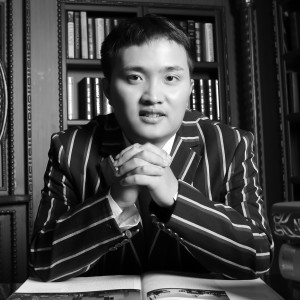
Farewell message from Congcong Le
2025-08-20
Our colleague, Congcong Le, will be leaving iTHEMS to join the Hefei National Laboratory as a Research Scientist. Since joining iTHEMS in August 2021 as a Postdoctoral Researcher, he has spent four wonderful years making progress in research and actively engaging in our community. We will all miss him and wish him the best of luck in this new endeavor.
Here is a message from Congcong:
I joined iTHEMS in August 2021 as a Postdoctoral Researcher and have spent four wonderful years here. Looking back on this journey, I have not only made significant progress in my research but have also felt immense warmth and care in my daily life.
For researchers, the most valuable thing is to have an open environment where we can freely explore ideas, follow our curiosity, and ask every question that comes to mind. iTHEMS has provided such an environment, and I consider myself very lucky to have been part of it. In our weekly Coffee Meetings, I always benefit from the vivid biological facts and mathematical tricks. In the weekly group discussions hosted by Chingkai, I can share the new problems and the new ideas, and these exchanges have continually broadened my perspective and strengthened my research abilities.
On a personal note, I am especially grateful to Hatsuda-san and all the iTHEMS assistants. During a challenging time for my family, they offered us sincere support and help. I still clearly remember that when we arrived in Japan from Germany in 2021, my wife was pregnant. Due to COVID-19, we needed to quarantine. To ensure my wife’s safety, Tomoko-san and Sasaki-san helped us find a hotel near the hospital, and after the quarantine, Hatsuda-san personally drove my family and me to RIKEN. This kindness and care will always remain in my heart.
Next, I will be moving to the Hefei National Laboratory in China. Although I am embarking on a new journey, I sincerely hope to return often to visit and continue enjoying the unique academic atmosphere here. Let’s stay in touch and keep enjoying the beauty of both research and life.
Hot Topic
Exhibition of the Science-Art Work “Black Hole Recorder” at Expo 2025 Osaka, Kansai, Japan
2025-08-18
The science-art work Black Hole Recorder, created in 2021 by iTHEMS in collaboration with external creators and based on quantum black hole theory, will be exhibited at the special exhibition “Entangled Moments — [Quantum, Ocean, Universe] × Art” (hosted by the Cabinet Office and the Ministry of Education, Culture, Sports, Science and Technology) at Expo 2025 Osaka, Kansai, Japan, from Thursday, August 14 to Wednesday, August 20, 2025.
To mark the exhibition, a YouTube video introducing Black Hole Recorder has been released, along with a digest version of a dialogue between physicists:
Atsuto Iso (Director, iTHEMS, RIKEN) × Nomura (Director, Berkeley Center for Theoretical Physics), discussing quantum gravity and black holes.
For details, please refer to the related links.
- entangle moment - [quantum | earth | universe] × art (in Japanese) | QST
- entangle moment - [quantum | earth | universe] × art | Expo 2025 Theme Weeks
- Physicists’ Dialogue: Discussing Quantum Gravity and Black Holes — Digest (in Japanese)
- Introduction to “Black Hole Recorder” (in Japanese)
- Black Hole Recorder at EXPO 2025: “Entangle Moment — [Quantum, Ocean, Space] × Art” Exhibition Movie, Expo 2025 Osaka, Kansai
Hot Topic

Farewell message from Misako Tatsuuma
2025-08-18
Our colleague, Misako Tatsuuma, will be joining the Department of Electronic Engineering, National Institute of Technology, Tokyo College as an Assistant Professor starting September 2025. She will continue to be involved with iTHEMS as a visiting scientist. We will all miss her and wish her the best of luck in this new endeavor.
Here is a message from Misako:
Although it has only been about two years since October 2023, my time at iTHEMS has been a lifelong treasure for me. My research field is planet formation theory, but by joining seminars from many different fields, I was able to learn a lot of new things and gain many new ideas for future research. I also had opportunities to engage in outreach and teaching, which gave me valuable experiences. I am especially grateful that, during the most difficult period of childcare, I was allowed to work flexibly, including working from home. I will continue to be involved with iTHEMS as a visiting scientist, so I look forward to staying connected with you.
From September 2025, I will be teaching in the field of information engineering at a National Institute of Technology (KOSEN), which is a five-year school for students from the equivalent of the first year of high school to the second year of university. This will be a new field for me, so I hope to learn a lot while also incorporating what I can into my research.
Thank you very much for everything.
Seminar Report
iTHEMS Theoretical Physics Seminar by Sergei Ketov on July 8, 2025
2025-08-18
After a review of Starobinsky inflation, it is demonstrated how it fits both Planck and ACT observations, even in the presence of production of primordial black holes (as dark matter) at smaller scales. The Swampland Program constraints on the Starobinsky inflation are resolved also. Further constraints to inflation in the supergravity framework, arising via renormalization of precision LHC physics on electroweak scales are briefly outlined.
Reported by Shuntaro Aoki
Starobinsky Inflation and Primordial Black Holes Production in Light of ACT, Planck and Swampland
July 8 (Tue) 16:00 - 17:30, 2025
Upcoming Events
Seminar

A Discussion on Quantum Machine Learning for Medical Data
August 26 (Tue) 14:00 - 15:00, 2025
Satoru Sugimoto (Senior Research Scientist, Medical Science Data-driven Mathematics Team, Division of Applied Mathematical Science, RIKEN Center for Interdisciplinary Theoretical and Mathematical Sciences (iTHEMS))
Our team is investigating the applicability of machine learning using quantum computers to medical data. In this talk, we will provide a brief overview of supervised machine learning for medical data as a topic for discussion.
Venue: via Zoom
Event Official Language: English
Seminar
Observational constraint of non-scalar phantom dark energies
August 26 (Tue) 16:00 - 17:30, 2025
Hsu-Wen Chiang (Postdoc, Department of Physics, Southern University of Science and Technology, China)
Recent observation of DESI strongly disfavors cosmological constant. Given the lack of constraint regarding the fundamental field that constitutes a dynamical dark energy, people traditionally resort on a hypothetical scalar field. We instead consider minimally coupled non-spinless field as alternative, specifically the extended Proca-Nuevo theory (spin-1) and 3-form field (spin-3). Both theories at the background level permit pure phantom (w < -1) and phantom crossing (w < -1 to w > -1) scenarios. Furthermore, with reasonable choice of EFT parameters we can decouple the scalar perturbation of the dark energy from the matter sector. However, the Lorentz constraint within the higher-spin field inevitably modifies the response of the scalar potential to the matter perturbation. This leads to an enhancement of the matter power spectrum most obvious in BAO fullshape analysis. We then perform MCMC analysis and show that the Hubble tension is alleviated, and the non-spin-0 models are preferred marginally over a cosmological constant.
Venue: Hybrid Format (3F #359 and Zoom), Seminar Room #359, 3F Main Research Building, RIKEN
Event Official Language: English
Seminar
Analysis of inflationary models in higher-dimensional uniform inflation
August 27 (Wed) 16:00 - 18:00, 2025
Hirose Takuya (Assistant Professor, Kyushu Sangyo University)
In this talk, we consider higher-dimensional uniform inflation, in which the extra dimensions expand at the same rate as three-dimensional non- compact space during inflation. We compute the cosmological perturbation in $D+4$ dimensions and derive the spectral index $n_s$ and the tensor- scalar ratio $r$. We analyze five inflationary models: chaotic inflation, natural inflation, quartic hilltop inflation, inflation with spontaneously broken SUSY, and $R^2$ inflation. By combining the results from these models with the Planck 2018 constraints, we discuss that it is not desirable for the extra-dimensional space to expand at the same rate as the three-dimensional non-compact space, except for the case of one extra dimension. This talk is based on arXiv:2501.13581[hep-ph].
Reference
- Takuya Hirose, Analysis of inflationary models in higher-dimensional uniform inflation, arXiv: 2501.13581
Venue: Seminar Room #359, 3F Main Research Building, RIKEN
Event Official Language: English
Seminar
Gyromagnetic Angular Momentum Interconversion in Neutron Stars
August 28 (Thu) 10:00 - 12:00, 2025
Hiroshi Funaki (Specially Appointed Assistant Professor, Faculty of Science and Technology, Keio University)
[NOTE] This informal seminar mainly organized by ABBL will be held in Japanese and is a joint event for GWX-EOS Working Group and iTHEMS-ABBL Joint Astro Study Group.
Abstract:
We propose a novel mechanism for angular momentum (AM) exchange between the crust and core of a neutron star (NS) via the gyromagnetic effect. Using extended hydrodynamics, we model the star by incorporating macroscopic AM and microscopic AM originating from neutron orbital and spin AM. We reveal that macroscopic dynamics in the crust can inform microscopic AM in the core leading to neutron spin polarization, and offer alternative scenario of (anti-)glitches. This work highlights the overlooked multi-scale AM interconversions in NS physics, paving the way for gyromagnetic astrophysics.
Reference
- Hiroshi Funaki, Yuta Sekino, Hiroyuki Tajima, Shota Kisaka, Nobutoshi Yasutake, Mamoru Matsuo, Gyromagnetic Angular Momentum Interconversion in Neutron Stars, arXiv: 2503.06068
Venue: Hybrid Format (3F #359 and Zoom), Seminar Room #359, 3F Main Research Building, RIKEN
Event Official Language: Japanese
Seminar
Shadow formation in gravitational collapse: redshift and blueshift by spacetime dynamics
August 28 (Thu) 16:00 - 17:30, 2025
Yasutaka Koga (Assistant Professor, Department of Information and Computer Science, Faculty of Information Science and Technology, Osaka Institute of Technology)
A black hole illuminated by a background light source is observed as a black hole shadow. For a black hole formed by the gravitational collapse of a transmissive object, redshift of light due to the spacetime dynamics is expected to play a crucial role in the shadow formation. In this talk, we investigate the redshift of light caused by the spacetime dynamics. First, we consider a spherical shell model. We see that the collapse of a shell typically leads to the redshift of light, while blueshift can be also observed in some cases. This result suggests that a shadow image is generally formed in the late stage of the gravitational collapse of a transmissive object. Second, we consider a general, dynamical, spherically symmetric spacetime and propose a new covariant formula for the redshift of light. This formula relates the dynamical redshift to the energy-momentum tensor of the background spacetime and provides its intuitive interpretation with Newtonian analogy.
Venue: via Zoom / Hybrid Format (3F #359 and Zoom), Seminar Room #359, 3F Main Research Building, RIKEN
Event Official Language: English
Seminar
Dust formation in the universe: reconstructing of theoretical models
August 29 (Fri) 14:00 - 15:15, 2025
Kyoko Tanaka (Appointed Associate Professor, Tokyo Woman's Christian University)
The formation process of cosmic dust is the starting point of solid matter and is important for understanding the evolution of cosmic material and planet formation processes. The nucleation process at the initial stage of the phase transition is a key to how cosmic dust is formed and evolves. Recent studies of the nucleation have shown possibilities that are very different from the theoretical models that have been considered so far. We have investigated the nucleation process using molecular dynamics simulations, which allow us to observe the nucleation process at the molecular level and obtain new information. We also present our attempt to develop and reconstruct a new theoretical model to elucidate a comprehensive picture of cosmic dust formation in collaboration with experiments.
Venue: Hybrid Format (3F #359 and Zoom), Seminar Room #359, 3F Main Research Building, RIKEN
Event Official Language: English
Seminar

A Fresh Look at Late-Time Hawking Radiation
September 2 (Tue) 14:00 - 15:30, 2025
Wei-Hsiang Shao (Special Postdoctoral Researcher, Division of Fundamental Mathematical Science, RIKEN Center for Interdisciplinary Theoretical and Mathematical Sciences (iTHEMS))
There is now a common belief that non-perturbative quantum gravity effects are relevant for resolving the black hole information puzzle. But could such effects also largely alter Hawking radiation itself, the main culprit that led to the puzzle in the first place?
There are two main lessons that I would like to convey from this presentation: 1. For large black holes formed by dynamical collapse, the usual description of Hawking radiation in the low-energy effective theory breaks down at an early stage, signaling the need for a UV theory to describe the origin of late-time radiation. 2. In UV models of the radiation field that incorporate a form of nonlocality motivated by string theory, Hawking radiation becomes a transient phenomenon that occurs only for a brief period of time. This behavior suggests a major deviation from the conventional picture of black hole evaporation based on local quantum field theory.
Venue: via Zoom / #359, 3F, RIKEN Wako Campus
Event Official Language: English
Seminar

Geometry of 2d topological field theories and integrable hierarchies
September 4 (Thu) 15:00 - 17:00, 2025
Zhe Wang (Research Scientist, Division of Fundamental Mathematical Science, RIKEN Center for Interdisciplinary Theoretical and Mathematical Sciences (iTHEMS))
In this talk, I will explain a mathematical formulation of 2d topological field theories making use of integrable hierarchies, which is a framework initiated by B. Dubrovin and developed by many other mathematicians. The talk is divided into two parts. The first 45 minutes is a gentle introduction on how the mathematical structure called Frobenius manifolds naturally appears from topological field theories. The remaining part of the talk is devoted to explaining relationships between Frobenius manifolds and integrable hierarchies via the example of the KdV hierarchy.
Venue: #359, Seminar Room #359, 3F Main Research Building, RIKEN / via Zoom
Event Official Language: English
Meeting
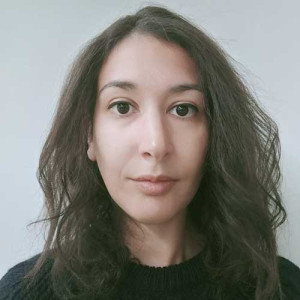
Mathematical Application Research Team Meeting #8
September 5 (Fri) 10:30 - 11:50, 2025
Sonia Mahmoudi (Assistant Professor, Mathematical Science Group, Advanced Institute for Materials Research (AIMR), Tohoku University)
The 8th meeting of the Mathematical Application Research Team invites Sonia Mahmoudi for a talk.
Venue: via Zoom / #359, 3F, RIKEN Wako Campus
Event Official Language: English
Seminar

Computer Algebra with Deep Learning
September 5 (Fri) 15:00 - 17:00, 2025
Yuki Ishihara (Assistant Professor, Department of Mathematics, College and Science Technology, Nihon University)
Computer algebra is a field that aims to perform various mathematical calculations on computers. In recent years, there has been a surge in efforts to accelerate computer algebra algorithms using deep learning models such as “Transformer,” which is used in ChatGPT. In this lecture, I will introduce the results of joint research with Professor Kera et al. on learning Gröbner bases with Transformer.
Reference
- Yuki Ishihara, Computer Algebra with Deep Learning
Venue: via Zoom / #359, Seminar Room #359, 3F Main Research Building, RIKEN
Event Official Language: English
Conference
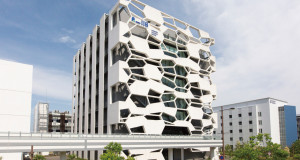
XIIIth International Symposium on Nuclear Symmetry Energy (NuSym25)
September 8 (Mon) - 13 (Sat) 2025
[Scientific scope]
The symposium will address experimental and theoretical investigations of the equation-of-state (EoS) of nuclear matter at various isospin asymmetries. Such investigations include efforts in nuclear structure, nuclear reactions and heavy-ion collisions, as well as in astrophysical observations of compact stars and associated phenomena. An important role of the symposium is to unify efforts of the nuclear physics and astrophysics communities in addressing common research challenges.
Venue: Integrated Innovation Building (IIB), Kobe Campus, RIKEN
Event Official Language: English
Seminar
Separability criteria for loops via the Goldman bracket
September 12 (Fri) 15:00 - 17:00, 2025
Aoi Wakuda (Ph.D. Student, Graduate School of Mathematical Sciences, The University of Tokyo)
In this talk, we give algebraic criteria using the Goldman bracket to determine whether two free homotopy classes of loops on an oriented surface have disjoint representatives. As an application, we determine the center of the Goldman Lie algebra of a pair of pants. We extend Kabiraj's method, which was originally limited to oriented surfaces filled by simple closed geodesics, and show that in this case, the center is generated by the class of loops homotopic to a point, and the classes of loops winding multiple times around a single puncture or boundary component.
Venue: via Zoom / #359, Seminar Room #359, 3F Main Research Building, RIKEN
Event Official Language: English
Lecture
8th QGG Intensive Lecture: Quantum reference frames and their applications in high-energy physics
September 24 (Wed) - 26 (Fri) 2025
Philipp Höhn (Assistant Professor, Qubits and Spacetime Unit, Okinawa Institute of Science and Technology Graduate University (OIST))
Quantum reference frames (QRFs) are a universal tool for dealing with symmetries in quantum systems. Roughly speaking, they are internal subsystems that transform in some non-trivial way under the symmetry group of interest and constitute the means for describing quantum systems from the inside in purely relational terms. QRFs are thus crucial for describing and extracting physics whenever no external reference frame for the symmetry group is available. This is in particular the case when the symmetries are gauge, as in gauge theory and gravity, where QRFs arise whenever building physical observables. The choice of internal QRF is typically non-unique, giving rise to a novel quantum form of covariance of physical properties under QRF transformations. This lecture series will explore this novel perspective in detail with a specific emphasis on applications in high-energy physics and gravity.
I will begin by introducing QRFs in mechanical setups and explain how they give rise to quantum structures of covariance that mimic those underlying special relativity. I will explain how this leads to subsystem relativity, the insight that different QRF decompose the total system in different ways into gauge-invariant subsystems, and how this leads to the QRF dependence of correlations, entropies, and thermal properties. We will then explore how relational dynamics in Hamiltonian constrained systems and the infamous "problem of time" can be addressed with clocks identified as temporal QRFs. In transitioning to the field theory setting, we will first consider hybrid scenarios, where QRFs are quantum mechanical, but the remaining degrees of freedom are quantum fields including gravitons. I will explain how this encompasses the recent discussion of "observers", generalized entropies, and gravitational von Neumann algebras by Witten et al. and how subsystem relativity leads to the conclusion that gravitational entanglement entropies are observer dependent. We will then discuss the classical analog of QRFs in gauge theory and gravity and how they can be used to build gauge-invariant relational observables and to describe local subsystems. This will connect with discussions on edge and soft modes in the literature, the former of which turn out to be QRFs as well. This has bearing on entanglement entropies in gauge theories, which I will describe on the lattice, providing a novel relational construction that overcomes the challenges faced by previous constructions, which yielded non-distillable contributions to the entropy and can be recovered as the intersection of "all QRF perspectives". Finally, I will describe how the classical discussion of dynamical reference frames can be used to build a manifestly gauge-invariant path integral formulation that opens up novel relational perspectives on effective actions and the renormalization group in gravitational contexts, which is typically plagued by a lack of manifest diffeomorphism-invariance. I will conclude with open questions and challenges in the field.
Program:
September 24
10:15 - 10:30 Registration and reception with coffee
10:30 - 12:00 Lecture 1
12:00 - 13:30 Lunch
13:30 - 15:00 Lecture 2
15:00 - 16:00 Coffee break
16:00 - 17:00 Lecture 3
17:10 - 18:10 Short talk session
18:20 - 21.00 Banquet
September 25
10:15 - 10:30 Morning discussion with coffee
10:30 - 12:00 Lecture 4
12:00 - 13:30 Lunch
13:30 - 15:00 Lecture 5
15:00 - 16:00 Coffee break
16:00 - 17:00 Lecture 6
17:10 - 18:10 Short talk session
September 26
10:15 - 10:30 Morning discussion with coffee
10:30 - 12:00 Lecture 7
12:00 - 13:30 Lunch
13:30 - 15:00 Lecture 8
15:00 - 16:00 Coffee break
16:00 - 17:00 Lecture 9 & Closing
Venue: #435-437, 4F, Main Research Building, RIKEN Wako Campus
Event Official Language: English
Seminar
Confined Circumstellar Material as a Dust Formation Site in Type II Supernovae
September 26 (Fri) 14:00 - 15:15, 2025
Yuki Takei (Program-Specific Researcher, Yukawa Institute for Theoretical Physics, Kyoto University)
Some massive stars undergo episodic mass loss shortly before core-collapse, producing dense circumstellar material (CSM) in their immediate surroundings. If the supernova (SN) ejecta strongly interacts with such CSM, narrow emission lines appear in the spectrum, classifying the event as Type IIn. In these cases, efficient radiative cooling forms a cold, dense shell (CDS), providing ideal conditions for dust condensation. Infrared observations of several SNe IIn have indeed confirmed newly formed dust. Recent time-domain surveys, however, suggest that compact and dense CSM, often termed “confined CSM”, is also present around a broader class of Type II SN progenitors with hydrogen-rich envelopes, beyond the traditional Type IIn subclass. This raises the possibility that dust formation in dense CSM is more common among core-collapse SNe than previously thought. In this talk, I will demonstrate that CDS formation occurs robustly across a wide parameter space for confined CSM using numerical simulations based on the open-source code CHIPS. I will also discuss the resulting dust mass and infrared emission, as well as the potential contribution of this process to the galactic dust budget.
Venue: Hybrid Format (3F #359 and Zoom), Seminar Room #359, 3F Main Research Building, RIKEN
Event Official Language: English
Lecture

Lectures on General Probabilistic Theories: From Introduction to Research Participation
October 6 (Mon) - 9 (Thu) 2025
Hayato Arai (JSPS Research Fellow, Graduate School of Arts and Sciences, The University of Tokyo)
(The deadline of the registration is on Sep 30.)
100 years have passed since quantum mechanics was born. The mathematical model has been describing the physical world remarkably well. However, the foundations of this model still remain unclear. A comprehensive understanding of quantum theory, including its foundations, is becoming even more important in an era where the demands of realizing quantum information technologies pose significant theoretical and experimental challenges.
The framework of General Probabilistic Theories (GPTs) is a modern approach to the foundations of quantum theory. It deals with mathematical generalizations of both classical and quantum theories and has attracted increasing attention in recent years. Roughly speaking, research on GPTs has three major objectives: characterizing the models of classical and quantum theories, investigating the fundamental limits of physical and information-theoretic properties arising from operational requirements, and deepening our understanding of the mathematical structures underlying classical and quantum theories. The studies of GPTs have provided many new perspectives on these topics. However, at the same time, there remain many important open problems in the field. For this reason, more researchers are encouraged to enter and contribute to research on GPTs.
This intensive three-day lecture series is designed to provide researchers and graduate students with the essential knowledge necessary for research on GPTs, starting from an introduction to the subject. The lectures will cover the mathematical foundations, physical and information-theoretic concepts, and both the established results and future directions of GPT research. The 1st day will present the necessary mathematical structures, including convex geometry, positive cones, and the operational formulation of probabilistic models. The 2nd day will explore composite systems, information-theoretic quantities, symmetries, and Euclidean Jordan algebras. The 3rd day will survey key results on discrimination and communication tasks, the characterization of classical and quantum theories, and open problems that connect GPTs to quantum information science and beyond.
Note: The content of each lecture may extend into the next slot or be covered earlier, depending on the pace of discussion and participant questions.
The 1st day (6th Oct.): Mathematical Introduction to GPTs
Venue: Large Meeting Room, 2F, Wako Welfare & Conference Building
10:30-12:00 Lecture 1 (Introduction and Mathematics on Positive Cones)
12:00-13:30 Lunch time
13:30-15:00 Lecture 2 (Mathematics on Positive Cones)
15:00-15:30 Coffee break
15:30-17:00 Lecture 3 (Introduction to General Models and Relation between Operational Probability Theories)
The 2nd day (7th Oct.): Physical and Information Theoretical Concepts in GPTs
Venue: Large Meeting Room, 2F, Wako Welfare & Conference Building
10:30-12:00 Lecture 4 (Composite Systems in GPTs)
12:00-13:30 Lunch time
13:30-15:00 Lecture 5 (Information Quantities)
15:00-15:30 Coffee break
15:30-17:00 Lecture 6 (Dynamics, Symmetry, and Euclidean Jordan Algebras)
The 3rd day (8th Oct): Previous and Future Studies in GPTs
Venue: Meeting Room 435-437, 4F, Wako Main Research Building
10:30-12:00 Lecture 7 (Discrimination and Communication Tasks)
12:00-13:30 Lunch time
13:30-15:00 Lecture 8 (Characterization of Classical and Quantum Theories)
15:00-15:30 Coffee break
15:30-17:00 Lecture 9 (Other Topics, Open Problems, and Future Directions)
18:00- Dinner
The day of no lecture (9th Oct): Open Discussion and Q&A
Research discussions will take place between the lecturer and participants in areas such as the hallways on the 3rd and 4th floors of the Main Research Bldg, RIKEN Wako Campus.
Venue: Welfare and Conference Bldg. 2F Meeting Room, RIKEN Wako Campus / #435-437, Main Research Building, RIKEN Wako Campus
Event Official Language: English
Colloquium

Why do we sleep? — The Role of Calcium and Phosphorylation in Sleep
October 10 (Fri) 15:30 - 17:00, 2025
Hiroki R. Ueda (Professor, Systems Pharmacology, Graduate School of Medicine, The University of Tokyo / Professor, Department of Systems Biology, Institute of Life Science, Kurume University)
Sleep remains one of greatest remaining mysteries. At the Sleep 2012 conference, we conceived a shift from the concept of “sleep substances” to “wake substances” such as calcium, suggesting that sleep homeostasis may arise from the integration of wake-related activity. Inspired by Dr. Setsuro Ebashi’s work on calcium signaling, we investigated calcium’s role in sleep regulation.
Using our Triple-CRISPR method (Sunagawa et al. 2016), we screened 25 genes related to calcium channels and pumps, revealing calcium as a brake on brain activity to promote sleep (Tatsuki et al. 2016). We also developed a tissue-clearing method CUBIC (Susaki et al. 2014; Tainaka et al. 2014) to visualize calcium’s effects on neural circuits. Further work showed that calcium-dependent enzymes, CaMKIIα/β kinases, act as calcium “memory” devices, with phosphorylation sites controlling sleep onset, duration, and termination (Tone et al. 2022). Other direct and indirect calcium-dependent phosphatases, Calcineurin and PP1 (sleep-promoting), and opposing kinases, PKA (wake-promoting), function as synaptic sleep switches (Wang et al. 2024).
We also identified the ryanodine receptor 1, a calcium channel, as a molecular target of inhalational anesthetics, hinting at shared pathways between anesthesia and sleep (Kanaya et al. 2025). Lastly, we proposed the WISE (Wake Inhibition Sleep Enhancement) mechanism, where quiet wakefulness suppresses and deep sleep strengthens synaptic connections, explaining links between sleep, depression, and antidepressant effects (Kinoshita et al. 2025).
Venue: Okochi Hall, 1F Laser Science Laboratory, RIKEN / via Zoom
Event Official Language: English
Paper of the Week
Week 4, August 2025
2025-08-21
Title: Quasiprobability Thermodynamic Uncertainty Relation
Author: Kohei Yoshimura, Ryusuke Hamazaki
arXiv: http://arxiv.org/abs/2508.14354v1
Title: Antiferromagnetic Long-Range Order in a Lattice Fermion Model
Author: Yukimi Goto, Tohru Koma
arXiv: http://arxiv.org/abs/2508.12421v1
Title: The NN$Ω_{ccc}$ Bound-States with the HAL QCD interaction
Author: Faisal Etminan
arXiv: http://arxiv.org/abs/2508.12276v1
Title: Scaling Behaviors in Active Model B+ via the Functional Renormalization Group
Author: Gergely Fejős, Zsolt Szép, Naoki Yamamoto
arXiv: http://arxiv.org/abs/2508.12065v1
Title: Sample efficient likelihood-free inference for virus dynamics with different types of experiments
Author: Yingying Xu, Ulpu Remes, Enrico Rinaldi, Henri Pesonen
arXiv: http://arxiv.org/abs/2508.11042v1
Title: The Alternative Hypothesis for Zeros of the Riemann Zeta-Function
Author: Siegfred Alan C. Baluyot, Daniel Alan Goldston, Ade Irma Suriajaya, Caroline L. Turnage-Butterbaugh
arXiv: http://arxiv.org/abs/2508.10857v1
Title: Probing Nucleon-$Ω_{\rm ccc}$Interaction via Lattice QCD at Physical Quark Masses
Author: Liang Zhang, Takumi Doi, Yan Lyu, Tetsuo Hatsuda, Yu-Gang Ma
arXiv: http://arxiv.org/abs/2508.10388v1
If you would like to cancel your subscription or change your email address,
please let us know via our contact form.
Copyright © iTHEMS, RIKEN. All rights reserved.